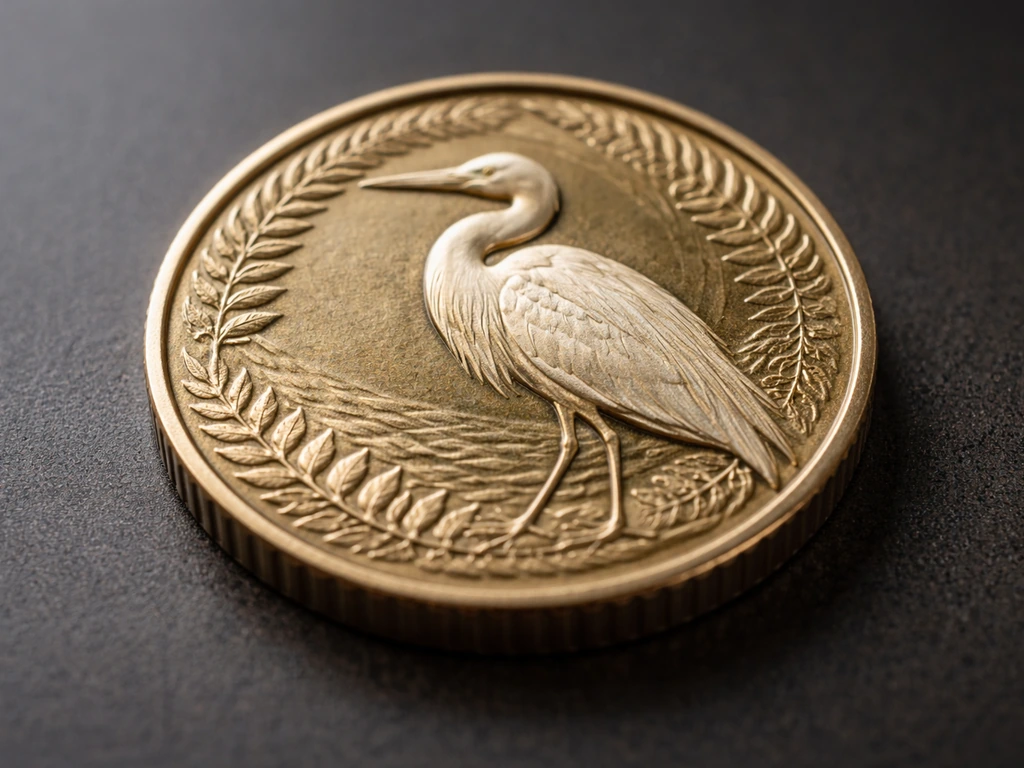
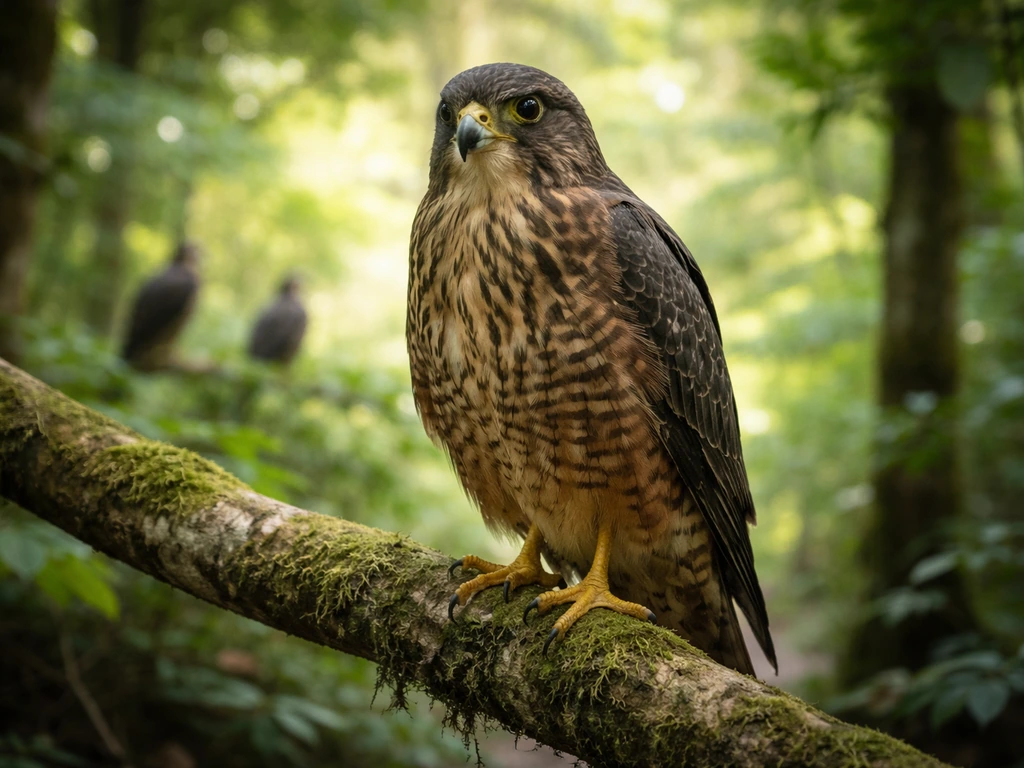
The bird on the New Zealand $20 note is the New Zealand falcon, known in Māori as the kārearea (Falco novaeseelandiae). You'll find it on the back of the note, and it's been the $20 denomination's bird since the current note series was introduced.
What Bird Is on the NZ 20 Dollar Note? How to Verify

Marcus Chen
18 May 2026
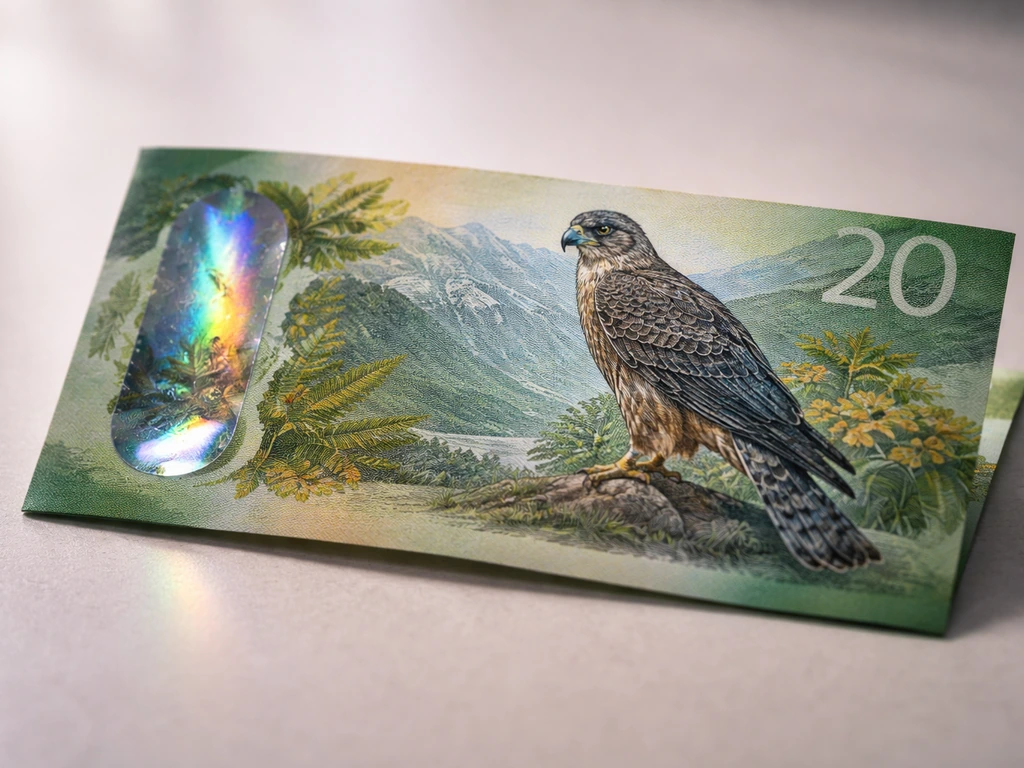
Where exactly is the bird on the $20 note?
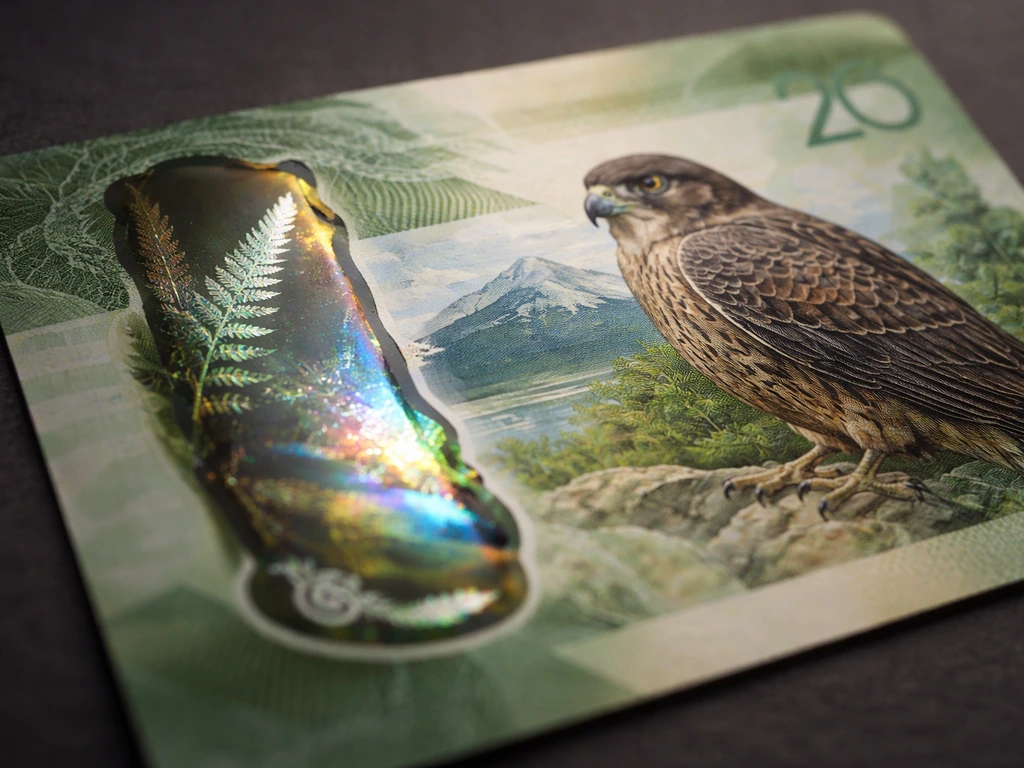
Flip the note over and the kārearea is front and centre on the reverse. The most eye-catching place to spot it is actually through the holographic window, a transparent security strip built into the note. When you hold the note up or tilt it, you'll see the falcon rendered as a silhouette inside that window, and the silhouette's colour changes as you move the note around. That colour-shifting bird is one of the Reserve Bank of New Zealand's official verification features, and it's impossible to miss once you know to look for it.
Beyond the holographic window, the printed imagery on the reverse of the note also depicts the kārearea alongside native New Zealand scenery. The Māori name kārearea is printed on the reverse as well, so you can confirm the species by reading the note directly.
How to confirm it's the right species (and not a look-alike)
The kārearea is sometimes confused with the swamp harrier (kāhu) in the field, since both are native raptors found around open country and forest edges. But on the banknote, you don't need to be a birder to confirm the species. Here's what to check:
- Look through the holographic window: the RBNZ explicitly describes the bird silhouette visible there as the kārearea. If the silhouette's colour shifts when you tilt the note, the security feature is genuine and the bird is confirmed.
- Read the Māori name printed on the reverse: 'kārearea' is written directly on the note, removing any ambiguity about species.
- Check the scientific name in reference sources: Te Papa's collection records identify the $20 note bird as Falco novaeseelandiae, the New Zealand falcon.
- Compare body shape if you're examining printed imagery: the kārearea has a compact, powerful falcon build with pointed wings, quite different from the harrier's longer, broader wingspan and more buoyant flight silhouette.
Because the most prominent bird depiction on the modern note is a silhouette in the security window rather than a detailed field-guide illustration, the written name on the note is actually the quickest way to settle any uncertainty about species.
A quick note on earlier $20 designs
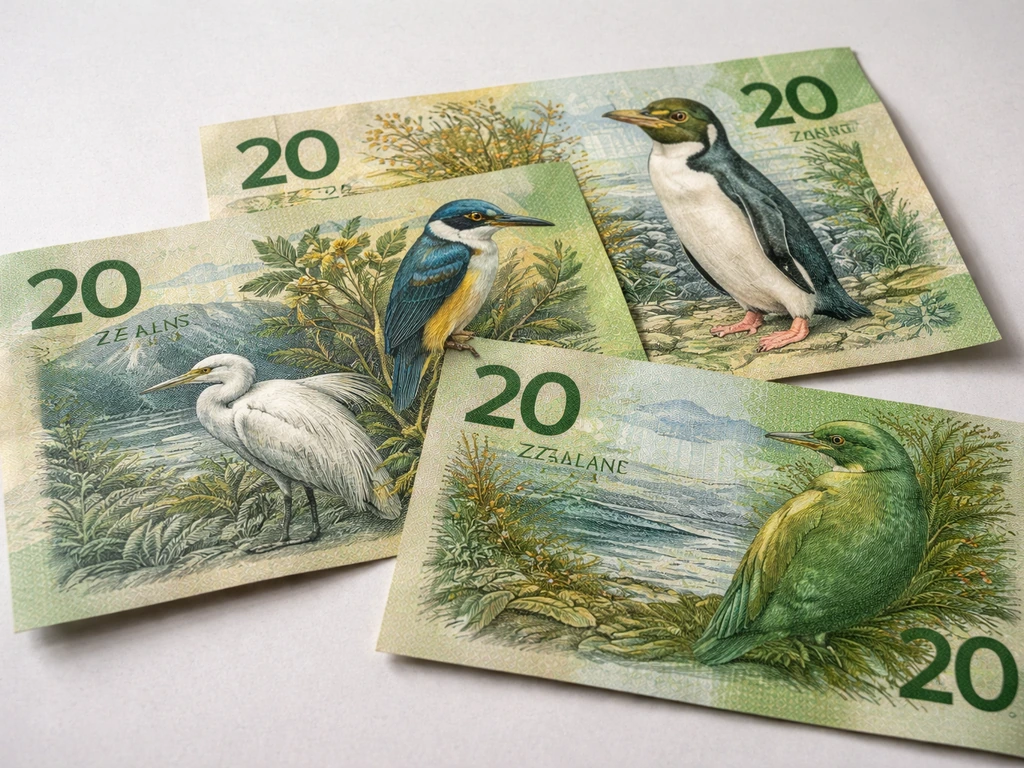
If you're looking at an older note and the bird doesn't match, that's not a mistake. Earlier series used different birds on the $20 denomination. The third-series $20 note, for example, featured the kererū (New Zealand pigeon) on its reverse. The kārearea became the established $20 bird in later series, and the current Series 7 'Brighter Money' notes, which entered circulation in May 2016, continue that association. So if you're holding a note and want to confirm it's current, check the holographic window: older notes won't have the same colour-shifting bird security feature.
Why the kārearea? The history and symbolism behind the choice
New Zealand's banknote redesign in the early 1990s made a deliberate shift toward native birds across all denominations, replacing earlier designs that felt less distinctly New Zealand. The goal was to give the currency a strong national identity rooted in the country's unique natural heritage. WWF-New Zealand described this as making the notes 'distinctly New Zealand in feel,' and native birds were the obvious choice for that job.
The kārearea was chosen for the $20 note specifically because it's one of New Zealand's most striking native birds. It's the country's only endemic falcon, meaning it exists nowhere else on Earth. That kind of biological exclusivity makes it a powerful symbol of New Zealand's unique wildlife, which is exactly what a national currency aims to represent.
The kārearea is also a bird with real presence. It's fast, bold, and fiercely territorial, known to dive-bomb much larger animals (including humans) that get too close to a nest. That assertive character fits well on a banknote meant to project confidence and national pride.
How the $20 note bird fits into New Zealand's wider bird symbolism
New Zealand's currency is essentially a showcase of the country's native birds. Each denomination carries a different species, so the set of notes functions almost like a field guide in your wallet. The kiwi, as New Zealand's unofficial national bird, has long featured on coins and is deeply embedded in national identity. The $20 kārearea sits alongside other denomination birds as part of that broader avian story told through the currency. The $10 coin features a different bird, so it can help to know the exact species when you are comparing designs bird on the 10 cent coin.
If you find yourself curious about the birds on other notes, the $10 note and $50 note each carry their own native species, and even coins like the $2 piece have their own bird connection. The $10 note also has its own native bird, so you can compare species across the different denominations. The $50 note also features a specific native bird, so you can use the same approach to identify it.
Coins also feature native birds, and the $2 New Zealand coin highlights a particular species coins like the $2 piece. On the $2 New Zealand coin, the bird shown is the kiwi. Each one reflects a different chapter in New Zealand's conservation and cultural history. The kārearea on the $20 is one of the more dramatic choices in the set, which makes it a favourite talking point for anyone interested in how nations use their currency to express identity.
Comparing the kārearea to the other birds across NZ notes
| Denomination | Bird (English) | Bird (Māori) | Notes |
|---|---|---|---|
| $5 | Blue duck | Whio | Endangered; found in fast-flowing rivers |
| $10 | Kingfisher | Kōtare | Common but vibrant; widely recognised |
| $20 | New Zealand falcon | Kārearea | Only endemic falcon; powerful predator |
| $50 | Kōkako | Kōkako | Rare forest bird with haunting call |
| $100 | Mohua (Yellowhead) | Mohua | Small, endangered forest songbird |
The kārearea stands out in this lineup as the apex predator of the group. While other notes feature songbirds, waterfowl, and forest birds, the $20 brings a genuine raptor to the table. That contrast makes it one of the more memorable of the denomination birds, and a natural centrepiece for anyone exploring what New Zealand has chosen to put on its currency.
FAQ
Is the bird on the NZ $20 note always the kārearea, even on older notes?
Yes, but the easiest clue is the series timing and the security strip. Series 7 notes (Brighter Money) introduced in May 2016 should show the color-shifting kārearea silhouette in the holographic window. If your holographic window does not show a color-changing bird silhouette, you likely have an older $20 note from a different series and the bird may not be kārearea.
How can I confirm the bird if the picture is unclear or I have trouble seeing the details?
You can tell the kārearea from the note’s text without relying on visual similarity to field species. Look on the reverse for the printed Māori name, kārearea, which is your direct match even if your first impression suggests a different raptor.
What’s the easiest way to avoid confusing the kārearea with the swamp harrier?
Not necessarily. The swamp harrier (kāhu) and the kārearea can both appear as raptors in open-country views, so visual guessing can mislead. On the banknote, ignore field identification habits and instead use the two built-in cues, the Māori name printed on the reverse and the holographic window silhouette.
Where exactly should I look on the note to identify the bird?
Check both sides. The bird is on the reverse, and the signature of the verification feature is on the holographic window on that side. If you only look at the front, you may miss the security element that clearly confirms the bird.
How should I tilt the note to see the color-shifting bird properly?
If the note is genuine, the holographic window should react as you tilt it, with the silhouette changing color. A common mistake is to tilt too slowly or from the wrong angle, where the window appears static. Try moving the note under a bright light and tilt it in small increments to see the shift.
What should I do if my $20 note does not show the same bird or security feature?
If you cannot find the kārearea name or the security strip does not show a bird silhouette, the note may be from an earlier $20 series. Earlier $20 notes used different bird designs, such as kererū on the third series, so you may need to check the note series details or compare the reverse artwork.
Can I use the bird image to spot a counterfeit NZ $20 note?
Be cautious about counterfeits that replicate the layout but fail the security behavior. A practical check is that the holographic silhouette should show a noticeable color change when the note is tilted, and the kārearea name should be present on the reverse. If either fails, treat the note as suspect.
For collecting, how do I determine which bird design corresponds to my specific $20 note series?
If you’re collecting or comparing designs, look for the note series (often indicated on the notes themselves) because the $20 denomination has not always used kārearea. The current association with kārearea is tied to later series, including Series 7.
Next Article
What Bird Features on a $2 New Zealand Coin?
Identify the bird on a $2 New Zealand coin and confirm the exact design, with symbolism behind the national emblem.