Aruba's national bird is the Prikichi, the local Papiamento name for the brown-throated parakeet (scientific name Eupsittula pertinax arubensis, also written Aratinga pertinax arubensis). This small, energetic parakeet was officially designated Aruba's national bird in 2017, and it is the bird you will see referenced on Aruba's official tourism pages and by the Dutch Caribbean Nature Alliance (DCNA) as the island's avian emblem. A government planning document in the Landspakket agenda/rapportage (zoek.officielebekendmakingen.nl) states that Aratinga pertinax arubensis (Prikichi) was “in 2017 benoemdtot nationale vogel van Aruba” (designated as Aruba's national bird) officially designated Aruba's national bird in 2017.
What Is the National Bird of Aruba? Symbol, History, ID Tips

Marcus Chen
6 Jun 2026
A quick note on the confusion you might run into
If you have been searching around, you have probably seen the Shoco (Aruba's burrowing owl, Athene cunicularia arubensis) described as the national bird on travel blogs and tourism discussion threads. That is understandable but technically incorrect. The Shoco was officially declared a national symbol on March 18, 2012, Aruba National Day, by the Department of Culture. It was a big deal at the time, and the distinction between 'national symbol' and 'national bird' is subtle enough that a lot of websites blurred it. Then in 2017, the Prikichi was formally named national bird, which is a separate and more specific designation. So both birds carry official status, but the Prikichi is the one that holds the national bird title.
How the Prikichi became Aruba's national bird
The Prikichi's path to national bird status followed naturally from Aruba's broader effort to anchor its identity in native wildlife. The Shoco designation in 2012 set the precedent: Aruba wanted symbols that were genuinely Aruban, not imported or borrowed from neighboring islands. The Prikichi fit that brief perfectly. Aruba's subspecies, arubensis, is found on the island and nowhere else in the same form, making it a genuinely local bird.
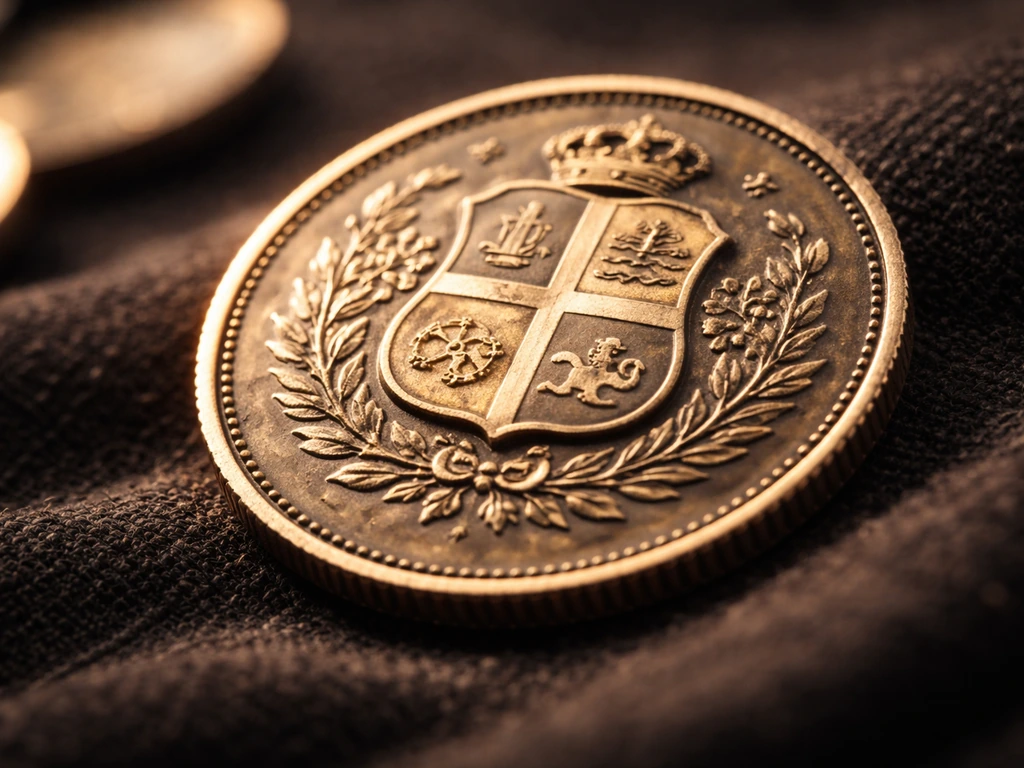
By 2017, the designation was made official. Aruba even issued a commemorative coin (herdenkingsmunt) featuring the Prikichi as the national bird, which is documented in the 2017 Aruba government annual report. That kind of commemorative marking is often more revealing of a country's pride in a symbol than the official decree itself.
What the Prikichi means to Aruba culturally
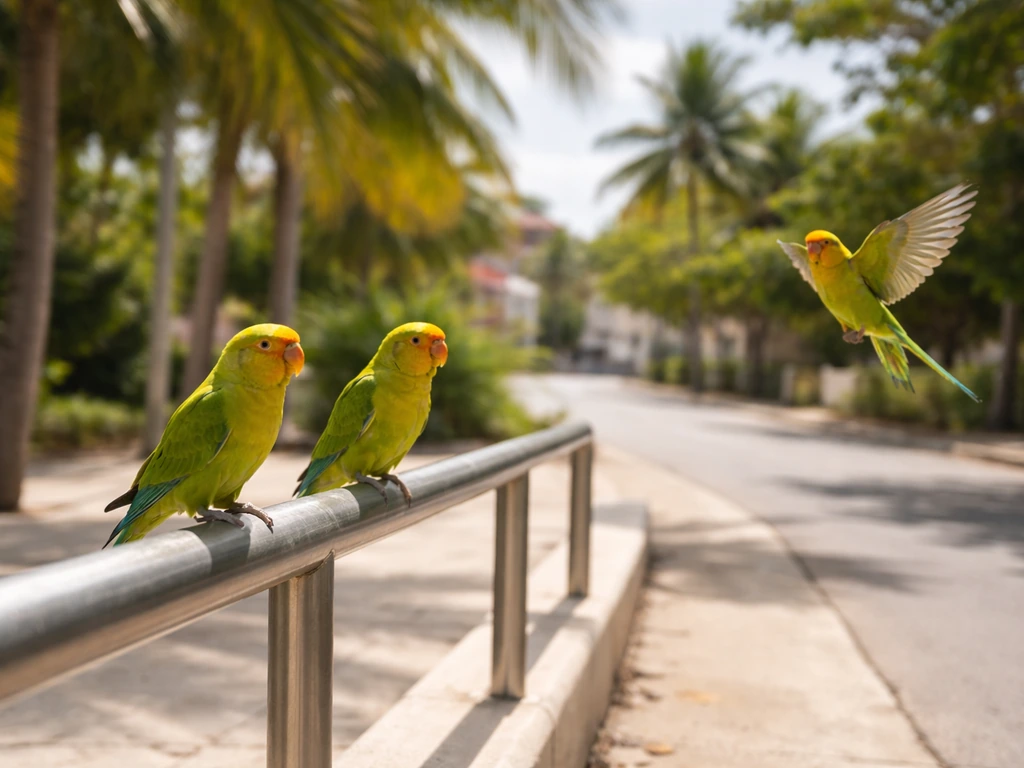
The Prikichi is everywhere on Aruba. These birds are noisy, social, and impossible to miss, which gives them a very different symbolic character compared to, say, a solitary raptor. Where the Shoco (still revered as a national symbol) represents wisdom and intelligence ('sabiduria y inteligencia' in the Department of Culture's own words), the Prikichi represents the island's lively, communal spirit.
Being a native subspecies matters a lot to Aruba's national identity. Aruba is a small island that has worked hard to define its own character, especially as a constituent country within the Kingdom of the Netherlands. Choosing a bird that is uniquely Aruban, not just a Caribbean-wide species, sends a clear message about wanting to root national symbols in what is genuinely and exclusively local. The same logic applied to the Shoco, which the Department of Culture described as 'uniek na mundo,' unique in the world.
You can see the Prikichi used as an identity hook across official and semi-official channels. Aruba.com, the island's main tourism information site, calls the Prikichi 'Aruba's national bird' in its Wildlife section and uses the bird to introduce visitors to the island's natural character before they even arrive.
What the Prikichi actually looks and sounds like
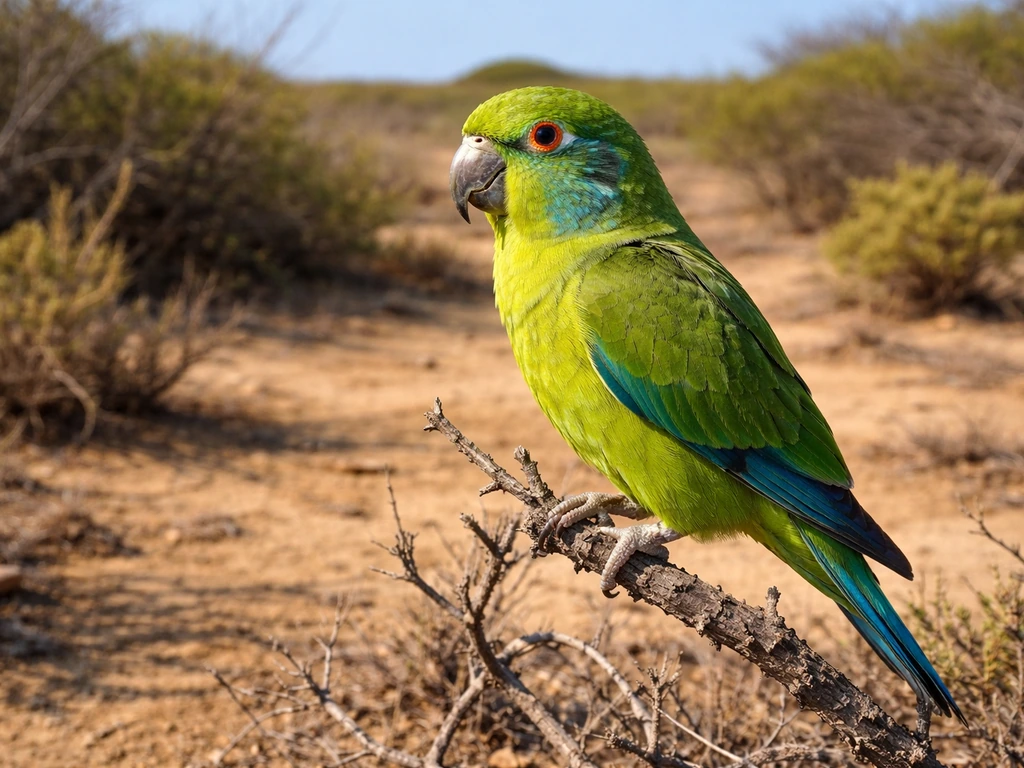
The brown-throated parakeet is a small parrot, typically around 23 to 28 centimeters long. The name tells you the key field mark: a brownish-orange or buff-colored throat and face, contrasting with the predominantly green body. The underparts are yellowish-green, and the tail is long and pointed in the classic parakeet style. Up close, you will also notice a bare orbital ring around the eye, which is a useful identifier if you are looking through binoculars.
In terms of habitat, the Prikichi is well-suited to Aruba's dry, scrubby landscape. Research on the species lists acacia scrub, savannas, dry forest, open woodland, mangroves, and farmland as typical habitats, all of which Aruba has in good supply. You are most likely to find them in flocks, moving noisily through the cactus-and-acacia terrain that covers much of the island's interior.
Vocally, these birds are hard to ignore. They are loud, and the Aruba subspecies (arubensis) has been the subject of specific scientific research on island contact calls, published in Ornithology (formerly The Auk). The contact calls of island populations like Aruba's have been studied as distinct from mainland counterparts, adding another layer of biological uniqueness to the subspecies.
Facts and stories worth knowing
- The Prikichi's scientific subspecies name, arubensis, literally means 'of Aruba,' which is as clear a statement of endemism as you can get.
- Aruba issued a commemorative coin featuring the Prikichi as national bird in 2017, making it one of the few Caribbean national birds to be commemorated in currency.
- The Shoco, Aruba's other official bird symbol, is a burrowing owl that nests underground. The Department of Culture has described it nesting in burrow holes in the earth, a behavior unusual enough to make it a favorite subject for wildlife education. Conservation groups including Aruba Bank have funded artificial burrow installations since 2019 to protect the Shoco population.
- The confusion between Shoco and Prikichi as 'national bird' is widespread enough that even reputable travel sources get it wrong. The DCNA explicitly addresses this, stating that the Shoco was declared a national symbol (2012) and the Prikichi became the national bird (after 2012, formally 2017).
- Research published in peer-reviewed ornithology journals has specifically studied the Aruba subspecies of the brown-throated parakeet, meaning the Prikichi is not just a flag-waving symbol but a scientifically documented island population with its own behavioral traits.
- Caribbean island nations often select birds that are endemic or near-endemic to reinforce national identity. Aruba's choice mirrors decisions made by other island territories: for example, the Doctor Bird of Jamaica, the Bermuda petrel (cahow) of Bermuda, and the yellow warbler of the Virgin Islands all reflect the same logic of picking something uniquely theirs.
How the Prikichi compares to its fellow national-symbol bird, the Shoco
| Feature | Prikichi (National Bird) | Shoco (National Symbol) |
|---|---|---|
| Common name | Brown-throated parakeet | Aruban burrowing owl |
| Scientific name | Eupsittula pertinax arubensis | Athene cunicularia arubensis |
| Official status | National bird (2017) | National symbol (2012) |
| Symbolism | Island identity, communal spirit | Wisdom and intelligence |
| Habitat | Acacia scrub, dry forest, open woodland | Open ground, burrows in semi-arid terrain |
| Visibility on island | Very common, seen in flocks | Present but more discreet, ground-dwelling |
Where to verify this and go deeper
For the most reliable confirmation, go directly to the DCNA (Dutch Caribbean Nature Alliance) page titled 'Prikichi declared Aruba national bird.' The DCNA is the authoritative regional conservation body and explicitly names the Prikichi as the national bird while explaining the distinction from the Shoco's national-symbol status. That is the single clearest source to cite or share.
Aruba.com's Wildlife section is another solid reference, particularly useful if you want something written for a general audience. It calls the Prikichi Aruba's national bird and places it in the context of the island's overall wildlife.
For the Shoco's national-symbol designation and its cultural symbolism, the Departamento di Cultura Aruba (Aruba Department of Culture) has a dedicated page on the Shoco that lays out the March 18, 2012 declaration and the cultural rationale behind it. Reading both pages together gives you the full picture of how Aruba's bird-symbol story unfolded.
If you want scientific depth on the Prikichi species itself, the Animal Diversity Web entry for Aratinga pertinax covers habitat and behavior well for a non-specialist reader. For more rigorous ornithology, the peer-reviewed checklist of birds of Aruba, Curaçao, and Bonaire (published in Ardea via BioOne) lists habitat types for the species in detail, and the Oxford Academic study on contact calls of island brown-throated parakeets specifically includes the Aruba subspecies. Both are worth bookmarking if you are researching beyond the national-bird label.
If you are exploring national birds of nearby islands, Aruba's situation is a good reference point for understanding how Caribbean territories often have layered symbol systems, with one bird as a cultural or heritage symbol and another as the formal national bird. If you are also wondering why Aruba has the Prikichi as its national bird, the article explains how the designation was made official in 2017.
Bermuda, the Virgin Islands, and Barbados each have their own interesting designation stories that follow similar patterns of anchoring identity in endemic or near-endemic species. Bermuda's national bird is widely recognized as the cahow, a rare seabird also known as the Bermuda petrel. If you are specifically looking for the what is barbados national bird answer, it is the Barbados bullfinch (Loxigilla barbadensis).
In the Virgin Islands, you can ask what the national bird of the virgin islands is to compare how their designation stories differ from Aruba's.
FAQ
Is the national bird of Aruba always the Prikichi, or is the Shoco also considered a national bird?
It is not the same designation. Aruba officially named the Prikichi the national bird in 2017, while the Shoco (burrowing owl) is a national symbol declared in 2012. Many travel sites blur the terms, but the official titles differ.
What does “Prikichi” mean, and is it the same name used for the species elsewhere?
“Prikichi” is the local Papiamento name for Aruba’s brown-throated parakeet subspecies. Other regions may use different common names for the same broader species complex, so “Prikichi” is the island-specific label you should look for.
Can I identify the Prikichi by sight without binoculars?
Often yes from a distance because they are noisy and travel in groups, but for a confident ID focus on the distinctive brownish-orange to buff-colored throat and face against the green body. If you are using binoculars, the bare eye ring is a quick confirming feature.
What time of day is best to see the Prikichi in the wild on Aruba?
Look for them when daily activity is highest, usually when they are most vocal and moving between feeding and roosting spots. Since Aruba is dry and scrubby, flocks are commonly spotted in open scrub and farmland edges rather than deep forest.
Where on the island are Prikichi most likely to be found?
They are most likely in dry, scrubby habitats such as acacia scrub, savannas, open woodland, and mangroves, plus farmland where cover is available. Birdwatchers often have better luck in interior cactus-and-acacia areas than purely coastal zones.
Do Prikichi and Shoco look similar, and could that cause confusion about the “national bird” label?
They are quite different. The Prikichi is a small, green parakeet with a brownish face, while the Shoco is a burrowing owl type bird. Confusion usually comes from mixed-up titles online rather than visual similarity.
If the Prikichi is a parakeet subspecies, why does Aruba emphasize that it is “Aruban” or unique?
Aruba’s national-bird choice is tied to its endemic or near-endemic identity, meaning the subspecies is associated specifically with the island’s populations. This is different from choosing a common Caribbean bird that also occurs widely elsewhere.
Are the national-bird and national-symbol designations decided by the same agency?
They were handled through Aruba’s cultural and governmental processes, but the key distinction is that the Shoco received its national-symbol status first (in 2012), and the Prikichi received national-bird status later (in 2017). Treat them as separate designations rather than one combined honor.
Where can I verify which bird is the national bird if I am making a reference for school or a post?
Use Aruba conservation and official tourism references that explicitly state “national bird” for the Prikichi, not just general wildlife pages. If you need precision, confirm the wording of the designation and not only the bird’s presence in an overview list.
Is Aruba’s national bird the same as the national bird of nearby islands?
No, nearby territories often have their own layered system and different official choices. If you are comparing, check both the bird’s designation type (national bird versus national symbol) and the exact year of the decision, since those details vary by island.