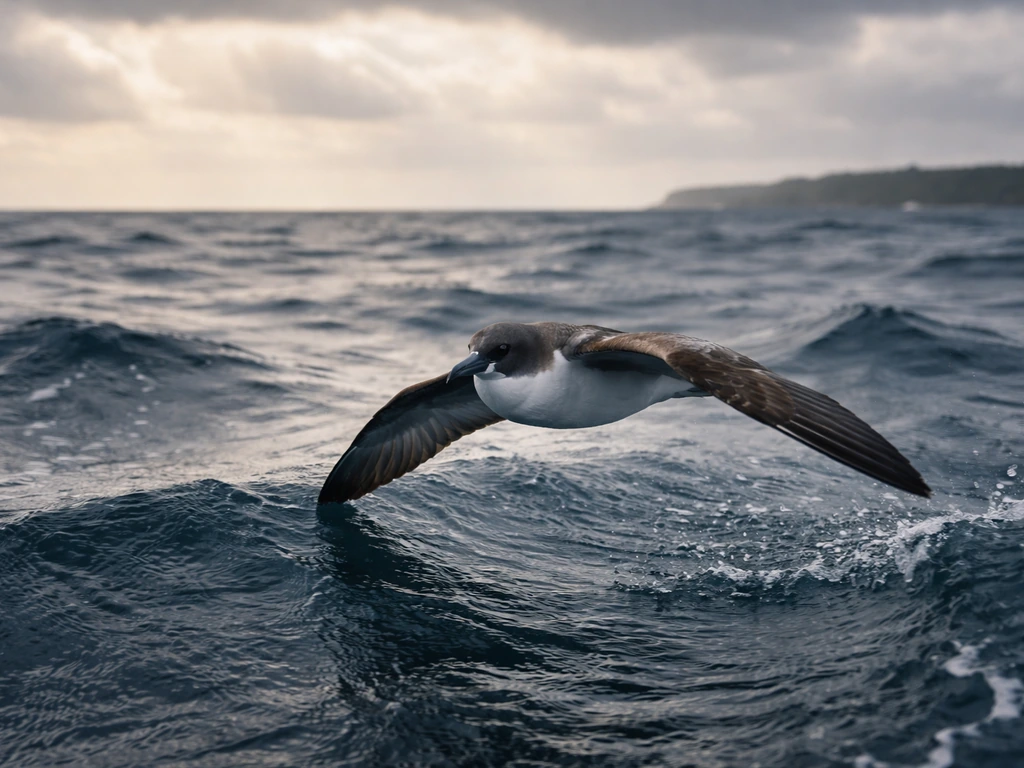
Bermuda's national bird is the Cahow, also known as the Bermuda Petrel (Pterodroma cahow). It's completely unique to Bermuda, making it one of the most fitting national symbols of any island in the world. The Bermuda government officially designates it as the national bird in its own recovery plan documents, which refer to the Cahow as "Bermuda's official National Bird."
What Is the National Bird of Bermuda? Meaning and Facts

Marcus Chen
29 May 2026
What the Cahow means to Bermuda
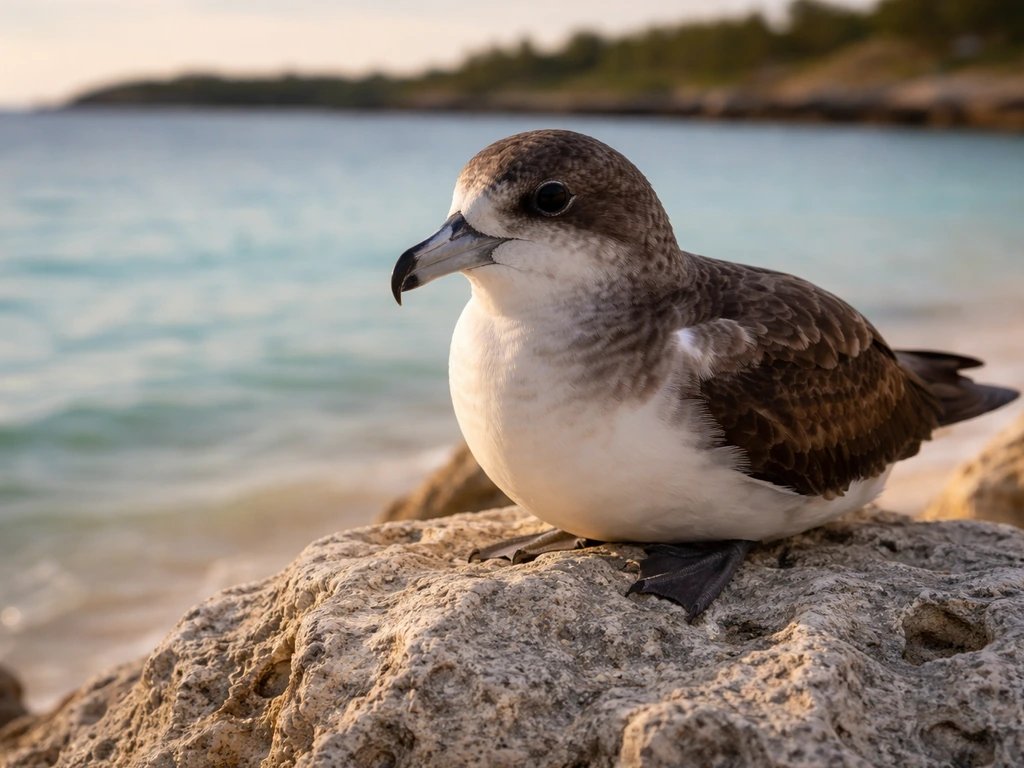
The Cahow isn't just a bird that happens to live on Bermuda. It's a creature found nowhere else on Earth, which instantly makes it a powerful symbol of Bermudian identity. Its entire existence is tied to these islands in a way that few national animals anywhere can match.
Beyond its uniqueness, the Cahow has become a symbol of resilience and hope. The bird was believed to be completely extinct for nearly 300 years. When a small surviving population was rediscovered in 1951, Bermuda didn't treat that news as a footnote. It launched one of the most sustained and celebrated endangered-species recovery programs in the world. International conservation groups now describe the Cahow as a "symbol of hope for critically endangered species" globally, not just locally.
That conservation identity runs deep in Bermudian culture. The bird appears on Bermudian currency, and in 2010 the Bermuda Monetary Authority issued a dedicated commemorative coin in its honor. When a country puts a bird on its money and mints special coins for it, that's a strong signal of how central the species is to national pride.
How the Cahow became the national bird
The Cahow's path to national bird status is inseparable from its near-extinction story. Early European settlers in Bermuda hunted the birds heavily and introduced rats and pigs to the islands, which wiped out most of the population. By the 1620s, the Cahow was thought to be gone forever. For roughly 300 years, it existed only in historical accounts.
Then in 1951, a small group of Cahows was found nesting on tiny Castle Harbour islets. Conservation work began almost immediately, with formal recovery efforts dating back to 1960. The Bermuda government's 2005 official Recovery Plan for the Bermuda Petrel references "the recent designation of the Cahow as Bermuda's National Bird," which places the formal national bird designation as relatively recent, tied directly to the conservation milestone of the bird's rediscovery and growing recovery. The designation made sense: no other bird could represent Bermuda's history, fragility, and determination more clearly. You may be wondering why the Cahow became Bermuda's national bird, and it mainly comes down to its rare history and its comeback through conservation why is the Cahow the national bird.
Getting to know the bird itself
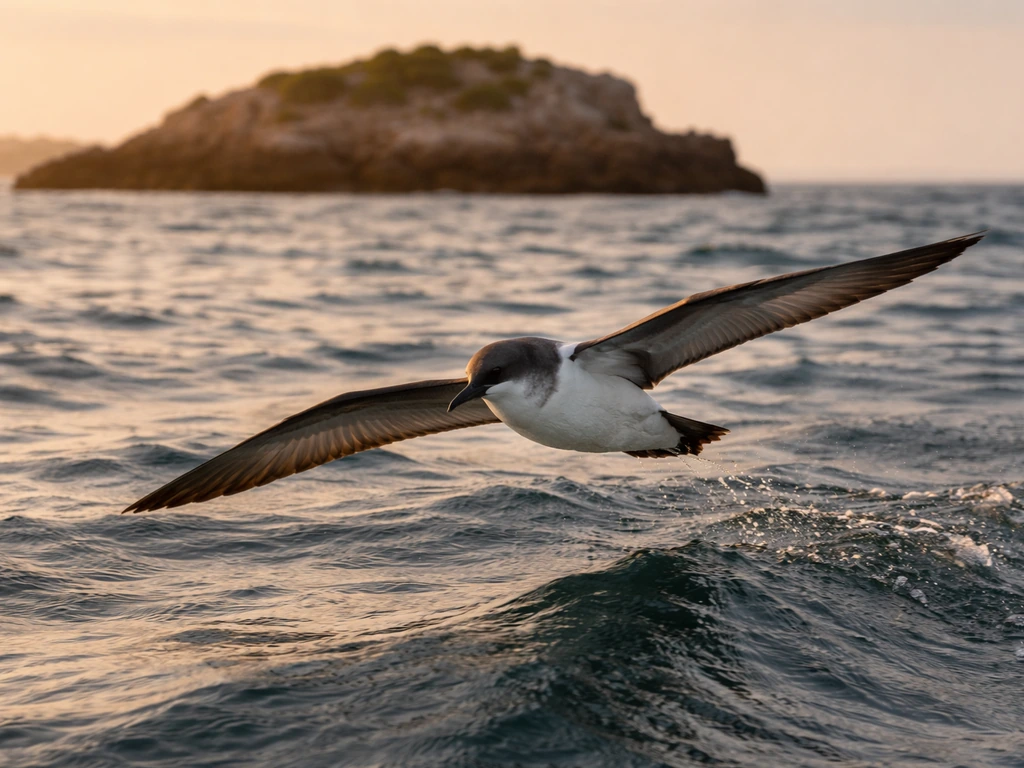
The Cahow is a medium-sized seabird in the petrel family. It spends the vast majority of its life on the open ocean, feeding on small squid, fish, and shrimp far from land. It only comes ashore to breed, which it does in burrows, and it does that at night. If you were standing on a Bermuda beach at midday, you'd almost certainly never see one.
Breeding takes place on small protected islets, and conservationists have worked hard to expand that to Nonsuch Island Nature Reserve through a translocation program that moved near-fledged chicks to establish a new colony there. One of the ongoing challenges is competition for nest burrows from White-tailed Tropicbirds, which the recovery program manages by fitting burrow entrances with specially sized wooden "baffler" plates that let the smaller Cahow through but block the larger Tropicbird.
The recovery numbers tell a striking story of progress. In the 1960s, only 18 pairs were producing about 8 fledged chicks per year. By the 2010 nesting season, 92 pairs were producing 52 successfully fledged chicks annually. Almost three-quarters of the entire known population had been individually banded for monitoring by 2010. For a bird that was considered extinct for three centuries, those are remarkable numbers.
| Attribute | Details |
|---|---|
| Common name | Cahow / Bermuda Petrel |
| Scientific name | Pterodroma cahow |
| Family | Procellariidae (petrels and shearwaters) |
| Size | Medium seabird |
| Diet | Small squid, fish, and shrimp |
| Nesting habit | Burrow-nesting, nocturnal, on small islets |
| Where found | Open ocean (pelagic); breeds only in Bermuda |
| Conservation status | Critically endangered |
| Known breeding pairs (2010) | 92 pairs |
How to verify this and dig deeper
If you want to confirm the Cahow's official status directly, the best starting point is Bermuda's Department of Environment and Natural Resources. Their species profile page for the Bermuda Petrel (Pterodroma cahow) and their dedicated Cahow Recovery Programme page both state its national bird status explicitly. The government's 2005 Recovery Plan document is the most direct official source, naming it "Bermuda's official National Bird" in plain language.
For scientific name verification and natural history context, the U.S. Fish and Wildlife Service has a species account for Pterodroma cahow that confirms the correct taxonomy. Britannica's entry on "Cahow" is another solid general reference for the common name and species identity. The Cornell Lab of Ornithology also covers the bird and references the Government of Bermuda's CahowCam monitoring project, which is a great way to actually see these birds in their nest burrows.
If you're interested in the cultural and educational angle, the Bermuda Audubon Society has published a resource specifically titled "The Story of the Cahow: Bermuda's National Bird," which ties together the historical narrative, conservation journey, and national symbolism in one place.
How Bermuda compares to its Caribbean neighbors
Bermuda's choice of an endemic, critically endangered seabird stands out even compared to other islands in the broader Caribbean region. Many nearby islands chose birds that are vibrant, visible, and easy to spot. Barbados, Aruba, and the Virgin Islands each have their own distinctive national birds with their own fascinating backstories. If you are also curious about Barbados, its national bird is the bananaquit Barbados, Aruba, and the Virgin Islands each have their own distinctive national birds. Aruba’s national bird is the Burrowing Owl (Athene cunicularia) Barbados, Aruba, and the Virgin Islands. If you also want to know the national bird of the Virgin Islands, the answer is different from Bermuda's Cahow. What makes the Cahow unusual is that it's almost impossible to see in the wild under normal circumstances, yet it carries enormous national weight. It was chosen not for its visibility but for its story, its exclusivity to Bermuda, and what its survival represents.
FAQ
Is the Cahow the same bird as the Bermuda Petrel, or are those different species?
They refer to the same bird. “Cahow” is the common name, and “Bermuda Petrel” is another common name for Pterodroma cahow (the scientific name), so you can treat them as one national-bird identification.
Why is the Cahow hard to see even though it is Bermuda’s national bird?
It spends most of the year over open ocean and only comes ashore to breed at night in burrows. That means daylight beach sightings are uncommon, and even during breeding season visibility depends on where and when you are (and whether cameras or monitoring sites are operating).
When are Cahows most likely to be seen or heard in Bermuda (even if only partially)?
The most practical chances are around the breeding period, and at night near known nesting areas, not during midday. Many visitors rely on organized monitoring tools or guided access to colony sites because the birds themselves are not consistently observable.
Was the Cahow officially designated as the national bird immediately after it was rediscovered in 1951?
Not right away. The article ties the formal national-bird designation to a later official milestone, referencing a government recovery plan that notes a more recent designation connected to the rediscovery and subsequent population recovery work.
Can a national bird be endemic to Bermuda if it also exists elsewhere?
Yes, but Bermuda’s case is extreme. The Cahow is endemic to Bermuda, which strengthens the national symbolism because the species is not shared with other countries or islands.
Do Cahows still face the same threats that caused their near-extinction?
Many of the original pressures are still relevant in modern form, especially introduced predators and nesting-burrow competition. The article highlights ongoing nest burrow competition from White-tailed Tropicbirds managed with barriers, showing recovery requires constant, specific interventions.
How do the burrow “baffler” plates work for the Cahow and the tropicbird?
They fit at burrow entrances with a size and shape that allows the smaller Cahow to enter while blocking larger birds. This reduces direct competition for limited burrow space in breeding areas.
Does the national-bird status affect conservation funding or legal protections?
In practice, it often strengthens priority and public support. The article notes official government recovery plan documents and sustained recovery efforts, which suggests the national symbol role and government planning move together to keep protection and management ongoing.
Where is the best place to verify the official national-bird claim for Bermuda?
For the most direct official confirmation, check Bermuda’s Department of Environment and Natural Resources pages and the government recovery plan document that explicitly calls it “Bermuda’s official National Bird.”
If I see “CahowCam” mentioned, does it show the national bird?
Yes. The CahowCam monitoring project is associated with Pterodroma cahow, so it is directly tied to the species that is recognized as Bermuda’s national bird. It is one of the more reliable ways to view the otherwise elusive nesting behavior.
Next Article
What Is the National Bird of the Virgin Islands?
Learn the national bird of the U.S. Virgin Islands, why it was chosen, its history, meaning, and how to verify.