Iceland's national bird is the gyrfalcon (Falco rusticolus). It's the bird you'll see referenced on national symbols lists, tourism sites, and heraldic records alike. If you're looking for the quick, definitive answer, that's it.
What Is Iceland’s National Bird? Species, Meaning, and Facts

Marcus Chen
21 Apr 2026
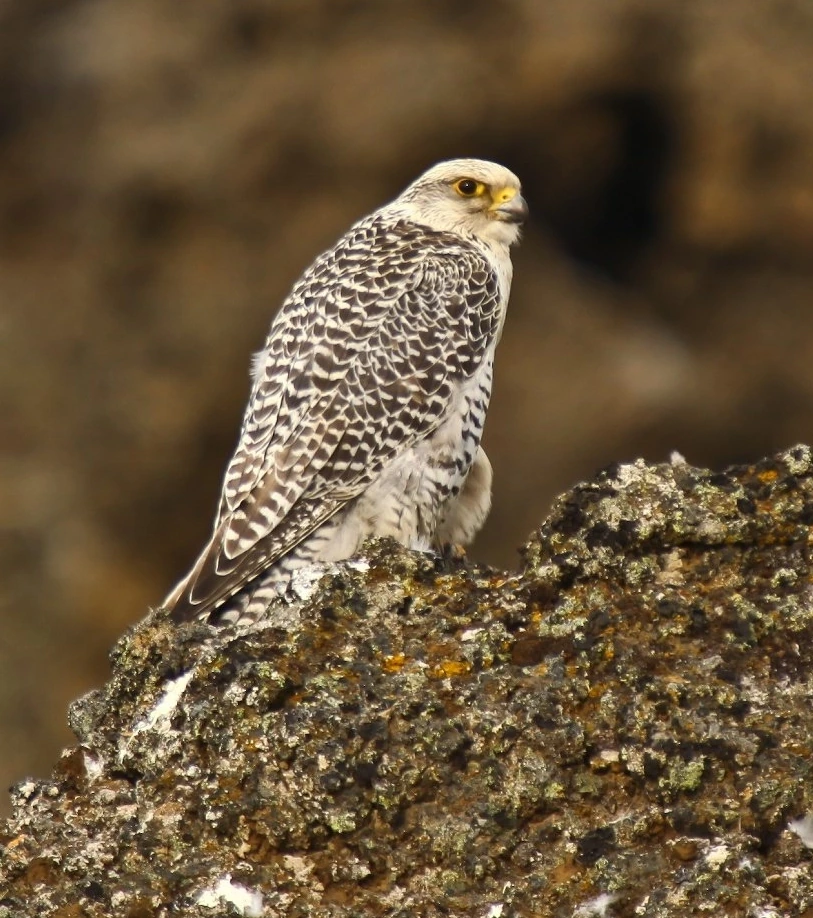
Iceland's National Bird: The Gyrfalcon
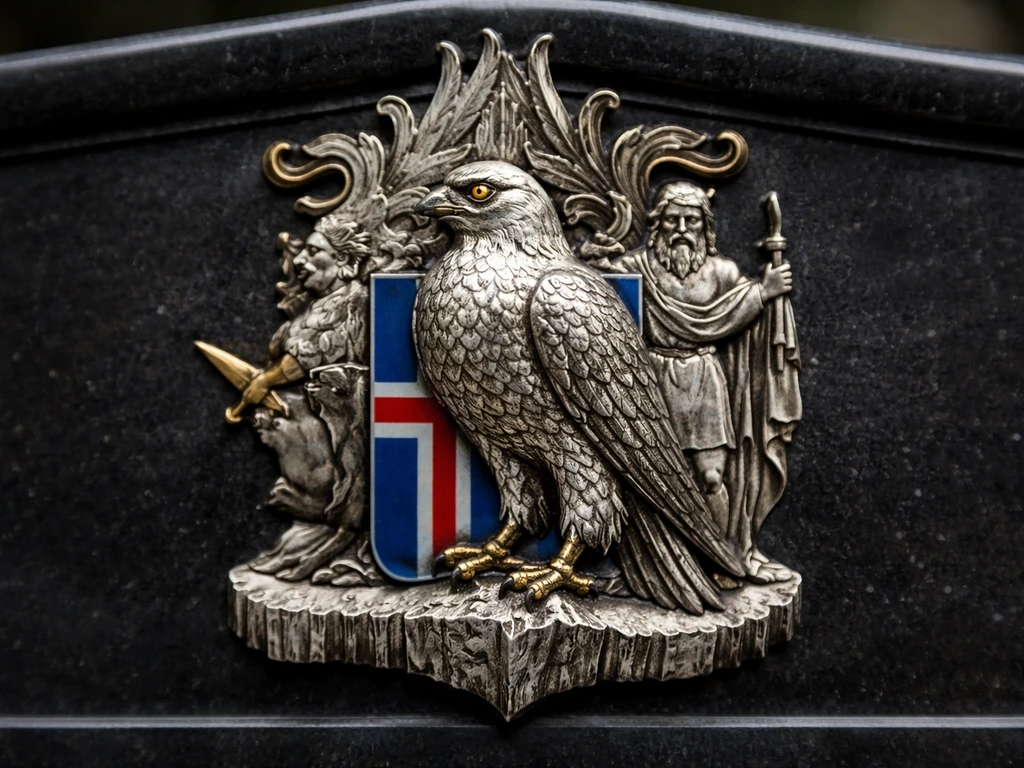
The gyrfalcon is widely and consistently cited as Iceland's national bird, and that reputation isn't arbitrary. The bird appears directly on Iceland's coat of arms, blank" rel="noopener noreferrer">described in a royal decree dated October 3, 1903, as "a white Icelandic gyrfalcon on a blue field." That heraldic link gives the gyrfalcon a level of official symbolic grounding that most other Icelandic birds simply don't have.
Then in 1921, King Christian X issued a royal decree founding the Order of the Falcon during his visit to Iceland, embedding the falcon symbol even more deeply into Iceland's national identity. Tourism sources like Guide to Iceland and Icelandia also use the phrasing "national bird of Iceland" explicitly, and they consistently name the gyrfalcon. So whether you're reading official heraldic records or a travel blog, the answer is the same.
Is It "Official"? Understanding What National Bird Means Here
This is worth clarifying, because it trips people up. Iceland doesn't appear to have a standalone legal declaration that says "the gyrfalcon is hereby designated Iceland's national bird" in the way some countries formally legislate their national symbols. The Government of Iceland's official communications refer to the coat of arms and national flag through decree language, but there's no equivalent decree specifically for a "national bird" title.
What Iceland does have is a bird that appears on its coat of arms by royal decree, on its national order, and in the vast majority of reputable national-symbols resources. In practice, that combination of heraldic and cultural endorsement is what makes the gyrfalcon function as the national bird, even if no single statute uses exactly that phrase. Think of it as a de facto national bird with very strong official heraldic backing, rather than a formally legislated emblem like some countries have.
History and Cultural Symbolism of the Gyrfalcon
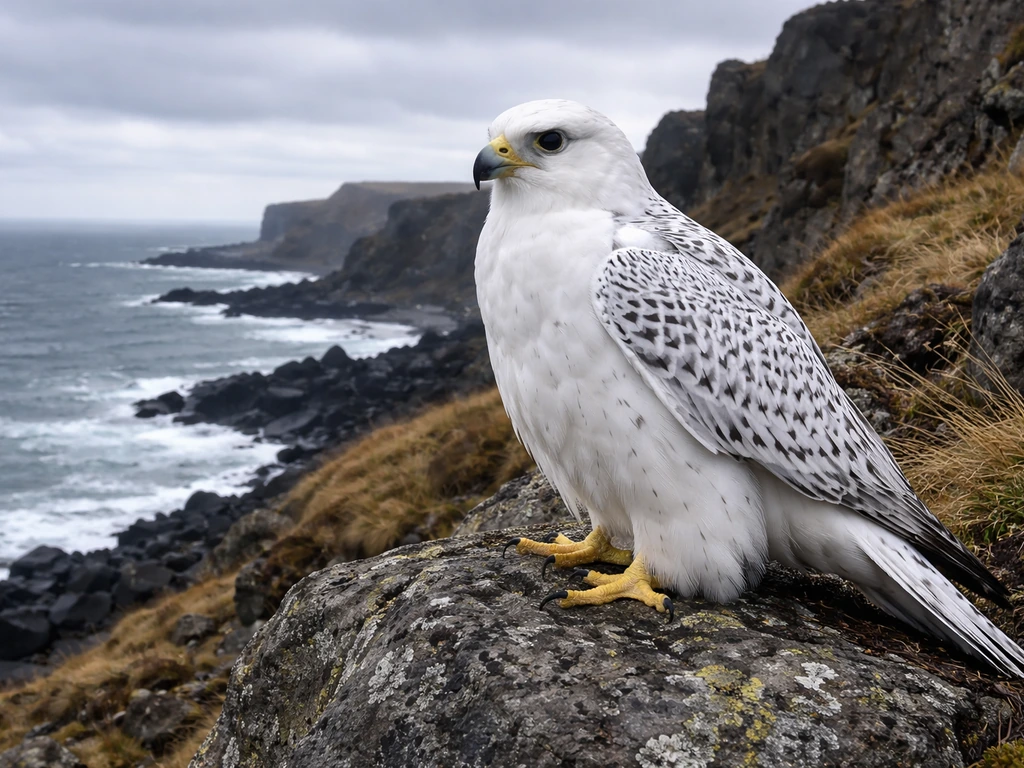
The gyrfalcon's symbolic history in Iceland runs deep. The 1903 royal decree establishing the white gyrfalcon on a blue shield as the coat of arms wasn't a random choice. Iceland had long been associated with the bird, and Icelandic gyrfalcons were historically prized across medieval Europe as prestige falconry birds. They were gifted between royal courts and considered among the most valuable birds a ruler could possess.
When the Order of the Falcon was established in 1921 during King Christian X and Queen Alexandrine's visit to Iceland, it formalized centuries of that symbolic tradition into a national honor. The Order of the Falcon remains Iceland's highest state honor today, and the imagery draws directly from the gyrfalcon's identity as a powerful, sovereign bird of the north.
That symbolism resonates with Iceland's self-image: a rugged, independent country at the edge of the Arctic, home to a bird that can survive and thrive in conditions most creatures cannot. The gyrfalcon is the largest falcon in the world, and in Iceland it occupies some of the most dramatic, remote cliff landscapes in the country. That fit between bird and place is part of why the symbol stuck.
What the Gyrfalcon Is Actually Like
If you want to recognize one or just understand what makes this bird special, here are the key facts.
Size and Appearance
The gyrfalcon is the world's largest falcon. It has a wingspan that can reach roughly 120 to 130 cm (around 47 to 51 inches) and a body length of about 50 to 60 cm. It comes in multiple color morphs, ranging from nearly pure white (the classic Arctic form) to dark grey or brownish. The white morph is the one historically associated with Iceland and is the form depicted on the coat of arms.
Habitat and Range in Iceland
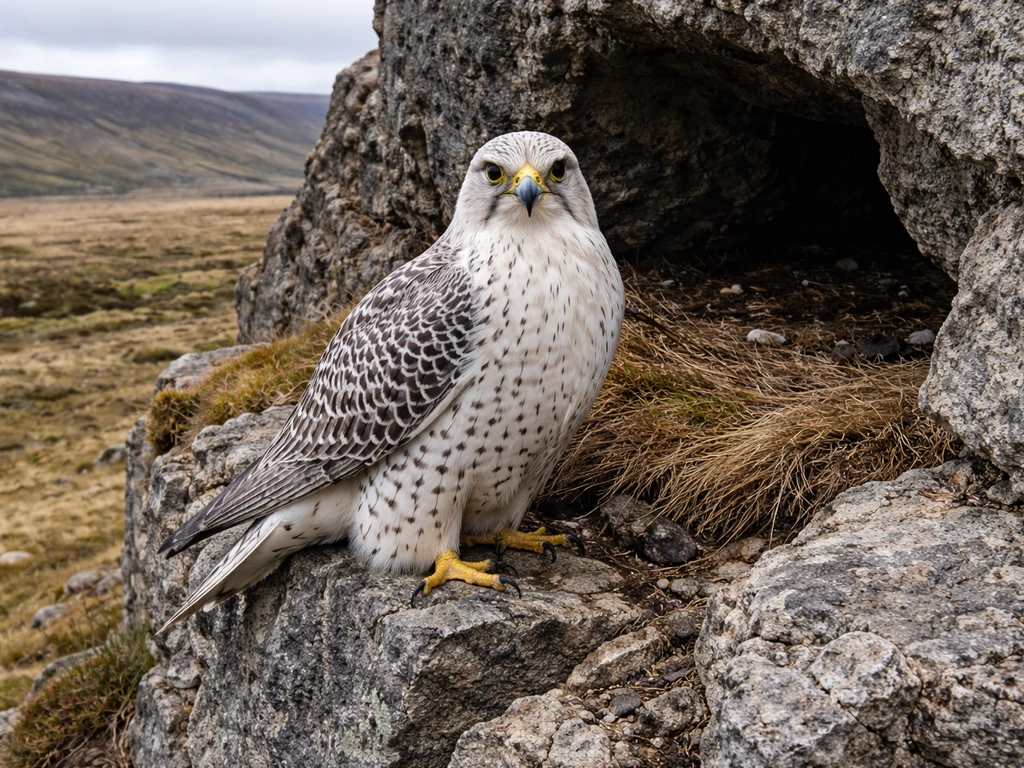
In Iceland, gyrfalcons breed across a wide range of habitats including polar desert edges, highland tundra, and alpine terrain. They prefer nesting on cliff faces with a ledge or overhang, and they typically don't build their own nests. Instead, they use bare cliff ledges or take over abandoned nests from ravens or other large birds. Iceland holds roughly 400 breeding pairs in a good year, which represents up to a quarter of Europe's entire gyrfalcon breeding population. That makes Iceland genuinely critical to the species' survival in Europe.
Behavior and Seasonality
Gyrfalcons are year-round residents in Iceland, not migratory visitors. They're apex predators in their environment, hunting ptarmigan, seabirds, and other prey with powerful, direct flight. Breeding season runs through spring and summer, with pairs often returning to the same cliff sites year after year. The Icelandic Institute of Natural History monitors breeding pairs annually, so the population data on this species is relatively solid compared to many other bird national symbols.
Stories, Folklore, and Cultural Mentions
The gyrfalcon's most persistent cultural role in Iceland is tied to falconry and medieval prestige. Icelandic white gyrfalcons were exported as gifts to European monarchs and Muslim rulers during the medieval period, making Iceland a supplier of one of the most valued luxury commodities of the era. A white gyrfalcon from Iceland was, at various points in history, worth more than a horse or a significant quantity of gold.
The Order of the Falcon, established in 1921, is the most formal and continuing cultural monument to this symbolism. Recipients of Iceland's highest honor are, in effect, being associated with the qualities the gyrfalcon represents: strength, independence, and mastery of a harsh environment.
It's also worth knowing that other birds carry strong cultural weight in Iceland without being the national bird. You may also wonder the same thing for Scotland, where the national bird is often asked about directly what is the national bird of scotland. The European golden plover, for example, is a beloved symbol of spring in Icelandic folklore, with the first sighting of a plover traditionally signaling winter's end.
Iceland even named the golden plover its "Bird of the Year" in 2021. And of course, the Atlantic puffin is everywhere on Icelandic souvenirs and is often mistakenly assumed to be the national bird by visitors. Neither bird has the heraldic and institutional backing of the gyrfalcon, but both illustrate why some sources get confused about which bird holds the title.
How to Verify the Claim (and What to Do When Sources Disagree)

If you come across a source claiming Iceland's national bird is the puffin, the golden plover, or another species, here's how to check it against something more reliable.
- Start with Iceland's coat of arms: The Government of Iceland's own documentation records the 1903 royal decree specifying a white gyrfalcon on a blue field. That's a primary heraldic source.
- Check the Order of the Falcon: The Presidency of Iceland (Forseti Íslands) documents the Order's founding in 1921 and its falcon symbolism. That's another official institutional anchor.
- Use the Icelandic Institute of Natural History (Náttúrufræðistofnun Íslands): This is Iceland's primary natural history authority. Its gyrfalcon monitoring program confirms the bird's genuine biological significance to the country, not just its marketing appeal.
- Treat tourism and travel sites as secondary: Sources like Guide to Iceland are useful and consistent, but they're drawing on the heraldic and cultural record above rather than creating it. Use them to confirm, not as the primary basis.
- Distinguish between 'national bird' and 'Bird of the Year': Iceland's annual Bird of the Year designations (like the 2021 golden plover) are cultural campaigns, not national symbol designations. A bird winning that title doesn't make it the national bird.
- Watch for the puffin confusion: The Atlantic puffin is Iceland's most photographed and merchandised bird, which is why it gets cited informally. But it has no heraldic or official symbolic standing comparable to the gyrfalcon.
When sources genuinely disagree, the tiebreaker is simple: which bird appears on Iceland's official state heraldry and its highest national honor? The answer is the gyrfalcon, and that's been true since at least 1903. Other birds may be culturally beloved, but the gyrfalcon is the one with the official symbolic record to back up the national bird title. If you are comparing how different countries name a national bird, you might also check what is the national bird of switzerland.
How Iceland Compares to Its Nordic and British Neighbors
It's interesting to compare how Iceland's choice stacks up against nearby nations. Some countries in the region selected their national birds through formal legislative acts; others, like Iceland, rely on heraldic tradition and cultural consensus. Scotland's national bird, Ireland's national bird, and Denmark's national bird each have their own stories and levels of official recognition. For Denmark, the national bird is commonly identified as the mute swan Denmark's national bird.
Ireland's national bird is the common chaffinch. If you're also curious about Scotland, the question to answer is what is the national bird of scotland. Switzerland has its own national bird too, and the answer is often listed in the same national symbols roundups what is the national bird of switzerland.
Denmark in particular shares some historical overlap with Iceland given the 1903 decree was issued by the Danish king during the period of Danish rule, so the heraldic connection between these countries is a real one worth exploring if you're digging into Nordic bird symbolism.
| Country | National Bird | Basis for Recognition |
|---|---|---|
| Iceland | Gyrfalcon (Falco rusticolus) | Royal decree (1903 coat of arms); Order of the Falcon (1921) |
| Scotland | Golden eagle | Cultural and heraldic tradition |
| Ireland | Northern lapwing | Popular vote / cultural recognition |
| Denmark | Mute swan | Officially designated national bird |
The gyrfalcon stands out in that group because its symbolic role is tied directly to state heraldry and a national order, giving it a stronger institutional footprint than birds chosen purely through popular vote or informal tradition.
FAQ
Why do some people say Iceland’s national bird is the puffin or the golden plover?
Those birds are extremely visible in Icelandic culture, especially the puffin on souvenirs and tourism branding, and the golden plover as a spring folklore signal. Visibility and tradition do not automatically equal official national-symbol status, and Iceland’s strongest “state” indicators point to the gyrfalcon instead.
Is there any Icelandic law that explicitly declares “the gyrfalcon is the national bird”?
In practice, there does not appear to be a single, standalone legal act that uses that exact national-bird wording. The clearer route is indirect, the gyrfalcon’s presence on state heraldry and its connection to the country’s top order provide the most reliable basis for treating it as the national bird.
If Iceland’s “national bird” is de facto, what should I use as the best verification method?
Use the pairing the coat of arms imagery plus the highest national honor (the Order of the Falcon). If a claimed national bird is not reflected in those state-level symbols, it is more likely a popular-culture “symbol” than the national-bird designation.
Are the “white Icelandic gyrfalcon” on the coat of arms and the gyrfalcon in general the same species?
Yes, they refer to the same species, the gyrfalcon (Falco rusticolus). The coat of arms depicts the white color morph, but the national-symbol choice is about the species and its historical association, not only one color variant.
Do Iceland’s gyrfalcons migrate, or are they present year-round?
They are generally year-round residents in Iceland rather than regular seasonal migrants. That matters because it strengthens the bird’s ongoing connection to the landscape, since it is present through breeding and non-breeding seasons.
Does Iceland’s Institute of Natural History monitor the gyrfalcon population?
Yes. Iceland’s population figures are supported by ongoing monitoring, particularly breeding pairs. That is useful because it reduces guesswork compared with birds where national-symbol claims are not tied to regular scientific tracking.
Is Iceland’s national bird the same as Iceland’s “Bird of the Year”?
No, those are different concepts. “Bird of the Year” can be assigned to highlight a species in a given period, while the national bird is about the country’s enduring national-symbol association, which in Iceland points to the gyrfalcon.
What’s a quick way to check a website’s claim that Iceland’s national bird is a specific species?
Look for whether the source ties the bird to official heraldry or the Order of the Falcon. If it only mentions tourism popularity, folklore, or general symbolism without state-symbol links, treat the claim as weaker than sources that connect to heraldic or institutional references.
Do any other birds have official state honors in Iceland, even if they are not the national bird?
The article’s examples focus on strong cultural roles for other birds, but the state-level heraldic and honor framework discussed centers on the gyrfalcon. If another bird had comparable official heraldic placement and a direct link to the highest honors, it would typically appear in the same verification trail.