Scotland's national bird: the golden eagle
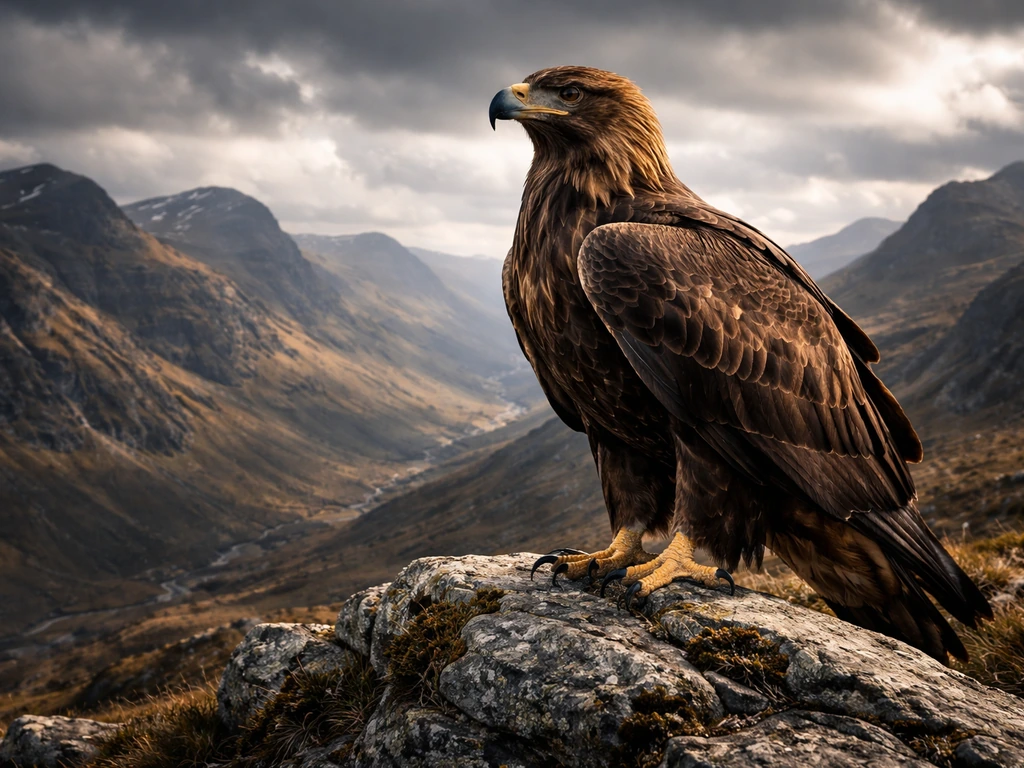
Scotland's national bird is the golden eagle (Aquila chrysaetos). It is widely recognized as the bird emblem of Scotland, celebrated for its connection to the country's wild upland landscapes and its commanding presence in Scottish skies. If you have been searching for a quick, definitive answer, that is it. But the fuller story is worth knowing, because the golden eagle's status comes with some nuance that actually makes it more interesting, not less.
What 'national bird' actually means in Scotland
Not every country has a formally legislated national bird the way some nations have officially codified national animals or flowers. Scotland is a good example of this. The golden eagle is consistently described as Scotland's national bird, but its status is best understood as widely recognized and culturally embedded rather than formally mandated by law. Sources like Macs Adventure explicitly label it the "unofficial national bird of Scotland," and the RSPB's own annual review echoes that framing.
This is actually pretty common globally. For context, even the robin's status as the UK's national bird came from a public vote promoted by The Times in the 1960s, not an act of parliament. Scotland's relationship with the golden eagle follows a similar pattern: it is rooted in cultural recognition and advocacy rather than a single formal declaration. That does not make it any less real as a symbol. It just means the title reflects genuine national sentiment rather than a bureaucratic checkbox.
Contrast this with something like the thistle, Scotland's national flower emblem, which has a much longer and more formally embedded history as an official heraldic symbol going back to medieval times. The golden eagle's recognition as a national bird is a more modern, civic-driven story, and that is part of what makes it worth following.
How the golden eagle became Scotland's bird symbol
The golden eagle has been admired in Scotland throughout human history. The National Trust for Scotland notes that its image has been "widely used in books and paintings" and ties it to enduring admiration across centuries. This is not a recently invented association. The bird's presence over Scotland's mountains and moorlands gave it a natural cultural gravity long before anyone wrote a petition about it.
The push to formalize that recognition gathered pace in the 2010s. In 2014, a public petition, PE1500, titled "Public Petition PE1500 on the Golden Eagle as the National Bird of Scotland," was heard at Holyrood by the Scottish Parliament's public petitions committee. The Scottish Raptor Study Group was among those supporting the move to formally designate the golden eagle. NatureScot also archived the petition, reflecting institutional awareness of the campaign.
Around the same time, RSPB Scotland ran a campaign with coverage in The Scotsman under the headline "Make golden eagle Scotland's national bird," pushing for the designation to be recognized more widely. The RSPB's own annual review for 2016-2017 referred to the golden eagle as an unofficial national bird. These efforts did not produce a single piece of legislation, but they did cement the golden eagle's public identity as Scotland's bird in a way that is now broadly accepted.
What the golden eagle represents for Scotland
NatureScot puts it well: the golden eagle is "symbolic for many people of Scotland's wild uplands." That phrase captures something genuine. Scotland's identity is deeply tied to its dramatic highland and moorland landscapes, and the golden eagle soaring over those places has come to represent that wildness, freedom, and rugged beauty. It is a bird that feels like it belongs to Scotland in a way that is hard to argue with.
The Scottish Wildlife Trust describes the golden eagle as the "top predator in the Scottish countryside," and that status matters symbolically too. As an apex predator, it sits at the pinnacle of Scotland's natural ecosystem. Choosing it as a national symbol is a statement about Scotland's wild character and its ecological heritage.
The bird also carries a sense of resilience. Conservation efforts, including the South of Scotland Golden Eagle Project licensed by NatureScot and supported by National Lottery funding, have translocated golden eagle juveniles to boost the low southern population. The fact that Scotland actively works to protect and restore its golden eagle numbers reflects how seriously the country takes this bird's presence. RSPB Scotland also highlights both Golden and White-tailed Eagles among the wildlife it supports across Scotland's habitats and natural areas both Golden and White-tailed Eagles among the wildlife supported by its work. It is not just a symbol on paper.
Golden eagle facts: what this bird is actually like
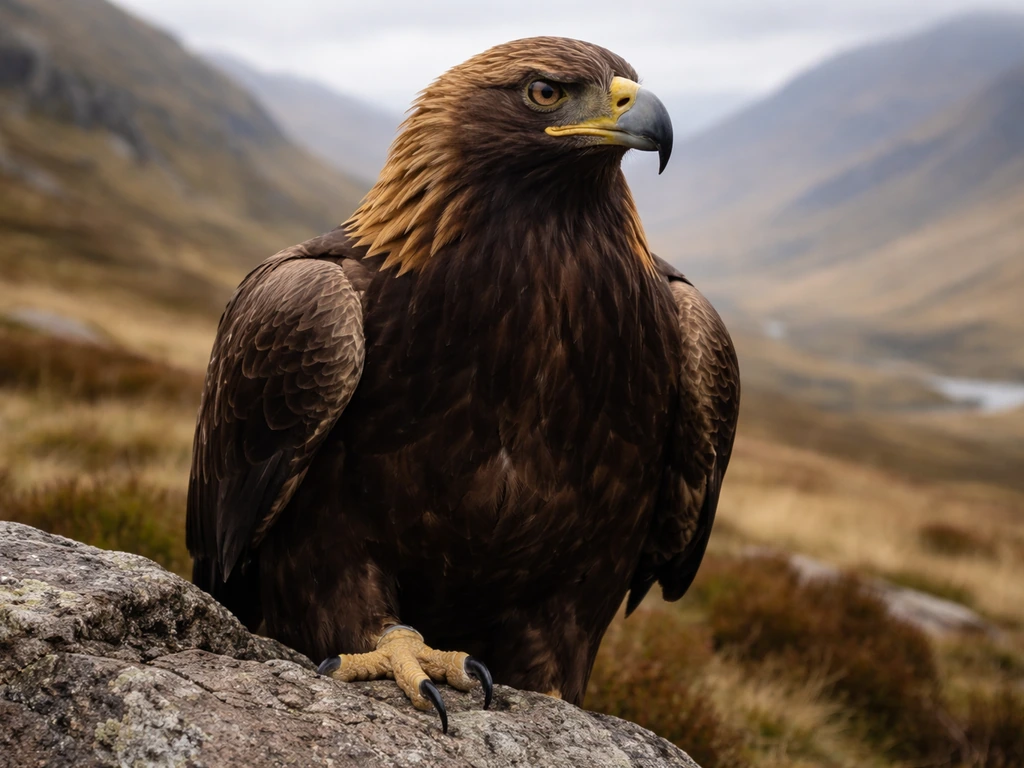
Size, appearance, and behavior
The golden eagle is a massive bird of prey. Its wingspan can reach up to 2.2 meters (roughly 7 feet), making it one of the largest birds you will encounter in Scotland. Adults are dark brown with a distinctive golden-buff coloring on the back of the head and neck, which gives the species its name. In flight, it soars on broad, long wings with a slightly upswept shape, and it can spot prey from enormous distances thanks to exceptionally sharp eyesight.
Diet and hunting
In Scotland, golden eagles mainly hunt rabbits and mountain hares, but they are capable of taking a wide range of prey. The Scottish Wildlife Trust, via The Wildlife Trusts’ wildlife explorer page, describes the golden eagle as the top predator in the Scottish countryside and says its main prey includes rabbits and mountain hares mainly hunt rabbits and mountain hares. The Scottish Wildlife Trust notes their diet also includes foxes, young deer, and large birds such as grouse. They hunt by quartering open ground at low altitude and then striking fast. Their combination of size, speed, and precision is a big part of why they are regarded as the top predator in Scotland's upland countryside.
Where to find them in Scotland
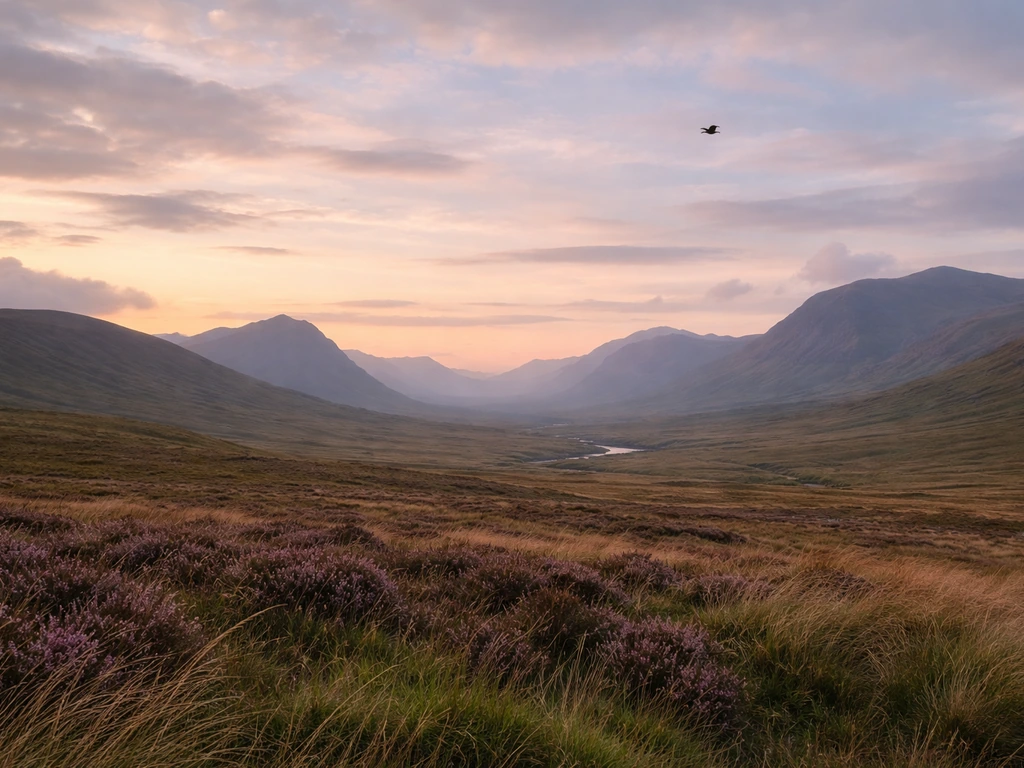
Golden eagles are rare but not impossible to spot if you know where to look. NatureScot describes them as a "rare bird of the mountains and moorlands of Scotland," and the 2015 national survey found 508 breeding pairs across the country. Forest and Land Scotland notes that "there are golden eagle territories in and around most of Scotland's upland forests," which gives you a broad geographic spread to work with.
The North-West Highlands are a particularly strong area. The National Trust for Scotland, which manages estates in locations like Kintail and Torridon, cites these landscapes as home to golden eagles. If you are planning a trip with any hope of seeing one, head for open, remote upland terrain in the Highlands. Early morning in spring or summer, when birds are most active around nesting sites, gives you the best odds.
| Feature | Detail |
|---|
| Scientific name | Aquila chrysaetos |
| Wingspan | Up to 2.2 meters (approx. 7 feet) |
| Weight | Roughly 3–6.5 kg depending on sex |
| Habitat in Scotland | Mountains, moorlands, upland forests |
| Diet | Rabbits, mountain hares, foxes, young deer, grouse |
| Breeding pairs (2015 survey) | 508 pairs recorded in Scotland |
| Conservation status | Protected; active reintroduction projects underway |
Common misconceptions worth clearing up
A few questions come up regularly around this topic, so here are quick answers to the most common ones.
- Is the golden eagle Scotland's official national bird? It is widely recognized as the national bird, but its status is civic and cultural rather than formally legislated. Think of it as the accepted national bird rather than a legally codified one.
- Is the red kite Scotland's national bird? No. The red kite is another magnificent Scottish raptor with a strong conservation story, but it is not associated with the national bird title. The golden eagle holds that place.
- Is the osprey Scotland's national bird? No. The osprey is another celebrated Scottish bird of prey, but again, the golden eagle is the recognized national bird.
- Does Scotland share a national bird with England? No. England is often informally associated with the robin (as part of the broader UK), while Scotland's symbol is the golden eagle. These are very different birds with very different cultural associations.
- Is the white-tailed eagle Scotland's national bird? No. Scotland has a healthy white-tailed eagle population following successful reintroductions, but the golden eagle is the national bird. The two species are sometimes confused because both are very large eagles.
Explore more national birds near Scotland
If Scotland's golden eagle has sparked your interest in national bird symbols across the region, there is plenty more to explore. Scotland's nearest neighbor Ireland has its own bird emblem with an equally fascinating story: you can read about the national bird of Ireland to see how that choice compares in terms of cultural symbolism and recognition.
Scandinavia and northern Europe also offer some interesting comparisons. Iceland's national bird is a good example of how island nations with dramatic landscapes tend to choose birds that reflect their wild environments, much like Scotland does with the golden eagle.
If you want to branch out further across Europe, the articles on Denmark's national bird and Switzerland's national bird each dig into the history and symbolism behind those choices, showing just how differently countries approach the idea of picking a bird to represent their national identity.