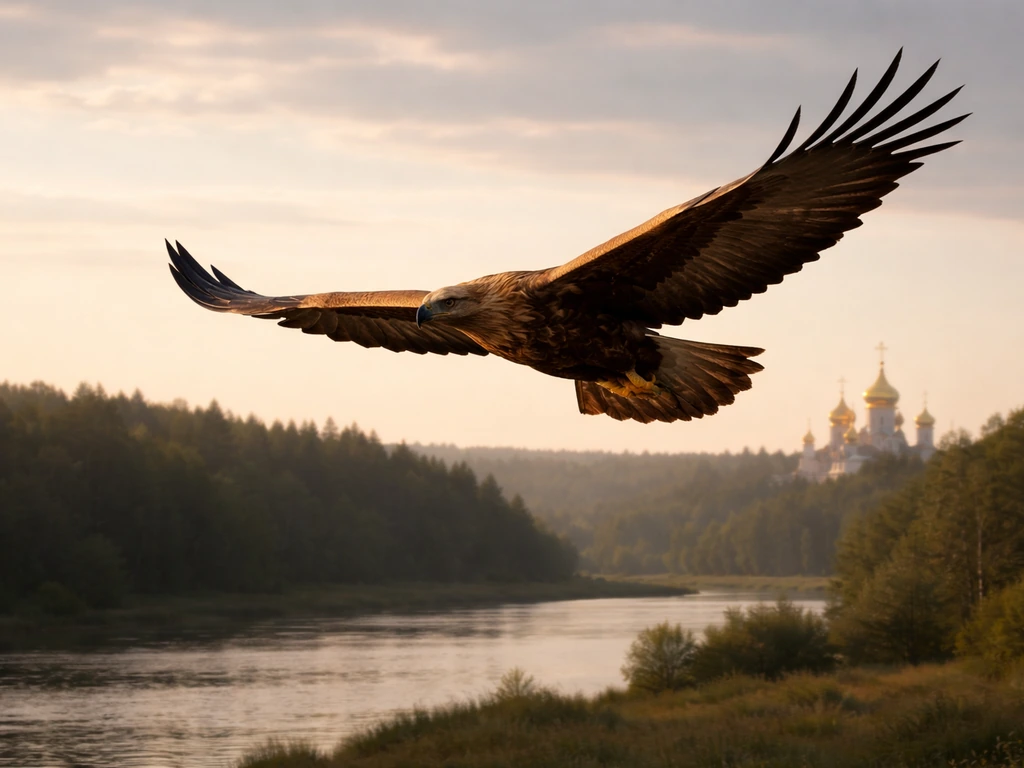
Russia does not have an officially designated national bird in the way that some countries do. There is no law or formal government decree naming a living bird species as Russia's official national bird. That said, the golden eagle (Aquila chrysaetos) is widely recognized as Russia's de facto national bird, meaning it is the species most commonly and credibly associated with the country in reference sources, even without a formal official appointment.
What Is Russia’s National Bird? Answer and Symbolism

Marcus Chen
11 Apr 2026
What 'national bird' actually means (and why Russia's answer is complicated)
The term 'national bird' can mean two very different things depending on the country. In some cases, it is a formal government designation backed by legislation or official decree. In others, it is simply a species that has become culturally associated with the country over time, appearing in reference lists and encyclopedias without any official backing. Russia falls firmly into the second category.
Russia's official national symbols, as described on the government's own website (gov. ru), include the national flag, the national anthem, and the national emblem. The national emblem features a prominent eagle, but that eagle is a heraldic symbol, not a species designation.
On Wikipedia’s overview of Russia’s national symbols, the “double-headed eagle” is treated as the national emblem and the heraldic eagle is not presented as a species-level national bird designation the national emblem eagle is a heraldic symbol, not a species designation.
The Kremlin’s official state-insignia description links the Russian coat of arms to a specific heraldic depiction: “a gold two-headed eagle,” under the federal constitutional law for the state coat of arms [the national emblem features a prominent eagle, but that eagle is a heraldic symbol, not a species designation. ](https://en. flag. kremlin.
ru/emblem/). No Russian federal law names the golden eagle, or any other bird, as the country's official national bird.
The bird most commonly cited: the golden eagle
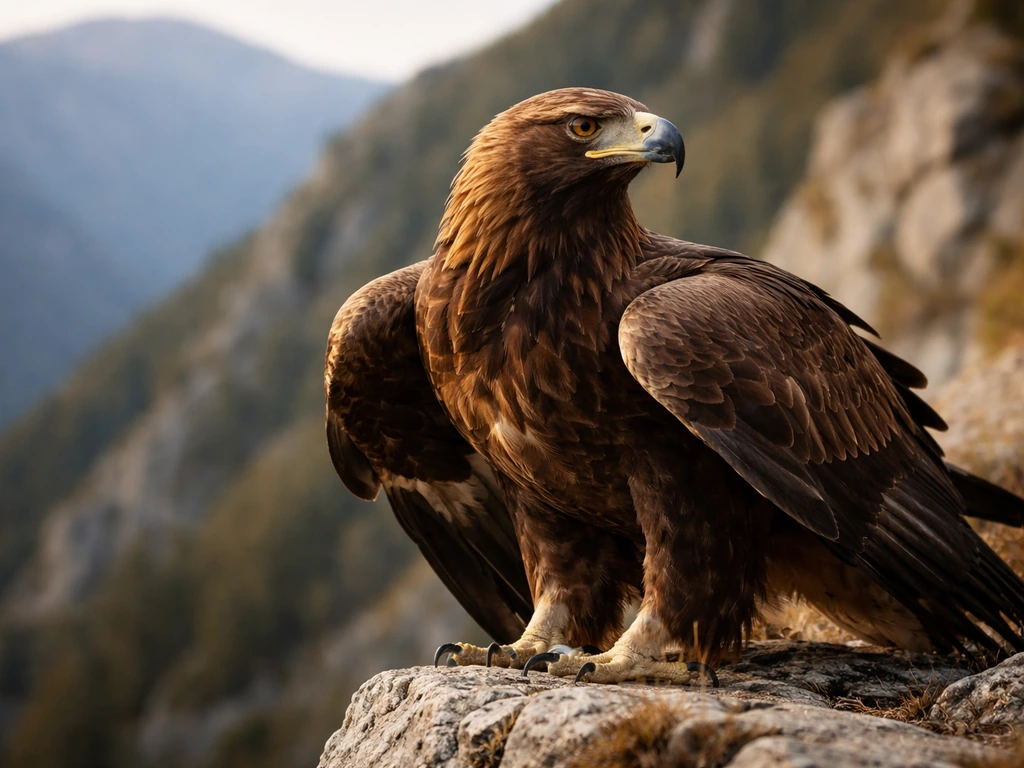
Wikipedia's structured page on the national symbols of Russia explicitly labels the golden eagle (Aquila chrysaetos) as the 'de facto national bird,' while keeping the double-headed eagle firmly in the 'national emblem' category. This is one of the clearest structured explanations you will find for how the two concepts are separate. The golden eagle is a real, living species that ranges widely across Russia, from European Russia through Siberia all the way to the Pacific region. It thrives in open country where tree cover is thin and gives way to open habitat, which describes vast stretches of the Russian landscape.
The golden eagle is a large, powerful raptor with a wingspan that can exceed 7 feet. It builds nests on cliff faces or in the largest available trees, and it is found across open habitats from tundra to grasslands. Its broad presence across the Eurasian continent, combined with its connection to eagle symbolism in Russian culture and heraldry, is what makes it the natural candidate for the de facto national bird label.
How the eagle became Russia's symbol: the history
The eagle's association with Russia runs deep, but the story starts with heraldry, not ornithology. The double-headed eagle first appeared as a Russian state symbol on the state seal of Ivan III in 1497, according to the State Duma's own historical account. Ivan III had strong ties to the Byzantine Empire through his marriage to Sophia Palaiologina, a Byzantine princess, and the double-headed eagle was already a prominent symbol of Byzantine imperial power. Russia essentially inherited and adopted the symbol as it positioned itself as the successor to Byzantium.
Over the following centuries, the double-headed eagle became inseparable from Russian imperial identity. It appeared on coins, medals, official documents, and banners. After the fall of the Soviet Union, the emblem was restored and codified under Federal Constitutional Law, cementing the double-headed eagle as the central figure of the Russian national emblem once again.
The transition from heraldic eagle to 'national bird' in the public consciousness happened organically. Because the eagle is so central to Russia's visual identity, reference sources began associating the golden eagle (the real-world species closest to the heraldic image) with Russia as a national bird. It was a cultural and symbolic transfer, not a government decision.
What the eagle means in Russian culture
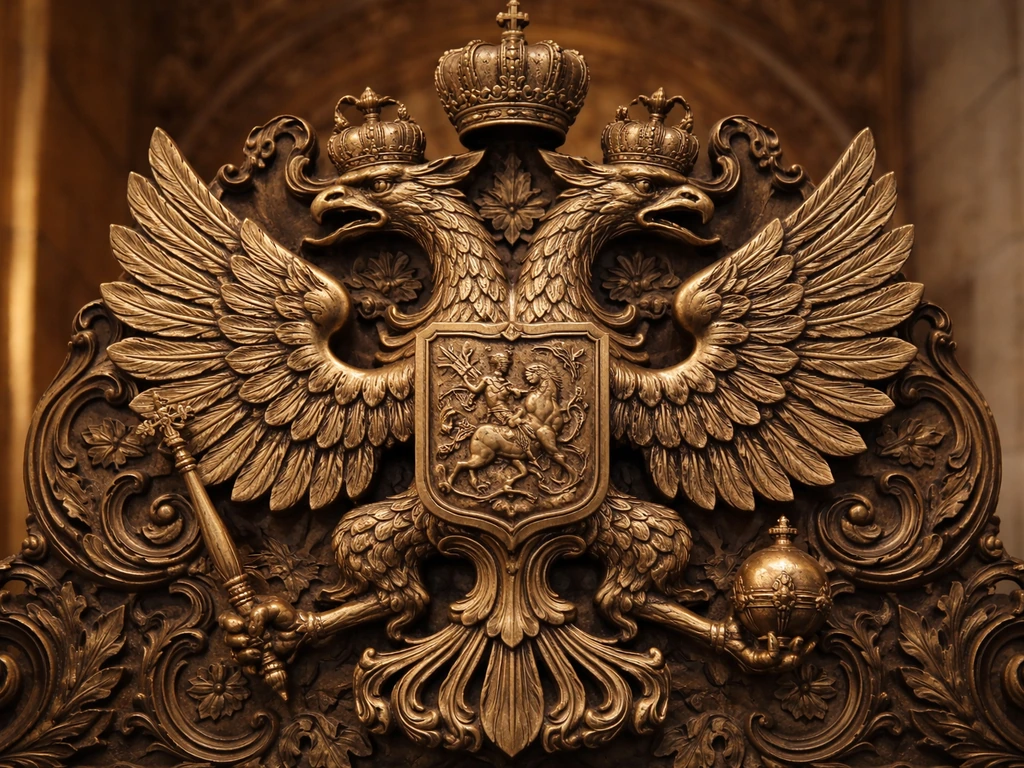
In Russian culture and folklore, the eagle has long represented power, sovereignty, and vision. The double-headed eagle in particular carries layers of meaning: the two heads traditionally face east and west, symbolizing Russia's dual identity as a nation that spans both Europe and Asia. It signals imperial authority, continuity with Byzantium, and a kind of watchful, all-seeing state presence.
This is quite different from how many other countries approach national bird symbolism. Comparing this to a country like the UK, for example, shows an interesting contrast. You can read about what the national bird of the UK is to see how a formal cultural selection process works. Russia's approach is much more tied to state power and imperial legacy than to a beloved or commonly sighted bird in the countryside.
The eagle also carries meaning in Russian folk tradition more broadly. Eagles in Slavic folklore were associated with the sky, the divine, and rulership. They were not just birds but cosmic symbols. That deeper cultural resonance is part of why the eagle, specifically, has never been displaced from Russia's national identity even as the country's political system changed dramatically over the centuries.
Why sources disagree and how to sort them out
If you have searched online and found conflicting answers, you are not alone. Some websites list Russia's national bird as the 'double-headed eagle,' which is not a real species at all. It is a heraldic motif. Other sites confidently say the answer is the golden eagle and imply it is officially designated, which overstates the case. A school-level encyclopedia might simply list 'eagle' under a national bird column without distinguishing between the emblem and a species. All of this creates a muddled picture.
Here is a simple framework for evaluating any source that claims to name Russia's national bird:
- Check whether the source cites a specific law, decree, or official government page. For Russia, no such law designating a national bird exists.
- Look at whether the source distinguishes between the national emblem (the double-headed eagle heraldic symbol) and a species-level national bird designation.
- Prefer structured reference sources like Wikipedia's national symbols page, which clearly labels things as 'de facto' when they are not officially codified.
- Treat compilation-style 'national birds of every country' lists with caution unless they explain their sourcing. Many of these lists blur the emblem/species distinction.
- If the source says the double-headed eagle is the national bird without noting it is a heraldic symbol, not a species, that is a red flag for inaccuracy.
This kind of careful sourcing matters especially for neighboring countries too. For instance, people researching the region often wonder about what the national bird of Ukraine is, and that country has its own distinct answer with its own symbolic history that is easy to conflate with Russia's if you are relying on low-quality list sites.
Official emblems vs national birds: a quick comparison
| Category | Russia's Answer | What It Means in Practice |
|---|---|---|
| Official national bird (by law) | None designated | No federal law names a living species as Russia's national bird |
| De facto national bird | Golden eagle (Aquila chrysaetos) | Widely cited in reference sources as the default answer |
| National emblem eagle | Double-headed eagle (heraldic symbol) | A stylized heraldic motif, not a real bird species |
| First appearance of eagle symbol | State seal of Ivan III, 1497 | Rooted in Byzantine heraldic tradition, not ornithology |
| Legal basis | Federal Constitutional Law (emblem only) | Covers the heraldic emblem, not a bird species designation |
Fun facts about the golden eagle for bird enthusiasts
If you are here as a bird enthusiast rather than just a trivia researcher, the golden eagle is genuinely worth knowing more about. It is one of the most widely distributed raptors on the planet, found across North America, Europe, Asia, and North Africa. Russia's vast territory, much of which consists of open tundra, steppe, and boreal forest edges, provides ideal habitat for the species.
- Golden eagles can reach wingspans of up to 7.5 feet (about 2.3 meters), making them one of the largest birds of prey in the Northern Hemisphere.
- They are famously agile for their size, capable of pursuing prey through complex terrain at high speed.
- Golden eagles nest on cliff ledges or in large trees, often returning to the same nest site year after year, adding material each season until nests become enormous.
- Across Russia, including Siberia and the Pacific Far East, golden eagles inhabit the open habitats and forest edges that define much of the country's interior landscape.
- The IUCN lists the golden eagle as a species of Least Concern globally, though local populations in some regions face pressure from habitat loss and human disturbance.
- In falconry traditions across Central Asia and Russia, golden eagles have been used as hunting birds for centuries, adding yet another layer of cultural connection to the species.
The golden eagle's connection to state symbolism is not unique to Russia. Several countries use eagle imagery in ways that overlap with their real-world bird populations. If you are curious about how this plays out in different cultural contexts, the story of why the robin became the national bird of England offers a fascinating counterpoint: a small, familiar garden bird chosen through a popular vote rather than centuries of imperial heraldry.
Where to look next
If you want to keep exploring national bird symbolism in the broader European and Eurasian region, there are some interesting rabbit holes nearby. The intersection of city identity and bird symbolism is one of them. For example, what the national bird of London is turns out to be a surprisingly layered question given that London is a city rather than a country, and the answer reveals how local identity and national identity can diverge when it comes to bird symbolism.
The short version on Russia: the golden eagle is your best and most credible answer when someone asks for Russia's national bird. Just be clear-eyed about the fact that it is a de facto designation rooted in cultural association and heraldic tradition, not an officially legislated choice. That distinction matters if you are doing serious research, writing a paper, or just want to give an accurate answer rather than repeat a common oversimplification.
FAQ
What should I answer if someone asks for the official national bird of Russia?
If you need a strict, research-grade answer, say “no official national bird has been designated by law,” and then add that the golden eagle is the most common de facto association. This avoids treating a cultural shorthand as an official appointment.
Why do some sources say the double-headed eagle is Russia’s national bird?
The “double-headed eagle” is a heraldic motif found on Russia’s national emblem, not a living bird species. A real species species closest to the heraldic image, commonly used in references, is the golden eagle (Aquila chrysaetos).
Should I say “golden eagle” or “no official national bird” in my paper?
For a school report or casual trivia question, “golden eagle” is usually the safest de facto answer, but include a one-line caveat that it is not officially legislated. For essays or citations, use the stricter phrasing about “no official national bird” plus the de facto association.
How can I tell whether a country’s national bird claim is official or just cultural?
You can treat “national bird” in Russia as a classification problem: (1) official state symbols versus (2) culturally associated species. Russia fits category (2), so focus on reputable references that explicitly distinguish de facto associations from official designations.
In Russia, where would someone realistically expect to find the golden eagle?
Russia covers many habitats, but golden eagles are most often linked with open country where tree cover is limited, including tundra and steppe margins. If someone asks about “where you can see it in Russia,” emphasize open landscapes rather than dense forest.
Does the golden eagle’s real-world presence in Russia make it an official national bird?
The golden eagle is widely distributed across Eurasia, but its presence does not automatically mean it is the official national bird. In Russia’s case, the symbolic link is driven by heraldry and identity, then aligned with the real species most similar to the emblem’s eagle imagery.
What red flags should I look for when verifying online claims about Russia’s national bird?
If you want a quick fact-check, watch for wording like “officially designated” or “named by government,” because those claims are the ones most likely to be wrong for Russia. When you see uncertainty, prefer sources that explicitly label “de facto” and explain the emblem versus species difference.
What is the simplest accurate one-sentence answer?
When giving an answer in conversation, you can say: “Russia does not have a legislated national bird, but the golden eagle is commonly treated as the de facto national bird.” This covers both accuracy and the common expectation.
How is Russia’s national-bird story different from countries that choose theirs through popular votes?
Yes, comparisons help. Some countries use popular votes or formal cultural processes to pick a national bird, while Russia’s “bird” association largely evolved from state heraldry and imperial symbolism, later mapping onto a real eagle species.
Next Article
What Is the National Bird of Zimbabwe? Symbolism and Facts
Discover Zimbabwe’s national bird, its distinctive traits, and the history and symbolism behind the emblematic choice.