The robin is widely described as England's national bird, but it has never been officially designated as one. The robin is widely described as England's national bird, but it has never been officially designated as one. There is no law, royal proclamation, or government order making it official. What actually happened is that a 1961 poll publicised by The Times voted the robin the nation's favourite bird, and that popular result stuck in the public imagination. Since then, the robin has been treated as an unofficial national bird of Britain (and by extension England), but Parliament has never formally recognised it. That is the honest, direct answer.
Why Is the Robin the National Bird of England?

Marcus Chen
14 May 2026
What 'national bird' actually means here
The phrase 'national bird' can mean very different things depending on the country. In some places it is written into law or enshrined in a constitution. In others it is declared by a government ministry. For England specifically, there is no equivalent process.
England does have official national symbols, including the Three Lions and the Tudor Rose, but no bird appears on that list. The same is true at the UK level: a UK Parliament Early Day Motion has explicitly noted that there has never been an officially recognised national bird of the UK, and called on government to formally appoint one.
The UK as a whole does not have an officially recognised national bird, which is why answers about England often come with an “unofficial” caveat officially recognised national bird of the UK. So when people say the robin is England's national bird, they are drawing on popular culture and tradition rather than any legal or governmental designation.
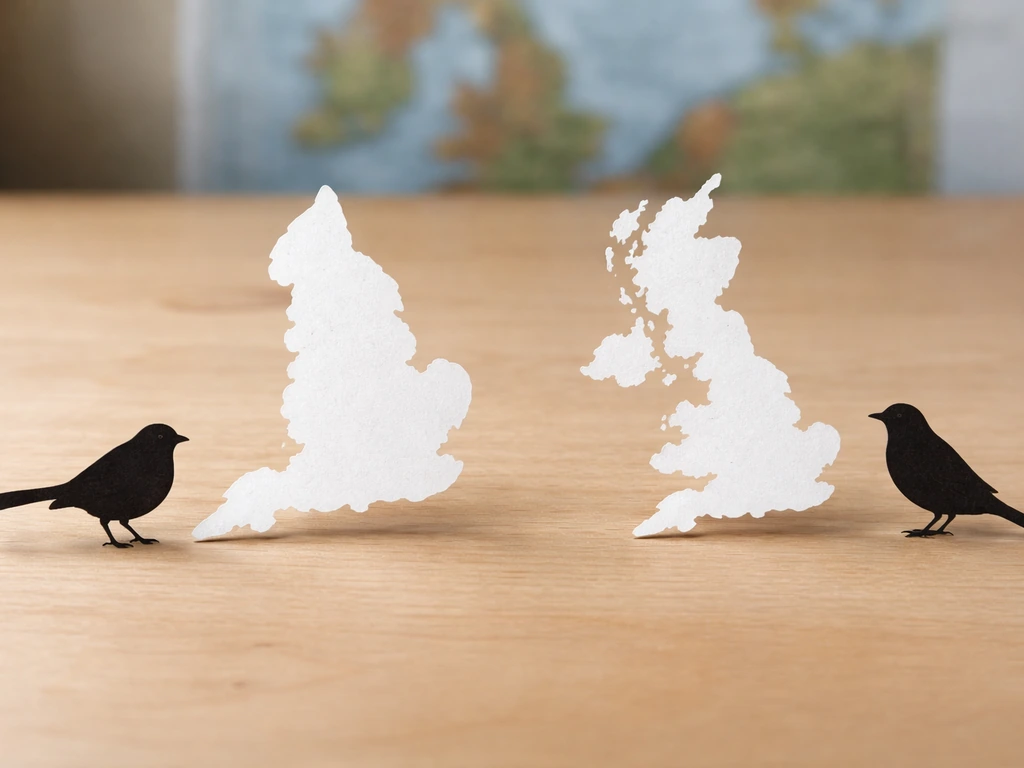
It is also worth keeping a basic geography point in mind. England is one of four nations within the United Kingdom, so there is a genuine question about whether any bird designation would apply to England specifically or to the UK as a whole. Most polls and petitions on this topic have used 'Britain' or 'UK' language rather than 'England' alone, which adds another layer of ambiguity to the claim.
Is the robin officially tied to England or the UK?
No, it is not official at either level. The Conservation Volunteers' Robin Factfile puts it plainly: 'No official status exists.' A UK Parliament e-petition titled 'Please sign the petition for the Robin to become our official National Bird' frames the status the same way, asking for official recognition that has not yet been granted. The Smithsonian described the robin as having been 'elected only informally in the 1960s.' The Guardian has consistently reported that the robin 'has never been officially recognised as a national bird.' Every credible source tells the same story: popular vote, strong cultural attachment, no formal recognition.
In 2015, a high-profile public vote organised through the VoteNationalBird campaign and covered widely by BBC News resulted in the robin topping the poll again. That renewed attention boosted the robin's reputation, but the result was still just a poll. It carried no legal weight, and no government body acted on it. The robin remains in an unofficial but widely accepted position.
How the robin became linked to England's identity
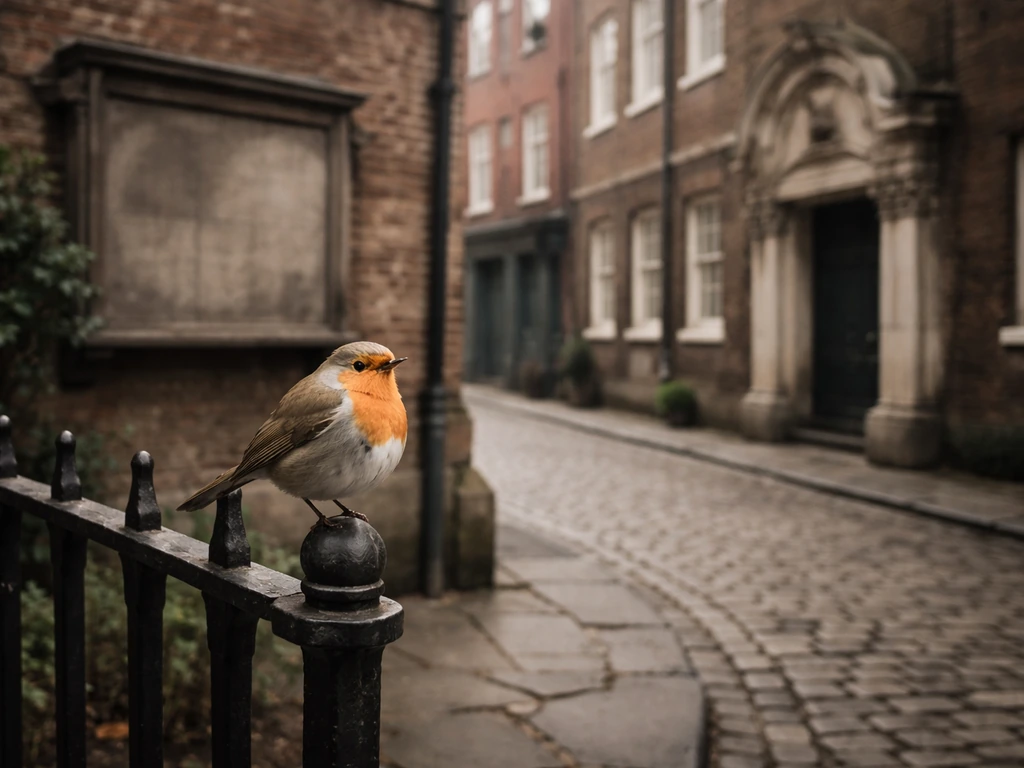
The robin's association with England runs much deeper than any modern poll. An essay in the Gentleman's Magazine from 1735 already noted 'great Superstition among the Common People of England' surrounding the Robin Redbreast, showing the bird had deep folk significance centuries before anyone thought about national-bird designations. The traditional ballad 'The Children in the Wood' includes the robin covering the bodies of dead children with leaves, a tender image that cemented the bird's role in English moral folklore as a protector and companion.
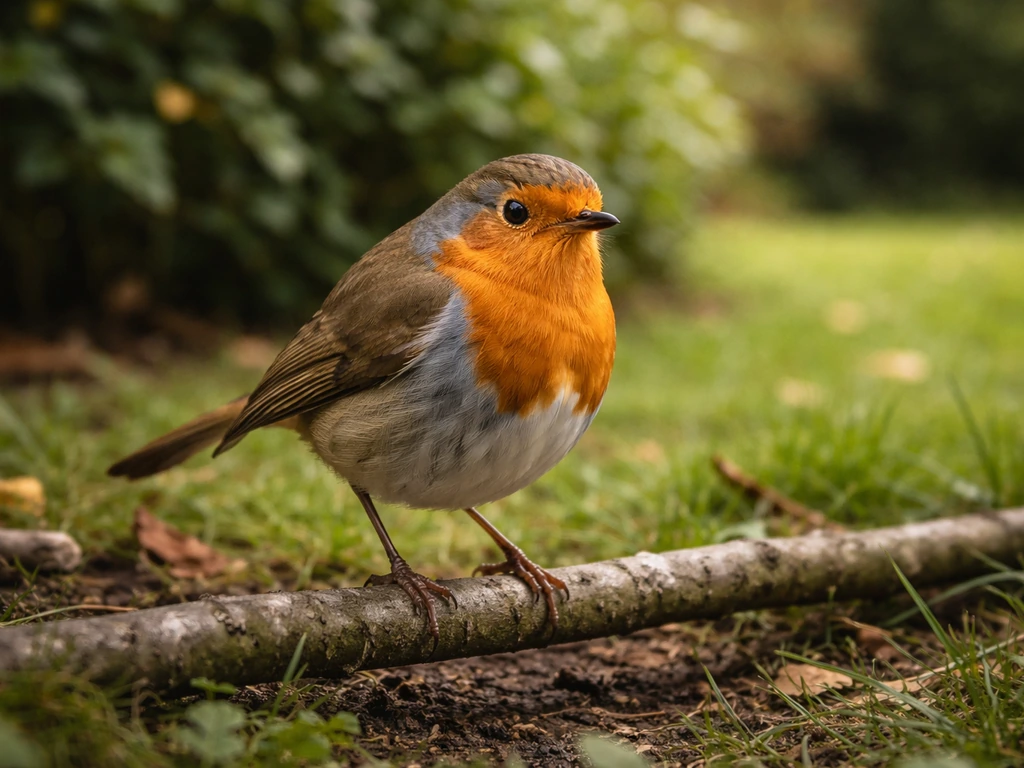
Part of why the robin embedded itself so firmly in English identity is simply behaviour. Robins are bold, curious birds. They follow gardeners, perch nearby while you dig, and show almost no fear of people. The BTO describes the robin as 'one of our most familiar birds,' specifically because of its red breast and its habit of living in close proximity to humans. One BTO garden bird study in Shropshire found robins reported in 93% of surveyed gardens. When a bird is that present in everyday life, it naturally becomes part of a nation's self-image.
Christmas cards, folklore, and the 'postman robin' story
The robin's lock on English cultural identity accelerated dramatically in the Victorian era, and Christmas is the main reason. In the 1860s, when the penny post transformed Christmas card sending into a mass phenomenon, the postmen who delivered those cards wore red uniforms and became nicknamed 'Robins.
The Battersea Bus site explains that, as Christmas cards grew more popular, they increasingly showed robins, including as a perch for a singing robin and in the “postman robin” idea tied to red-uniform postmen delivering letters postman robin idea tied to red-uniform postmen delivering letters.
' Illustrators and card designers began depicting actual robins delivering letters, a clever visual pun that played on the nickname. The New Statesman traces this connection directly: postmen's red waistcoats earned them the robin nickname, and the bird then served as a symbolic stand-in for the postman on Christmas cards.
That imagery snowballed. By the late Victorian period robins were a standard feature on Christmas cards, often shown perched on snowy letter boxes or carrying envelopes. The Game and Wildlife Conservation Trust notes that by the 1860s illustrations showed Britain's favourite bird on Christmas cards 'carrying a letter in its beak.' That image became so embedded in English Christmas tradition that even today robins and Christmas are essentially synonymous in England. The RSPB explicitly describes the robin as a 'Christmas staple' and 'the UK's favourite bird,' which reinforces how deeply the seasonal association runs.
Beyond Christmas, the Woodland Trust calls the robin a 'gardener's best friend,' again tying it to the kind of ordinary, domestic English life that makes a creature feel like it belongs to the nation rather than just living in it.
Why people choose the robin above all other birds
Three factors combine to explain the robin's dominance in this conversation: visibility, familiarity, and meaning. Visibility because the robin is genuinely everywhere, in gardens, parks, hedgerows, and woodland edges across England year-round. Familiarity because its red breast makes it instantly recognisable even to people with no interest in birds at all. And meaning because centuries of folklore, ballads, and Christmas tradition have loaded the bird with emotional and cultural weight that most other species simply do not carry.
When the Times poll was conducted in 1961 and again when the VoteNationalBird campaign ran in 2015, the robin won not because it is the rarest or most spectacular bird in England, but because it is the most personally familiar. Ordinary people have a relationship with robins in a way they do not with, say, a barn owl or a red kite. That personal connection is exactly what makes a bird feel like a national symbol.
Birds that often get confused with England's national bird
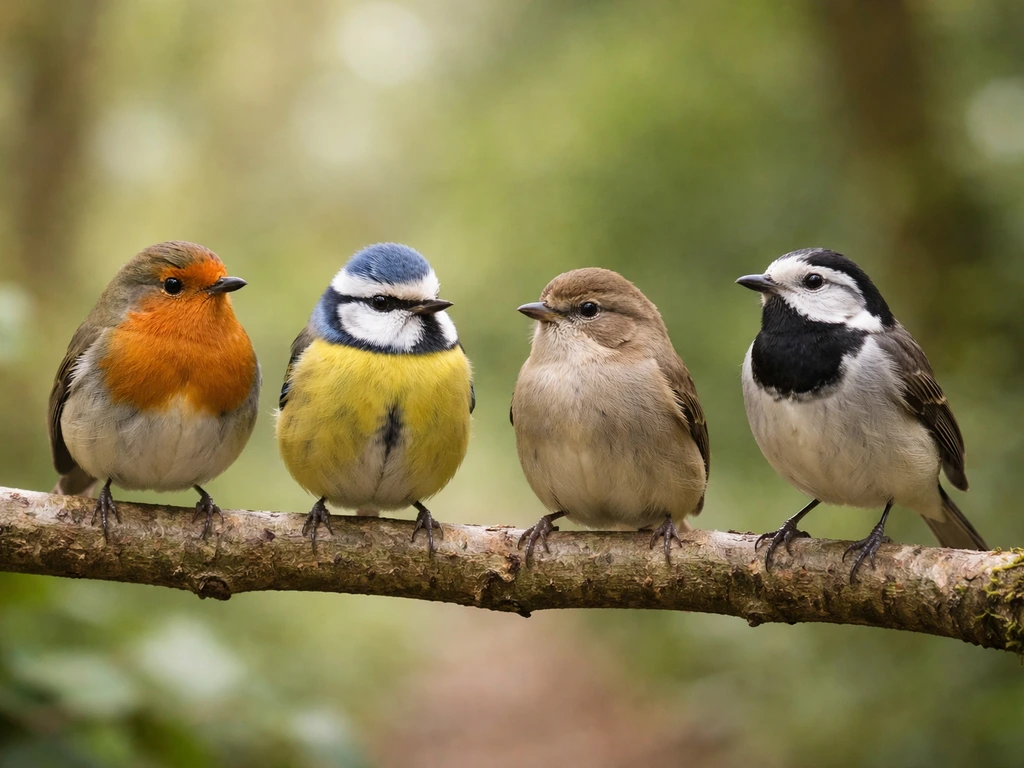
Because there is no official designation, people regularly cite other birds in the same breath, and it is easy to see why. Here are the main alternatives and why they keep coming up.
| Bird | Why it gets mentioned | Why it is not 'the' national bird |
|---|---|---|
| Wren | The most numerous wild breeding bird in the UK according to the BTO; also featured in historic traditions including appearing on the old farthing coin | Did not win the 1961 or 2015 polls; far less visible to most people than the robin despite its numbers |
| Red Kite | Frequently cited in national-bird polls and debates; a conservation success story in England making it emotionally resonant | A reintroduction success rather than a deep cultural emblem; limited everyday visibility compared to the robin |
| Barn Owl | Topped some informal polls; seen as quintessentially English countryside | Not a garden bird; lacks the daily familiarity and Christmas-card cultural weight of the robin |
| Kingfisher | Stunning and iconic; featured as a finalist in the 2015 national bird vote | Specialist habitat bird; most people rarely see one, reducing the 'everyday England' feeling |
| Mute Swan | Linked to the Crown through the ancient Crown ownership tradition; majestic and widely recognised | A Crown symbol rather than a people's symbol; no polling evidence it is considered England's bird by the public |
| Red Grouse | A UK Parliament Early Day Motion specifically proposed it as the UK national bird | Associated with Scottish and northern English moorland shooting estates, not with everyday English life |
The mute swan sometimes causes particular confusion because of its royal associations. Swans on certain English waterways are technically Crown property, which leads some people to treat the swan as an official English or British symbol. It is not a national bird in any formal or popular sense. Similarly, the red grouse confusion is worth noting because a Parliamentary motion proposing it as the UK national bird sometimes appears in searches alongside robin discussions, but that motion never passed and the grouse never gained popular support.
The bottom line and where to verify it
The robin is England's national bird in cultural and popular terms only. If you are asking directly what the national bird of London is, the robin is the answer people usually mean, but it is still not officially designated by government. It [won a public poll in 1961 publicised by The Times](https://feeds. bbci.
co. uk/news/uk-33090043), and it won another high-profile vote in 2015. It carries centuries of English folklore, Christmas symbolism, and garden-bird familiarity that no other species can match. But it has never been officially recognised by any government body, and England has no legal national bird at all.
If you want to describe the robin as England's national bird, you are on solid ground as long as you add the word 'unofficial. ' If you need a strictly formal answer for schoolwork or a reference document, the honest answer is that England does not have an officially designated national bird.
To verify this for yourself, the most reliable sources are the BTO (British Trust for Ornithology) and the RSPB, both of which describe the robin's cultural status accurately without overstating it. The UK Parliament's own Early Day Motion records also confirm the absence of any official designation. Those three sources together give you everything you need to cite the robin correctly and confidently.
If you are exploring the wider picture of national birds across the British Isles and nearby countries, it is worth knowing that the UK as a whole faces the same ambiguity England does when it comes to an official bird. While the robin is often treated as England's national bird, Ukraine has its own national bird answer national bird across the British Isles. Other European nations nearby have made firmer choices, and comparing those decisions helps illustrate just how informal the English and British tradition really is.
FAQ
If England has no official national bird, is it still okay to say the robin is England’s national bird in everyday conversation?
Yes, in everyday conversation it is commonly understood as a cultural shorthand. The safest phrasing is “unofficially regarded as England’s national bird,” especially if you are writing something that might be checked for factual precision.
What should I write for a strict “official” answer, for example in an essay or school assignment?
Use a two-part answer: (1) England has never officially designated a national bird by law or government action, and (2) the robin is widely popularized as the unofficial favorite, especially after the 1961 poll and the 2015 campaign. This covers both accuracy and the reason people keep repeating the robin claim.
Does the lack of an official designation mean robins are legally protected in special “national bird” ways?
No. Unofficial national-bird status does not create special legal protections by itself. Any protection robins have comes from general wildlife laws and conservation rules, not from their cultural label.
Would a UK-wide “national bird” designation automatically make the robin England’s national bird too?
No. Even at the UK level, there has been no formal national-bird appointment. So there is no automatic transfer from UK symbolism to England, which is why you still see “unofficial” caveats attached to the robin.
Do polls like the 1961 Times result or the 2015 VoteNationalBird vote have any official standing?
No. They are public votes, not government decisions. They help explain why the robin became entrenched in public imagination, but they do not create any legal status or enforceable designation.
How can I avoid mixing up “England,” “Britain,” and “UK” when answering this question?
State the scope you mean. “Britain” and “UK” typically refer to the whole political grouping, while “England” is only one constituent nation. Because most campaigns and surveys use broader language, the robin claim is usually about cultural belief across the islands rather than a formal England-only designation.
Are there any other birds that people cite as a national bird, and how should I handle that in a comparison?
Yes, people often bring up the mute swan because of royal associations, and the red grouse because it appears in search results tied to parliamentary ideas. The key is that these citations still do not amount to an official designation for England, so treat them as competing suggestions rather than established symbols.
If someone says “the robin is the national bird of London,” is that accurate?
It is accurate only in the same unofficial, popular sense. London does not have a government-designated national bird either, so the robin is what people usually mean culturally, not what an official authority has appointed.
If I want to fact-check quickly, where should I look without getting misled by myth or retellings?
Prioritize references that explicitly address official status and parliamentary or ornithological records, rather than articles that only repeat the “national bird” label. In particular, check whether a source distinguishes “unofficial popular choice” from “officially designated by government.”
Next Article
What Is the National Bird of Ukraine? Meaning and History
Discover Ukraine’s national bird, why the trident is linked to it, and the symbolism and history behind the choice.