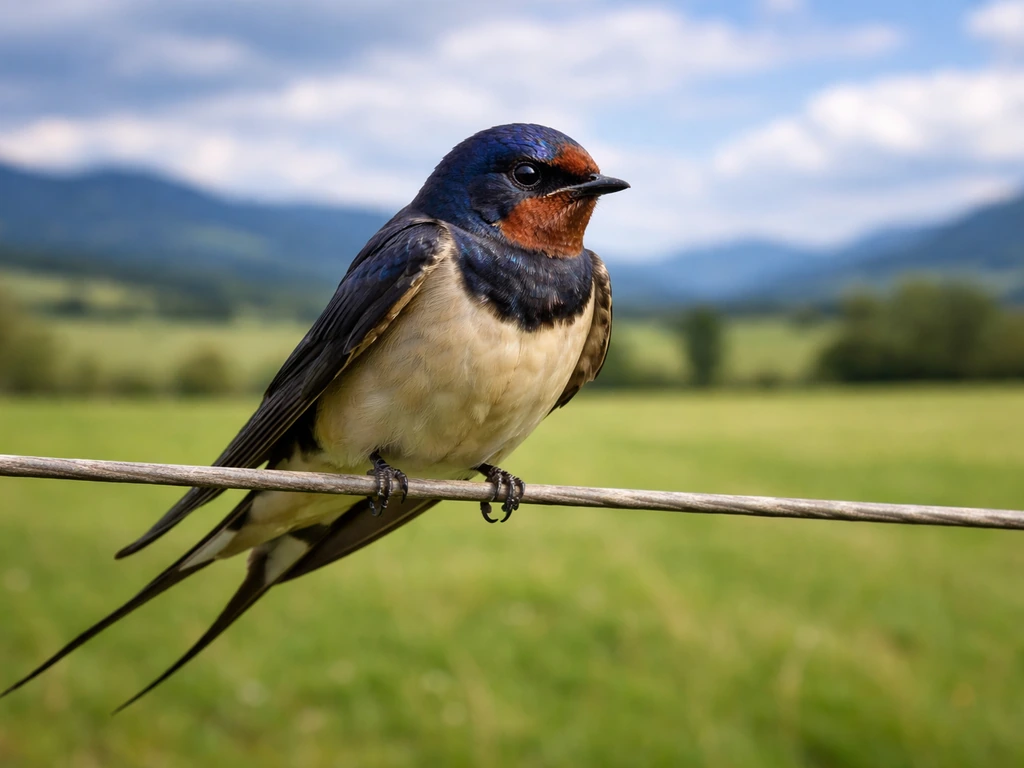
Austria's national bird is the Barn Swallow (Hirundo rustica), known in German as the Rauchschwalbe. It was officially selected on 12 April 1962, though that designation was short-lived, by 1964 a different bird had taken its place. Despite that brief formal tenure, the Barn Swallow remains the bird most consistently cited in both German and English references as Austria's national bird, and it is the answer you will find repeated across BirdLife Österreich materials and ornithological sources today.
What Is the National Bird of Austria? Answer and Meaning

Marcus Chen
30 Apr 2026
A quick note on the confusion you might run into
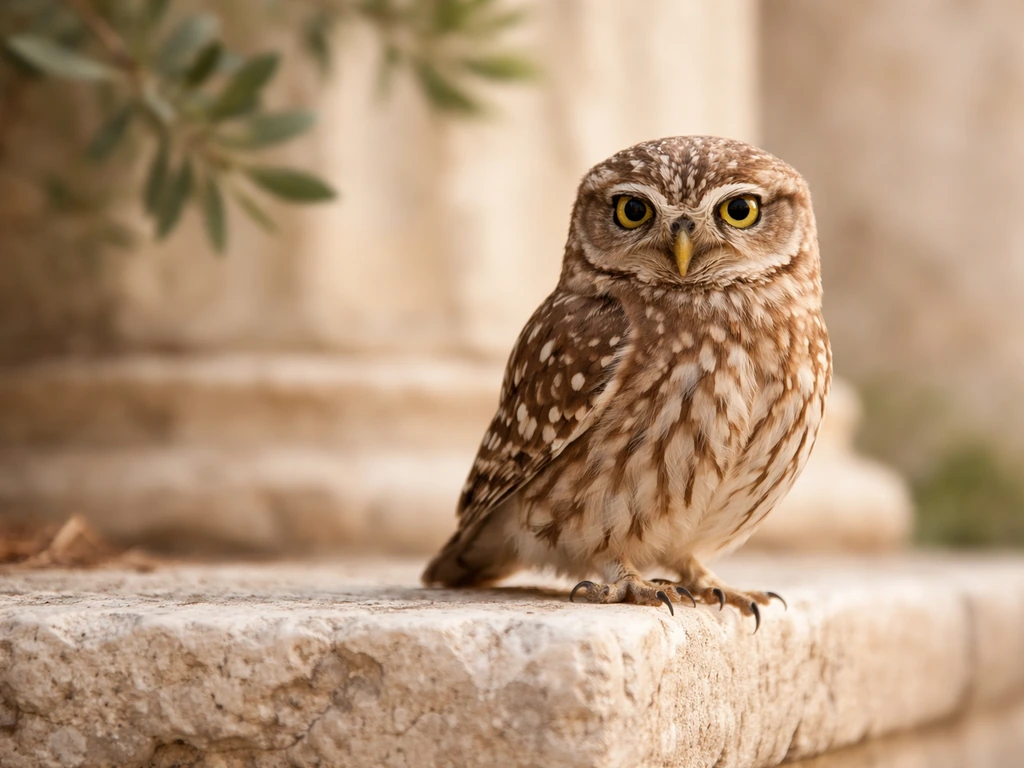
If you have already searched around a bit, you may have seen references to an eagle as Austria's national bird. That confusion comes from Austria's federal coat of arms, the Bundesadler, which features an eagle as a heraldic state symbol. The eagle is a powerful visual presence in Austrian official imagery, but it is a heraldic symbol, not a designated national bird. Some aggregator-style websites conflate the two, listing the eagle as both the national animal and the national bird. If you are comparing national birds across Europe, Romania has its own official national bird as well what is the national bird of romania. For the specific question of national bird, the Barn Swallow is the correct answer across the most authoritative ornithological sources.
How and when Austria chose the Barn Swallow
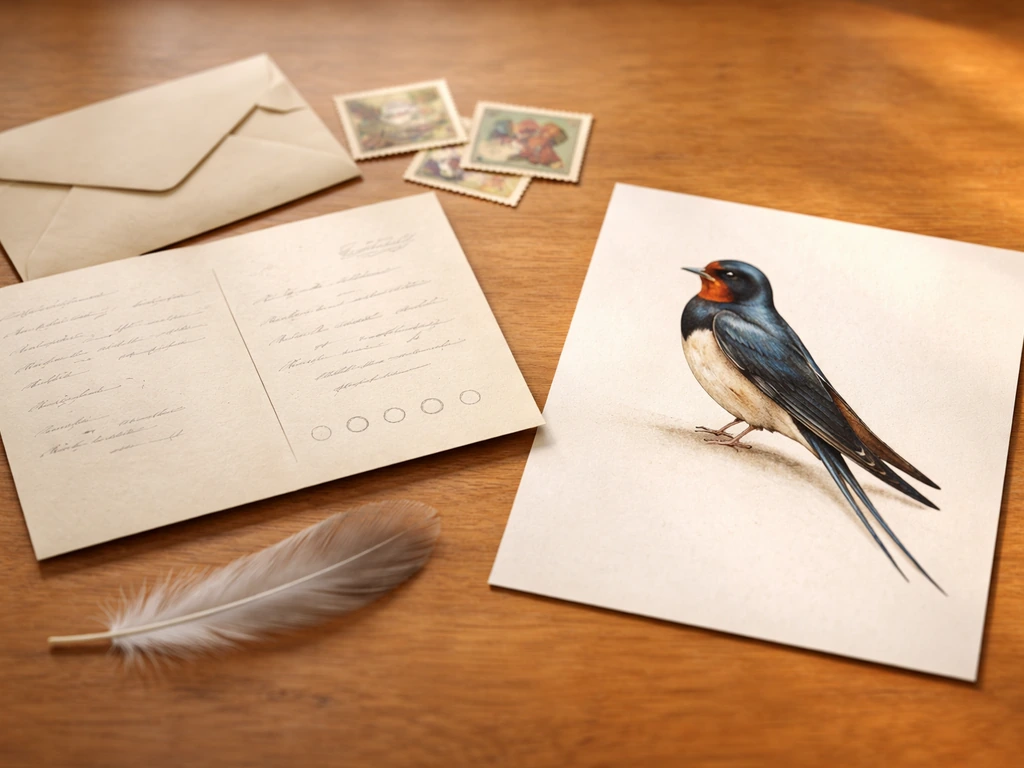
The selection happened on 12 April 1962, through a process that included a public postcard vote (Postkartenabstimmung) organized by Austrian ornithological circles. A historical article hosted on ZOBODAT, the Austrian natural history archive, describes the event explicitly, framing the Rauchschwalbe's selection as a formal ornithological designation, complete with the date and the concept of the bird as a kind of national monument.
The designation lasted only until blank" rel="noopener noreferrer">1964, when a different bird was chosen to replace it. German-language sources, including a historical note on German Wikipedia, confirm the tenure as 1962 to 1964. The German Wikipedia entry on the Rauchschwalbe also states that the Rauchschwalbe was Austria's national bird from 1962 to 1964 blank" rel="noopener noreferrer">confirm the tenure as 1962 to 1964. That short window explains why you sometimes find inconsistencies, some references capture the 1962 selection, others reflect the post-1964 change, and many modern summaries simply default to the Barn Swallow as the canonical answer without noting the transition.
Why the Barn Swallow made sense as a national symbol
The Barn Swallow is what ornithologists call a Kulturfolger, a species that follows and adapts to human settlements. That term matters here because it captures exactly why the bird felt like such a fitting national emblem. Austria in the early 1960s was still a country shaped by agricultural traditions, farmsteads, and open rural landscapes. The Rauchschwalbe was everywhere in that world, nesting in the barns and stables (Vieh- und Reitställe) that dotted the countryside.
It was not a remote or rarified bird. It was the bird ordinary Austrians grew up seeing around their farms and villages. That familiarity, and the sense that it belonged to the landscape alongside people rather than apart from them, gave it a kind of democratic national symbolism. You did not have to travel to a mountain summit or a specific forest to find one. It was already there, in the farmyard.
What the Barn Swallow looks like and where to find it in Austria
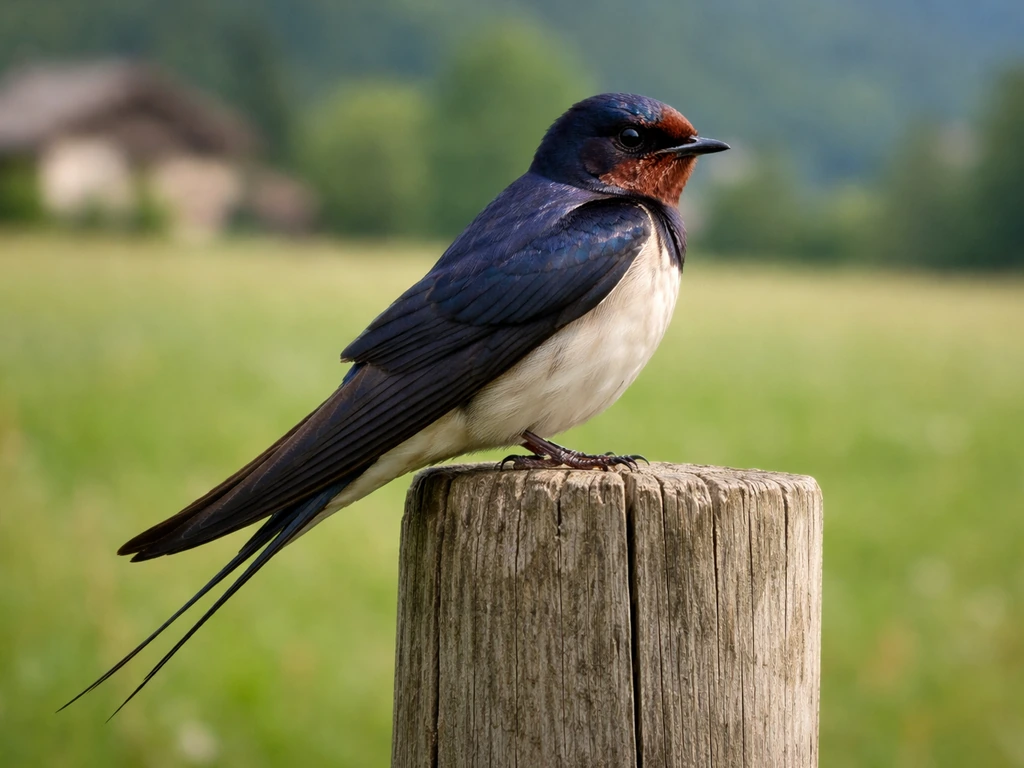
The Barn Swallow is one of the easier birds to identify in the field. It has deep blue upperparts, a rusty-red throat patch, pale underparts, and a long, deeply forked tail that is distinctive in flight. Adults in good light have an almost iridescent quality to the blue on their back and wings. When they are swooping low over a field or farmyard, the forked tail makes them unmistakable.
In Austria, the species is widespread across most of the country. BirdLife Österreich describes it as broadly distributed, with larger gaps only in the high Alpine zones where the terrain and altitude make open farmland habitats unavailable. The distribution data comes from the Österreichischen Brutvogelatlas 2013 to 2018, published in 2024 by the Naturhistorisches Museum Wien, which is the most current breeding atlas for Austrian birds.
If you want to spot one, head to open agricultural landscapes rather than dense forest or city centres. Look near farms with livestock, riding stables, and large barns, especially during the breeding season from late April through August. The swallows nest inside these structures, so the birds are often seen flying low over adjacent fields and meadows hunting insects. Rural areas in Lower Austria, Styria, and Burgenland are particularly productive.
| Feature | Detail |
|---|---|
| Scientific name | Hirundo rustica |
| German name | Rauchschwalbe |
| Upperparts | Deep metallic blue |
| Throat | Rusty-red patch |
| Underparts | Pale / cream |
| Tail | Long, deeply forked |
| Habitat in Austria | Open farmland, near stables and barns |
| Range in Austria | Widespread; gaps only in high Alps |
| Best time to spot | Late April through August (breeding season) |
Cultural footprint: the swallow in Austrian life and symbolism
The Barn Swallow has a long presence in European folk tradition, and Austria is no exception. Swallows nesting in a barn were traditionally considered good luck, a sign of a healthy, prosperous farmstead. Harming a swallow's nest was considered bad fortune in rural communities across the German-speaking world, a belief that reflects how deeply embedded these birds were in agricultural life.
The 1962 national selection process itself, as described in the historical ZOBODAT article, framed the bird partly in terms of its status as a national monument, language that suggests the ornithological community saw the designation as more than a taxonomic exercise. It was a cultural statement about which species best represented Austria's natural and rural heritage to the world.
The swallow also carries pan-European associations with the arrival of spring and the return of warmth after winter, which gave it a hopeful, renewal-linked symbolism that would have resonated in postwar Austria of the early 1960s. A migratory bird that returns reliably each year carries a different kind of meaning than a year-round resident.
How to verify this for yourself
If you need to confirm or cite this, here is where to look. For the species account, habitat detail, and Austria-specific distribution, the BirdLife Österreich Rauchschwalbe species page is the most authoritative freely available source. BirdLife Österreich is the primary bird conservation authority in the country and publishes rigorously sourced species accounts.
For the historical chronology, specifically the 12 April 1962 selection date and the 1964 change, the most reliable source is the scholarly journal article hosted on ZOBODAT, the Austrian natural history data archive. It is a PDF hosted through BirdLife Österreich's archive and contains the primary-source narrative of the national bird selection process with explicit dates, which is more reliable than secondary aggregator sites.
A word of caution: avoid relying on national-symbols aggregator pages that list multiple countries' symbols without sourcing. These often mix up the heraldic Bundesadler eagle with the ornithological national bird designation, leading to the eagle confusion mentioned earlier. If a source does not distinguish between heraldic symbols and designated national birds, treat it with some skepticism.
How Austria fits into the broader picture of European national birds
Austria's choice of a common, farmland-associated bird stands in interesting contrast to some of its neighbors. Italy’s national bird is also tied to national identity, and there are specific historical reasons for choosing the Italian sparrow. Hungary, for example, leans into a more dramatic avian symbol, while Greece and Turkey each have choices tied to their own distinct landscapes and cultural histories. The national bird of Hungary is the great bustard (Otis tarda). You might also be curious about what is the national bird of Iran and how its symbol compares to Austria’s choice. If you are also wondering about Greece, its national bird is the hoopoe. Albania's national bird connects directly to the country's heraldic eagle imagery in a way that Austria's swallow explicitly does not. To learn more about it, see what the national bird of Albania is and how that choice is described in Albanian sources. Italy's national bird, the Italian Sparrow, shares something with the Barn Swallow in being a culturally embedded, human-associated species rather than a majestic raptor, which makes that comparison worth exploring if you are building a regional picture of European national bird symbolism.
Austria's Barn Swallow also shares its national bird title with Estonia, which is a relatively rare instance of two countries designating the same species. That shared designation points to how broadly the Barn Swallow was appreciated across European cultures as a symbol of home, agriculture, and the seasonal rhythms of life.
FAQ
Why do some websites list an eagle as Austria’s national bird even though the Barn Swallow is the answer?
They are usually mixing up the heraldic eagle from Austria’s coat of arms (Bundesadler) with a bird that was formally designated as a national bird. Heraldic symbols can appear in official imagery, but they are not the same thing as an ornithological national-bird selection.
Was the Barn Swallow Austria’s national bird for only a short time, and does that affect the “correct” answer?
Yes, the official selection date is 12 April 1962, and the bird was later replaced by 1964. However, the Barn Swallow remains the most consistently cited national-bird answer in modern ornithological references, largely because it is tied to that documented earlier designation.
What other birds might be confused with the Barn Swallow when trying to identify it in the field?
People often confuse swallows with other small, dark-winged aerial insect hunters, but the Barn Swallow’s deep blue upperparts, rusty-red throat patch, and especially the long, deeply forked tail are key. If you are unsure, wait for clear flight views where the forked tail stands out.
When is the best time to spot Barn Swallows in Austria?
Aim for the breeding season window from late April through August. Birds often fly low over adjacent fields and meadows because they nest in farm structures and hunt insects around open farmland.
Where in Austria are Barn Swallows most likely to be seen?
They are widespread across most of the country, with fewer gaps only in high Alpine zones where farmland habitats are limited. Productive areas tend to include rural regions with livestock farms, riding stables, and large barns.
Does the national-bird status mean Barn Swallows are protected everywhere in Austria?
National-symbol status does not automatically guarantee site-by-site protection. It can, however, make the species a conservation priority for bird organizations, so for actual legal protections you would still need to check Austria’s conservation rules for breeding birds and nest disturbance.
How can I tell whether a source is reliable when it claims a national bird for Austria?
Prefer sources that clearly distinguish between heraldry (like the coat-of-arms eagle) and a formal national-bird designation. If the page does not explain the selection process or specific dates, or it lists multiple symbols without clarification, treat it as potentially conflated.
Are there cultural reasons Barn Swallows fit as a national emblem in Austria?
Yes. In rural, German-speaking traditions, swallows nesting in barns were associated with good luck and prosperous farms. That human connection to farm life is part of why the bird is often presented as a fitting symbol rather than a distant, purely wild species.
Next Article
What Is the National Bird of Greece? Meaning and Facts
Find what Greece’s national bird is and why the eagle became a symbol, with history, meaning, and FAQs.