The short answer (and why it gets complicated)
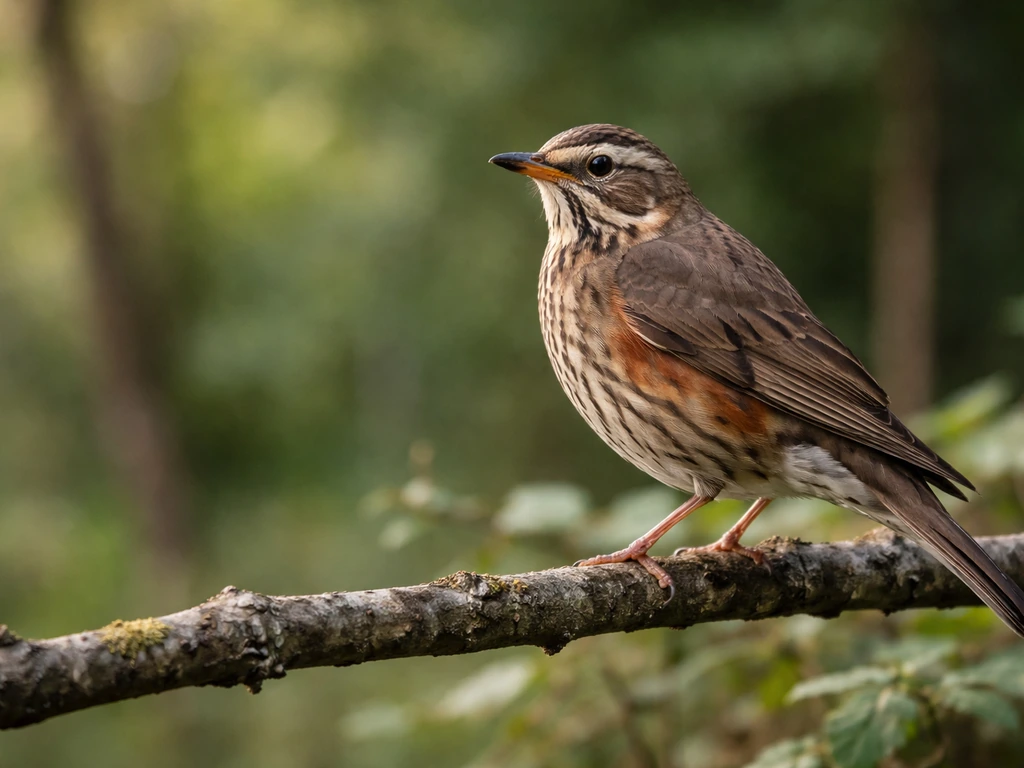
The national bird most commonly associated with Turkey (the country) is the Redwing, a thrush species known scientifically as Turdus iliacus. You'll find this claim repeated across dozens of national bird reference lists, bird-themed compilations, and country-symbol directories. But here's the honest truth: Turkey does not appear to have a formally legislated or government-designated national bird the way some other countries do. The Redwing designation is widely cited but lacks a clear primary source tying it to an official Turkish government decision. So the most accurate thing to say is: the Redwing is the bird most commonly attributed as Turkey's national bird, but treat that with a grain of salt compared to countries with rock-solid official designations.
Turkey the country vs. turkey the bird
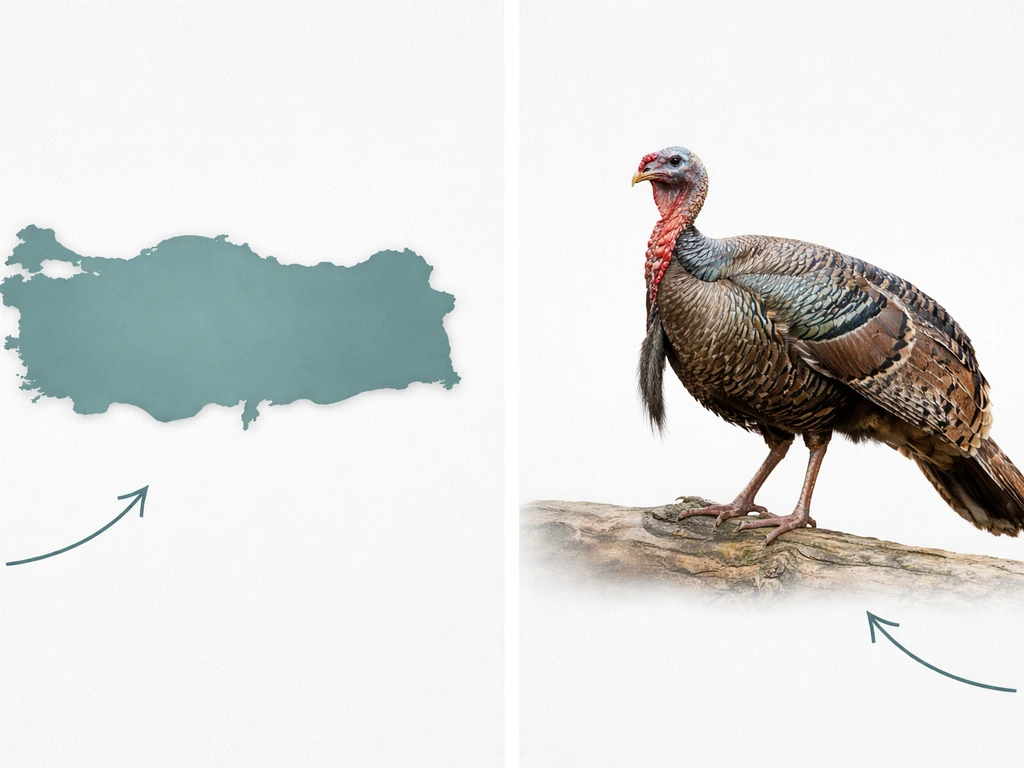
Before anything else, let's clear up the single biggest source of confusion around this search. Turkey (capitalized) is a country in Eurasia, officially known since 2022 as Türkiye. The turkey (lowercase) is an entirely different thing: it's the large North American game bird in the genus Meleagris, the one you carve at Thanksgiving. These two share a name purely by historical accident, and that coincidence causes real problems when people search online. You'll sometimes see search results or social posts suggesting the turkey bird is somehow Turkey's national animal or national bird, which is completely wrong. The Meleagris turkey is native to North America, not Anatolia, and the country of Turkey has nothing symbolic to do with it.
This confusion got enough attention that Turkey officially rebranded its international name to Türkiye, partly to distance the country from the bird association. So if you've been going in circles trying to figure out whether the country named itself after the bird or vice versa, you're not alone, and that rabbit hole goes surprisingly deep.
Turkey's national bird: meet the Redwing
The bird you'll find listed as Turkey's national bird across reference sources is the Redwing, scientific name Turdus iliacus. It's a medium-sized thrush, roughly 20 to 24 cm in length, recognizable by the bold creamy stripe above its eye and the vivid rusty-red patch under its wings (hence the name). The Woodland Trust notes that the redwing is around 21 cm in length. The Redwing is a migratory bird that breeds across northern and northeastern Europe and Asia, and it has a documented presence in Turkey, confirmed by bird observation records tagged with Turkey's country code. It belongs to the same family as the common blackbird and the song thrush, so if you've ever seen one of those, you'll immediately recognize the family resemblance.
One thing worth noting: you may also come across the Eurasian Hoopoe (Upupa epops) in connection with Turkey's national bird. This is a case of imperfect data spreading across aggregator websites. The Hoopoe is actually the national bird of Israel, and while it does appear in Turkey geographically, it doesn't hold the national bird title for the country. If you see the Hoopoe listed for Turkey, that's a sourcing error worth flagging.
What the Redwing symbolizes in Turkish culture
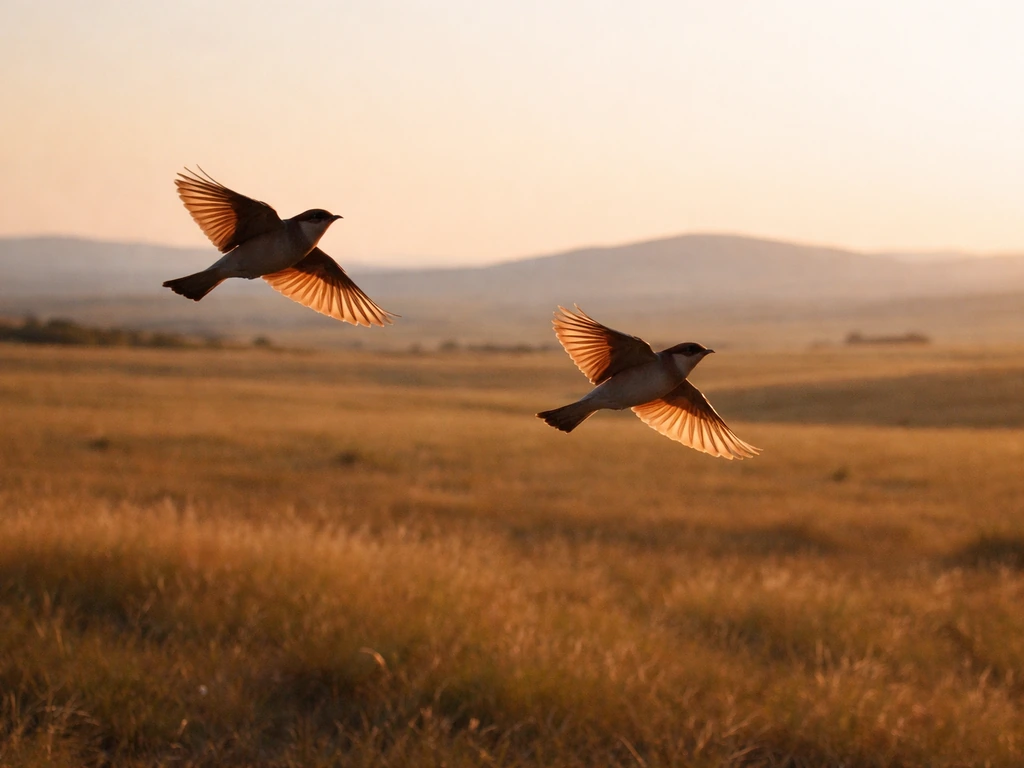
Turkey sits at the crossroads of Europe and Asia, and its wildlife reflects that unique geographic position. The Redwing's migratory nature makes it a fitting symbol for a country that has historically served as a bridge between continents and cultures. Birds in general carry strong symbolism in Turkish tradition, appearing in poetry, folk literature, and Islamic art as metaphors for the soul, freedom, and spiritual longing. The nightingale (bülbül) is probably the most celebrated bird in Turkish folk poetry, but the Redwing's presence as a visitor and passer-through speaks to Turkey's identity as a place of movement, passage, and meeting points between worlds.
It's also worth mentioning that Turkey uses the concept of a "milli kuş" (national bird) when discussing other countries' designations, so the framework for national bird symbolism is familiar within Turkish public discourse, even if Turkey's own formal designation remains ambiguous.
How the Redwing became associated with Turkey (the history behind the claim)
This is where honesty matters more than a clean story. Unlike countries with a well-documented selection process, there's no widely available record of a Turkish parliamentary decree or governmental announcement formally naming the Redwing as the national bird. What exists instead is a pattern of aggregator sites and country-symbol databases converging on the Redwing, citing each other without tracing back to a primary Turkish source. The designation seems to have taken hold through the compiled national bird lists that circulate among reference websites rather than through an official proclamation.
Compare this to countries like Hungary, where the national bird story has clearer cultural grounding, or to Greece's national bird, which carries its own documented symbolic weight. Turkey's case is more like a consensus that formed organically across secondary sources. That doesn't necessarily make it wrong, but it does mean you should approach any single source claiming a definitive designation with some skepticism.
If you want to dig further, your best verification path would be checking Turkish government cultural or wildlife institutions directly, or consulting the IUCN's country profiles. Cross-referencing multiple national symbol databases is a reasonable starting point, but it's not the same as a primary government document.
How Turkey compares to its neighbors on national bird designations
Turkey sits in a region where neighboring countries have varying levels of formality around national bird designations. Some have clearly designated birds with cultural and legislative history; others are in the same boat as Turkey, where the listing is common knowledge on reference sites but primary documentation is thin. Here's a quick comparison of Turkey and some of its regional neighbors:
| Country | National Bird | Designation Status |
|---|
| Turkey | Redwing (Turdus iliacus) | Widely cited, no confirmed official decree |
| Greece | Phoenix (mythological) / Little Owl | Referenced in cultural/historical context |
| Iran | Common Nightingale | Cited in national symbol listings |
| Hungary | Saker Falcon | Strong cultural and historical backing |
| Romania | Golden Eagle | Referenced in national symbol sources |
| Albania | Golden Eagle | Strong heraldic and national identity backing |
| Austria | Barn Swallow | Cited in national symbol listings |
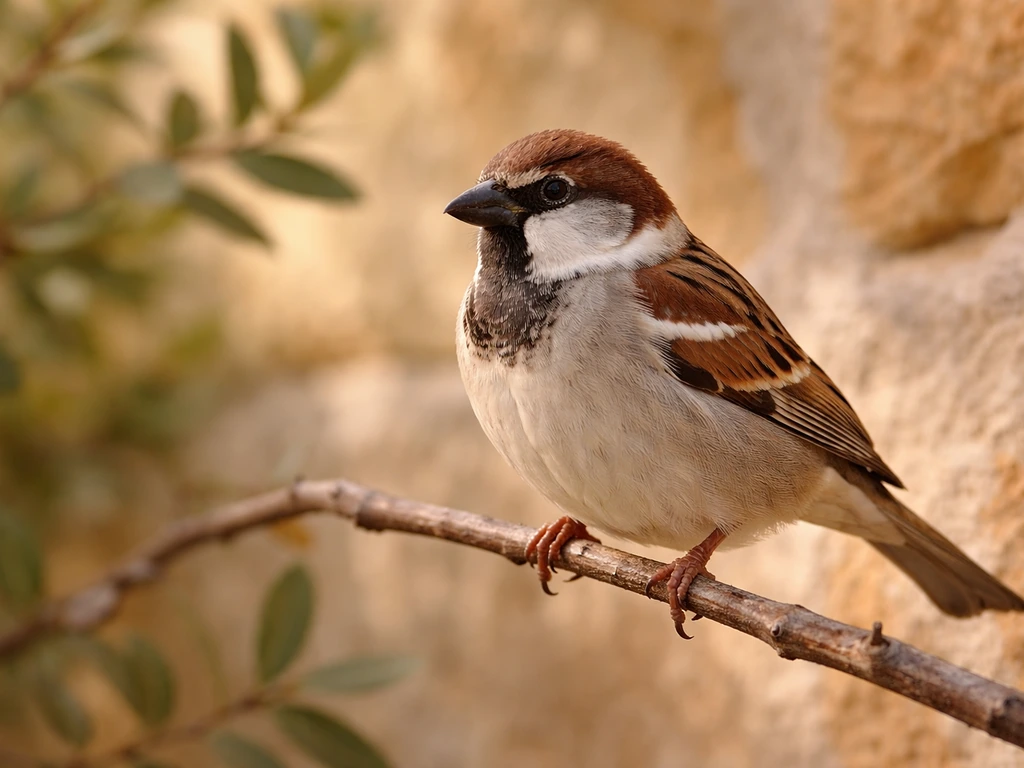
| Italy | Italian Sparrow | Designated by scientific/ornithological recognition |
Turkey's situation isn't unique in this region. Several countries rely on broadly accepted cultural consensus rather than formal legal designation. What varies is how deep the cultural roots go and how much primary documentation exists.
Fun facts about the Redwing, and where to go next
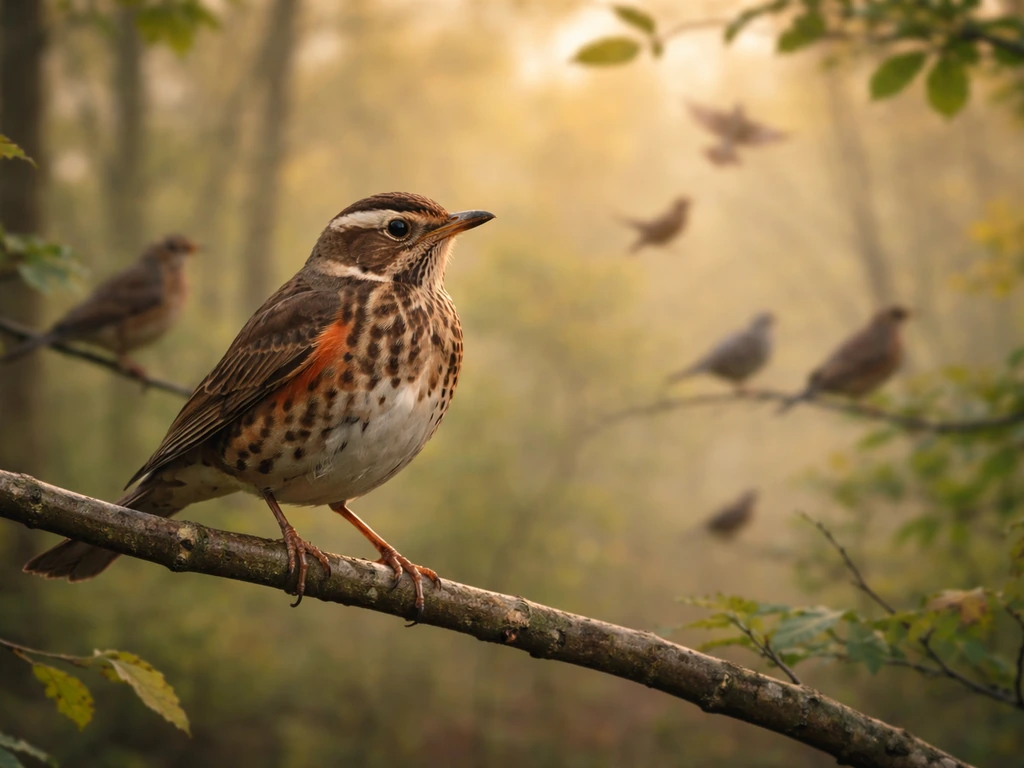
The Redwing is actually the smallest true thrush found in Europe. It's a highly social bird during migration, often traveling in large flocks alongside fieldfares, and it's known for its thin, high-pitched "seep" call heard on autumn nights as flocks pass overhead. During harsh winters it can be spotted in gardens and hedgerows across a wide range from Western Europe to Central Asia, feeding on berries and fallen fruit.
If you're exploring national birds of the broader region, it's worth reading about Iran's national bird, which has its own fascinating cultural layer tied to Persian poetry and the nightingale tradition that stretches across the Islamic world. Turkey and Iran share this deep literary connection to birds as spiritual symbols, which adds interesting context to how national birds get chosen (or informally adopted) in this part of the world.
For a neighboring country with a particularly strong national bird story, Hungary's national bird, the Saker Falcon, has roots that go back to ancient Magyar mythology and is one of the more compelling national bird narratives in the entire region.
If you're curious about how Italy handles its national bird designation, the story behind why the Italian Sparrow is Italy's national bird is a good read, especially because it involves an interesting scientific debate about species recognition that ended up shaping the official designation. And if you just want a quick comparative reference, the article on Italy's national bird lays out the full picture cleanly.
For other regional neighbors worth comparing: Albania's national bird (the Golden Eagle) is one of the most visually dramatic national bird choices in the world, given that it literally appears on the Albanian flag. And Romania's national bird follows a similar eagle symbolism thread, showing how powerful birds of prey dominate national identity across the Balkans and Eastern Europe.
Finally, if you're working through Central European national birds, Austria's national bird, the Barn Swallow, is a nice contrast: a small, common bird chosen for its everyday cultural resonance rather than its power or rarity. That range from golden eagles to barn swallows tells you a lot about the different philosophies countries bring to the question of what bird best represents them.
The bottom line
Turkey's national bird is most commonly identified as the Redwing (Turdus iliacus), a migratory thrush with a distinctive red underwing and a broad presence across Europe and Asia. The designation is widely cited across national bird reference sources and country-symbol databases. However, unlike countries with a clearly documented official selection, Turkey's designation doesn't appear to trace back to a confirmed governmental decree, so treat it as the widely accepted answer rather than a legally certified one. And above all: the Meleagris turkey bird has nothing to do with Turkey the country. That confusion is real, it's common, and now you know exactly why it happens.