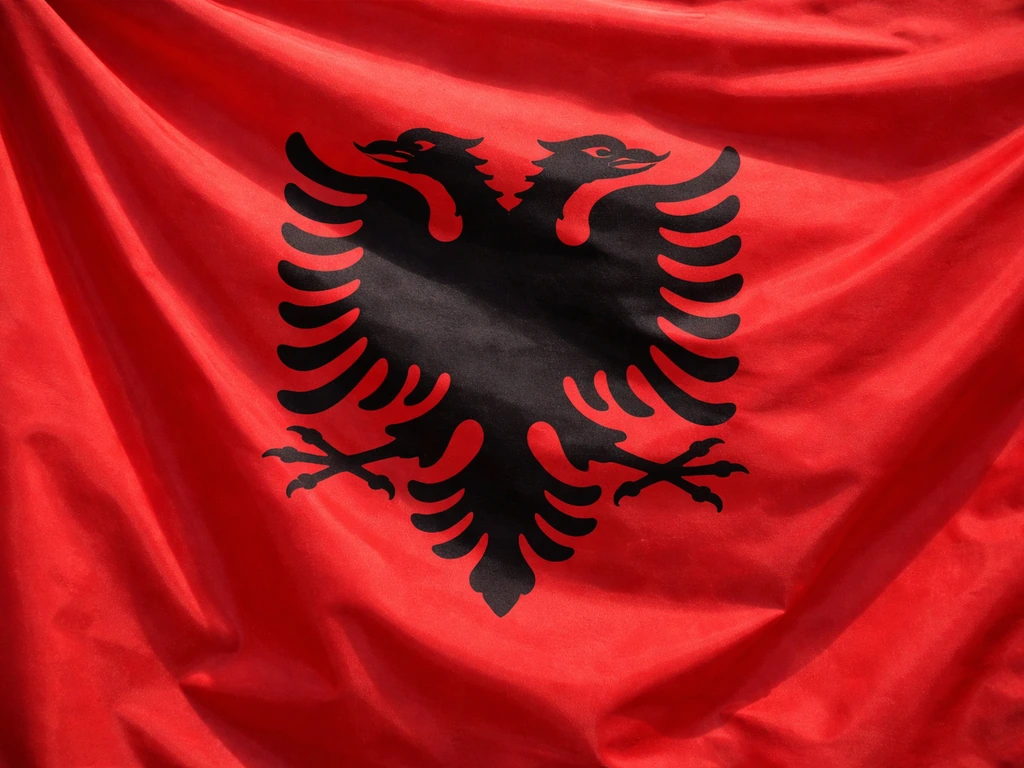
Albania's national bird is the Golden Eagle (Aquila chrysaetos). In Italy, people often wonder which bird represents the country and why it holds that status why is the Italian sparrow the national bird of Italy. This isn't just a wildlife designation, the eagle is woven into Albania's very identity, appearing as blank" rel="noopener noreferrer">a black double-headed eagle on the national flag and state seal. Italy's national bird is also specified in its official national symbolism, so it's worth looking up alongside Albania's eagle what is Italy's national bird. Albanians even refer to themselves as "Shqiptarë," which translates roughly to "Sons of the Eagle."
What Is the National Bird of Albania? Meaning and Facts

Marcus Chen
22 May 2026
What the eagle means to Albania
Few countries have a bond with their national bird as deep as Albania's connection to the eagle. The bird represents freedom, heroism, and pride in Albanian folk tradition, qualities that have shaped the national character for centuries. In Albanian pagan tradition, the eagle is a sky totem associated with freedom and heroism, which explains why it has resonated so strongly across generations and political eras.
The Albanian Ornithological Society (AOS) puts it plainly: the Golden Eagle embodies national pride and identity. It's described as a "majestic bird of the Albanian mountains," and that mountain connection matters, Albania is a rugged, largely mountainous country, and the eagle soaring above those peaks is a natural fit for what the nation sees in itself.
This kind of symbolism isn't unique to Albania. Many countries, including several of Albania's Balkan and European neighbors, have chosen eagles or birds of prey to represent strength and sovereignty. But Albania's relationship with the eagle runs unusually deep, going beyond official emblems into language, legend, and everyday cultural identity.
How the eagle became Albania's symbol
The story starts in the medieval period. On November 28, 1443, the Albanian national hero Gjergj Kastrioti, known as Skanderbeg, raised a red flag bearing a black eagle at Krujë, the fortified city that became the center of Albanian resistance against the Ottoman Empire. That single act planted the eagle symbol so firmly in Albanian consciousness that it has never really left.
The double-headed eagle design itself draws from Byzantine tradition, reflecting Albania's historical and cultural ties to the Eastern Roman world. What's remarkable is the continuity: successive Albanian regimes across dramatically different political eras all kept the red flag and black eagle. That consistency made the symbol feel less like a government choice and more like a permanent national truth.
The formal legal grounding came with Albania's 1998 Constitution, approved by referendum on November 22, 1998. It describes the Republic's seal as "a red shield with a black, two-headed eagle", locking the emblem into constitutional law. More recent administrative decisions, including a presidential decree dated July 10, 2014, have continued to define and standardize how the eagle emblem appears in official contexts.
What a Golden Eagle actually looks like
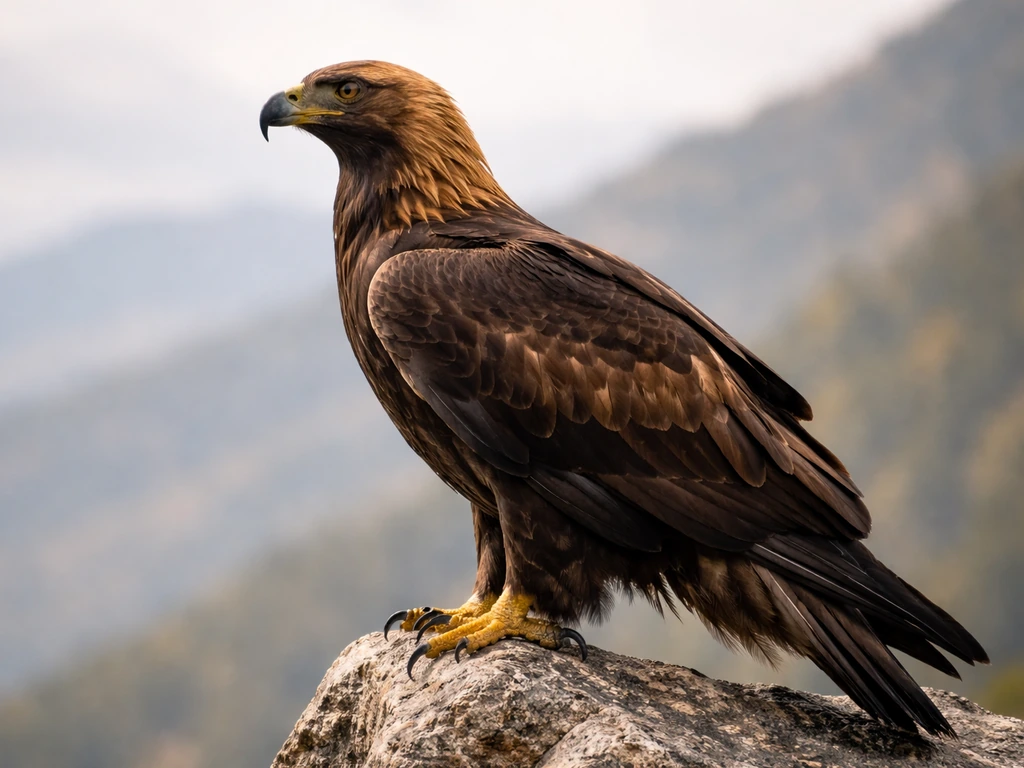
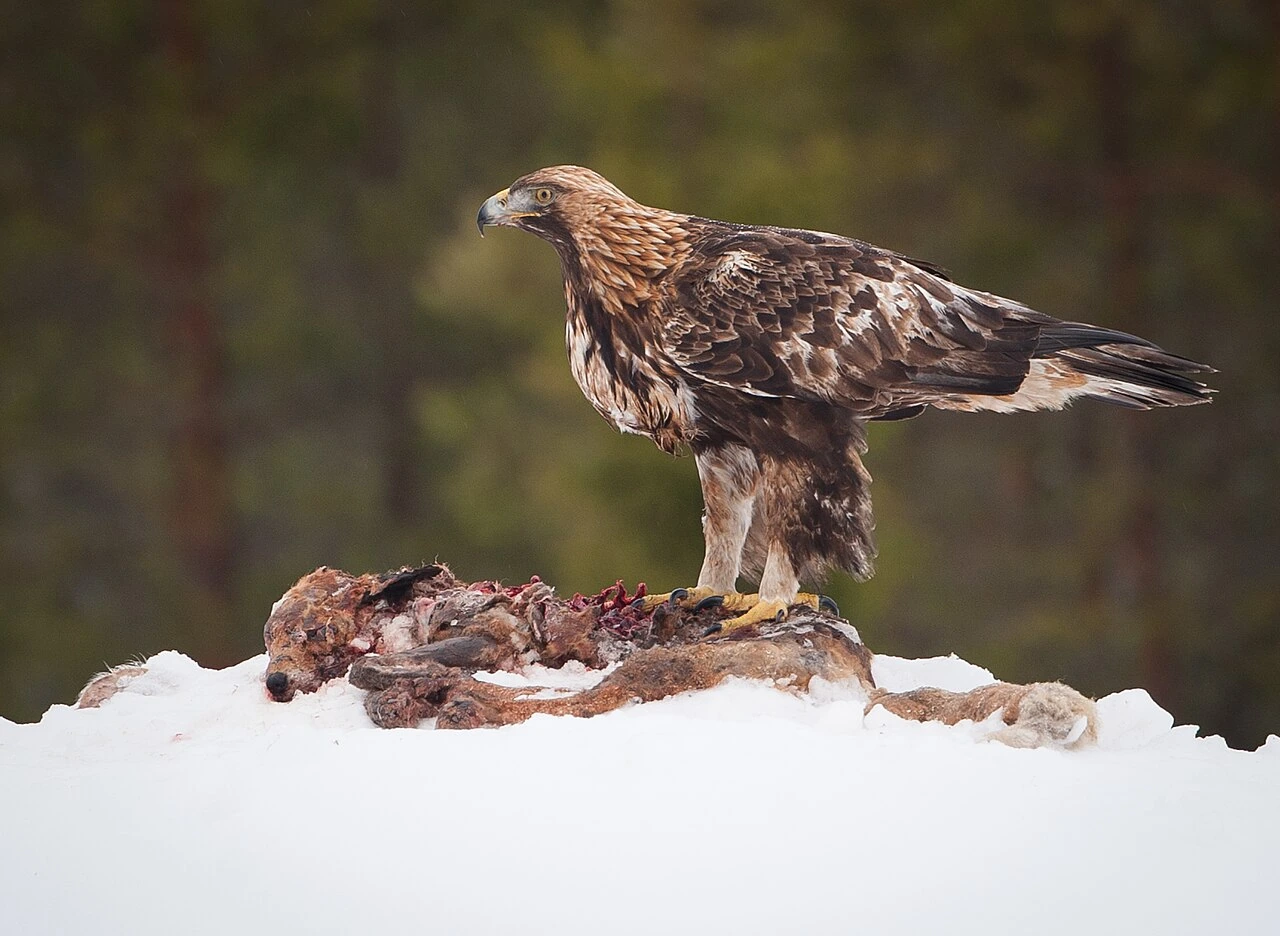
If you want to recognize a Golden Eagle in the wild, the most distinctive feature is the golden-brown sheen on the back of the head and neck, that's what gives the species its name. The rest of the body is dark brown. These are large, powerful raptors with a wingspan that can exceed two metres, and they're built for soaring. In flight, they hold their wings in a slight upward V-shape, which helps distinguish them from other large raptors.
Young birds look different from adults and can confuse first-time observers. Immature Golden Eagles often show white patches at the base of the tail and on the wings, which gradually disappear as the bird matures over several years.
In Albania specifically, Golden Eagles are birds of the high mountains. They nest on cliff ledges or in the tallest trees in forested areas with open sightlines, exactly the kind of terrain you find in places like Korab-Koritnik Nature Park, where the species is officially documented as an important bird. If you're visiting Albania and hoping to spot one, head to the rugged northeastern highlands. Patience and binoculars are your best tools.
Quick ID reference for Golden Eagles
| Feature | What to look for |
|---|---|
| Size | Very large raptor, wingspan over 2 metres |
| Adult plumage | Dark brown overall with golden-buff nape and back of head |
| Immature plumage | White patches on wings and tail base, fading with age |
| Flight shape | Long broad wings held in slight V (dihedral) when soaring |
| Habitat in Albania | Mountain cliffs, forested highland slopes, open ridges |
| Scientific name | Aquila chrysaetos |
Stories and facts worth knowing
The name "Shqipëri", Albania in Albanian, is directly tied to the eagle. "Shqiponjë" means eagle, and "Shqiptar" (Albanian person) connects back to the same root. This makes Albania one of the few countries in the world where the national bird is embedded in the country's very name.
The double-headed eagle design has a specific meaning too. The two heads are said to symbolize looking both East and West, reflecting Albania's geographic and cultural position between the Byzantine and broader European worlds. It's a detail that adds real depth to what could otherwise seem like a purely decorative choice.
Conservation is also part of the modern eagle story. The AOS has documented incidents involving Golden Eagles being shot in Albania, including a bird found injured in the Skrapar region that was later taken to a rehabilitation center. The fact that this made headlines reflects how seriously Albanians take the bird's welfare. Harming a Golden Eagle in Albania isn't just an ecological issue; it carries a cultural weight that few other species can claim.
According to BirdLife International data, the Golden Eagle population in Albania has faced some decline, mirroring broader European trends driven by habitat pressure and human disturbance. BirdLife/Aquila chrysaetos assessment material compiled from BirdLife and IUCN-style data reports an estimated Golden Eagle population range for Albania and includes population-trend information, including reported declines Albania has faced some decline. Conservation efforts are ongoing, and the species' status as a national symbol has helped motivate local protection efforts.
Where to go from here
If you want to verify the constitutional details yourself, the 1998 Albanian Constitution (available via OSCE-hosted PDF) spells out the eagle emblem in Article 14. For bird-specific identification and distribution data, Cornell Lab of Ornithology's All About Birds and BirdLife International's DataZone both carry detailed Golden Eagle species profiles, including range maps and conservation status.
For the cultural and historical angle, Britannica's entry on the Flag of Albania goes deep on the Skanderbeg connection and the emblem's evolution through different political periods. It's a solid starting point for anyone who wants the full historical arc rather than just the symbol itself.
Albania's eagle story also fits into a fascinating broader pattern across European and neighboring nations. Greece, Turkey, Romania, Hungary, and Austria all have their own national bird traditions with distinct symbolism and selection histories, some rooted in medieval heraldry, others in more recent official designations. Iran also has an official national bird, so it is worth comparing how each country chooses a symbol that fits its history and identity national bird of Iran. Romania's national bird is also often discussed in terms of its cultural symbolism and official selection national bird of Romania. Austria’s national bird is the eagle, a symbol tied to the country’s history and heraldic traditions. You can also look up Hungary's national bird to see how that country's symbolism differs from Albania's golden eagle tradition. For Greece specifically, the national bird is often cited as the griffin, a mythological creature used in Greek symbolism. Turkey’s national bird is the bustard, a choice that also reflects the country’s natural landscape. Comparing them highlights just how varied the reasoning behind national bird choices can be, even among geographically close countries.
- Read Albania's 1998 Constitution (OSCE PDF) to see the official eagle emblem language firsthand
- Check Cornell Lab's All About Birds or BirdLife DataZone for Golden Eagle identification guides and range maps
- Visit the Albanian Ornithological Society (AOS) website for local conservation news and Albanian bird records
- Explore Britannica's Flag of Albania entry for the full Skanderbeg-era historical narrative
- If visiting Albania, target Korab-Koritnik Nature Park or the northeastern highlands for a real chance of seeing Golden Eagles in the wild
FAQ
Is the national bird of Albania the Golden Eagle or the double-headed eagle symbol on the flag?
The bird is the Golden Eagle (a real species), while the flag and seal show a stylized black double-headed eagle emblem. The emblem is symbolic design, it is not a depiction of a specific animal with two heads.
Why do some people say Albania’s bird is an eagle but not specify which eagle?
Because the country’s common national imagery is an eagle, but official identity points to the Golden Eagle species. Confusion usually comes from using the flag emblem as shorthand for the species.
Are Golden Eagles common anywhere in Albania, or are they limited to certain areas?
They are most strongly associated with rugged high-mountain terrain, cliff ledges, and forest edges with open sightlines. If you are trying to spot one, focus on northeastern highlands rather than lowland cities.
How can I tell a Golden Eagle from other large birds of prey in Albania?
Look for the golden-brown sheen on the back of the head and neck, and the dark brown body. In flight, Golden Eagles often show a slightly raised V-shape to their wings, and juveniles may have lighter patches that fade as they mature.
Do immature Golden Eagles look totally different from adults?
Yes. Young birds can show white patches at the base of the tail and on the wings, which makes them easier to misidentify. These patches typically diminish over several years as the bird reaches adult plumage.
Is it legal or advisable to approach a Golden Eagle or its nest for photos?
No, do not approach nests or attempt close photography. Even if the bird is a national symbol, disturbance can be harmful, and wildlife protection rules can apply. Use binoculars or a long lens from a safe distance.
What should I do if I find an injured Golden Eagle in Albania?
Contact local wildlife or rehabilitation authorities and avoid handling the bird yourself. The article mentions that injured birds have been taken to rehab centers after being found, which is the safer path for both the animal and you.
Does the national bird status affect conservation or protection efforts?
It can, because national symbolism increases public attention. The article notes ongoing efforts and documented incidents, and that cultural importance can motivate local protection and reporting.
Where does the national bird symbolism appear in official Albanian documents?
Beyond the flag and seal, the 1998 Constitution specifically defines the seal emblem description. If you want a legal reference, look for the seal wording in Article 14 of that Constitution.
Why does Albania’s emblem show a double-headed eagle instead of a single-headed Golden Eagle?
The double-headed form comes from heraldic and Byzantine-related tradition, it is a historical symbol used in state imagery. The Golden Eagle is the chosen national species, while the double-headed design is the stylized emblem representing national identity.
Next Article
What Is the National Bird of Austria? Answer and Meaning
Find Austria’s national bird, plus history, symbolism, and a quick ID guide to spot it in the wild.