Portugal's most recognized national bird symbol is blank" rel="noopener noreferrer">the Rooster of Barcelos, known in Portuguese as the Galo de Barcelos. It is a domestic rooster (Gallus gallus domesticus) tied to a famous legend from the northern town of Barcelos, and it has become one of the most iconic emblems of Portuguese culture and identity.
What Is the National Bird of Portugal? Symbol and Facts

Marcus Chen
27 Apr 2026
Official symbol or cultural emblem?
This is worth clearing up because it trips a lot of people up. The Galo de Barcelos is not a formally designated ornithological species chosen by a government decree the way some countries officially name a wild bird. Instead, it sits firmly in the category of a cultural emblem, widely recognized both domestically and internationally as representing Portugal's values and heritage.
UNESCO's Creative Cities Network explicitly describes the Rooster of Barcelos as 'the Portuguese emblem and symbol of good faith and justice.' Wikipedia's list of national symbols of Portugal includes the Galo de Barcelos as one of the country's most prominent emblems. So the honest answer is: it carries the weight and recognition of a national symbol, even if you won't find it written into a specific piece of Portuguese ornithological legislation.
If you've come across a list claiming Portugal has a separate officially designated wild bird species as its national bird, treat that with some skepticism. The most consistently cited and authoritative sources all point back to the Galo de Barcelos as Portugal's bird emblem.
Why Portugal chose the rooster
The rooster's connection to Portuguese identity runs through a legend set in the town of Barcelos, in northern Portugal. According to the story, a pilgrim traveling the road to Santiago de Compostela was falsely accused of theft and condemned to death by hanging. Before his execution, he reportedly pointed to a roasted rooster on the judge's dinner table and declared that if he were innocent, the rooster would crow. The rooster crowed, the man was spared, and the story took on a life of its own as a symbol of faith, justice, and good fortune.
That narrative is unusually powerful for a national symbol: it ties the image directly to real human values, namely proving innocence and trusting in justice. It also connects Portugal to the broader Camino de Santiago pilgrimage tradition, which runs through the country via the Portuguese Way. The Barcelos municipal government maintains an official page about this legend, and it remains a living part of the city's identity rather than just a historical footnote.
Over time, the rooster became a staple of Portuguese folk art, produced in painted ceramic form by artisans in Barcelos. The Museu de Olaria de Barcelos showcases this ceramic tradition, and the rooster figurine became an export that travelers brought home from Portugal for decades. That widespread physical presence, in souvenir shops, museums, and homes around the world, helped cement the Galo de Barcelos as the face of Portugal internationally.
How to recognize the Galo de Barcelos
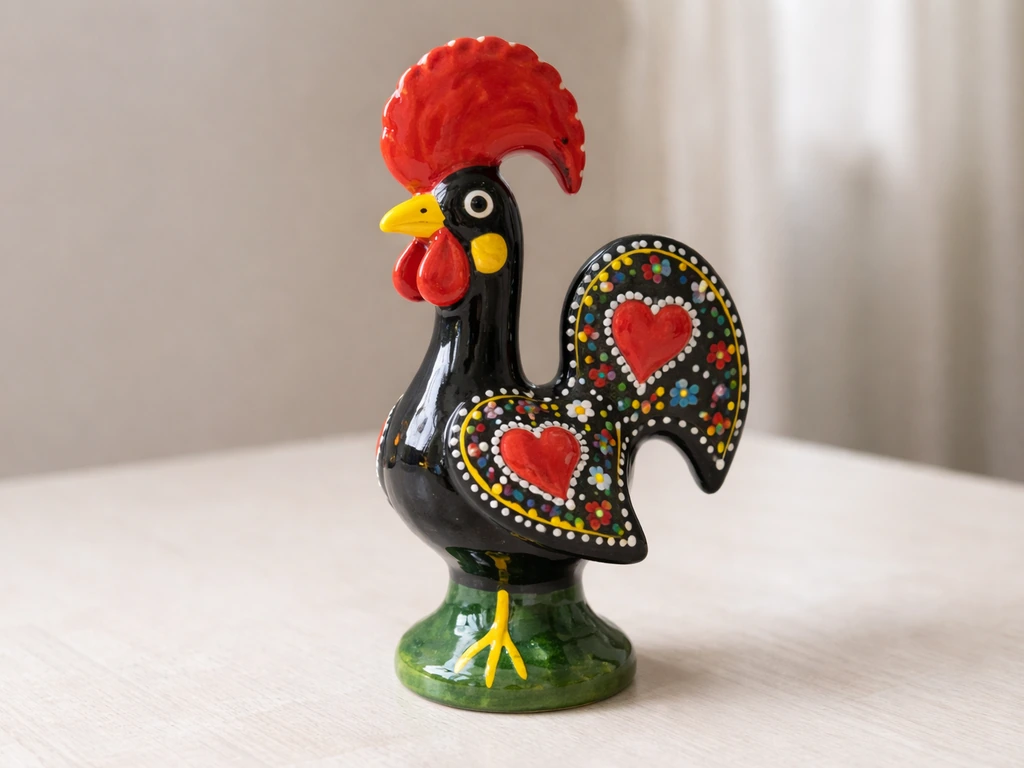
Because the rooster is primarily recognized through its ceramic and folk-art forms rather than as a wild bird you'd spot in the field, knowing what the symbol looks like is genuinely useful. The Barack Obama Presidential Library's artifact collection even includes a ceramic Portuguese Rooster of Barcelos, which gives a good reference point for the classic depiction.
- A large, bold red comb on top of the head
- A yellow beak
- Red wattles hanging beneath the beak
- A black body as the base color
- Colorful, decorative patterns painted across the feathers (often featuring hearts, flowers, and folk motifs)
That combination of black body with vivid painted patterns is what makes the Barcelos rooster instantly distinctive. You're unlikely to confuse it with any other country's bird symbol once you've seen it. The decoration varies between artisans, but the red comb, yellow beak, and patterned feathering are the consistent markers across virtually every version.
How to verify this for yourself
If you want to double-check the answer before citing it for a school project or a trivia night, here are the most reliable places to look:
- UNESCO Creative Cities Network: Search for Barcelos and you'll find the explicit description of the Galo de Barcelos as the Portuguese emblem and symbol of good faith and justice. This is an internationally recognized primary source.
- Câmara Municipal de Barcelos (official Barcelos city website): The municipal government hosts a dedicated page about the legend of the Galo de Barcelos, making it a direct local authority on the subject.
- Wikipedia's 'National symbols of Portugal' page: Useful as a cross-reference to triangulate what sources include as recognized Portuguese emblems. Look for the Galo de Barcelos listed among the prominent national symbols.
- VisitPortugal.com: Portugal's official tourism portal references the Barcelos ceramic tradition and the Museu de Olaria de Barcelos, giving further institutional backing to the rooster's cultural significance.
Using two or three of those sources together gives you a solid, well-sourced confirmation. The key thing to check in each source is whether it describes the Galo de Barcelos as an emblem or symbol of Portugal, which all of them do.
What the rooster actually means
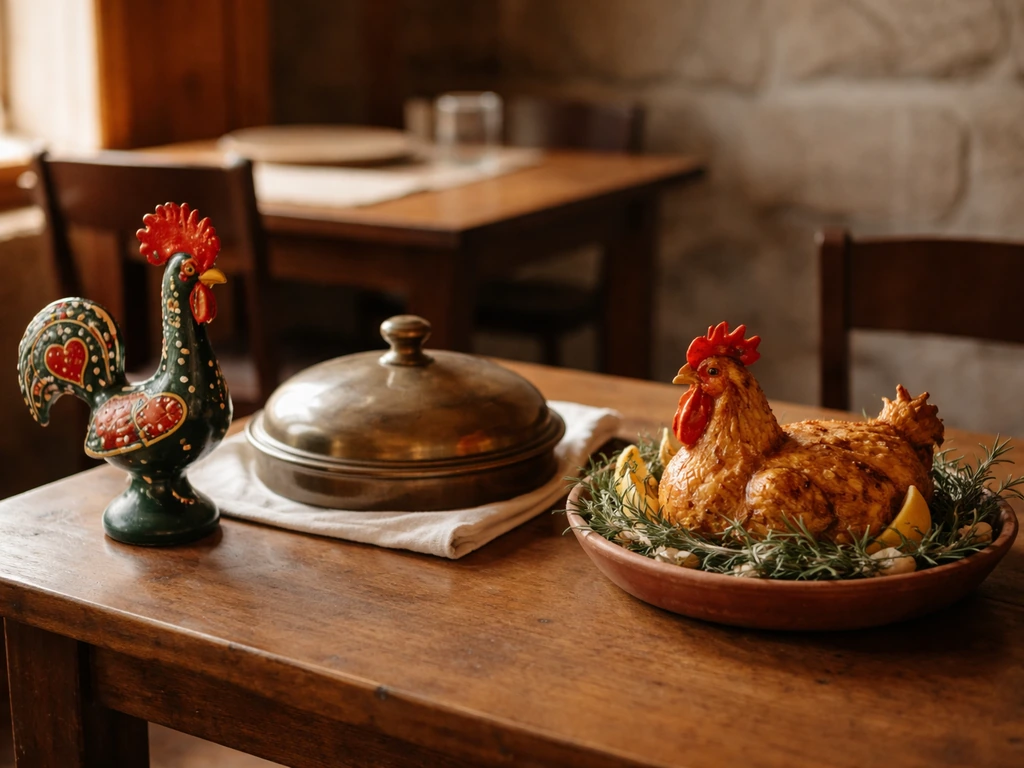
The Galo de Barcelos carries a layered symbolism that goes well beyond a ceramic souvenir. UNESCO frames it as representing good faith and justice, which ties directly back to the legend. But in everyday Portuguese life and tourism, it has also come to represent hospitality, good luck, and a sense of national pride.
There's something fitting about a country choosing a rooster as its bird emblem. The rooster has historically been a symbol of vigilance and honesty across many cultures, because it crows at dawn whether or not anyone is watching. In Portugal's case, that natural symbolism got amplified by a story where the rooster literally spoke truth to power on behalf of an innocent man.
The symbol also has a practical staying power that purely ornithological national birds sometimes lack. When Spain chose the Spanish imperial eagle, or when France adopted the Gallic Rooster, those choices were more abstract declarations. Portugal's Galo de Barcelos is grounded in a specific story, from a specific place, made tangible by generations of ceramic artisans. Many people also search for what Spain's national bird is, and the answer there centers on a specific official bird what is Spain's national bird. That combination of legend, craft, and place gives it a cultural depth that most bird symbols don't have.
Portugal's rooster compared to other European national birds
It's worth noting how Portugal's approach differs from its neighbors. Spain, France, Sweden, Norway, Finland, Wales, and the Netherlands all have their own bird symbols with varying degrees of official status. Many people also ask what the national bird of the Netherlands is, and the answer depends on whether you mean an official national symbol or a commonly recognized national bird what is the national bird of the Netherlands. If you're also curious about Wales, you can ask what is the national bird of Wales and learn what official or commonly used symbol the country favors. For example, Finland's national bird is the whooper swan. You can find out more about what is the national bird of norway and how it is officially recognized in the country. If you're wondering what is Sweden's national bird, you can compare it to how Sweden treats its official bird symbolism versus Portugal's legend-based emblem. What makes Portugal's case distinctive is that its most recognized bird symbol comes from a specific regional legend rather than a biological species selected for its wildlife significance.
| Country | Bird Symbol | Type of Recognition |
|---|---|---|
| Portugal | Rooster of Barcelos (Galo de Barcelos) | Cultural emblem, UNESCO-recognized |
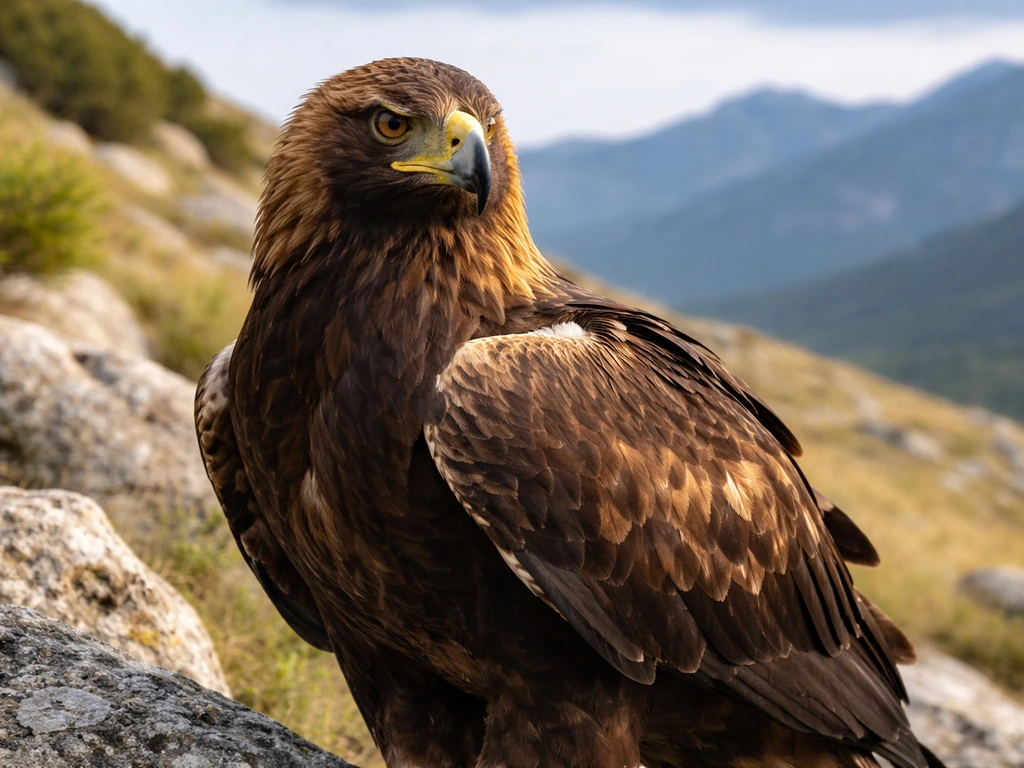
| Spain | Spanish Imperial Eagle | Wildlife/heraldic symbol |
| France | Gallic Rooster (Le Coq Gaulois) | Cultural/historical emblem |
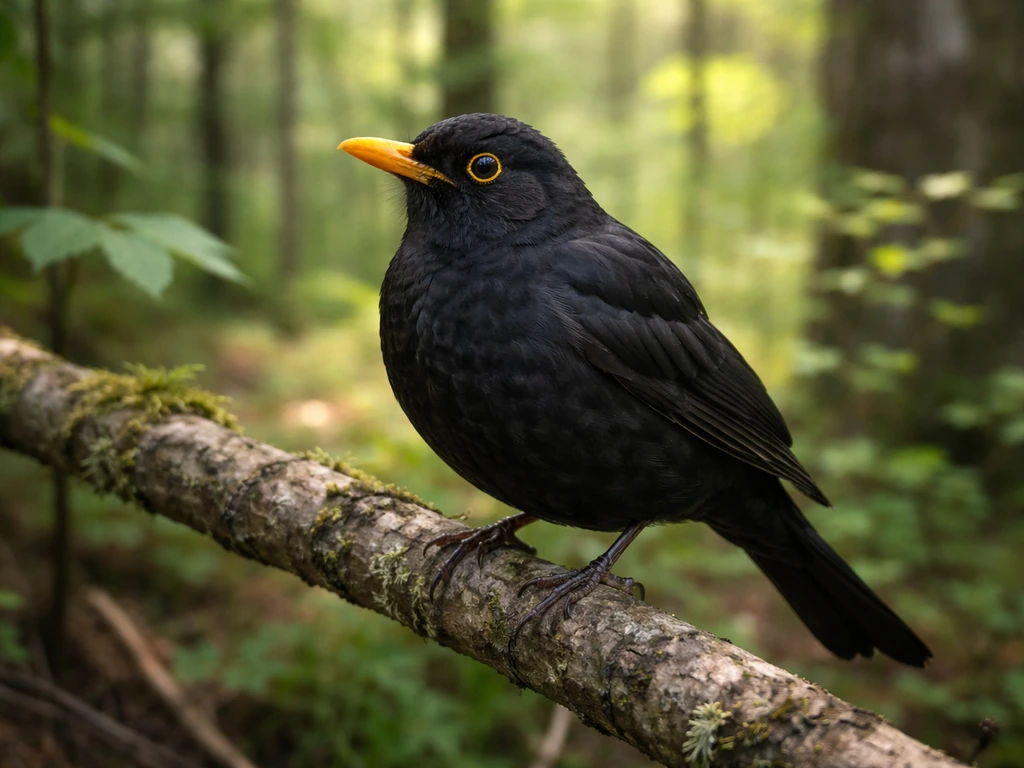
| Sweden | Eurasian Blackbird | Officially designated national bird |
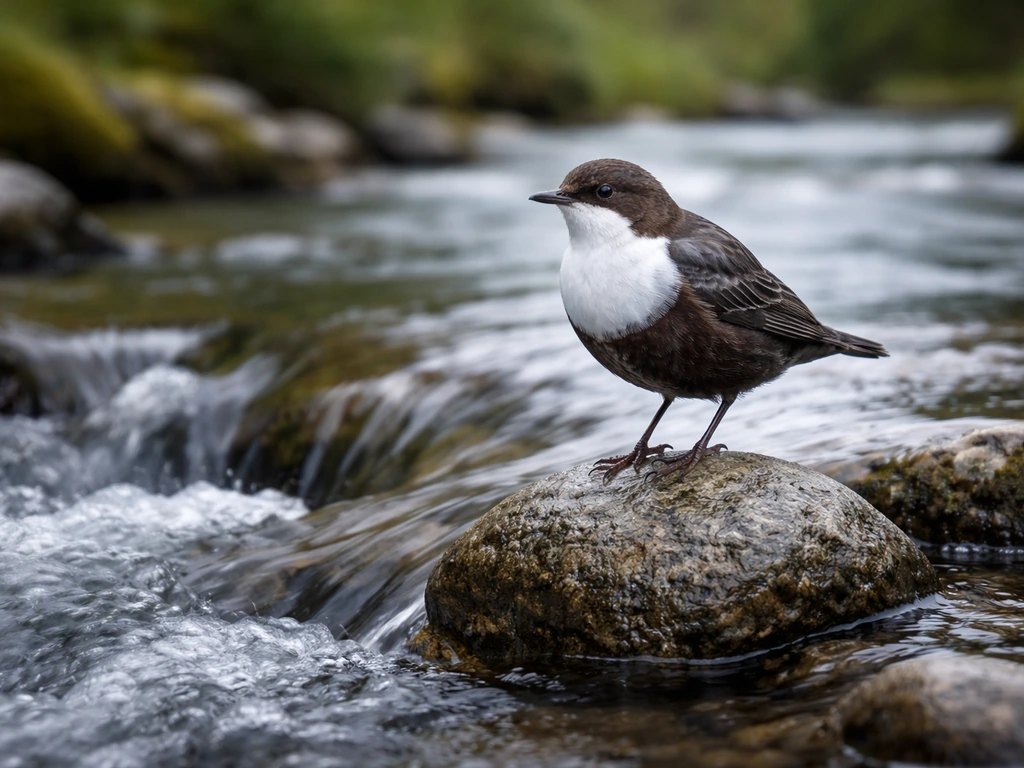
| Norway | White-throated Dipper | Officially designated national bird |
| Finland | Whooper Swan | Officially designated national bird |
| Netherlands | Black-tailed Godwit | Officially designated national bird |
| Wales | Red Kite | Culturally recognized symbol |
Portugal and France are the two Iberian-adjacent nations where a rooster holds the cultural bird symbol role, which makes for an interesting comparison. France's Gallic Rooster has deep historical roots tied to the Latin word 'Gallus' meaning both Gaul and rooster. In France, the Gallic Rooster is often cited as the national bird symbol, reflecting the country's long association with roosters France's Gallic Rooster. Portugal's Barcelos Rooster takes a completely different route to the same bird species, arriving through a medieval legend of miraculous justice rather than through linguistic history.
Three facts worth remembering
If you want to lock the answer in your memory, these three details do the job well. First, the legend involves a roasted rooster that came back to life to crow in defense of an innocent man, which is why the symbol carries connotations of honesty and divine justice rather than just national pride. Second, UNESCO itself calls it the Portuguese emblem and connects it explicitly to the values of good faith and justice, giving it formal international recognition. Third, the rooster appears as a documented museum artifact in collections as far away as the Barack Obama Presidential Library, which shows just how far this small-town legend has traveled as a symbol of Portuguese identity.
FAQ
Is Portugal’s national bird a wild bird species, like an eagle or swan?
No. The national bird symbol most associated with Portugal is the Galo de Barcelos, a domestic rooster connected to a legend and folk art tradition, not a wild species selected for biological or conservation reasons.
Why do some websites claim Portugal has an officially designated “national bird” species?
Those lists often mix up cultural emblems with government-designated wildlife symbols. Portugal’s most consistently recognized “bird of the nation” is the Barcelos rooster emblem rather than a formally legislated wild bird.
What species is the Rooster of Barcelos based on?
It is a domestic rooster, typically described under the domestic form of the chicken (Gallus gallus domesticus). The important point is that the emblem is rooster symbolism, not a specific wild bird taxonomy.
If I want the correct answer for a quiz or school assignment, should I say “Rooster of Barcelos” or “Galo de Barcelos”?
Use either, but include the Portuguese name if you can. “Rooster of Barcelos” is the English phrasing, and “Galo de Barcelos” is the exact Portuguese reference most sources use.
What does the emblem usually look like, and what details help identify it?
Most versions show a rooster with a red comb and wattle, a yellow beak, and a strongly painted pattern on the body and feathers. The exact colors and motifs can vary by artisan, but that bold painted style is the giveaway.
Is the Rooster of Barcelos only a tourist souvenir, or does it have official cultural standing?
It is more than a souvenir. It is treated as a national cultural emblem in international and Portuguese cultural contexts, and it is tied to a specific locality (Barcelos) and a long-standing craft tradition.
Where did the legend originate, and why does that matter for the symbol?
The legend is associated with Barcelos in northern Portugal, which makes the emblem geographically specific rather than generic. That connection to place helps explain why it functions as a national identity symbol even without being a wild bird law designation.
Are there alternative Portuguese “bird symbols” I might see mentioned besides the Rooster of Barcelos?
You might see other birds referenced in different contexts (for example, regional symbols or wildlife-related promotions), but for the national emblem concept the Rooster of Barcelos is the most consistently cited answer.
Can the Rooster of Barcelos represent different values over time, like luck or hospitality?
Yes. While its core story emphasizes innocence, justice, and good faith, everyday usage and tourism can broaden the symbolism to include hospitality and good luck, especially through festival and souvenir culture.
How can I quickly verify the correct “national bird” answer before submitting it?
Look for sources that explicitly describe the Galo de Barcelos as an emblem or symbol of Portugal, not sources that only talk about roosters in general or list wildlife species without clarifying the emblem status.