Spain's national bird: the short answer
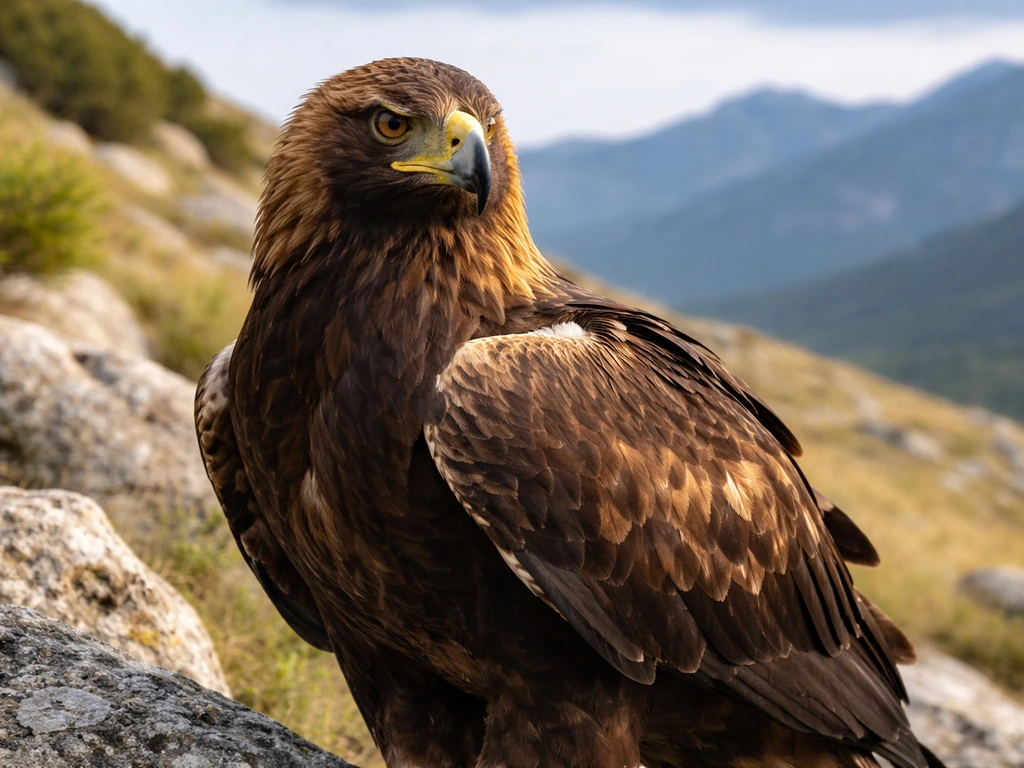
Spain's national bird is the Spanish Imperial Eagle, known in Spanish as the "águila imperial ibérica" (scientific name: Aquila adalberti). You'll see this bird named as Spain's national bird on wildlife sites, travel guides, and Spanish-language education pages alike. There is one important caveat worth knowing upfront: this designation is widely accepted but not officially codified in Spanish law the way some countries formally declare a national bird by government decree. Think of it as the bird that Spain has organically claimed as its own through culture, conservation, and history rather than a formal legal stamp.
Official vs. commonly cited: what the sources actually say

This is where things get a little fuzzy, and it's worth being upfront about it. No Spanish government document reviewed to date contains a binding declaration naming Aquila adalberti as the official national bird of Spain. What you will find instead is a broad consensus among wildlife guides, Spanish-language education sites, and national bird reference lists that all point to the same species. Phrases like "popularly considered," "unofficially recognized," and "said to be Spain's national bird" appear repeatedly across both Spanish and English sources.
That kind of informal-but-universal agreement is actually common for national birds. Many countries around the world operate the same way, where the bird earns the title through cultural weight and popular recognition rather than a legislative vote. Spain is not unusual in this regard. What makes the Spanish Imperial Eagle stand out as the logical choice is the fact that it is entirely endemic to Spain and parts of Portugal, making it as uniquely Spanish as any animal symbol could be.
Spain's official environmental agency, MITECO (the Ministry for Ecological Transition and the Demographic Challenge), treats Aquila adalberti as a flagship conservation species in its official species documentation. The bird has a prominent role in Spanish environmental policy, particularly in the country's southwestern regions where breeding populations are concentrated. That level of institutional attention reinforces the bird's symbolic status even in the absence of a formal declaration.
How Spain ended up with an eagle as its emblem
Eagles have deep roots in Spanish national identity, and that history stretches back centuries. The most significant thread is the Águila de San Juan, the Eagle of Saint John, which became associated with the Catholic Monarchs Ferdinand and Isabella in the late 15th century. This heraldic eagle appeared on their coat of arms and represented Christian imperial power at a pivotal moment in Spanish history, coinciding with the Reconquista and Columbus's 1492 voyage to the Americas.
The St. John's Eagle motif passed through several historical transitions, appearing in various forms under the Habsburg monarchy and later being revived during the Franco era, which borrowed the symbol from the Catholic Monarchs to project a sense of imperial and religious legitimacy. This long chain of eagle symbolism in Spanish heraldry and governance created a cultural environment where eagles were already deeply embedded in how Spain represented itself.
The transition from a heraldic eagle concept to the specific species Aquila adalberti as the national bird candidate makes sense when you consider the 20th-century conservation story. The Spanish Imperial Eagle was nearly driven to extinction by the mid-1900s, with population counts dropping to fewer than 30 breeding pairs at its lowest point. The [Junta de Andalucía’s recovery plan](https://www. juntadeandalucia.
es/medioambiente/portal/areas-tematicas/biodiversidad-y-vegetacion/fauna-amenazada/conservacion-y-recuperacion-de-especies-de-fauna-amenazada/aguila-imperial-iberica) for the Iberian imperial eagle notes that it is endemic to the Iberian Peninsula and that it has been targeted for recovery, with goals such as reaching around 100 breeding pairs in one autonomous community and 500 across Spain. The dramatic recovery effort, led by Spanish conservation programs, turned the bird into a symbol of ecological resilience and national pride.
Oryx (Cambridge Core) recoge la recuperación demográfica de Aquila adalberti y cita el paso de alrededor de 38 parejas en los años 1970 a cerca de 200 parejas en 2004 pasó de ~38 parejas en los años 1970 a ~200 parejas en 2004. That real-world story gave the species a living, contemporary meaning that purely heraldic eagles could never have.
What the eagle means to Spain culturally
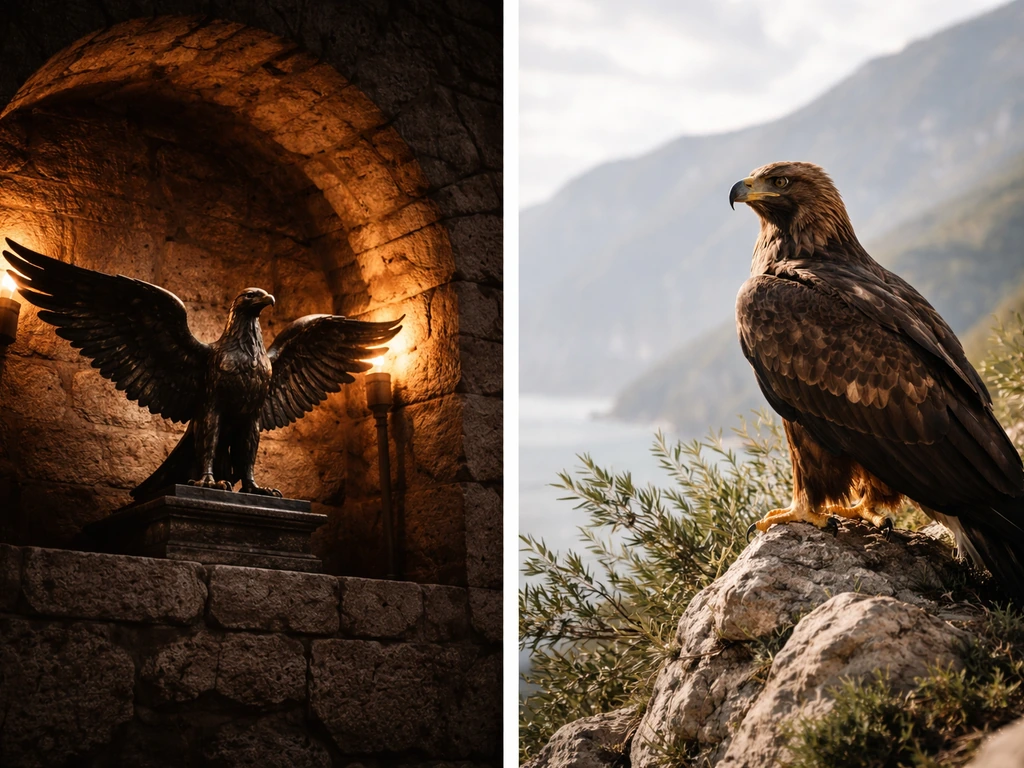
The Spanish Imperial Eagle carries several layers of meaning for Spain. On the historical side, the eagle represents imperial power, Christian heritage, and the legacy of the Catholic Monarchs who unified Spain as a modern nation-state. That symbolism is woven into centuries of Spanish art, heraldry, and political identity in a way that few other animals can match.
On the contemporary side, the bird has become a powerful symbol of Spain's commitment to conservation and environmental stewardship. Because Aquila adalberti is found almost exclusively within Spain (with a smaller population in Portugal), it is sometimes described as one of the most authentically Spanish animals alive. Several Spanish-language sources describe it as "autóctona" (native/indigenous) in a way that reinforces national ownership of the species.
There is also a regional dimension to its symbolism. The eagle's stronghold is in the southwest, particularly in Extremadura, Castilla-La Mancha, and Andalusia. Regional governments in these areas, including the Junta de Castilla y León, have highlighted Aquila adalberti in official conservation communications, treating it as a locally significant emblem as well as a nationally representative one.
Interesting facts and where to spot it
The Spanish Imperial Eagle is visually striking and easy to identify once you know what to look for. Adults have a dark brown body with distinctive white patches on the upper wings (the shoulders/scapulars), which stand out clearly in flight. They have a pale cream-colored head and a yellow cere at the base of the bill. Wingspan typically reaches between 177 and 220 cm, making them a large and imposing bird in the air.
- Scientific name: Aquila adalberti (named after Prince Adalbert of Prussia, who collected a specimen in the 19th century)
- Wingspan: approximately 177 to 220 cm
- Status: Vulnerable on the IUCN Red List, but recovering steadily thanks to Spanish conservation programs
- Population: From fewer than 30 breeding pairs in the 1960s to over 800 pairs today, one of Europe's great conservation success stories
- Range: Almost entirely restricted to Spain, with a small population in Portugal
- Diet: Primarily rabbits and other small to medium mammals, with rabbits forming the backbone of their diet in most territories
If you want to see one in the wild, the Doñana National Park in Andalusia is probably your best starting point. Doñana is a UNESCO World Heritage site and holds one of the highest densities of Spanish Imperial Eagles in the country. The Montes de Toledo area in Castilla-La Mancha and parts of Extremadura are also reliable regions. The breeding season (roughly February to June) is when territorial adults are most visible as they patrol their hunting grounds.
The eagle's image appears on Spanish conservation stamps, regional government publications, and wildlife organization materials. It has become something of an ambassador species for the Iberian Peninsula's unique biodiversity, often appearing alongside the Iberian lynx in promotional content for Spanish nature tourism.
How to verify this and explore other European national birds
If you want to verify the claim yourself, the most reliable path is to check Spain's MITECO species database, which documents Aquila adalberti's distribution and conservation status in Spain. That official government source won't use the phrase "national bird" explicitly, but it confirms that this is the species Spanish authorities treat as the flagship representative of native Spanish avifauna. Cross-reference that against a few Spanish-language education or wildlife sites and you'll see the same species named consistently.
One practical tip: be cautious with generic "national birds of the world" lists that don't cite sources. Some of these lists conflate heraldic eagle symbols with specific living species, or repeat information without checking whether the designation is official or informal. The Spanish Imperial Eagle is the right answer for Spain, but knowing that it is an informal rather than a legally declared title helps you avoid getting into pointless arguments when sources word things differently.
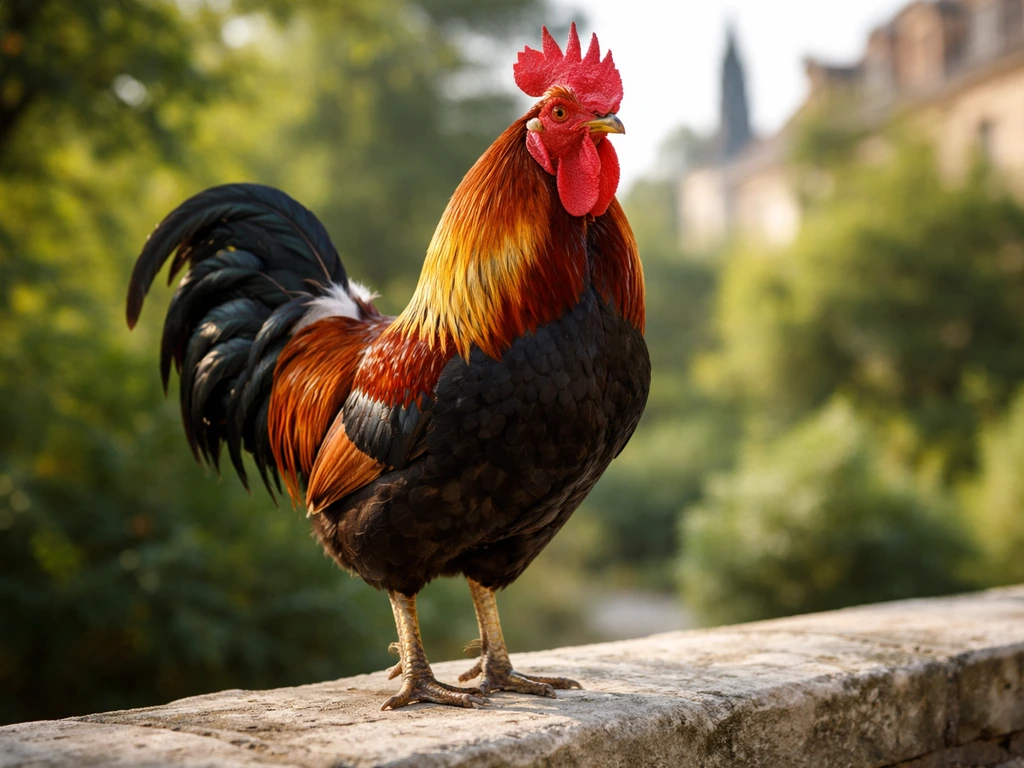
Spain sits within a region where several neighboring countries have their own fascinating bird emblems. If you're curious how the pattern continues across Europe, Portugal's national bird is a natural next stop given the two countries share the Iberian Peninsula and even a small overlap in the Spanish Imperial Eagle's range. France takes a very different approach: France's national bird is the Gallic Rooster, a symbol rooted more in national mythology than in a specific wild species.
Further north, the national bird choices reflect very different landscapes and cultural traditions. Sweden's national bird is the common blackbird, a humble but beloved choice that says a lot about Scandinavian sensibility. Meanwhile, Norway's national bird, the white-throated dipper, is similarly tied to the natural landscape rather than imperial tradition. Finland's national bird, the whooper swan, carries its own rich cultural weight in Finnish mythology and art.
The Netherlands' national bird is the black-tailed godwit, a wader species with strong ties to Dutch agricultural landscapes. And if you want to explore the Celtic fringe, Wales's national bird, the red kite, is one of the great conservation comeback stories in British history, rivaling Spain's own eagle recovery in drama and significance.
The bottom line on Spain: the Spanish Imperial Eagle, Aquila adalberti, is the bird you're looking for. It's deeply tied to Spanish history through centuries of eagle heraldry, it's one of the most uniquely Spanish animals on Earth, and its conservation recovery story has made it a modern national symbol in a way that feels earned rather than assigned.