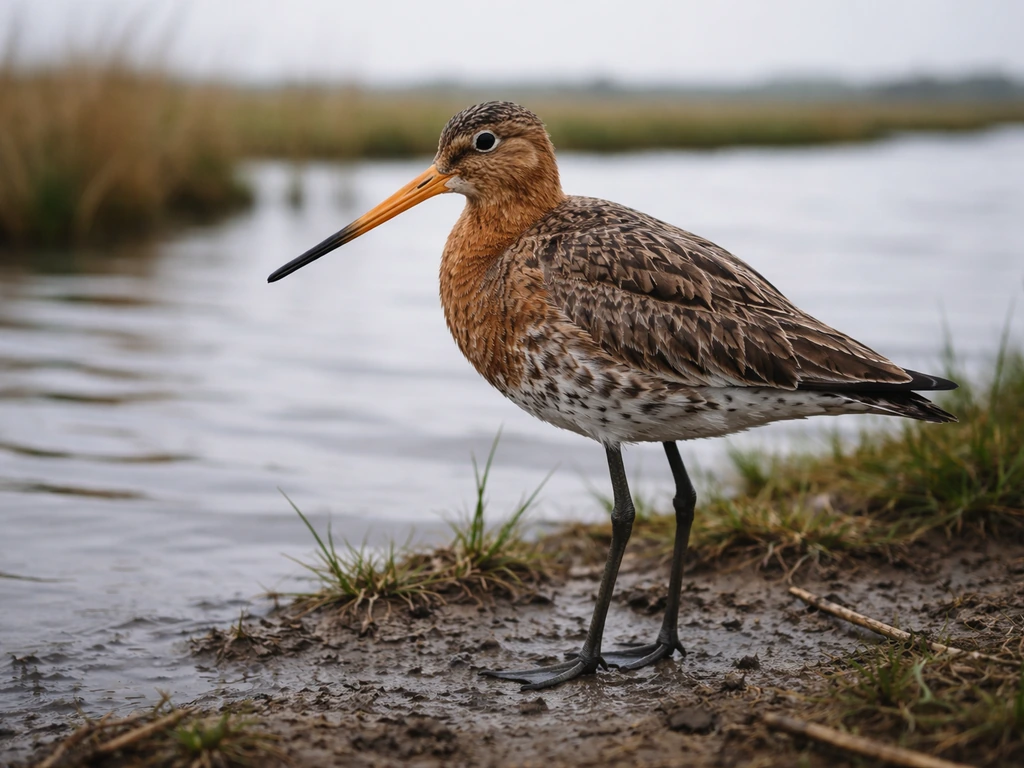
The national bird of the Netherlands is the black-tailed godwit, known in Dutch as the grutto (Limosa limosa). The black-tailed godwit, Dutch name grutto (Limosa limosa), is recognized as the national bird of the Netherlands blank" rel="noopener noreferrer">the black-tailed godwit, Dutch: grutto (Limosa limosa). It was officially proclaimed the nationale vogel of the Netherlands on 17 November 2015, chosen through a public election organized by Vogelbescherming Nederland (Bird Protection Netherlands) and VARA's popular nature program Vroege Vogels, broadcast on NPO2.
What Is the National Bird of the Netherlands?

Marcus Chen
23 May 2026
Official status: how the grutto became the national bird
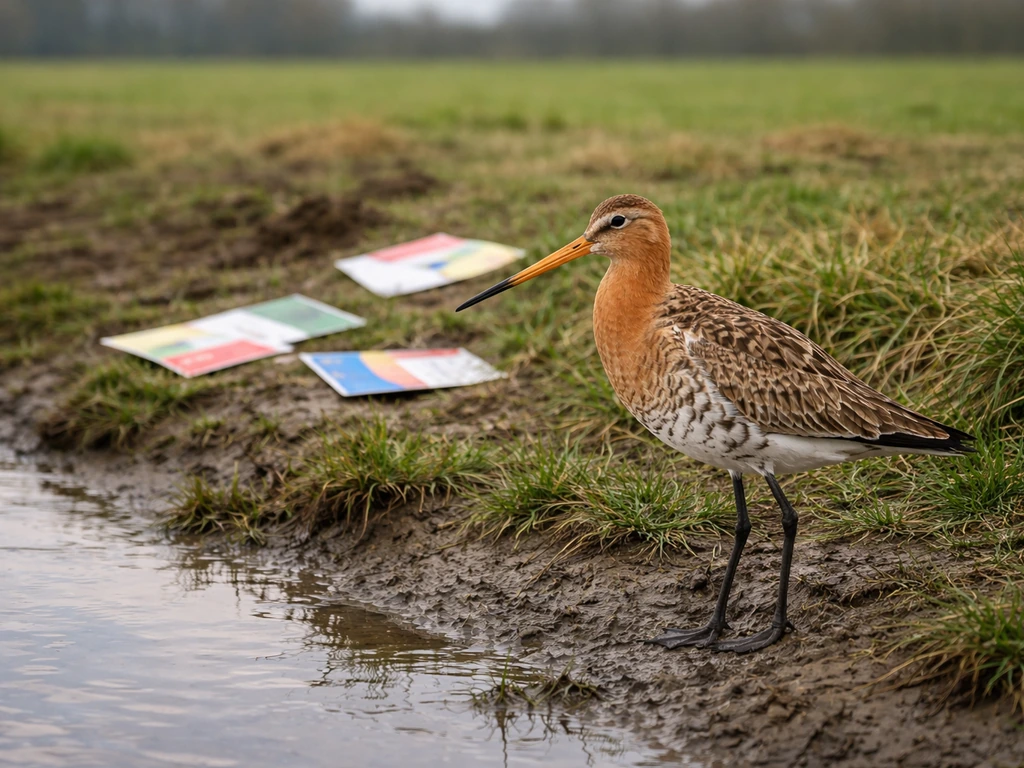
Unlike the national bird designations in some other countries, the Netherlands has no formal government or royal decree naming a national bird. The grutto's status comes from a widely recognized public election, which gives it a different but still meaningful kind of legitimacy. The Dutch royal coat of arms and national heraldic symbols make no mention of a bird at all, so this title belongs entirely to the cultural and ornithological community.
The election, called 'De Verkiezing van de Nationale Vogel,' was a joint project between Vogelbescherming Nederland and Vroege Vogels. The BNNVARA Vroege Vogels page “Nationale Vogel” describes this election as the choice of the Netherlands' Nationale Vogel. The announcement was made on 17 November 2015, with the grutto winning over other candidate species. Since then, every major Dutch bird organization, including Sovon (the Dutch Centre for Field Ornithology) and Natuurmonumenten, uses the 'nationale vogel' framing when writing about the grutto. That kind of consistent institutional adoption is what makes the status stick, even without a royal stamp.
Before 2015, various birds were casually floated in online lists and public discussions as candidates for a Dutch national bird, but there was no consensus. The 2015 election settled the question in a clear and very public way.
Why the grutto? Symbolism and what it represents
The grutto fits the Netherlands in a way that's almost too obvious once you understand Dutch geography. The country is defined by its polders, wet meadows, and low-lying agricultural land, and the grutto is the quintessential 'weidevogel,' meaning meadow bird. Vogelbescherming calls it the 'koning van de weide,' which translates to 'king of the meadow.' That phrase captures why this bird resonates so deeply with Dutch identity.
The Netherlands holds one of the most important breeding populations of black-tailed godwits in the world. When grutto arrive back from their wintering grounds in West Africa and southern Europe each spring, it signals the start of the Dutch meadow season. That annual return has become something of a cultural moment, reinforced by seasonal events like the 'Welkom Grutto Weekend' organized by Vogelbescherming, where the public is invited to go out and spot the returning birds.
Natuurmonumenten also calls the grutto 'de weidevogel van Nederland,' linking it directly to the Dutch wet meadow habitat and to ongoing conservation efforts. The bird isn't just symbolic in a decorative sense; it acts as a living indicator of the health of the Dutch countryside. When grutto numbers drop, it reflects problems with intensive farming, drainage, and habitat loss. That conservation dimension adds a layer of meaning that feels very Dutch: practical, land-connected, and tied to stewardship.
The grutto in Dutch culture and history
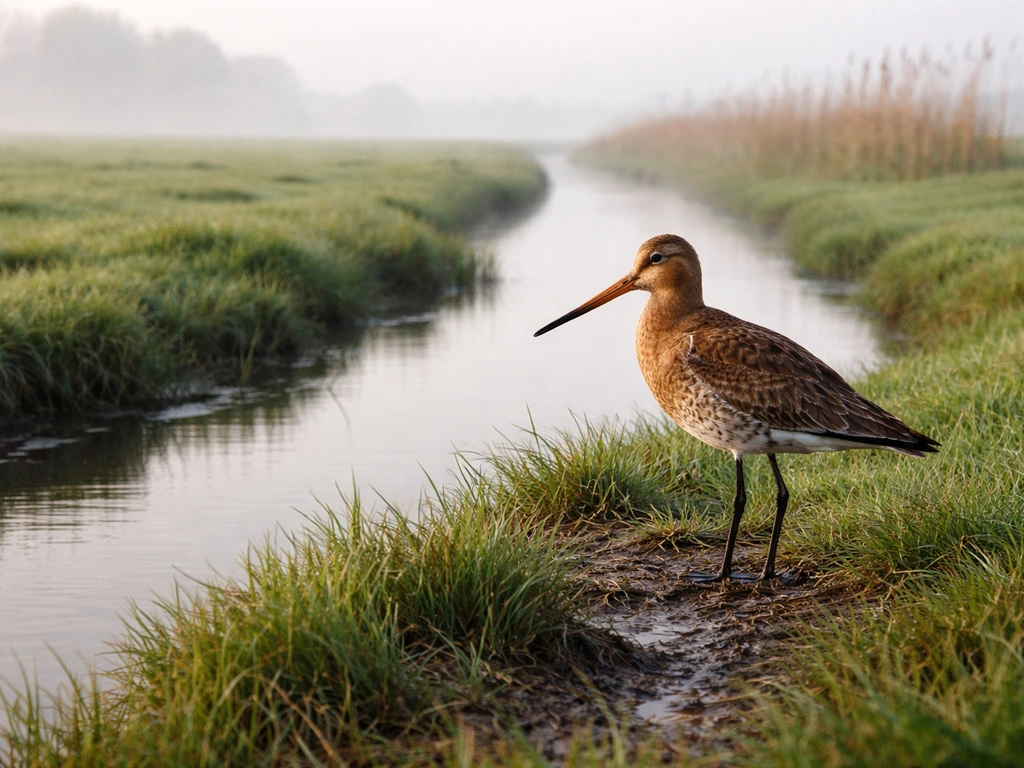
The relationship between the Dutch and their meadow birds goes back centuries. The polder landscape, created through generations of water management and land reclamation, is itself a symbol of Dutch ingenuity. The grutto has lived in that engineered landscape as a constant presence, nesting in the grass between the ditches, its call one of the defining sounds of the Dutch spring countryside.
Vogelbescherming frames the grutto as a kind of spring messenger, the bird that announces the season across Dutch farmland. This seasonal symbolism connects it to an older rural Dutch experience that many people still feel a strong nostalgia for. Even as the Netherlands has urbanized, the image of the grutto in a green polder meadow remains a powerful shorthand for 'Dutch nature.'
The grutto's designation also arrived at a culturally significant moment. By 2015, the species was already recognized as under pressure from agricultural intensification. Choosing it as the national bird was partly a conservation statement: a way of saying this bird matters, and so does the landscape it depends on. That kind of values-driven symbolism has parallels with how other European countries have picked their national birds. France's Gallic rooster and Sweden's common blackbird each carry their own layers of cultural meaning, and the grutto is the Netherlands' equivalent: a bird that tells you something real about the country.
Interesting facts about the black-tailed godwit
- The grutto is a large wader, roughly 37 to 42 cm long, with a long, slightly upturned bill and long legs that project clearly beyond the tail in flight.
- In flight, it shows a broad white wing stripe and a white tail base with a distinctive broad black terminal band, making it easier to identify than many other waders.
- The species winters mainly in West Africa and the Iberian Peninsula, making a long migration to reach Dutch meadows each spring.
- The Netherlands holds a globally significant proportion of the western European breeding population, which is why Dutch conservation policy around the grutto has international importance.
- During the breeding season, males perform dramatic display flights over meadows, calling loudly, which is where the iconic 'grutto' sound comes from.
- The species is classified as Near Threatened globally, and Dutch breeding numbers have declined sharply over recent decades due to changes in agricultural practice.
- Vogelbescherming runs the 'Welkom Grutto Weekend' each spring, timed to coincide with the main return migration to the Netherlands.
Where and when to see the grutto in the Netherlands
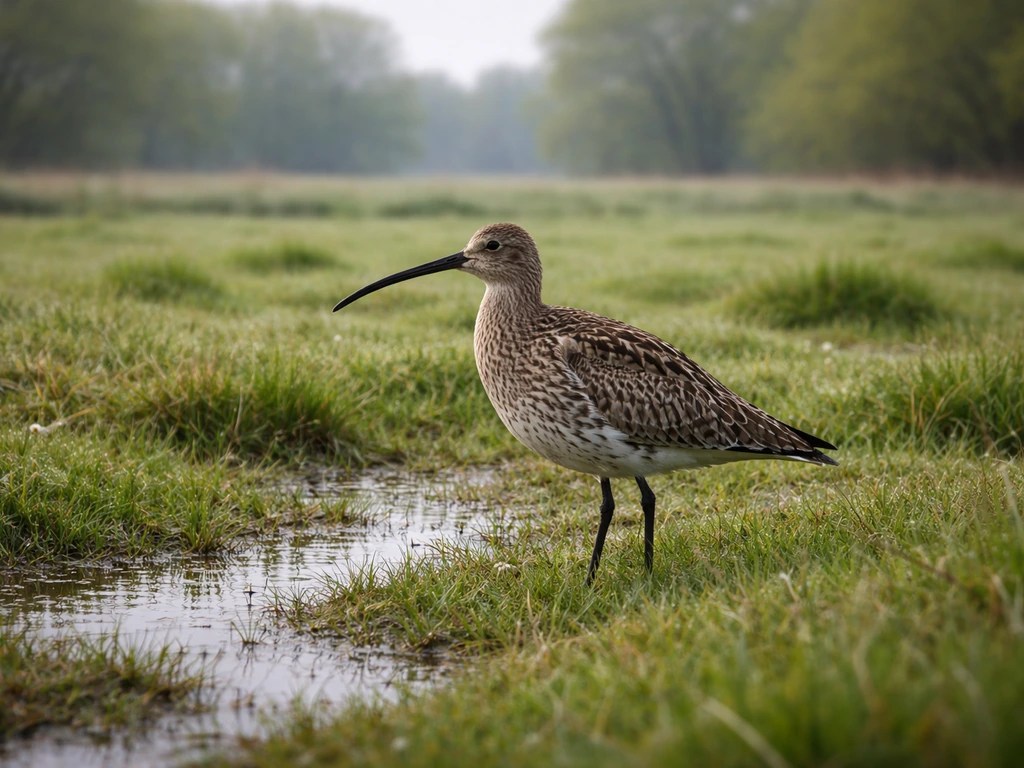
The best time to see grutto in the Netherlands is from March through June, when breeding birds are present in meadows across the country. Spring arrival is the most spectacular period, with birds gathering in wet grasslands and performing display flights.
Natuurmonumenten highlights several key areas for finding grutto. The Greidhoeke in Friesland, including spots like Skrok, Skrins, and the Lionserpolder, is one of the most reliable regions. Eemland in Utrecht and the Wormer- en Jisperveld in North Holland are also well-known grutto areas. For Natura 2000 protected sites specifically used by grutto for feeding and roosting, Vogelbescherming points to the Groote Wielen, Haringvliet, and Polder Zeevang.
If you want to learn more about the grutto, Vogelbescherming's online 'vogelgids' (bird guide) has a detailed species page with identification tips, habitat notes, and conservation status. Sovon's species pages give you population data and monitoring context. Both are free, in Dutch, and genuinely useful for anyone wanting to go beyond the basics.
Telling the grutto apart from similar birds
The most common identification mix-up is between the grutto and the rosse grutto (bar-tailed godwit, Limosa lapponica). In flight, the grutto has a clearly visible broad white wing stripe that the bar-tailed godwit lacks. The grutto also has longer legs that project well beyond the tail in flight, and a longer, straighter bill. Once you know those two features, separating them becomes much more reliable.
Common mix-ups and related Dutch national symbols
The most frequent confusion is between the national bird and the national animal. The Netherlands' national animal is the lion, which appears on the royal coat of arms and the national flag's heraldic elements. The grutto has nothing to do with official heraldry; it's a cultural and conservation symbol chosen by public vote.
Some people also wonder whether the Netherlands has a provincial or city bird that outranks the national title. The grutto is associated most strongly with the polder provinces like Friesland and Utrecht, but its national bird status covers the whole country. Individual provinces and cities do have their own heraldic animals, but none of these replace or conflict with the grutto's national bird designation.
Another common question is whether the election result from 2015 is 'official' in the same way as, say, the bald eagle in the United States or the peacock in India. The honest answer is no, it's not a statutory designation. But in the Netherlands, the grutto is universally used in that role by every major bird and nature organization, which gives it the same practical weight. For the purposes of education, reference, and public communication, it is the national bird.
If you're exploring national birds across Europe, the Netherlands sits in interesting company. If you're also comparing countries, you might be looking for what the national bird of Wales is what is the national bird of Wales. Spain’s national bird is the common swift what is spain's national bird. Neighboring countries have made quite different choices: France went with the Gallic rooster (a more symbolic than ornithological pick), and Portugal chose the barcelos cockerel as a cultural symbol. Portugal’s national bird is the bar-tailed godwit, known locally as the bar-tailed godwit. If you're wondering what is France's national bird, the Gallic rooster is the commonly referenced choice. Scandinavian countries like Norway, Sweden, and Finland each chose birds strongly tied to their own specific landscapes, much like the grutto's connection to the Dutch polder. If you're curious about Finland specifically, the national bird is the whooper swan what is the national bird of finland. Scandinavian countries like Norway, Sweden, and Finland each chose birds strongly tied to their own specific landscapes national bird of Norway. That pattern of landscape-linked national birds makes the grutto a very typical example of how these choices work. Sweden’s national bird is the common blackbird, a species closely associated with the country’s everyday landscapes Sweden's national bird.
| Country | National Bird | Selection Basis |
|---|---|---|
| Netherlands | Black-tailed godwit (grutto) | Public election, 2015, organized by Vogelbescherming and Vroege Vogels |
| France | Gallic rooster (coq gaulois) | Historical/cultural symbol, not a specific bird species |
| Sweden | Common blackbird (koltrast) | Public vote |
| Norway | White-throated dipper (fossekall) | Designated by Norwegian ornithological society |
| Finland | Whooper swan (laulujoutsen) | Designated by Finnish ornithological society, 1960 |
| Portugal | Barcelos rooster (galo de Barcelos) | Cultural and folkloric symbol |
FAQ
Is the grutto the same bird as the black-tailed godwit, and what is its scientific name?
Yes. In Dutch the name is grutto, and the English species name is black-tailed godwit. The scientific name is Limosa limosa, and using the scientific name helps avoid confusion with similar godwit species.
What if I visit outside March to June, can I still see the national bird?
If you miss the March to June window, you can still find grutto outside breeding season in parts of the Netherlands, but sightings depend heavily on where they are feeding or roosting that year. Check current local reports for sites like Natura 2000 areas rather than relying on seasonal “arrival” expectations.
Where should I look in the Netherlands to maximize my chances of spotting grutto?
The best approach is to look for wet meadow habitat, not just any open field. Grutto prefer grassland with damp conditions where they can forage, so places that are regularly inundated or managed as wet meadows usually outperform dry farmland for viewing.
What identification mistakes make people confuse grutto with other birds?
Common birding mistake is trying to identify from distance only. If you can, observe flight features (the broad white wing stripe and leg projection beyond the tail) and bill shape, because these are more reliable than size estimates or vague calls.
Is the grutto national bird status legally official, like some countries’ government decrees?
Not exactly. The Netherlands does not have a single government decree, so it is not a statutory “law” type designation. However, major organizations consistently use the grutto as the national bird for education and public communication, which is why the title is widely treated as authoritative in practice.
Do any provinces or cities have a bird title that overrides the national bird?
There is no replacement hierarchy where a city or province title overrides the national bird. Provincial and municipal symbols may include their own heraldic animals, but they coexist with the grutto being the national bird for the whole country.
How should I compare the Netherlands’ national bird choice with other countries’ national bird designations?
If you are comparing “national bird” lists across Europe, it helps to check whether each country’s designation comes from law, monarchy, or public selection. In the Netherlands, the public election process and consistent use by major organizations is the key reason the title has staying power.