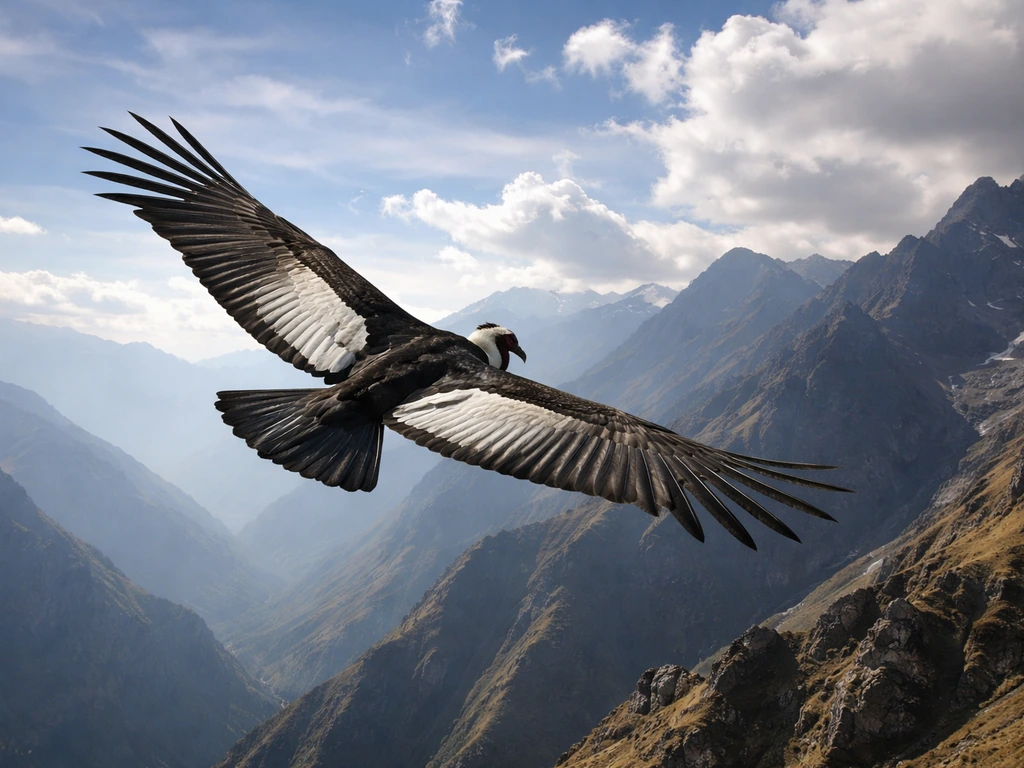
Ecuador's national bird is the Andean condor (Cóndor Andino), scientific name <em>Vultur gryphus</em>. That's the direct answer, and it's well-established: Cornell Lab of Ornithology's Ecuador bird activity guide states plainly, "El Cóndor Andino (<em>Vultur gryphus</em>) es el ave nacional del Ecuador." If you've seen conflicting claims online, ignore them. It's the condor, full stop.
What Is Ecuador’s National Bird? The Official Answer

Marcus Chen
15 Apr 2026
Official status and how it was recognized
The Andean condor's status as Ecuador's national bird is backed up by more than tradition. Ecuador's government went a step further by formally designating July 7 as the "Día Nacional del Cóndor Andino" (National Day of the Andean Condor), a declaration tied to a conservation action plan registered in Ecuador's official government register (Registro Oficial No. Esa designación legal remite al “Registro Oficial No. 716” y establece el 07 de julio como el “Día Nacional del Cóndor” para fines de protección del Cóndor Andino (Vultur gryphus). 716). That national day has been commemorated every year since July 7, 1996, which means as of 2026, Ecuador has been celebrating its national bird this way for 30 years.
The ProAmazonía Atlas Ambiental, an official environmental reference for Ecuador, lists the Andean condor under "Especies Emblemáticas" (emblematic species) of the country's biodiversity, specifically calling it "Ave nacional del Ecuador, representativa del páramo." That phrase matters: it links the bird not just to national pride but to a specific ecosystem, the páramo highland grasslands, which are Ecuador's ecological identity.
What the condor means to Ecuador
The Andean condor is one of the most loaded symbols in South American culture. For Andean peoples, it represents power, freedom, and a connection between the earthly world and the heavens. It appears in regional legends, traditional artwork, and on national emblems across the continent. Ecuador's national coat of arms features the condor perched prominently at the top, wings spread, which you'll see on official government documents and currency.
Colombia's Ministry of Environment has noted that the condor carries "great cultural relevance for Andean peoples" and explicitly lists Ecuador among the countries whose national shields include the bird. That kind of cross-border recognition tells you something: this isn't a bird that Ecuador just happened to pick. The condor is woven into the identity of the entire Andean region, and Ecuador claiming it as a national symbol reflects a deep cultural truth, not just a bureaucratic decision.
The history behind the choice
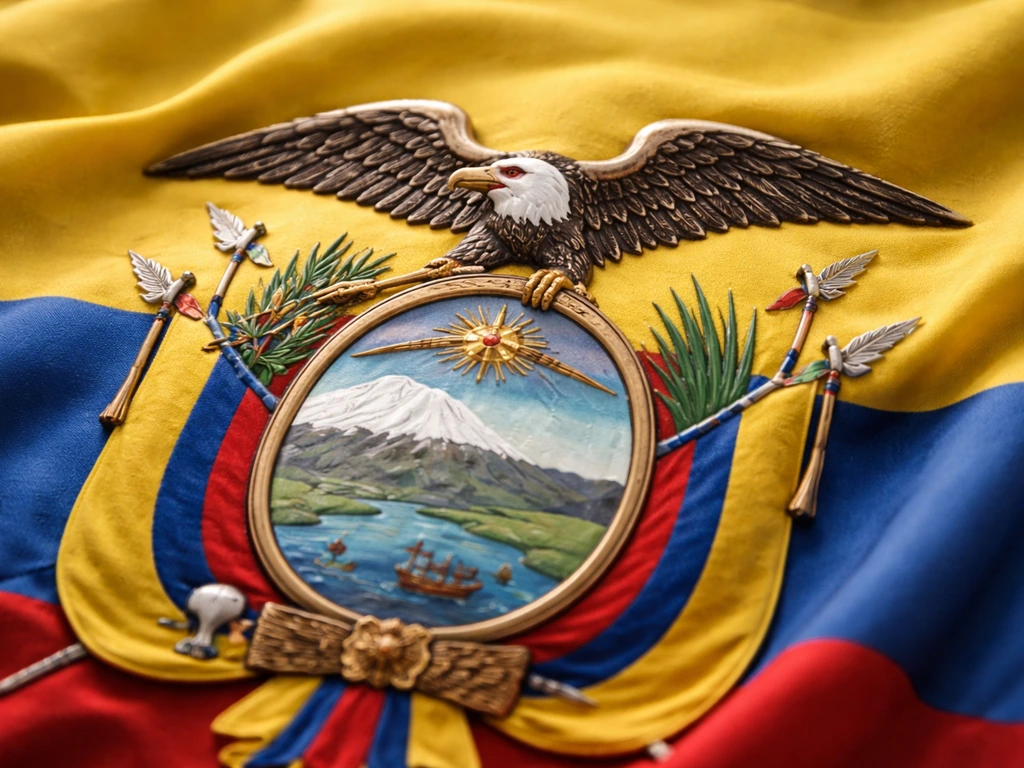
The condor's place on Ecuador's coat of arms predates the 1996 national-day designation by well over a century. The bird has been a fixture of Ecuadorian national iconography since the country's founding era in the 19th century, making it one of the longest-standing avian symbols in the Americas. The 1996 action plan and national day weren't choosing the condor fresh; they were formalizing and reinforcing a symbol that had always been there.
The conservation angle matters too. By the 1990s, the condor's population was under serious threat across its range. Ecuador designating an official national condor day in 1996 was partly a conservation move: putting the bird front and center in public awareness to drive protection efforts. El Universo has described the condor as both a national emblem and a species facing extinction risk, which captures the tension Ecuador has navigated for decades. The last official national condor census was conducted in June 2018, and as of 2026, that figure has not been officially updated, which conservationists have flagged as a gap in monitoring.
How to identify the Andean condor
If you're planning to spot one in the wild, knowing what to look for helps. The Andean condor is one of the largest flying birds on Earth, measuring roughly 100 to 130 cm in body length, with a wingspan that can exceed 3 meters. Once you see one soaring over Andean ridges, the size alone is unmistakable.
| Feature | Description |
|---|---|
| Body length | Approximately 100–130 cm |
| Plumage (adult) | Predominantly black with grayish wing coverts |
| Neck collar | Distinctive white feather ruff around the neck |
| Head/neck skin | Bare, reddish or grayish skin, no feathers |
| Male crest | Prominent fleshy caruncle (comb-like crest) on the head |
| Female | Smaller, no crest; red eyes (versus brown in males) |
| Wingspan | Can exceed 3 meters |
The white neck collar is the easiest field marker at a distance. In flight, the condor holds its wings in a slight dihedral (V-shape) and soars with minimal flapping, using thermal currents to stay aloft for hours. That effortless soaring is part of why Andean cultures historically associated it with the sky and the divine.
Where to find it in Ecuador
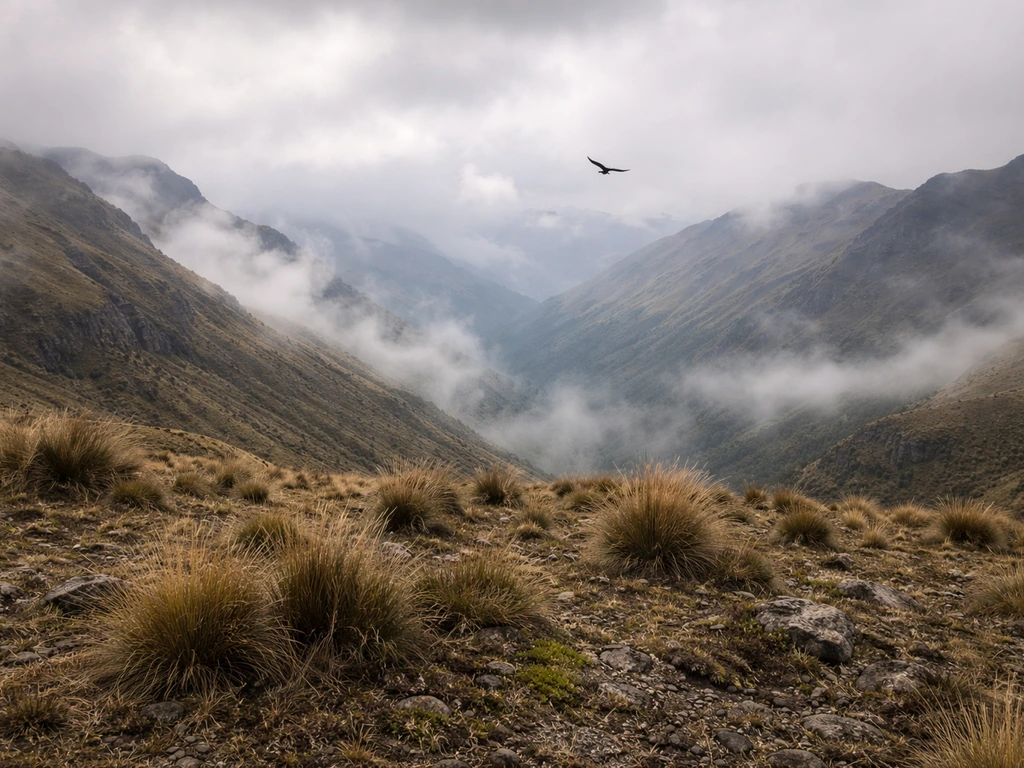
The Andean condor in Ecuador is primarily a bird of the páramo and high Andean zones. Cajas National Park, located in the southern highlands near Cuenca, has the condor listed on its official bird checklist and offers one of the more accessible settings for sightings. The park's open páramo habitat and altitude range make it well suited to condor movement patterns.
In the northern highlands, the Imbabura region has been an active area for condor monitoring and reintroduction work. The Zoológico de Quito has documented the return of rehabilitated condors to páramo zones in Imbabura, which is a sign that conservation efforts are producing results. Field research tracking condor home ranges in Ecuador has shown the birds using rugged, rocky terrain and open grazing landscapes, typically at higher elevations, though sightings have been recorded at altitudes as low as 1,000 to 2,000 meters in certain zones.
If you're visiting Ecuador specifically to see condors, target the early morning hours when thermals begin to build. Condors are most active in flight mid-morning through early afternoon. Bring binoculars with at least 8x magnification, and look for the soaring silhouette along ridge lines rather than scanning flat terrain.
Fun facts and things people get wrong
- The Andean condor is a New World vulture, not a true eagle or hawk. Despite its majestic reputation, it's more closely related to storks than to raptors like eagles.
- It's a scavenger, not a hunter. The condor feeds on carrion and plays a critical ecological role cleaning up carcasses in the Andes. Its bare head is an adaptation for feeding inside carcasses without matting feathers.
- Condors can live over 70 years in captivity, making them one of the longest-lived birds in the world. In the wild, their lifespan is shorter but still exceptional.
- They don't breed often. A condor pair typically raises only one chick every two years, which is a major reason population recovery is so slow.
- A common misconception is that condors are only found in Peru or Colombia. Ecuador has its own wild population, and active field research and reintroduction programs are working to expand it.
- Ecuador's national condor day (July 7) is sometimes confused with other dates or attributed to different years. The official designation traces back to 1996, formalized in the government's Registro Oficial.
How Ecuador's condor fits the broader picture
Ecuador sits at the heart of the Andean condor's range, and understanding its national bird gives you a window into the country's geography, culture, and conservation priorities all at once. If you're curious how neighboring countries have approached similar choices, it's worth looking at what is the national bird of Bolivia, since Bolivia also shares the Andean condor as a national symbol, making for an interesting regional comparison.
Venezuela, another South American neighbor, took a completely different direction with its national bird selection. Reading about what is the national bird of Venezuela shows just how varied the reasoning behind these choices can be across the continent, from ecological habitat to indigenous symbolism to colonial history.
For a wider regional view, what is the national bird of South America is a useful starting point if you want to map out which birds different countries chose and why. And for another example of a landlocked Andean nation making a distinctive national-bird choice, the article on what is the national bird of Paraguay offers an interesting contrast to Ecuador's high-altitude condor symbol.
The short version: Ecuador's national bird is the Andean condor, officially recognized, historically rooted, and actively celebrated every July 7. It's a bird that earns its symbolic status not just through appearance but through the genuine role it plays in Andean ecosystems and culture. If you ever get the chance to watch one soar over the páramo, it's immediately clear why this bird has carried so much meaning for so long.
FAQ
Are there any other birds officially recognized as Ecuador’s national bird?
No. Ecuador’s national bird is the Andean condor (Cóndor Andino). Other species may be listed as emblematic or protected in different programs, but they are not the national-bird designation.
Why do some websites list a different national bird for Ecuador?
Most mismatches come from confusing “emblematic species” with “national bird,” or translating older regional or cultural symbols into a national-bird claim. In Ecuador’s case, the formal national-day designation and the emblem usage tie back to the Andean condor.
What does the national day for the Andean condor (July 7) mean in practice?
It is tied to public awareness and conservation efforts, not just a ceremonial date. If you visit around July 7, you may find local outreach events, school activities, or park communications focused on condor protection and sightings.
Is the Andean condor in Ecuador the same species found in neighboring countries?
Yes, it is the same species (Vultur gryphus). What changes by country is how populations are distributed, how often individuals are seen, and how monitoring and reintroduction programs are managed.
Where in Ecuador is the best chance to see the Andean condor?
Look for open highland habitat tied to the páramo and rocky terrain. Cajas National Park near Cuenca is one option, and the northern highlands around Imbabura have been part of monitoring and reintroduction work.
What altitude should I expect for condor sightings in Ecuador?
Condors are commonly associated with higher Andean zones, but sightings can occur as low as about 1,000 to 2,000 meters in certain areas. Weather and thermal conditions often matter more than altitude alone.
What time of day gives the best viewing odds?
Early morning through early afternoon tends to be best because thermals build and help the birds soar longer with minimal flapping. Plan to be at ridge lines or open highland viewpoints during that window.
What field marks help confirm you are looking at an Andean condor?
At distance, the white neck collar is a key indicator. Also, in flight the silhouette is distinctive for very large soaring with a V-shaped wing posture, with reduced flapping as it rides thermals.
What’s the best way to bring home the “right” information when planning a visit or a school project?
When you cite the national-bird claim, include the common name (Andean condor) and the scientific name (Vultur gryphus), and distinguish national-bird status from general conservation or “emblematic species” listings.
How up to date is the condor monitoring data mentioned for Ecuador?
The last official national census referenced in the article was in June 2018, and there has not been an official update as of 2026. For planning, treat recent sightings and local reports as supportive, but not as replacements for updated census figures.