
South America is a continent of 12 sovereign countries, and each one has its own national bird. There is no single "national bird of South America" for the whole continent. So if you searched this phrase, you are almost certainly looking for one specific country's bird, or you want a full rundown of every South American country's official national bird in one place. Either way, you are in the right spot.
What Is the National Bird of South America? Answers by Country

Marcus Chen
11 May 2026
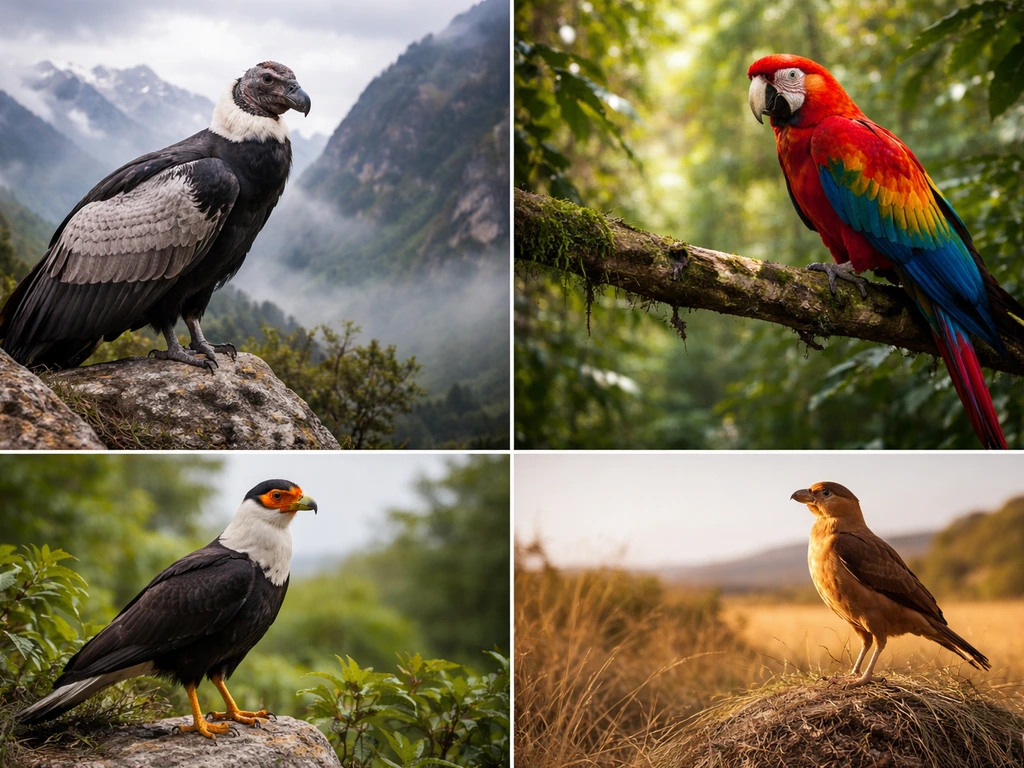
Which countries actually count as South America
The United Nations M49 classification lists the following sovereign countries under "South America": Argentina, Bolivia, Brazil, Chile, Colombia, Ecuador, Guyana, Paraguay, Peru, Suriname, Uruguay, and Venezuela. That is 12 countries total. The same UN list also includes French Guiana, which is technically an overseas territory of France rather than a sovereign nation, so it does not have its own national bird. The Falkland Islands are another dependent territory sometimes attached to the continent geographically, but again, no independent national bird designation there either.
Panama often gets lumped in with South America in casual conversation, but it is officially part of Central America, which itself falls under the North America region in UN classification. So Panama is out of scope here. Stick to those 12 sovereign countries and you have the full picture.
The national birds of every South American country
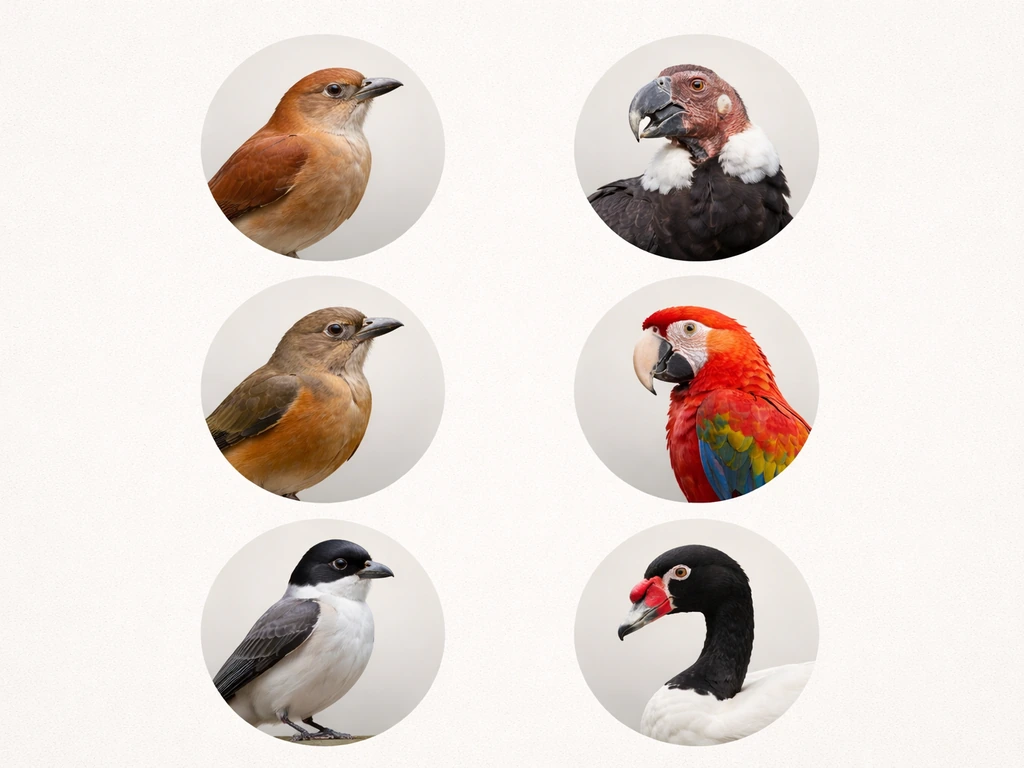
Here is the complete list. Once you spot your country, the sections below give the full story behind each bird.
| Country | National Bird | Common Name |
|---|---|---|
| Argentina | Rufous hornero | Hornero |
| Bolivia | Andean condor | Cóndor andino |
| Brazil | Rufous-bellied thrush | Sabiá-laranjeira |
| Chile | Andean condor | Cóndor andino |
| Colombia | Andean condor | Cóndor andino |
| Ecuador | Andean condor | Cóndor andino |
| Guyana | Harpy eagle | Harpy eagle |
| Paraguay | Bare-throated bellbird | Campanero / Pájaro campana |
| Peru | Andean cock-of-the-rock | Tunki / Gallito de las rocas |
| Suriname | Scarlet macaw | Arakanga |
| Uruguay | Southern lapwing | Tero |
| Venezuela | Venezuelan troupial | Turpial |
Why these birds were chosen: symbolism and meaning
Andean condor (Bolivia, Chile, Colombia, Ecuador)
The Andean condor is the most dominant national bird symbol on the continent, claimed by four countries. That should tell you how deeply it is woven into Andean culture. With a wingspan reaching up to 3.3 meters (about 10.8 feet), it is the largest flying bird in the world by combined wingspan and weight. Pre-Columbian Andean civilizations, including the Inca, regarded the condor as a sacred messenger between the earthly world and the heavens. It represents power, freedom, and an almost supernatural connection to the mountains. For Bolivia, Chile, Colombia, and Ecuador, the condor on the national emblem is not just a bird. It is a statement of identity rooted in Indigenous heritage and Andean geography.
Rufous hornero (Argentina)
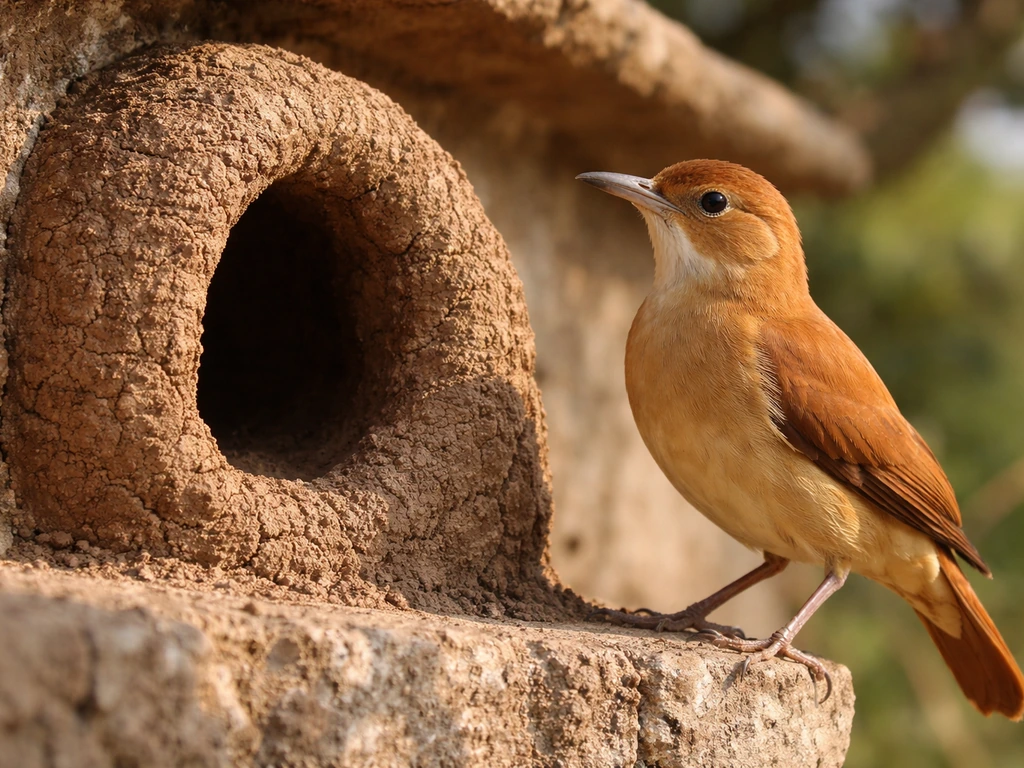
Argentina's national bird is the rufous hornero, locally called "el hornero" (the oven-maker). The name comes from the bird's remarkable mud nest, which looks like a dome-shaped clay oven. Argentines chose it not because it is the flashiest bird in the country, but because it is everywhere, it is hardworking, and it builds its own home with its own two feet. That symbolism of honest labor and resilience resonated deeply. Argentina actually marks October 5 as the "Día Nacional del Ave" (National Bird Day), showing just how seriously the country takes this kind of avian symbolism in public life.
Rufous-bellied thrush (Brazil)
Brazil's national bird is the sabiá-laranjeira, the rufous-bellied thrush. It was popularized as a national symbol largely through literature. The poet Gonçalves Dias immortalized it in his famous 1843 poem "Canção do Exílio" (Song of Exile), where he wrote about longing for the bird's song in his homeland. That poem became deeply embedded in Brazilian culture, and the bird became inseparable from ideas of home, nostalgia, and national identity. It was blank" rel="noopener noreferrer">officially designated as the national bird in 2002.
Harpy eagle (Guyana)
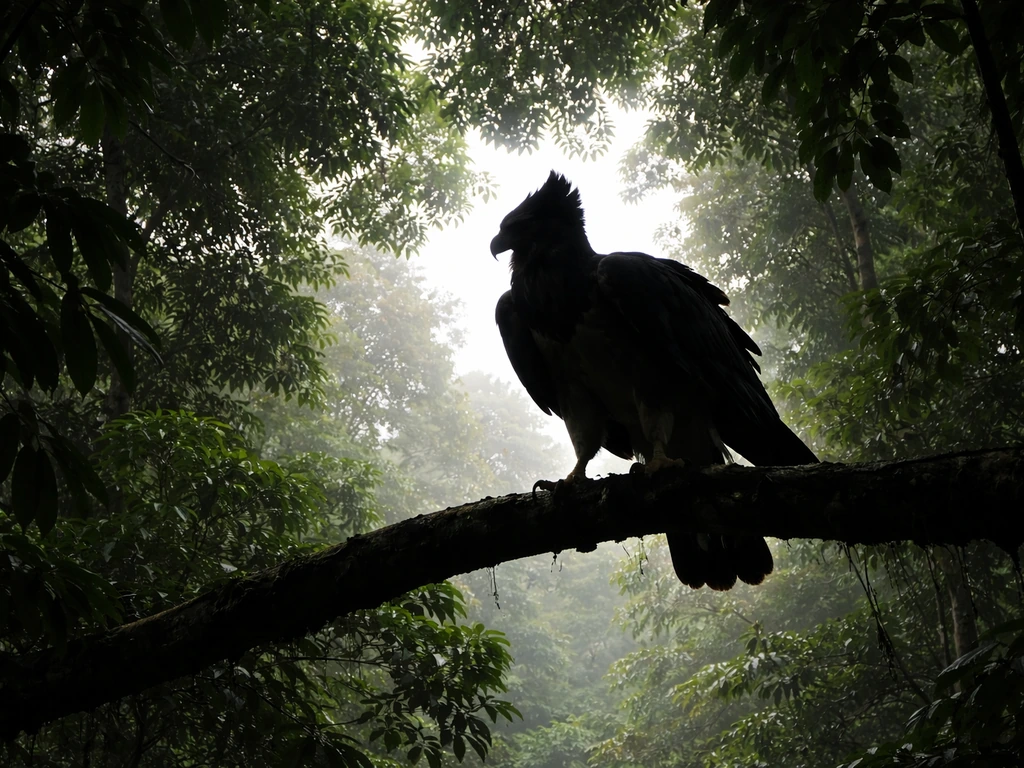
Guyana's national bird, the harpy eagle, is arguably the most powerful raptor in the Americas. It hunts monkeys and sloths in the forest canopy, has talons roughly the size of a grizzly bear's claws, and is one of the largest eagles on Earth. Guyana chose it to represent strength and the country's vast, largely untouched rainforest interior. It appears on Guyana's coat of arms and is closely tied to the country's image as a place of wild, unspoiled nature.
Bare-throated bellbird (Paraguay)
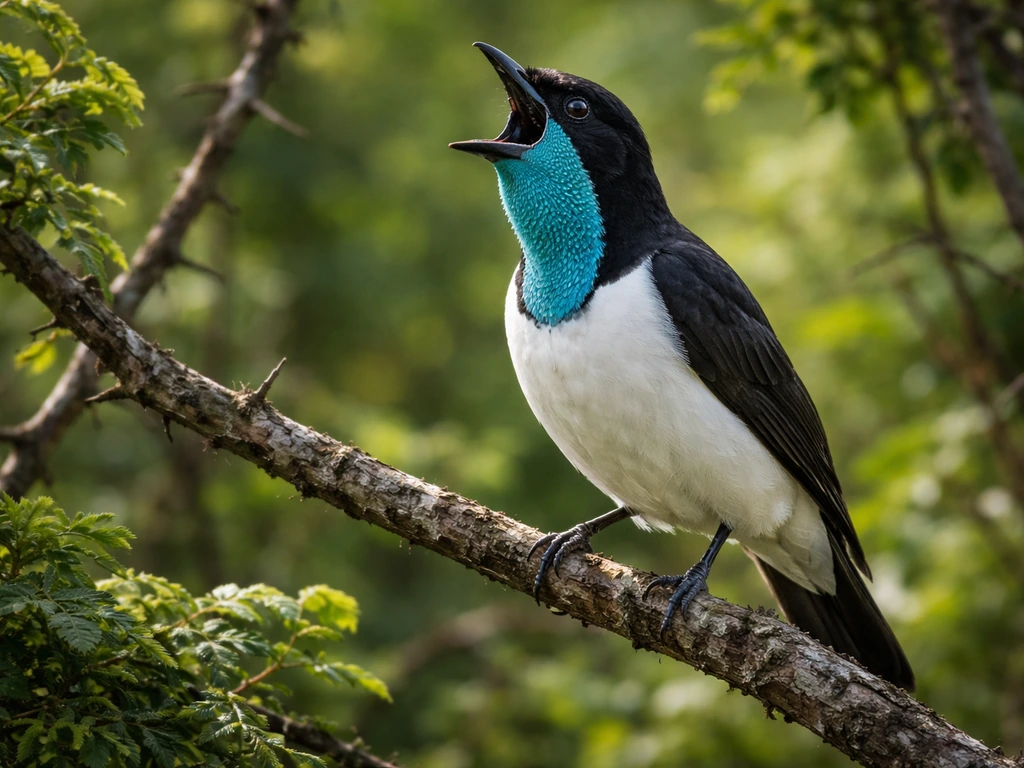
Paraguay's national bird, the bare-throated bellbird (pájaro campana, or "bell bird"), is famous for having one of the loudest calls of any bird in the world, measured at up to 125 decibels at close range. The male is almost entirely white with a striking bare blue-green throat. Its ringing, bell-like call is a deeply familiar sound in Paraguayan folklore and rural life, which is why it resonates so strongly as a national symbol.
Andean cock-of-the-rock (Peru)
Peru's national bird is the Andean cock-of-the-rock (tunki in Quechua). The male is unmistakable: a brilliant scarlet-orange body with a large disc-shaped crest covering most of its bill. It lives in Andean cloud forests and is considered one of the most spectacular birds in South America. For Peru, it represents the country's extraordinary biodiversity and its deep roots in Andean Indigenous culture. The tunki also appears in traditional Quechua stories and art.
Scarlet macaw (Suriname)
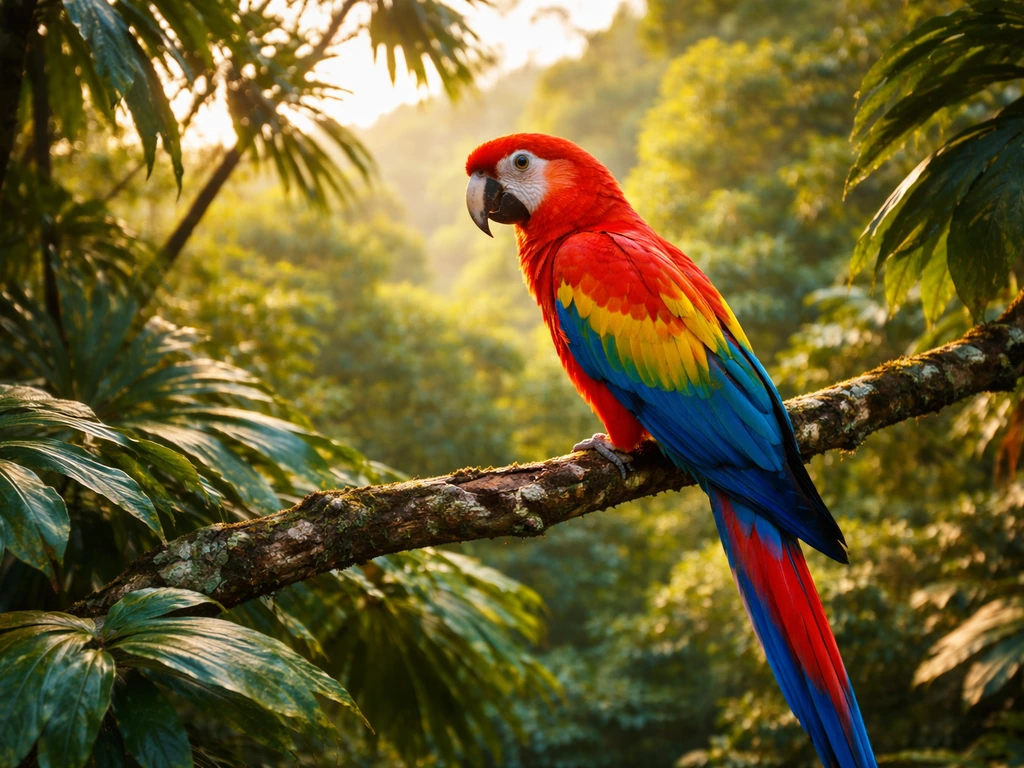
Suriname's national bird is the scarlet macaw (arakanga in the local Sranan Tongo language). With its vivid red, yellow, and blue plumage, the scarlet macaw is one of the most recognizable birds in the Americas. It symbolizes Suriname's tropical biodiversity and appears prominently in the country's cultural imagery. The scarlet macaw is also one of the most intelligent parrot species, known for its ability to mimic sounds and its strong pair bonds, which last for life.
Southern lapwing (Uruguay)
Uruguay's national bird is the southern lapwing, called "tero" locally after the sharp, alarm-call sound it makes. The tero is known for being fiercely territorial and fearless, diving at animals and even people who come too close to its nest. Uruguayans identify with that bold, no-nonsense personality. It is also one of the most commonly seen birds across the Uruguayan countryside, making it a truly everyday national symbol rather than a rare or exotic one.
Venezuelan troupial (Venezuela)
Venezuela's national bird is the Venezuelan troupial (turpial), a striking bird with bright orange and black plumage and a vivid blue eye ring. It was officially designated the national bird of Venezuela in 1958 and is considered one of the most beautiful birds in the country. The turpial is known for its rich, melodious song, which has made it a popular cage bird historically, though conservation attitudes have shifted toward appreciating it in the wild.
How and when each bird was officially selected
The selection processes vary quite a bit across these countries. Some were chosen by presidential decree, some by congressional resolution, and a few emerged through public votes or cultural consensus over decades before being formally recognized.
- Argentina: The rufous hornero was officially designated the national bird by a government decree. Argentina also institutionalized national bird awareness with its annual "Día Nacional del Ave" on October 5.
- Bolivia: The Andean condor's status as Bolivia's national symbol is embedded in the country's coat of arms, a tradition dating back to the founding of the republic in 1825.
- Brazil: The sabiá-laranjeira was formally named national bird by Brazilian law in 2002, though its cultural status as a symbol of national identity dates back to the 19th century through poetry and literature.
- Chile: Like Bolivia, Chile's condor appears on its coat of arms, a designation that has been part of Chilean national identity since the 19th century.
- Colombia: The Andean condor was declared Colombia's national bird by a congressional resolution. It also features prominently on Colombia's coat of arms.
- Ecuador: The condor appears on Ecuador's national emblem and has been a recognized national symbol since the country's early republican era.
- Guyana: The harpy eagle is enshrined as Guyana's national bird and appears on the national coat of arms.
- Paraguay: The bare-throated bellbird (pájaro campana) was officially declared Paraguay's national bird by law.
- Peru: The Andean cock-of-the-rock was officially declared Peru's national bird in 1941.
- Suriname: The scarlet macaw is the officially recognized national bird of Suriname.
- Uruguay: The southern lapwing was declared Uruguay's national bird in 1962.
- Venezuela: The Venezuelan troupial was officially designated Venezuela's national bird in 1958.
Quick facts worth remembering
- Four countries (Bolivia, Chile, Colombia, Ecuador) share the Andean condor as their national bird, making it the single most common national bird designation on the continent.
- The Andean condor has the largest wingspan of any land bird, reaching up to 3.3 meters (10.8 feet).
- Brazil's national bird, the sabiá, was immortalized in a famous poem in 1843, more than 150 years before it was officially named national bird in 2002.
- Paraguay's bellbird is one of the loudest birds ever recorded, at around 125 decibels at close range.
- Argentina celebrates a formal National Bird Day (Día Nacional del Ave) every October 5.
- Peru's Andean cock-of-the-rock (tunki) has been an official national symbol since 1941 and is deeply rooted in Quechua culture.
- Venezuela's troupial (turpial) was designated national bird in 1958, the same year Venezuela transitioned to democratic government, giving it an added layer of historical meaning.
- Uruguay's tero is notable for its personality: it fearlessly attacks much larger animals to defend its nest, which Uruguayans see as a reflection of national character.
- Guyana's harpy eagle has talons as large as a grizzly bear's claws and is considered one of the world's most powerful birds of prey.
How to find the official source for each country's national bird
If you need to verify any of these for a school project, research paper, or just personal certainty, the most reliable sources are each country's official government website, national constitution or coat of arms documentation, or the relevant congressional or presidential decree that formalized the designation. Paraguay declared the “Pájaro Campana (Procnias nudicollis)” as its national bird through Ley N° 2511. Here is how to approach that practically.
- Search the official government portal for the country in question (e.g., argentina.gob.ar for Argentina, gob.pe for Peru). Most national symbols are listed under culture, heritage, or national identity sections.
- Look up the country's coat of arms description, since many South American countries (Bolivia, Chile, Colombia, Ecuador, Guyana) feature their national bird directly on the coat of arms, which is constitutionally or legally defined.
- Check the IUCN Red List (iucnredlist.org) for scientific names and range maps for any bird you want to confirm, which helps cross-check common name confusion across languages.
- For countries with specific legislative designations (like Brazil's 2002 law or Uruguay's 1962 decree), search the national legislative database or official gazette (e.g., Brazil's Diário Oficial da União) using the bird's local name.
- For a continental overview, the UN's M49 classification page (unstats.un.org) is the authoritative source confirming which countries fall under South America, so you can make sure you are not mixing up regions.
If you came here specifically for one country's bird, several of these have their own detailed write-ups worth exploring. Ecuador's national bird, Venezuela's turpial, Bolivia's condor, and Paraguay's bellbird each have their own rich stories that go deeper than what a continent-level overview can cover. The condor in particular deserves its own deep dive given how central it is to Andean identity across four nations.
FAQ
If there is no single national bird of South America, why do some websites still claim one bird represents the continent?
Most of the time they are taking a continent-wide nickname approach, not an official designation. In practice, national bird status is granted by individual countries through their own government or cultural institutions, so a “continental” bird usually reflects popularity or symbolism rather than a legal or constitutional definition.
Is the Andean condor the national bird of every South American country?
No. The Andean condor is claimed as a national bird symbol by four specific countries, Bolivia, Chile, Colombia, and Ecuador. Other South American countries have different official birds.
Do overseas territories or dependent islands in South America have a national bird too?
Typically, no national bird designation applies to territories that are not sovereign states. For example, French Guiana and the Falkland Islands may appear in geographic lists, but they do not have independent national bird status the way sovereign countries do.
How can I confirm the national bird for a specific country for an assignment?
Use the country’s official government materials (such as constitutional references or legislation), or official national emblem documentation like the coat of arms. If the designation came through a formal action, you can usually locate the relevant decree, resolution, or parliamentary act title in official archives.
Why do some countries’ national bird designations look inconsistent across years or sources?
Definitions can change over time, or the bird may be culturally recognized before it is formally codified. Also, you may find older sources that describe the symbol informally, while newer sources reflect the official date of designation.
Are the national birds always the same as the bird shown on the national coat of arms?
Not necessarily. Some birds appear directly on official emblems, while others are designated as national birds through law or cultural consensus but may not be depicted on coats of arms. Checking emblem documentation and the formal designation record helps avoid mix-ups.
What if I’m looking for the national bird of a country sometimes grouped with South America, like Panama?
Panama is not included under the UN’s South America list used in the article, because it is officially part of Central America. If you want Panama’s national bird, you need to look under Panama’s own country information rather than South America lists.
Do all South American countries have an official national bird designation?
Many do, but “national bird” status is not always tracked the same way across countries, and some may rely on different forms of official symbols. If a country is missing from a list you found, treat that as a cue to verify with that country’s official government sources rather than assuming it is unofficial.
Could a national bird name have multiple spellings or local-language names?
Yes. Common names may vary, and local names can be spelled differently depending on the language and transliteration system. When verifying, match both the bird’s scientific name or widely accepted common name plus the country’s official language label where provided.