Venezuela's national bird, answered directly
blank" rel="noopener noreferrer">Venezuela's national bird is the Venezuelan troupial, known locally as the "Turpial" (scientific name: Icterus icterus). It was officially declared the national bird (ave nacional) on May 23, 1958, by Venezuela's Junta de Gobierno, chaired at the time by Wolfgang Larrazábal. That's the short answer. Everything below explains why the Turpial was chosen, what it means to Venezuelans, and where you'll still see it used as a national symbol today.
What the Turpial means in Venezuelan culture
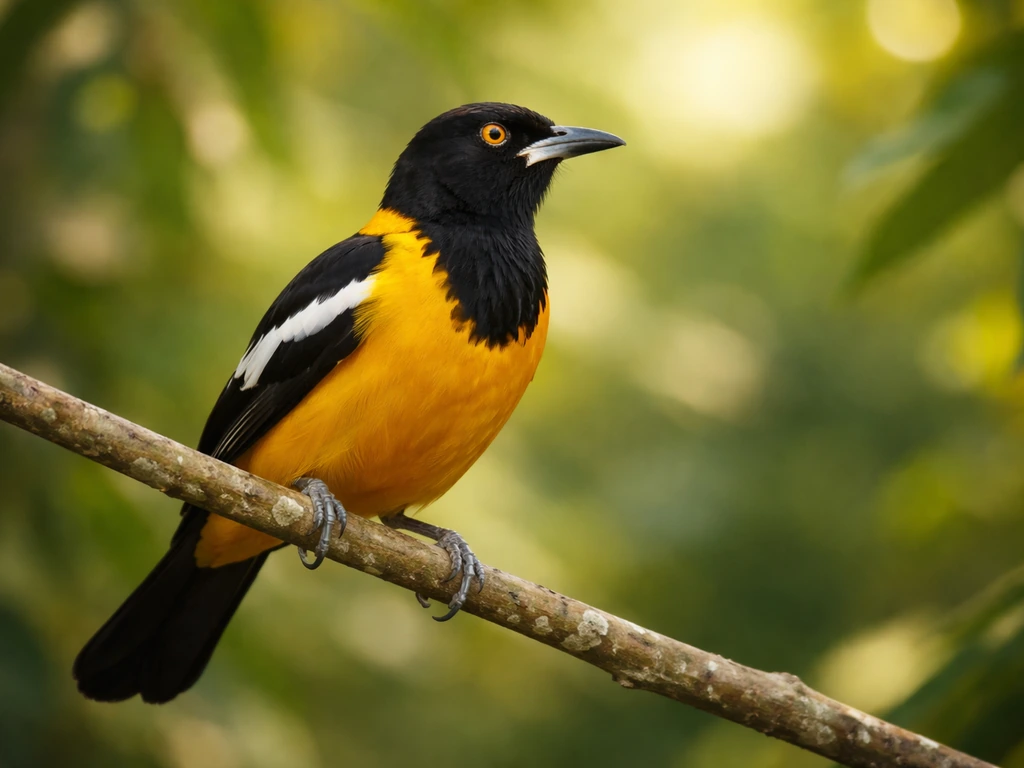
Venezuelans don't think of the Turpial as just a pretty bird. It's described in Venezuelan cultural writing as a "símbolo de la venezolanidad", roughly, a symbol of what it means to be Venezuelan. That's a meaningful phrase. It ties the bird not just to the country's geography but to its identity, its morning sounds, and its everyday presence in Venezuelan life.
Part of what makes the Turpial such a powerful cultural symbol is its voice. The bird's call is a simple but striking song built from loud, long, repetitive notes that carry easily across open landscapes. For generations of Venezuelans, especially those who grew up in rural areas or near the Llanos, that sound is tied to the start of a day. Venezuelan cultural sources describe it as a bird that "alegra las mañanas", it brightens mornings. That's the kind of association that turns a bird into a symbol.
The Turpial's visual identity is equally striking. It has vivid orange and black plumage with bold white wing patches, which makes it unmistakable. A bird this recognizable, this widespread, and this tied to everyday Venezuelan life was a natural choice for a national emblem. South America's national birds as a group tend to reflect this same logic: the chosen species are usually ones that feel deeply familiar to the people, not just scientifically impressive.
How the Turpial became Venezuela's official national bird
The official designation happened on May 23, 1958. Venezuela's governing junta at the time, led by Wolfgang Larrazábal, made the formal declaration. But the process behind it was driven by the Sociedad Venezolana de Ciencias Naturales, which organized the selection. The scientific community essentially nominated and selected the Turpial through a structured process, and the government then gave it official status.
1958 is a significant year in Venezuelan history. The country had just transitioned out of a military dictatorship, and the junta was managing the country in the lead-up to democratic elections. Declaring national symbols during that period was part of a broader effort to build a shared national identity. Choosing a bird that Venezuelans across regions already knew and loved made sense in that context.
For comparison, other countries in the region went through similar processes at different times. Ecuador's national bird, the Andean condor, carries its own separate history of formal recognition rooted in that country's independence symbolism. Every nation's selection process reflects something about its own history and priorities.
Key facts about the Venezuelan troupial
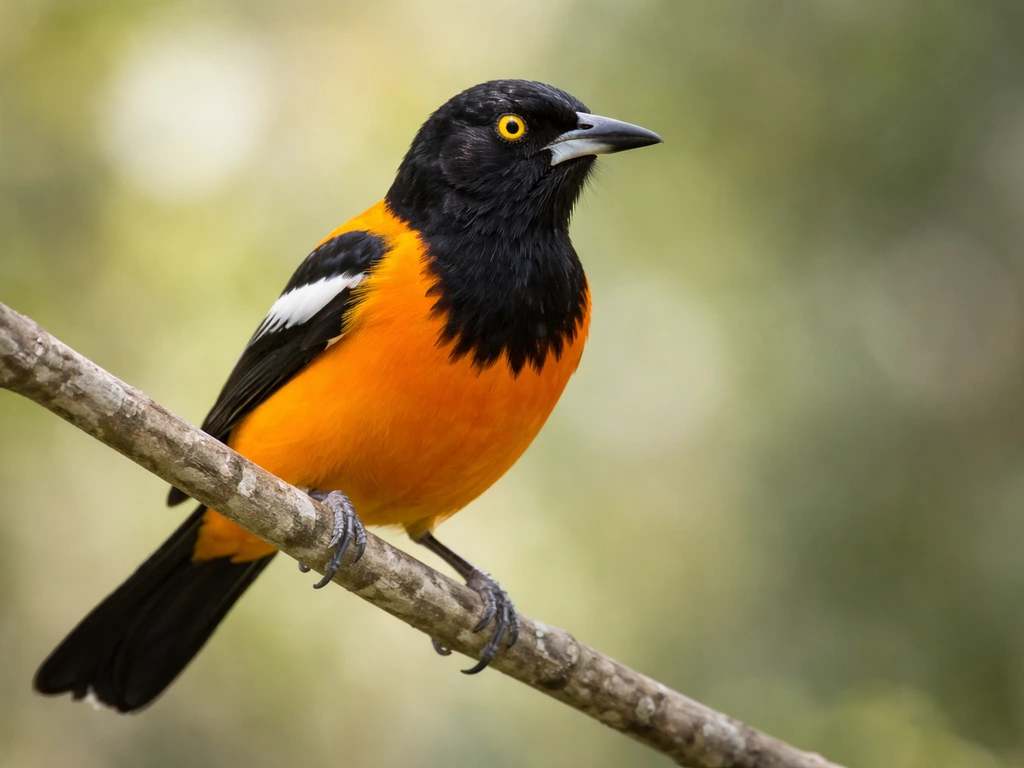
Here are the core things to know about Icterus icterus as a species:
| Trait | Detail |
|---|
| Scientific name | Icterus icterus |
| Common names | Venezuelan troupial (English), Turpial or Turpial guajiro (Spanish) |
| Plumage | Vivid orange body, black head and bib, white wing patches |
| Call | Loud, long, repetitive notes; a simple but distinctive song |
| Habitat | Found across nearly all of Venezuelan territory, especially the Llanos lowlands |
| Nesting behavior | Does not build its own nest — it takes over nests built by other birds |
| Family | Icteridae (blackbirds and orioles) |
One of the most interesting things about the Turpial's behavior is its nesting strategy. Rather than building its own nest, the bird takes over nests already constructed by other species. This "stolen nest" behavior is well documented. It's unusual enough to stand out, and it's the kind of natural-history detail that makes the bird more memorable once you know it.
In terms of range, the Turpial lives across almost all of Venezuelan territory, with a strong presence in the eastern Llanos, the vast lowland plains that define a huge portion of Venezuela's interior. The Llanos ecosystem is one of South America's most biologically rich environments, and the Turpial is one of its recognizable residents. Bolivia's national bird, the Andean condor, occupies a very different ecological niche (high-altitude Andes), which shows just how varied national bird choices across the continent can be.
Where you'll see the Turpial used as a national symbol
The most tangible place to spot the Turpial as a national emblem is on Venezuelan currency. The 500 bolívares banknote, issued by the Banco Central de Venezuela (a 2018 issue), features the Turpial on its design alongside imagery of Macarao National Park. Multiple numismatic sources confirm this. It's a direct, everyday use of the bird as a national symbol that most Venezuelans would have literally held in their hands.
Beyond currency, the Turpial appears in educational materials, environmental campaigns, and Venezuelan cultural content as a shorthand for national identity. The phrase "símbolo de la venezolanidad" turns up regularly in Venezuelan media and writing whenever the bird is discussed. It's also recognized in institutional contexts: Venezuela's public parks authority (Inparques) references the Turpial as the national bird in its official calendar of environmental dates, treating May 23 as a notable day.
For a broader regional picture, it's worth noting that neighboring Paraguay also has a distinct national bird with its own cultural resonance. You can read about Paraguay's national bird to see how another South American country frames its national avian symbol.
How to verify this and keep learning
If you want to confirm the national bird designation through primary or institutional sources, there are a few reliable places to check. Venezuela's Inparques (the national parks institute) explicitly lists the Turpial as the national bird and includes the May 23, 1958 declaration date. The Spanish-language Wikipedia entry for Icterus icterus also cites the official declaration, the Junta de Gobierno, and Wolfgang Larrazábal's role in making it official.
For species verification, the Fundación Empresas Polar's Diccionario Visual del Español de Venezuela is a respected Venezuelan lexicographic reference that labels the Turpial explicitly as "Ave Nacional de Venezuela (Icterus icterus)." If you want a scientific checklist, the official list of Venezuelan birds (Lista Oficial de las Aves de Venezuela, v2021) published by UVOVenezuela.org includes Icterus icterus and is a useful cross-reference for species identity. The UVOVenezuela v2021 official birds list also includes Icterus icterus and associates it with the common name “blank" rel="noopener noreferrer">Toche Turpial.”.
For natural history depth, Animal Diversity Web (ADW) has a solid species account for Icterus icterus covering range, call, and behavior. The University of the West Indies also has documentation on the species' nesting behavior in their Trinidad and Tobago animals guide, which is useful if you want to go beyond the basics.
The short version: Venezuela's national bird is the Turpial (Icterus icterus), officially declared May 23, 1958. It's orange, loud, culturally beloved, and found across the Venezuelan Llanos and beyond. If you're building out your knowledge of South American national birds, that's a solid foundation to start from.