Myanmar's national bird is most widely cited as the grey peacock-pheasant, scientific name Polyplectron bicalcaratum. That said, you will also find reputable-looking sources claiming it is the green peafowl (Pavo muticus), so there is genuine online confusion worth knowing about before you cite either one.
What Is the National Bird of Myanmar? (Answer + Meaning)

Marcus Chen
5 May 2026
The official answer and where it comes from

The grey peacock-pheasant (Polyplectron bicalcaratum) is the bird that appears on the most authoritative bird-specific reference pages for Myanmar. Wikipedia's List of Birds of Myanmar, for example, states directly that the grey peacock-pheasant is Myanmar's national bird. The species is also recorded under the blank" rel="noopener noreferrer">historical synonyms Polyplectron chinquis and the older Pavo bicalcaratus, so if you see those names in older texts, they refer to the same bird. The IOC World Bird List and the Cornell Lab's Clements Checklist both use Polyplectron bicalcaratum as the accepted binomial.
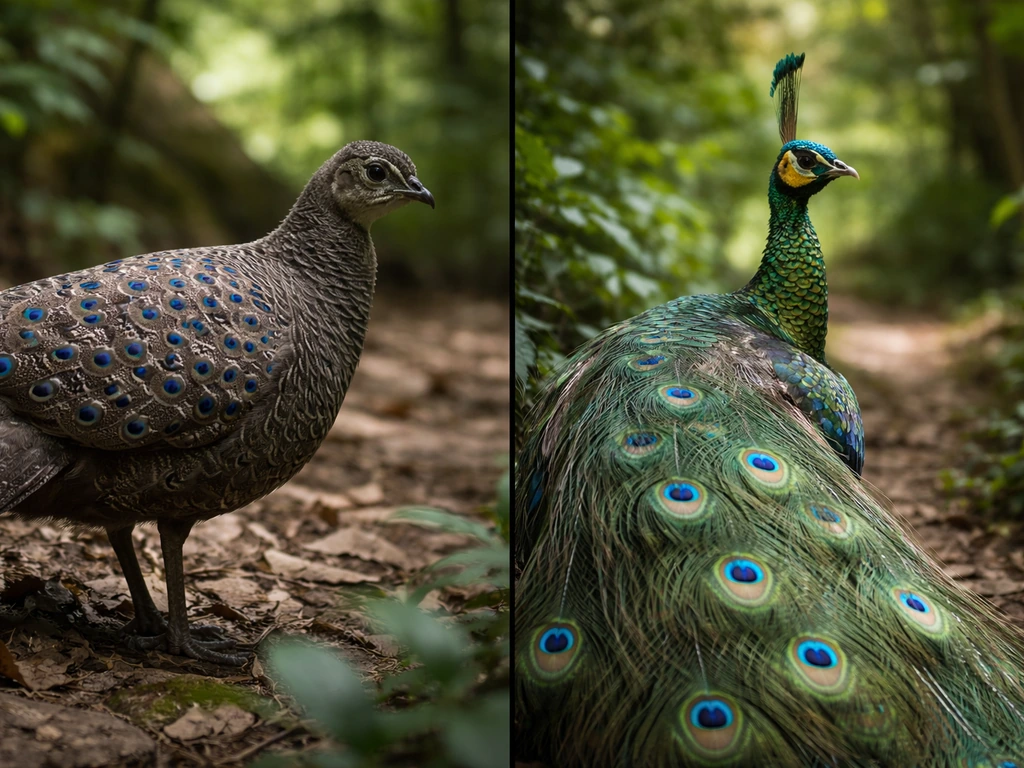
The competing claim for the green peafowl (Pavo muticus) also appears on widely viewed pages, which is why the confusion persists. The green peafowl is a genuinely different species, and its connection to Myanmar comes largely from the deep cultural role the peacock plays in Burmese history and symbolism rather than from a formal bird-registry designation. Both claims are out there, so it is worth being specific about which source you are using if you need to cite this.
A clear official record is harder to pin down than you might expect
Unlike some countries that have a constitutional provision or a specific government gazette entry naming their national bird, Myanmar does not appear to have a publicly documented, dated decree that formally designates one. The Myanmar government's national symbols page covers official emblems like the state seal and flag, but a specific national-bird proclamation was not located in the available official sources. This is actually common across Southeast and South Asia: many national bird designations exist as widely accepted convention rather than a formal legislative act. Nepal's Himalayan monal and Thailand's Siamese fireback are similar in that their designations are culturally entrenched but not always traceable to a single official document.
Why the peacock keeps showing up in Myanmar's identity

The peacock has been central to Burmese royal and national imagery for centuries, and that history is the root of the confusion between the grey peacock-pheasant and the green peafowl. King Alaungpaya introduced a peacock emblem to Myanmar's flag in 1757, and the dancing peacock became a lasting symbol of the Konbaung dynasty. The bird was associated with sun descent, Buddhism, and royal authority, making it one of the most recognizable emblems in the country's visual culture. During the colonial period and afterward, the peacock continued to appear on flags used by resistance movements and nationalist groups.
The grey peacock-pheasant fits into this tradition because it shares the peacock's eye-spotted plumage pattern, is native to Myanmar's forests, and carries its own local cultural weight. It is a smaller, more forest-specific bird than the green peafowl, but visually it echoes the same symbolism that made the peacock so important to Burmese identity in the first place.
Facts worth knowing about both birds
The grey peacock-pheasant
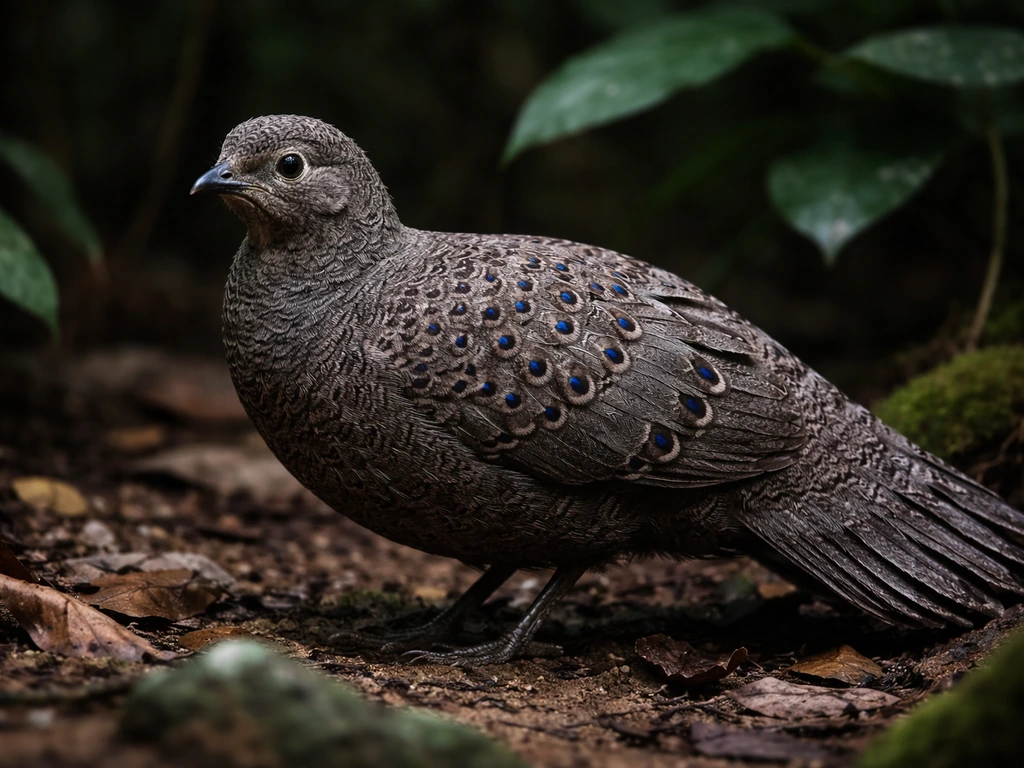
- Scientific name: Polyplectron bicalcaratum (synonyms: Polyplectron chinquis, Pavo bicalcaratus).
- Lives in lowland and hill forests across South and Southeast Asia, including Myanmar's forested interior.
- Listed as Least Concern on the IUCN Red List, meaning it is not currently under immediate extinction pressure.
- The male has distinctive metallic eye spots on its feathers, similar to a peacock's train but on a much smaller scale.
- It is a ground-dwelling bird, typically found scratching through leaf litter in dense forest rather than open terrain.
The green peafowl (the competing claim)
- Scientific name: Pavo muticus.
- Native to tropical forests across Southeast Asia and southern China.
- Listed as Endangered on the IUCN Red List since 2009, with populations declining due to habitat loss and hunting.
- A much larger and more striking bird than the grey peacock-pheasant, and the one most strongly associated with royal Burmese imagery.
- Its cultural ties to Myanmar are real and deep, even if the formal national-bird designation more commonly points to the grey peacock-pheasant.
Quick comparison
| Feature | Grey Peacock-Pheasant | Green Peafowl |
|---|---|---|
| Scientific name | Polyplectron bicalcaratum | Pavo muticus |
| Size | Medium (pheasant-sized) | Large (peacock-sized) |
| IUCN status | Least Concern | Endangered |
| Habitat | Lowland and hill forests | Tropical forests and open woodland |
| National bird claim | Most bird-specific sources | Some general symbol listings |
| Cultural role | Local forest symbolism | Royal and national emblem history |
How to verify this yourself
If you want to confirm the taxonomy or check the national bird claim for a project or quiz, here is a practical three-step approach. You can use the same approach to verify the national bird of Afghanistan from reputable bird checklists and official sources.
- Cross-check the scientific name. Search for Polyplectron bicalcaratum on the Cornell Lab's eBird species page or the Clements Checklist download (the 2022 version is the current standard). Confirm that the accepted binomial matches and note the listed synonyms so you recognise the older names if they appear.
- Compare the competing claims side by side. Search 'national bird of Myanmar Polyplectron bicalcaratum' and then 'national bird of Myanmar Pavo muticus' separately. You will quickly see which appears in ornithological and bird-list sources versus general symbol directories. That contrast tells you a lot about the reliability of each claim.
- Check Myanmar's official symbol documentation. The Myanmar government's national symbols page is the primary official source. If neither bird appears there explicitly, note the absence and use the most consistently cited ornithological reference instead.
Where to go from here
If Myanmar's national bird sparked your curiosity about the wider region, the pattern of peacock and pheasant symbolism repeats across Southeast and South Asia in interesting ways. Thailand's national bird, the Siamese fireback, is another pheasant-family species with strong cultural connections. Thailand's national bird is the Siamese fireback.
Vietnam, Nepal, and Afghanistan each have their own stories about why a particular bird was chosen, and those choices often reflect religious tradition, royal history, or ecological identity in the same way Myanmar's does. For example, you can look up what is the national bird of Nepal and how it is described in common bird references. The Maldives is a particularly interesting contrast: an island nation whose national bird reflects an entirely different ecological and cultural context.
This site covers all of those national birds in dedicated pages, so if you want to compare Myanmar's grey peacock-pheasant against neighbouring countries' choices, the best next step is to browse the regional Southeast and South Asia sections. You will find the same format used here: a direct answer, the competing claims flagged where they exist, and the cultural story behind each choice.
FAQ
Why do some sources list a different Myanmar national bird (grey peacock-pheasant vs green peafowl)?
Most of the disagreement comes from how the “national bird” label is applied. Some references treat it as a formal registry designation and cite the grey peacock-pheasant, while others attach the honor based on national symbolism and cultural association with the peafowl, which then gets attributed to the green peafowl. That means two sources can both sound credible but be using different criteria.
Is there an official government document that formally names Myanmar’s national bird?
For Myanmar, the article notes that a publicly documented, dated proclamation was not found in the available official sources. If you need to be strict for a school, legal, or publishing requirement, treat the “national bird” label as a commonly accepted designation rather than something you can always trace to a single government decree.
If I have to cite it in a paper, which bird should I choose and how should I phrase it?
Use the grey peacock-pheasant (Polyplectron bicalcaratum) for the direct “national bird” claim, then add a brief caveat that you also encountered an alternate attribution to the green peafowl in some pages. This shows you checked conflicting claims without endorsing the alternative as the primary designation.
Are the different names I see for the grey peacock-pheasant (synonyms) the same bird?
Yes, older or alternate binomials can refer to the same species. The article explains that Polyplectron bicalcaratum has been listed under historical names, so if you see older literature using a different scientific name, confirm whether it matches the same species concept before concluding it is a different bird.
What is the practical way to distinguish the grey peacock-pheasant from the green peafowl visually?
The grey peacock-pheasant is a smaller forest bird with a pheasant-like body and the eye-spotted pattern on its plumage. The green peafowl is a much larger, peacock-like bird. If you are doing identification for a quiz or fieldwork, don’t rely only on “peacock” symbolism, use size and habitat clues plus plumage pattern.
Do Myanmar’s peafowl-related symbols mean the national bird must be the green peafowl?
Not necessarily. The article ties the peafowl symbolism to Burmese royal and national imagery, but symbolism alone does not automatically determine species-level selection. The grey peacock-pheasant claim is supported by bird-reference listings, while the green peafowl connection often comes from cultural interpretation.
Does the national bird designation affect conservation or legal protection for that specific species?
In many countries, a national bird label is symbolic and does not automatically confer special legal protections or a distinct conservation status. If your project requires legal protection details, you would need to check Myanmar wildlife protection laws and protected-area rules rather than assuming the national-bird label provides them.
How can I verify the claim quickly for a quiz or quick fact-check?
Use a two-pronged check: confirm the species in a bird checklist that lists accepted scientific names for Myanmar, then separately review how major encyclopedic or national-symbol pages describe the “national bird.” If those two categories disagree, that mismatch is usually what creates the grey peacock-pheasant versus green peafowl confusion.
Next Article
What Is the National Bird of Afghanistan? Facts and Story
Discover Afghanistan’s national bird, its official and common names, plus the history and symbolism behind its emblem.