
Nepal's national bird is the Himalayan Monal, known locally as the Danphe (or Danfe). Its scientific name is Lophophorus impejanus. This is spelled out clearly in Nepal's constitution, which states: "Lophophorus shall be the national bird of Nepal." So if you need a single, authoritative answer, that's it.
What Is the National Bird of Nepal? Meaning and Facts

Marcus Chen
16 Apr 2026
What the Himalayan Monal means to Nepal
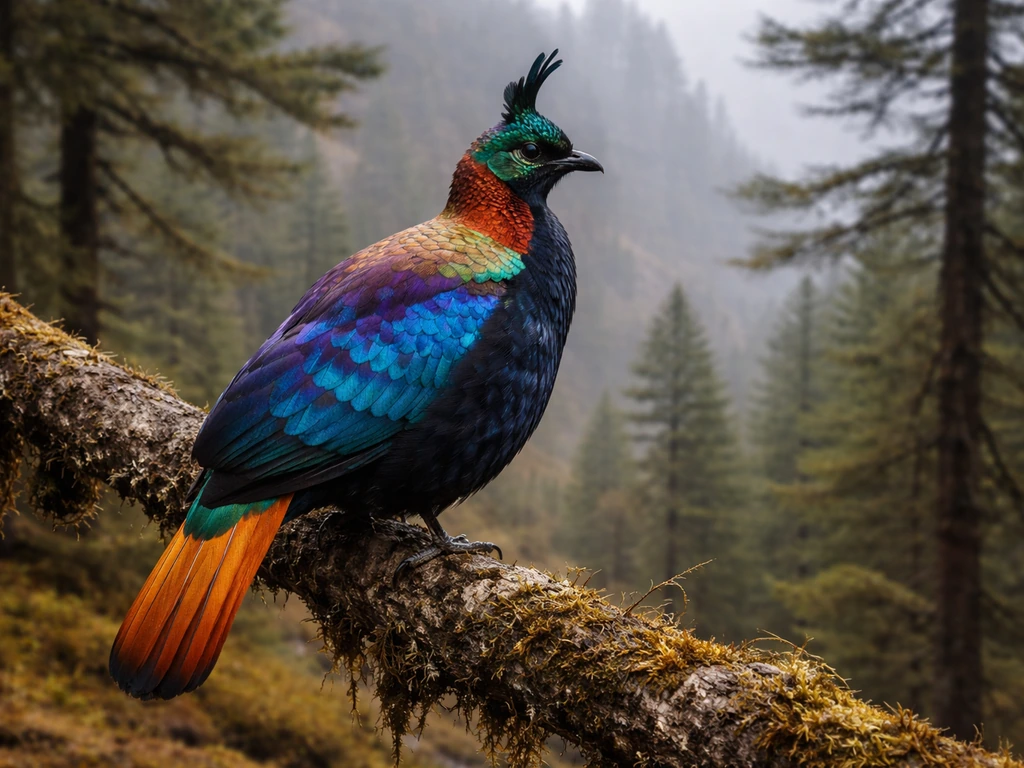
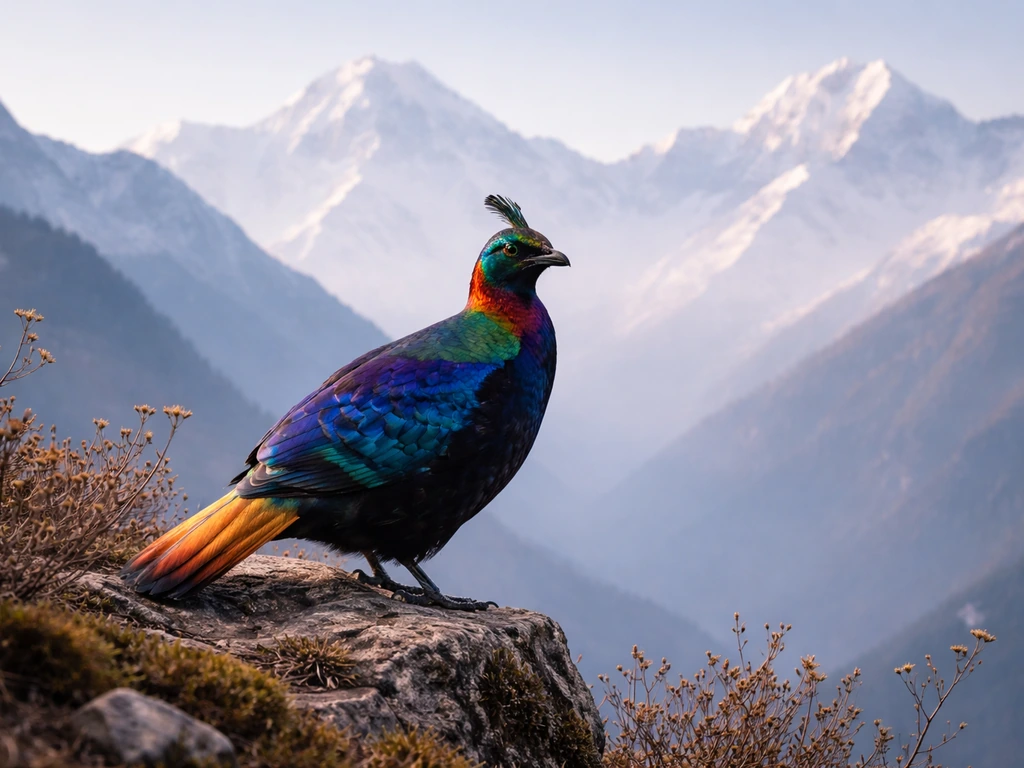
The Danphe is more than just a pretty bird on a government list. It's deeply tied to Nepal's Himalayan identity. Nepal is home to eight of the world's ten tallest peaks, and the Himalayan Monal lives right in that dramatic high-altitude landscape, thriving where few other birds can. Choosing it as a national symbol was a natural fit: the bird literally embodies the rugged, elevated character of the country.
The male Himalayan Monal is one of the most visually striking birds on the planet. Its plumage shifts through iridescent greens, blues, purples, and copper depending on the light, making it an unforgettable sight against the snow and rocky slopes. That combination of toughness and beauty makes it a fitting emblem for a country that prizes both its natural wilderness and its cultural richness.
How and when the Danphe became Nepal's official bird
The Danphe's status as a national symbol goes back a long way. Nepal's 1962 Constitution already included the line: "Danfay (the lophophorus) is the national bird of Nepal." That means this bird has held official national status for well over six decades. When Nepal went through its constitution-making process in more recent years, the bird's status was actively debated in constitutional committee discussions, and it was kept in place. The current constitution continues the same designation, framing it as "Lophophorus shall be the national bird of Nepal."
The Government of Nepal's Department of National Parks and Wildlife Conservation (DNPWC) also formally recognizes the bird in its Pheasant Conservation Action Plan (2019), stating that the Himalayan Monal "has been declared as the National Bird of Nepal." This isn't just symbolic language: the national-bird status directly connects to legal protection under Nepal's National Parks and Wildlife Conservation Act 1973.
Facts about the Himalayan Monal you'll actually remember
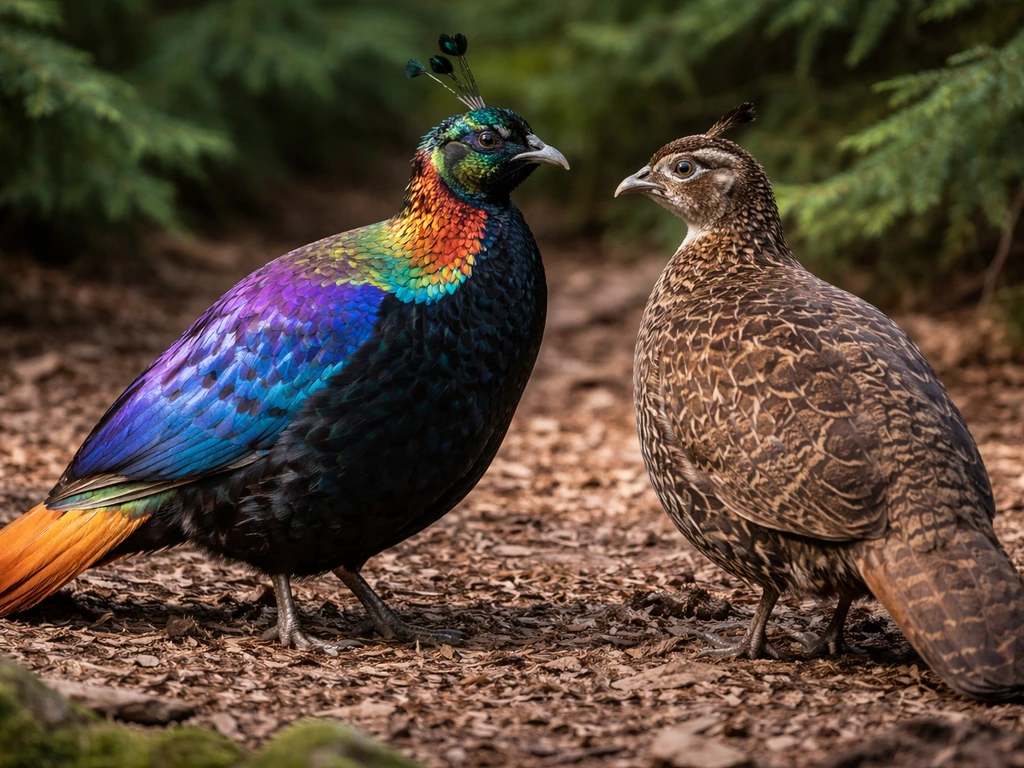
The Himalayan Monal is a pheasant, not a songbird or raptor, and the male looks almost unreal. The iridescent feathers shift color in sunlight, covering nearly every color of the spectrum. Females are more subdued, with brown streaked plumage, which helps them stay camouflaged while nesting.
In terms of habitat, the Himalayan Monal lives between roughly 2,100 and 4,500 meters above sea level. Research in Nepal's Langtang National Park tracked birds along survey routes ranging from about 3,000 m up to 4,300 m. That puts their preferred range squarely in the subalpine and alpine forest zones. They use steep, open slopes and rocky hillsides, often foraging by digging into the soil with their curved bill to find bulbs, tubers, and insects.
When approached by humans, the Danphe doesn't typically fly far. It tends to run downhill first, then takes a short, low flight with a distinctive whistling chuckle call. If you're ever trekking in Nepal at high altitude and hear that call followed by a flash of iridescent color disappearing downslope, you've almost certainly just seen the national bird.
One important conservation note: while the Himalayan Monal is globally assessed as "Least Concern" by the IUCN, Nepal's own national red list classifies it as "Near Threatened. The Himalayan monal is listed as blank" rel="noopener noreferrer">Least Concern on the IUCN Red List (global status). " It's also listed on CITES Appendix I, meaning international trade is tightly controlled. This difference between global and local status is worth knowing, especially if you're following up on conservation research.
Don't confuse the Danphe with neighboring countries' birds
One common mixup worth flagging: the Himalayan Monal is sometimes confused with the state bird of Uttarakhand in India, which is also the Himalayan Monal. The species range extends across the Himalayas, so both Nepal and the Indian state of Uttarakhand have designated it as a symbol. But only Nepal has it as a national bird enshrined in a constitution. If you're doing research and see conflicting claims, that's likely the source of the confusion.
If you're also exploring other Asian national birds for comparison, Thailand's national bird is the Siamese Fireback pheasant, another striking member of the pheasant family, which gives you a good regional point of comparison.
How to verify this yourself
If you want to confirm the Danphe's national-bird status directly rather than taking anyone's word for it, here are four reliable ways to do it:
- Search the current English translation of Nepal's Constitution (available on WIPO Lex) for the phrase "Lophophorus shall be the national bird of Nepal." It's listed in the national symbols section.
- Pull up Nepal's 1962 Constitution PDF on ConstitutionNet and search for "Danfay (the lophophorus)" to see the historical continuity of this designation.
- Download the DNPWC's Pheasant Conservation Action Plan 2019 and search for "Himalayan Monal (Lophophorus impejanus) … declared as the National Bird of Nepal."
- Cross-check the local name Danphe against the scientific name Lophophorus impejanus using Biodiversity Conservation Society Nepal (BIOCOS Nepal), which also notes the bird's Nepal-specific Near Threatened status versus its global Least Concern rating.
Where to go next if you want to learn more
If you're curious about spotting the Himalayan Monal in real life, the target habitat is Nepal's high-altitude forest belt between 2,100 and 4,500 m. Protected areas like Langtang National Park and the Great Himalayan National Park region have published survey data on population and distribution. Field guides covering the Himalayas will show you the species' key visual traits, which makes identifying it far easier than trying to describe it in words.
For birdwatchers comparing notes across South and Southeast Asia, it's useful to look at how neighboring countries pick their national birds too. For example, Vietnam's national bird is the Red-crowned Crane, a choice rooted in very different cultural symbolism than Nepal's habitat-driven selection. Myanmar's national bird, the Grey Peacock-Pheasant, is also a pheasant family member, making for an interesting regional pattern.
If you're covering the broader South Asian region, Afghanistan's national bird is the Golden Eagle, while the Maldives chose the White Tern, a seabird that reflects its ocean geography as much as Nepal's Danphe reflects its mountain character. Looking at these side by side shows just how much a country's landscape shapes its symbolic choices.
Quick reference: Himalayan Monal at a glance
| Attribute | Detail |
|---|---|
| Common name (English) | Himalayan Monal |
| Local name (Nepali) | Danphe / Danfe / Danfay |
| Scientific name | Lophophorus impejanus |
| Also known as | Impeyan Monal |
| Official designation | National Bird of Nepal (enshrined in Nepal's Constitution) |
| First designated | Nepal's 1962 Constitution |
| Habitat elevation | Approximately 2,100 to 4,500 m above sea level |
| Global IUCN status | Least Concern |
| Nepal national red list status | Near Threatened |
| Legal protection in Nepal | National Parks and Wildlife Conservation Act 1973; CITES Appendix I |
| Family | Phasianidae (pheasants) |
FAQ
Is the “Danphe” only the male Himalayan Monal, or does it include females too?
The national-bird designation applies to the Himalayan Monal species as a whole (Lophophorus impejanus). In the wild and in identification, you will notice major sex differences, males are highly iridescent while females are more brown and streaked, but both belong to the same nationally designated bird.
Where in Nepal is it realistic to spot the national bird, and at what elevations?
In most cases, you will not see the Danphe in lowland Nepal. Its typical elevation is roughly 2,100 to 4,500 meters, so if your trip is mostly below about 2,000 meters, the chance of reliably encountering it is much lower.
If I go trekking, can I expect to see the Danphe every time, or does it depend on conditions?
The national-bird title does not mean it is easy to guarantee in a single outing. Weather, time of day, and terrain matter because the bird often runs downslope and then makes short low flights, so surveys and sightings are more common on steep open slopes with good visibility.
What are the most common mistakes people make when trying to identify the Danphe?
Yes, there are common identification pitfalls because the Himalayan Monal is a pheasant, not a raptor or songbird. If you are only comparing “bird size and shape” without checking for the male’s iridescent green-blue-purple sheen and the female’s brown streaking, you can easily confuse it with other high-altitude forest birds.
Why might it be described as low-risk globally but higher-risk within Nepal?
The article mentions conflicting conservation labels, and this is a key edge case. “Least Concern” globally does not override Nepal’s national “Near Threatened” classification, and international trade controls from CITES Appendix I can still restrict parts and products across borders.
Can tourists or researchers legally collect feathers, photos, or any specimens?
Because international trade is controlled under CITES Appendix I, exporting or importing any biological parts is not simply a matter of personal collecting. If you are doing wildlife research, photography permits and local park rules can also apply, so always check before any handling or acquisition.
How can I verify I am looking at Nepal’s national-bird claim and not the Uttarakhand state bird?
Yes, the Uttarakhand confusion is common because the Himalayan Monal is also used as a state symbol there. If a source does not specify “national bird” in Nepal’s constitutional sense, it may be referring to a different type of designation or to India’s state-level choice.
What should I look for in behavior and sound to confirm I likely saw the Danphe?
If you are confirming on the ground, focus on high-altitude habitats and typical behavior rather than only color. The distinctive pattern is often male iridescence in good light, then a short low flight after running downhill, accompanied by a whistling chuckle-like call.
Next Articles
What Is the National Bird of Zimbabwe? Symbolism and Facts
Discover Zimbabwe’s national bird, its distinctive traits, and the history and symbolism behind the emblematic choice.
What Is the National Bird of Botswana? Bird ID, Meaning
Answers Botswana national bird name with species ID, how to recognize it, where to spot it, and its cultural meaning
National Bird of South Africa Meaning: History and Symbolism
Learn the meaning, history, and symbolism of South Africa’s national bird, plus key traits, facts, and how to verify cla