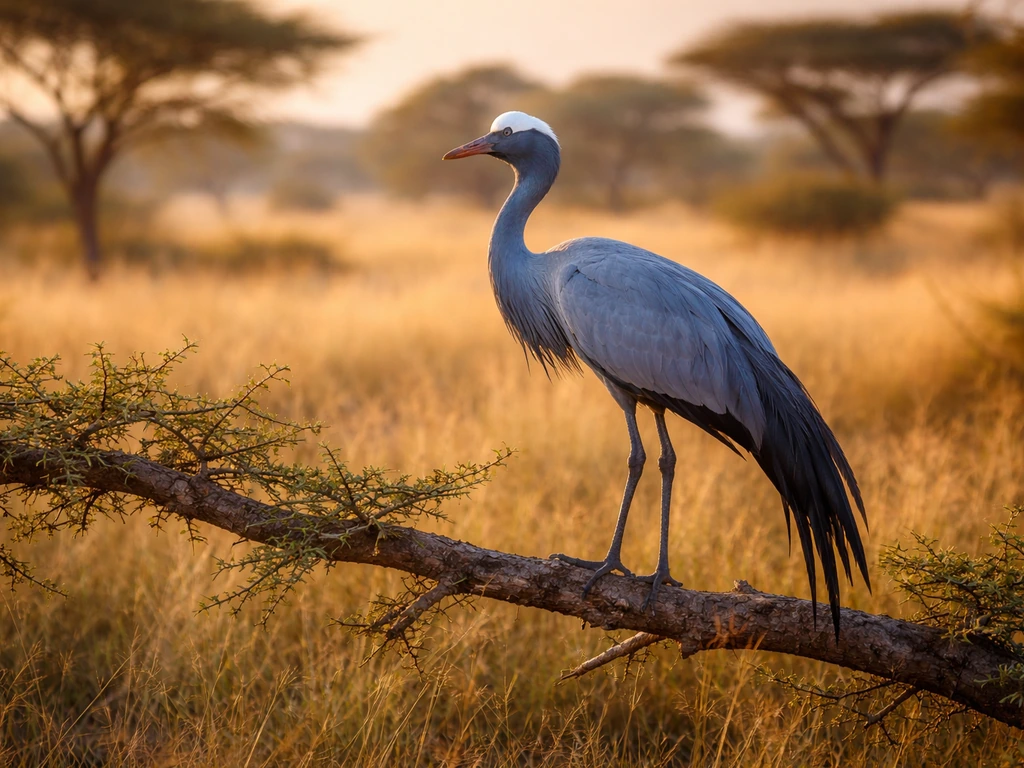
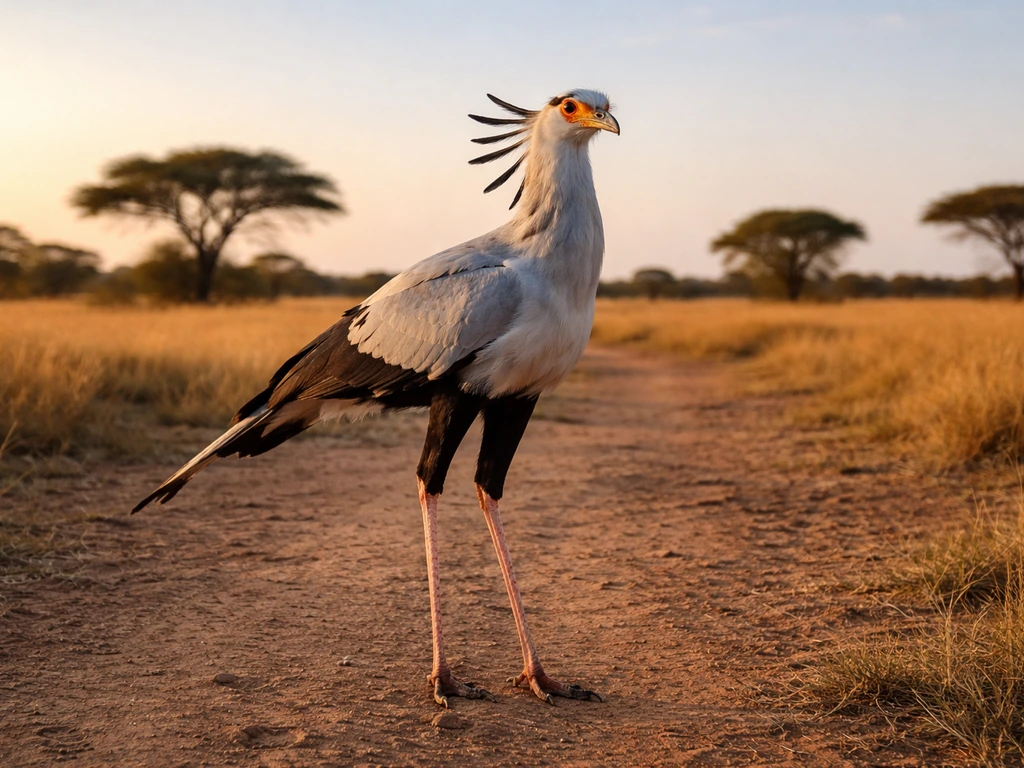
Sudan's national bird is the secretarybird (Sagittarius serpentarius). It appears on Sudan's official coat of arms, the presidential seal, and the flag of the president, making it one of the most visible national symbols the country has.
What Is the National Bird of Sudan? Answer and Meaning

Marcus Chen
6 Jun 2026
What the official sources actually say
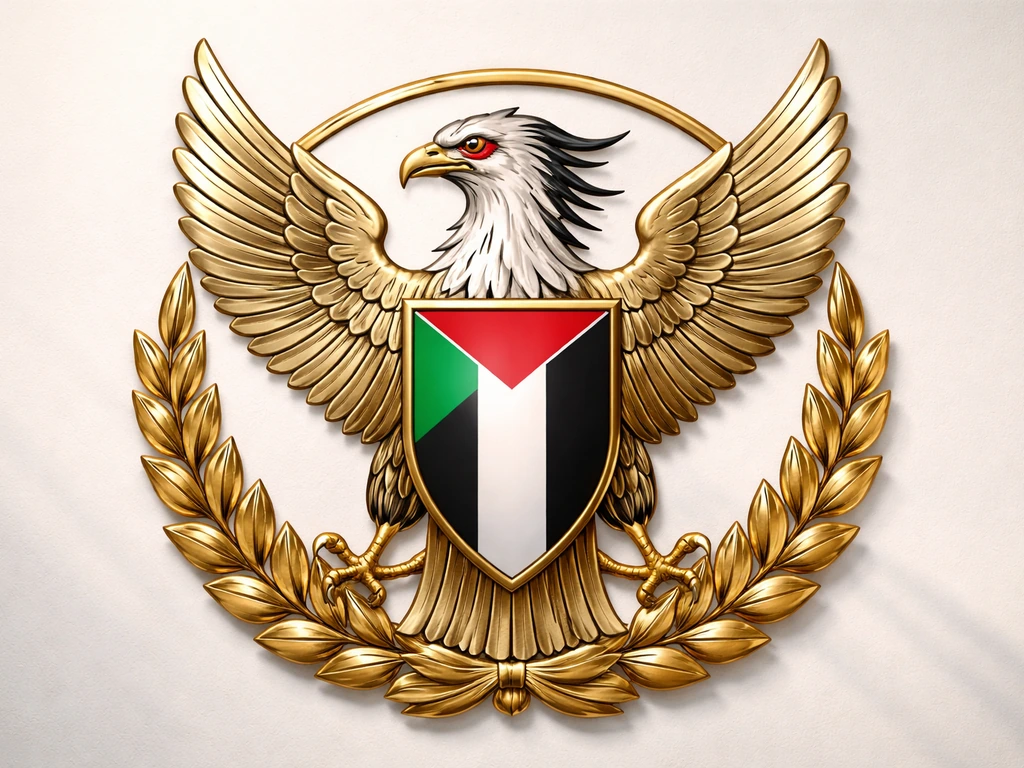
The secretarybird is confirmed through Sudan's national emblem, which is the most authoritative place to look when identifying a country's national bird. The emblem depicts a secretarybird bearing a shield on its chest, surrounded by the national colors. This same image appears on the presidential seal and is used in official state ceremonies.
Heraldic and vexillological reference works that document national emblems consistently identify this bird as the secretarybird, spelled both as one word and two. Numismatic records (coin catalogues) also show the secretarybird on Sudanese coinage tied to Republic-era designs, reinforcing that this is not a recent change or a disputed identification. Numismatic and state-symbol references describe the central bird on Sudan’s current emblem and coinage designs as the secretary bird secretarybird on Sudanese coinage.
One important thing to watch out for: some sources confuse Sudan (the Republic of the Sudan) with South Sudan, which became an independent country in 2011. blank" rel="noopener noreferrer">South Sudan has its own coat of arms and uses a different bird. If you are reading an older or less careful source, double-check which country it is actually describing. For the Republic of Sudan, the bird is the secretarybird.
How Sudan came to choose the secretarybird
The secretarybird was incorporated into Sudan's national emblem during the government of Jaafar Mohammed Nimeiri, who ruled from 1969 to 1985. An earlier version of the emblem existed before this period, and the current version featuring the secretarybird is commonly dated to 1985. So the bird has been part of Sudan's official iconography for over four decades.
The choice was deliberate and thoughtful. Many Arab states traditionally used eagle-based imagery on their emblems, drawing on symbols like the Eagle of Saladin or the Hawk of Quraish tied to Arab nationalist traditions. Sudan's designers chose the secretarybird as a distinctively Sudanese and indigenous alternative. It kept the spirit of a powerful heraldic bird while grounding it in something native to the African landscape Sudan actually occupies.
What the secretarybird symbolizes for Sudan
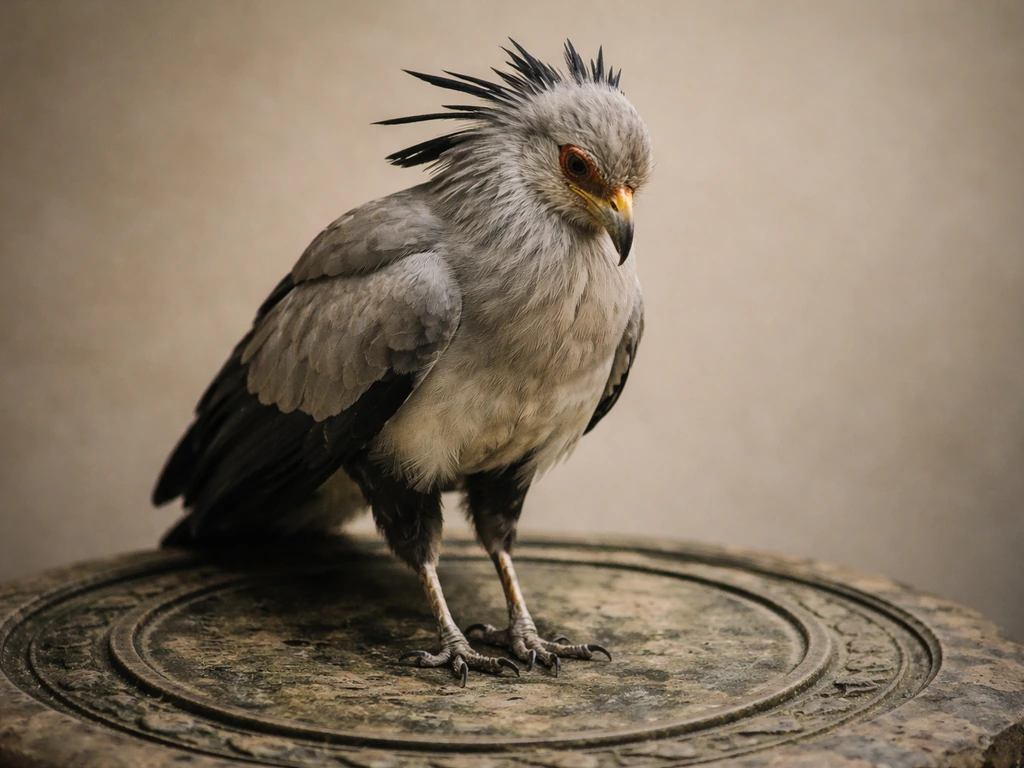
The secretarybird is described in Sudan's embassy documentation as appearing in a state of stillness on the emblem, which projects calm authority rather than aggression. That posture matters symbolically. It signals sovereignty and dignity without overt militarism.
Beyond the official framing, the secretarybird is a natural fit for a country like Sudan. It is a bird of open grasslands and savanna, the kind of terrain that characterizes large parts of sub-Saharan Africa. Choosing it connects Sudan's national identity to the African continent and its native wildlife, which was a meaningful distinction from the eagle imagery common to neighboring Arab states.
There is also something inherently commanding about the secretarybird's appearance. It stands tall, moves deliberately, and has a reputation as a formidable hunter. For a national emblem, those qualities translate well into ideas of strength, independence, and resilience.
Facts about the secretarybird worth knowing
The secretarybird is genuinely one of the more unusual birds on the planet. Here are some things that make it stand out:
- Scientific name: Sagittarius serpentarius. The genus name Sagittarius means "archer" in Latin, referencing its long, arrow-like tail feathers.
- It is one of only two species in the family Sagittariidae, making it taxonomically unique among raptors.
- Its legs are nearly twice as long as those of other ground birds of similar body mass, which is a key adaptation for hunting on foot.
- It is famous for stomping on and killing snakes, striking them with powerful kicks rather than using its beak.
- It lives across sub-Saharan Africa in open savanna and grassland habitats, which aligns well with parts of Sudan's landscape.
- Despite being a raptor, it spends most of its time walking on the ground rather than soaring.
Where to actually see the secretarybird
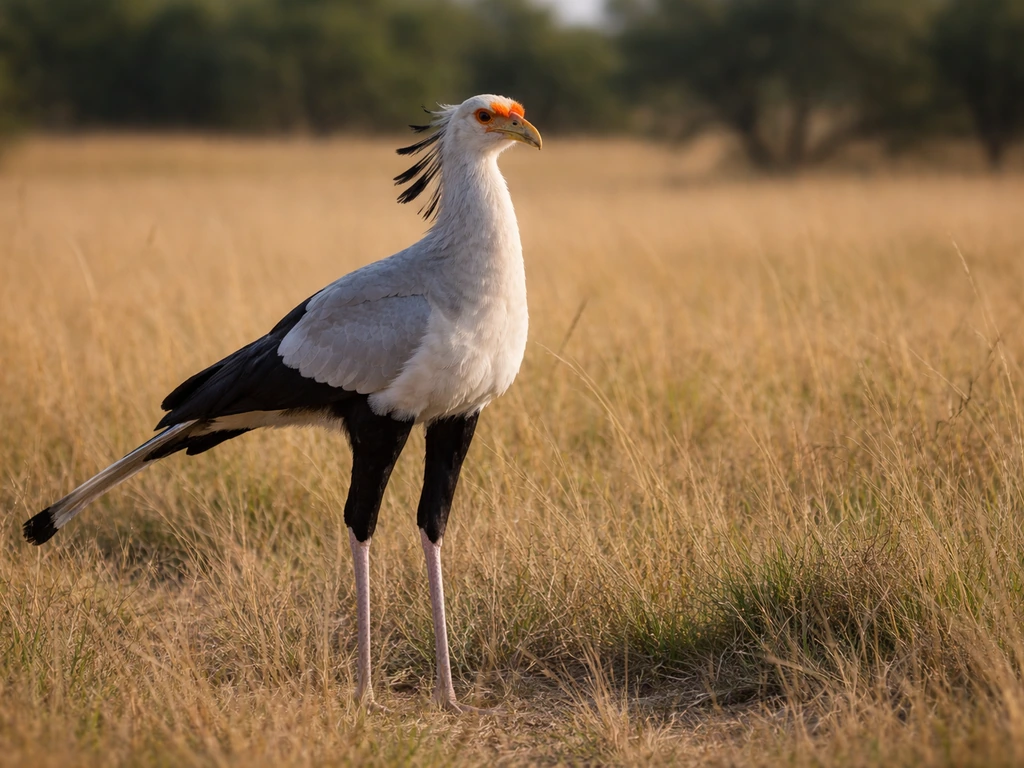
If you want to see the secretarybird in its role as a national symbol, the easiest place is on Sudan's official coat of arms, which appears on government buildings, official documents, currency, and state vehicles. The presidential seal and the flag of the president both carry the image, so it shows up prominently in ceremonial contexts.
In the wild, the secretarybird is found across grassland and open savanna regions of sub-Saharan Africa. Countries like Kenya, Tanzania, and South Africa are well-known spots for wildlife tourists to spot them. Countries like Kenya, Tanzania, and South Africa are well-known spots for wildlife tourists to spot them, including areas where you might also learn about Tanzania’s national bird. Within Sudan's borders, the bird's range historically covered areas of suitable open habitat, though habitat pressures have affected populations across the continent. The species is currently considered vulnerable, so populations are worth monitoring.
For those interested in the broader pattern of how African nations choose their national birds, Sudan's pick is an interesting case study. Ethiopia, Tanzania, and Ghana each made distinct choices that reflect their own histories and environments. If you are curious about Ethiopia specifically, its national bird is a different species than Sudan's secretarybird Ethiopia, Tanzania, and Ghana each made distinct choices. For example, Ghana's national bird is the great black-backed gull. Sudan's decision to go with a native African bird rather than a pan-Arab eagle makes it stand out among countries in the region.
A quick reference summary
| Detail | Information |
|---|---|
| National bird | Secretarybird |
| Scientific name | Sagittarius serpentarius |
| Appears on | Coat of arms, presidential seal, flag of the president |
| Emblem version with secretarybird adopted | 1985 (during Nimeiri era, 1969-1985) |
| Natural habitat | Open grassland and savanna, sub-Saharan Africa |
| Conservation status | Vulnerable (IUCN) |
| Common confusion | Sometimes mixed up with South Sudan's emblem, which uses a different bird |
If you came here just needing the answer for a quiz, school assignment, or simple curiosity: Sudan's national bird is the secretarybird. In many African countries, the national bird varies, but Sudan is commonly described as having the secretarybird national bird of Africa. If you want to go deeper, Sudan's coat of arms is the best primary source to examine, and the embassy documentation that describes the bird as appearing "in a state of stillness" gives you a feel for the symbolic intent behind the choice.
FAQ
Is Sudan’s national bird ever shown as a different species in some sources?
Yes, occasional reference errors happen, most often from mixing up Sudan with South Sudan. For the Republic of the Sudan, confirm the wording “secretarybird” (Sagittarius serpentarius) on the official coat of arms and related presidential insignia.
How can I verify Sudan’s national bird quickly for a school project or quiz?
Use the official coat of arms as the primary check, then cross-check the same animal on the presidential seal. If both display the same bird, you have a reliable answer even if other websites disagree.
Is the secretarybird the national bird of South Sudan too?
No. South Sudan has its own national emblem and uses a different national bird. If the source is older or vague, look for the country’s coat of arms description to ensure it refers to the correct state.
Does Sudan’s national bird spelling vary (secretary bird vs secretarybird)?
It varies by style guide, but it refers to the same bird. In official context, the identification is consistent, and the species name Sagittarius serpentarius is what locks the meaning in.
Has Sudan’s national emblem changed in a way that would change the national bird?
The secretarybird has been part of the main official iconography since the emblem version associated with the late 20th century. If you see an emblem version that looks different, still check whether it depicts a secretarybird rather than a generic bird shape.
What habitat does the secretarybird symbolize, and why does it matter for understanding the choice?
The symbolism connects to open grasslands and savanna, which mirror much of Sudan’s landscape. This is one reason the secretarybird is framed as distinctly indigenous rather than a motif imported from eagle-based heraldry traditions.
Is the secretarybird protected or endangered, and does that affect its use as a national symbol?
The secretarybird is described as vulnerable in conservation discussions, and that makes population monitoring important. Even if it is present in national iconography, it does not guarantee stable wild numbers across the region.
If I cannot access the coat of arms, what secondary evidence is most reliable?
Look for official or embassy-style documentation that describes how the bird is positioned on the emblem (for example, a still or dignified posture). Coinage and state-vehicle markings can also be strong supporting evidence when they match the emblem image.
Next Article
What Is the National Bird of Africa? Official Answers by Country
No single national bird for all Africa. See country-by-country national birds, symbols, history, and how to verify.