Tanzania's national bird is widely cited as the Grey Crowned Crane (scientific name: Balearica regulorum). You'll find this claim repeated across travel and birding sites, and the bird does have a strong presence in Tanzania's landscapes. However, it's worth knowing upfront that there is a genuine source of confusion here: the Grey Crowned Crane is also officially designated as the national bird of Uganda, where it appears on the national flag and coat of arms. Tanzania does not have a formal, government-legislated national bird in the same way Uganda does, but the Grey Crowned Crane is the bird most consistently associated with Tanzania in that symbolic role.
What Is the National Bird of Tanzania? Meaning and Facts

Marcus Chen
8 Jun 2026
The official context: what Tanzania actually recognizes
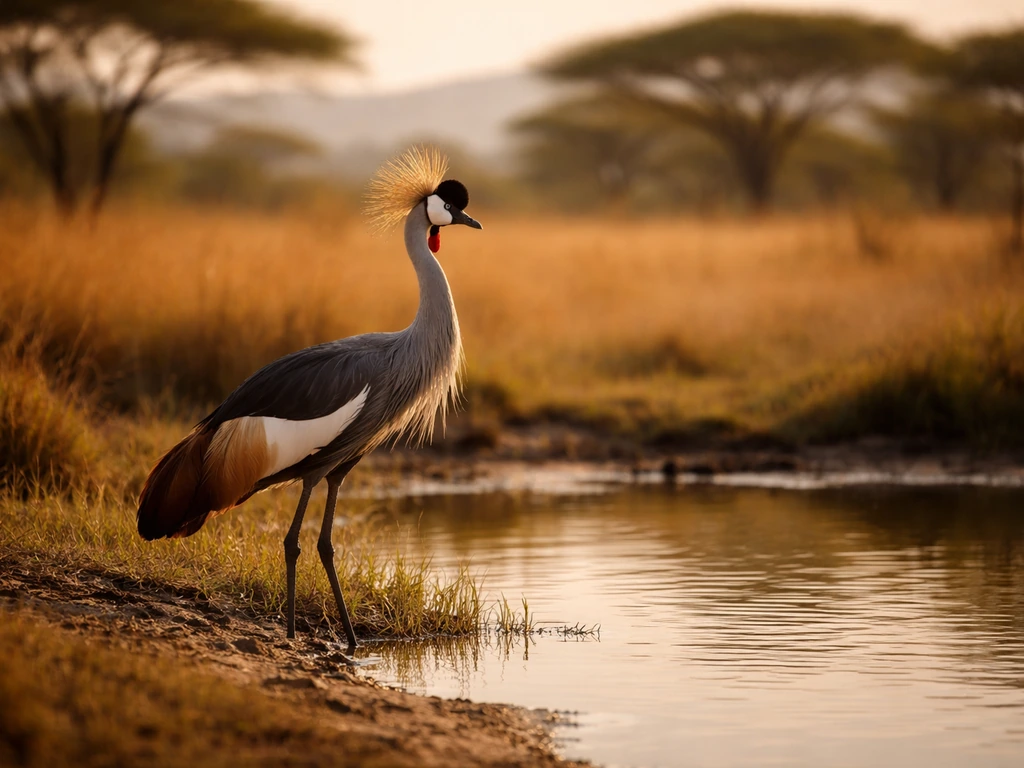
Unlike some countries where the national bird is enshrined by parliament or a specific governmental decree, Tanzania has no single definitive legislative document that formally names a national bird. The Grey Crowned Crane has been adopted through cultural convention and widespread recognition rather than through an act of government. Tanzania's official national symbols, such as the flag and coat of arms, feature other imagery. So when you see the Grey Crowned Crane listed as Tanzania's national bird, understand that it reflects a broadly accepted association, one that birding organizations, tourism boards, and wildlife publications have reinforced over time, rather than a formal state declaration with a specific date or issuing authority.
This is actually more common than people realize. Many nations have national birds that exist by strong popular and institutional consensus rather than explicit legislation. Tanzania's deep conservation culture and the crane's prominent place in its ecosystems have made the designation feel natural and fitting, even without formal paperwork behind it.
Identifying the Grey Crowned Crane: what to look for
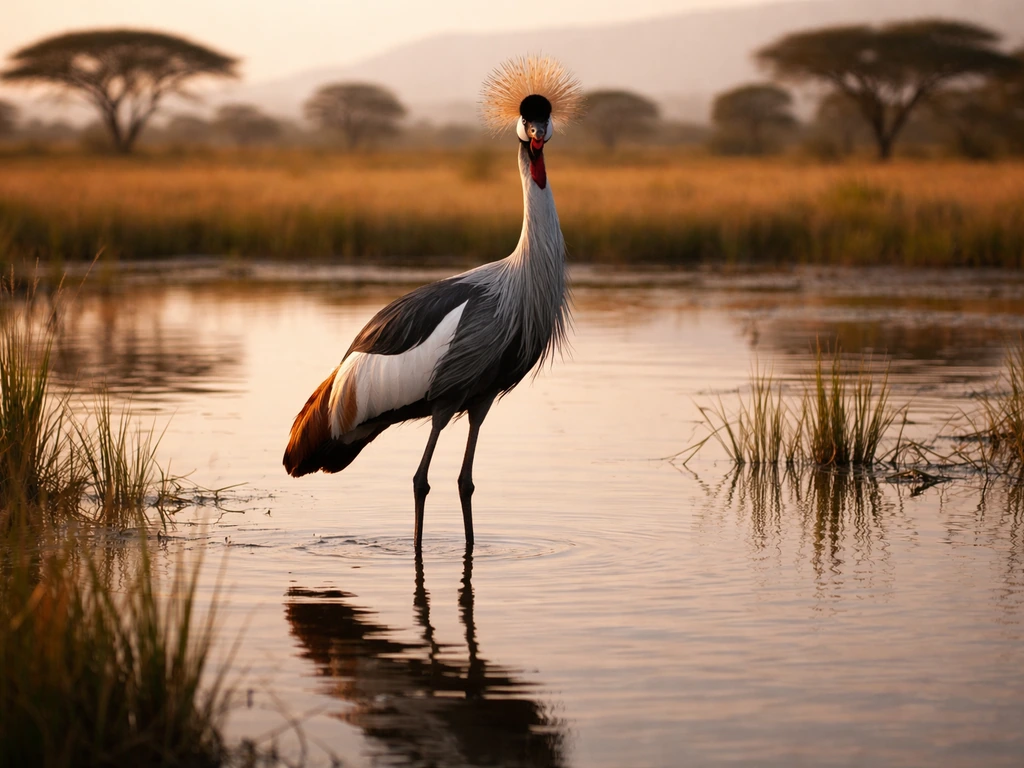
Balearica regulorum is genuinely one of the most striking birds you'll encounter in East Africa. Once you've seen one, there's no mistaking it. The bird stands roughly 1 meter (about 3.3 feet) tall and has a wingspan of up to 2 meters (6.5 feet). Here are the features that make it unmistakable:
- A dramatic golden straw-colored crown of stiff feathers radiating from the top of the head, which gives the bird its name
- A predominantly grey body with white and red patches on the face, including a bright red inflatable throat pouch (gular sac)
- White wing coverts that contrast sharply with dark flight feathers in flight
- Long legs adapted for wading in shallow wetlands and marshes
- A distinctive dancing courtship display, involving bowing, jumping, and wing spreading
The scientific name breaks down helpfully: Balearica refers to its genus of crowned cranes, and regulorum translates roughly to 'of kings' or 'of rulers' in Latin, a nod to that regal golden crown. The bird is also sometimes called the African Crowned Crane or East African Crowned Crane in older references, so don't let those alternate names throw you off. They all point to the same species.
The Uganda mix-up: why you'll see conflicting information
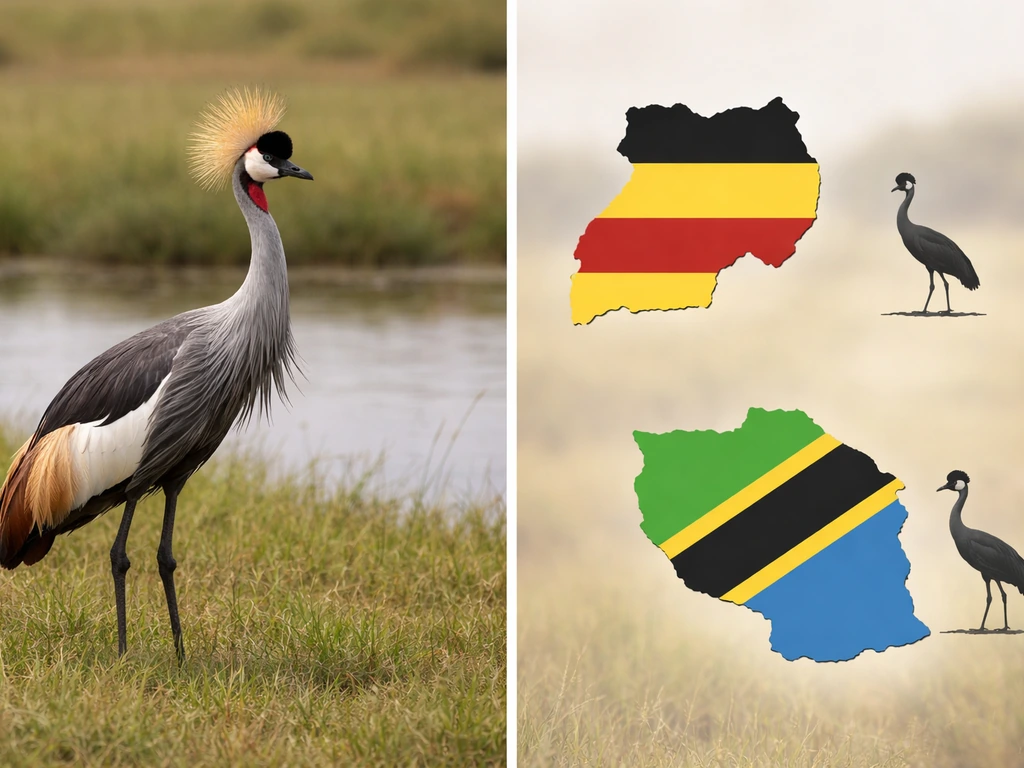
It's worth addressing this directly because it genuinely trips people up. The Grey Crowned Crane is undisputedly Uganda's national bird. Wikipedia’s account of the Grey crowned crane also notes that Balearica regulorum is the national bird of Uganda, not Tanzania [Balearica regulorum is undisputedly Uganda's national bird](https://en. wikipedia.
org/wiki/Greycrownedcrane). It appears on Uganda's national flag, which makes it one of the most formally recognized national bird designations in all of Africa. Tanzania and Uganda share much of the same East African ecosystem, and the Grey Crowned Crane lives across both countries' wetlands, savannahs, and grasslands. When sources list the bird as Tanzania's national symbol, they are drawing on the bird's ecological and cultural presence in the region rather than a Tanzanian-specific government proclamation.
The distinction matters if you're doing academic research or writing formally, but in casual and educational contexts, the Grey Crowned Crane is accepted as Tanzania's emblem.
What the crane symbolizes in Tanzania
The Grey Crowned Crane carries layered symbolism that fits Tanzania's national identity well. The golden crown is universally interpreted as a symbol of royalty, dignity, and grace. In Tanzanian and broader East African culture, cranes are associated with longevity, fidelity (they mate for life), and prosperity. Their elaborate dancing rituals have made them a symbol of celebration and community across many African traditions.
Tanzania is one of the world's premier wildlife conservation nations, home to the Serengeti, the Ngorongoro Crater, and the Selous ecosystem. The Grey Crowned Crane fits this identity: it is a visually spectacular bird that draws visitors and represents the biodiversity Tanzania is globally celebrated for protecting. The crane's presence in wetlands also ties it to water, which across many African cultures symbolizes life and renewal.
The bird's threatened status under the IUCN Red List (classified as Vulnerable) gives it additional modern symbolism as a conservation emblem, reinforcing Tanzania's ongoing commitment to protecting its natural heritage. National Geographic reports that the gray crowned crane is threatened, and it provides species facts for Balearica regulorum.
How the Grey Crowned Crane became Tanzania's emblem
There is no single founding moment or official ceremony that marked the Grey Crowned Crane as Tanzania's national bird. The association developed organically across several decades as Tanzania built its identity as a wildlife tourism and conservation destination after independence in 1961. The bird's visibility in iconic Tanzanian habitats, particularly around the Rift Valley lakes, the Serengeti plains, and coastal wetlands, made it a natural representative of the country's natural world.
Wildlife and birding organizations operating in Tanzania adopted the crane as a recognizable symbol, and tourism materials reinforced the connection. The fact that a closely related species, the Black Crowned Crane (Balearica pavonina), serves as the national bird of Nigeria and is recognized across West Africa, shows how the crowned crane family has become a pan-African symbol of national pride. Tanzania's adoption of the Grey Crowned Crane follows this broader regional pattern where the most majestic and ecologically representative bird earns the emblematic role.
Fun facts for bird enthusiasts
- The Grey Crowned Crane is one of only two crane species that roosts in trees (the other is the Black Crowned Crane). Most cranes are strictly ground birds. This tree-roosting ability evolved as protection from ground predators.
- Crowned cranes are considered the most ancient of all living crane species, with fossil records suggesting the genus Balearica has existed for around 37 to 54 million years.
- Their famous dancing behavior is not just courtship. Cranes of all ages dance, and researchers believe it plays a role in social bonding and even in developing coordination in younger birds.
- The red gular sac on the throat can be inflated and is used in calling. Their calls are loud, resonant booming sounds that carry across open wetlands.
- A Grey Crowned Crane pair will typically defend a territory of around 30 to 200 hectares and return to the same nesting sites year after year.
- The species faces habitat loss from wetland drainage, agricultural encroachment, and capture for the illegal pet trade, which has reduced wild populations significantly across East Africa.
- Tanzania hosts the Grey Crowned Crane in some of its most spectacular birding locations, including Lake Manyara, the Serengeti National Park, and the Usambara Mountains, making it a genuine highlight on any East African birding trip.
How Tanzania's national bird compares to its East African neighbors
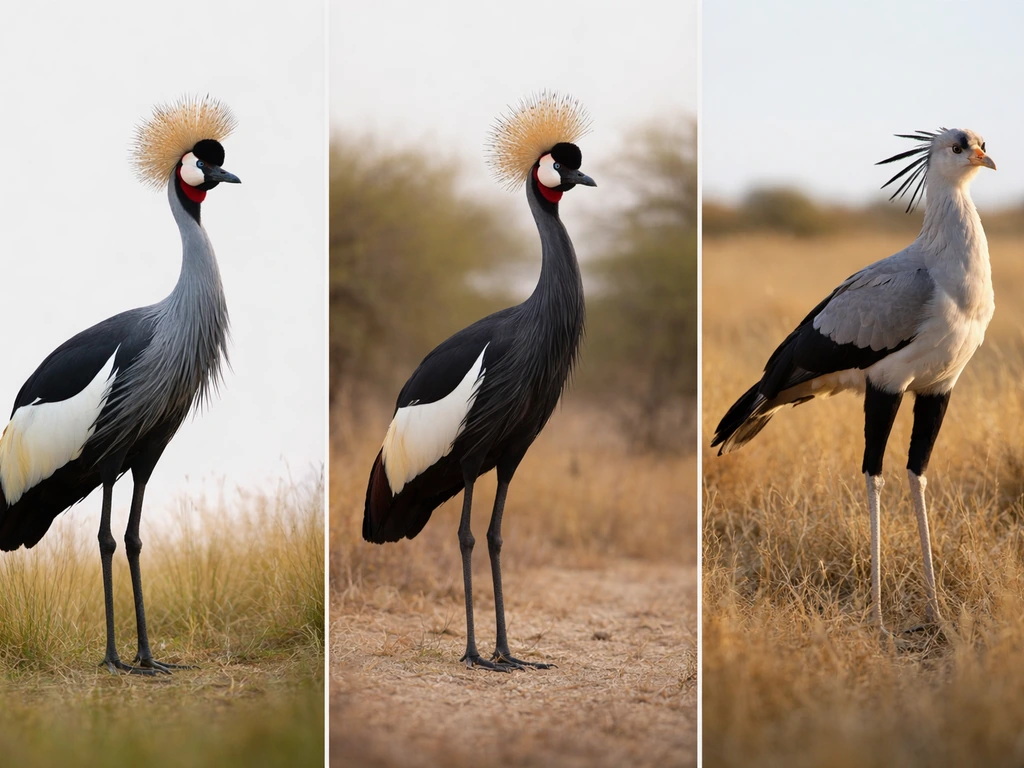
It's interesting to look at Tanzania's emblem alongside those of neighboring countries. Uganda has the most formally official claim to the Grey Crowned Crane, enshrined on its flag. Ethiopia's national bird is the Blue-winged Goose, a high-altitude specialist found nowhere else in the world, reflecting that country's distinct highland ecology. If you're wondering what is the national bird of Ethiopia, it's the Blue-winged Goose.
Sudan's national bird carries its own regional symbolism. If you're wondering what that is, the answer is the Sudan golden eagle Sudan's national bird. Each East African country has gravitated toward a bird that captures something essential about its landscape and identity, and Tanzania's crane fits the pattern perfectly: large, charismatic, wetland-dependent, and unmistakably East African.
| Country | National Bird | Key Symbolism |
|---|---|---|
| Tanzania | Grey Crowned Crane (Balearica regulorum) | Grace, longevity, biodiversity, conservation |
| Uganda | Grey Crowned Crane (Balearica regulorum) | Formal flag emblem, national pride (official decree) |
| Ethiopia | Blue-winged Goose (Cyanochen cyanoptera) | Endemic highland species, uniqueness |
| Ghana | Bald Eagle equivalent / various cited | National identity, strength |
The overlap between Tanzania and Uganda on the same species is unusual globally but makes ecological sense. The Grey Crowned Crane doesn't respect borders, and both nations have legitimate cultural and ecological connections to it. If you're exploring the national birds of Africa more broadly, you'll find this kind of regional sharing of emblematic species is more common than you might expect. If you're asking what the national bird of Ghana is, Ghana’s national bird is the African Grey Parrot. If you're asking what the national bird of Africa is, the answer depends on the country, since each nation has its own official (or widely recognized) emblem national birds of Africa.
FAQ
Is Tanzania’s national bird officially legislated like in some other countries?
In most mainstream references, the Grey Crowned Crane (Balearica regulorum) is treated as Tanzania’s national bird, even though Tanzania does not appear to use a single, government-issued act to formalize it. If you need a strict, “officially legislated” answer for academic or legal contexts, you may have to rely on the specific institution or publication you are using, because there is no universally cited Tanzanian government decree.
How can I confirm whether a source is calling it “official” or just a commonly accepted symbol?
Because sources can be inconsistent, a practical way to verify is to check whether a reference also names the national symbol on Tanzania’s government flag or coat of arms. If it points to the flag and coat of arms, Tanzania’s imagery may not match the Grey Crowned Crane, which is a clue that the “national bird” label is based on convention rather than formal state symbolism.
Are the names Grey Crowned Crane, African Crowned Crane, and East African Crowned Crane all the same bird?
If you see “African Crowned Crane” or “East African Crowned Crane,” it is usually referring to the same species, Balearica regulorum, rather than a different bird. The safest approach is to compare the scientific name or the key field marks, since common names sometimes vary by region and language.
Can the Grey Crowned Crane be confused with other crowned cranes when I’m birdwatching in Tanzania?
If your goal is bird identification, don’t go by the “national bird” label. The Grey Crowned Crane can be confused with other crowned cranes, so use features like the extent of the golden crown, body size, and typical wetland behavior, and confirm with the scientific name where possible.
Why does the Grey Crowned Crane show up as national bird for both Tanzania and Uganda?
The confusion is usually cross-border rather than taxonomic. The Grey Crowned Crane is officially tied to Uganda’s national identity, while Tanzania’s link is more cultural and institutional. For writing or research, explicitly state the nature of the claim (official designation versus widely accepted association) to avoid factual mismatches.
What’s the difference between a national bird label and a symbol used in official state iconography?
Many countries have a practical distinction between “national bird” and “national symbol used in official state iconography.” Tanzania appears to fall closer to the first category in popular and conservation-tourism contexts, while its formal state symbols may feature different animals or emblems, so you should decide which definition you’re using.
Could “crowned crane” references be referring to the Black Crowned Crane instead of the Grey Crowned Crane?
Yes, the family connection matters: Black Crowned Crane (Balearica pavonina) is associated with national symbolism elsewhere (for example, Nigeria). This means that “crowned crane” mentions can look interchangeable at first glance, so always verify the species name (regulorum versus pavonina) before concluding which country’s national bird is being referenced.
Where in Tanzania are the best chances to spot the Grey Crowned Crane?
If you’re planning to see the bird, prioritize habitats where wetlands and open grasslands overlap, including areas around Rift Valley lake systems and other wetland-dependent landscapes. Since the species is tied to water bodies, your “where to look” will usually be more important than “which month,” although local seasonal water changes can affect viewing opportunities.
Is the Grey Crowned Crane’s conservation status important to mention when talking about it as a national bird?
For conservation framing, “Vulnerable” status can shift over time, so check the most recent conservation assessment if you are including numbers in a report. The key practical point is that the bird is commonly used as a conservation emblem, which aligns with why it is frequently selected in national-symbol discussions.