
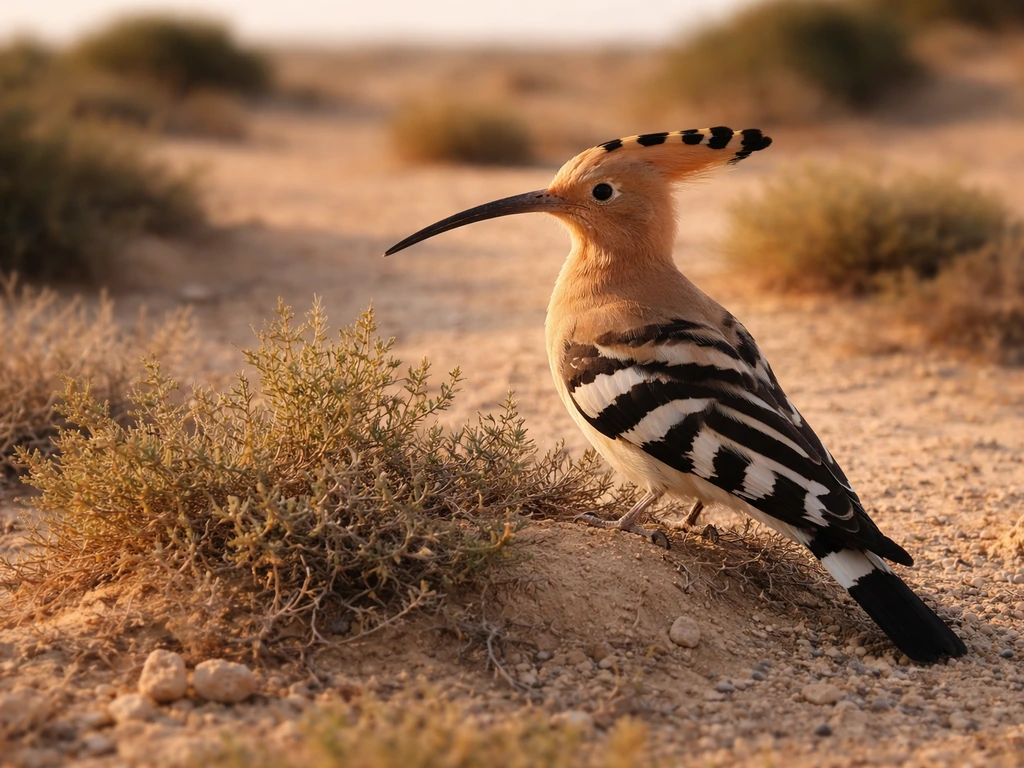
Israel's national bird is the hoopoe, known in Hebrew as the duchifat (דוכיפת). The designation was announced on May 29, 2008, by President Shimon Peres as part of celebrations marking 60 years since Israel's founding. It is the answer you will find consistently across credible news sources, government-linked materials, and ornithology references, so you can feel confident in it.
What Is the National Bird of Israel? Official Answer

Marcus Chen
14 Apr 2026
Official or just commonly cited? Here's the nuance
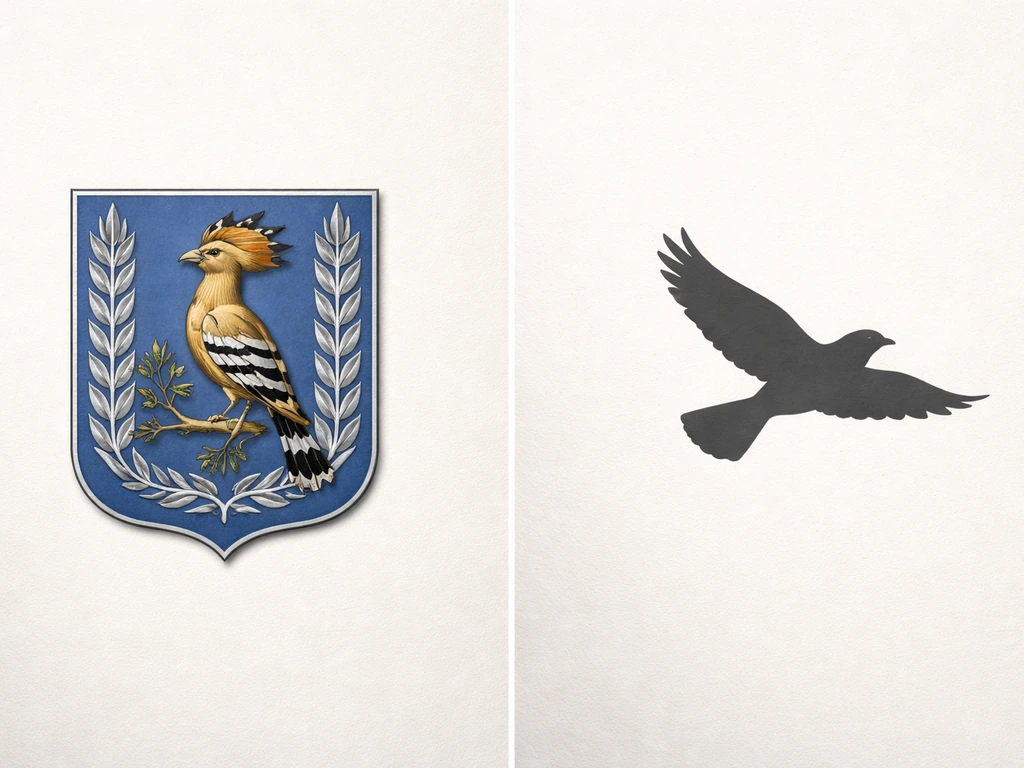
This is where things get a little interesting, and it is worth being honest about. The hoopoe was selected through a national public vote and declared the winner by President Peres, but the designation does not carry formal legal status under Israeli law. One Israeli symbols document puts it plainly, noting the selection "never gained any official recognition" in a legislative sense. This is not unusual: many countries have national birds that were chosen through cultural or governmental processes rather than written into law. Israel's national symbols page on Wikipedia notes the same thing, explaining that such symbols are "often chosen by selection processes held or sponsored by government agencies" but may not have official legal status.
So the accurate way to describe it: the hoopoe is Israel's recognized and widely accepted national bird, declared by the head of state, celebrated by government institutions, and treated as the official choice in practice, even if it was never codified in legislation. For virtually every practical purpose, including school projects, reference guides, and general knowledge, the hoopoe is the answer.
If you have seen other birds floated as Israel's national symbol online, they are not supported by any credible source. The hoopoe is not just commonly cited; it is the only bird that has ever been formally declared in any capacity, and it won its place through a transparent public process.
How the hoopoe got chosen
The story behind the selection is genuinely compelling. In the lead-up to Israel's 60th anniversary in 2008, the Society for the Protection of Nature in Israel organized a national bird contest. Around 155,000 Israeli citizens participated in the survey, voting from a shortlist of candidates. The hoopoe came out on top, beating the white-spectacled bulbul, among others. President Peres then officially announced the winner on May 29, 2008, giving the result a ceremonial stamp of approval at the national level.
The Knesset also recognized the occasion, with exhibit materials from that anniversary period referencing the hoopoe's selection as part of Israel's 60th milestone. The Israel Mint even produced commemorative coins featuring the winning bird and its runner-ups from the competition, which tells you just how seriously the designation was taken at a cultural and institutional level.
If you want a deeper look at why specifically this bird resonated so strongly with the Israeli public, why the hoopoe became the national bird of Israel goes into the reasoning and cultural factors behind the vote in much more detail.
What the hoopoe means to Israel
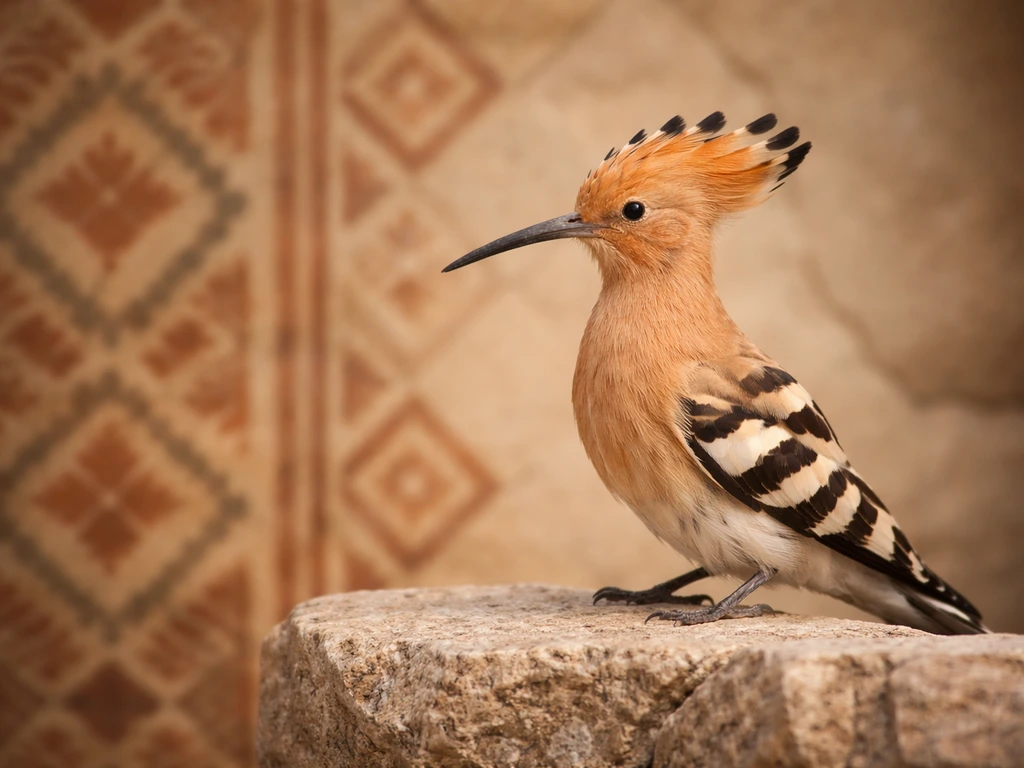
The hoopoe carries a remarkable amount of cultural weight for a single bird. Its roots in Israeli and Jewish tradition go back thousands of years. The bird appears in the Bible and the Talmud, and in Jewish and Islamic legend it plays a notable role in stories about King Solomon and the Queen of Sheba. In those narratives the hoopoe acts as a messenger between the two monarchs, which gives it an almost diplomatic symbolic identity. That kind of deep, layered presence in ancient texts made it a natural fit for a national symbol.
The Society for the Protection of Nature in Israel (TEVA) highlights this connection explicitly, pointing to the bird's mentions in the Bible and Talmud as part of what makes it culturally meaningful to Israelis today. The hoopoe is not just a pretty bird that won a popularity contest; it is a species woven into the stories and identity of the region across multiple religious and cultural traditions.
Beyond religion and legend, the name duchifat has become embedded in Israeli institutional life in a striking way. The Israeli Defense Forces have a battalion called the Duchifat Battalion, named directly after the bird, and a reconnaissance unit established in 1966 also carries the duchifat name. When a military uses a bird's name for one of its units, that bird has clearly crossed from symbolic to genuinely cultural territory.
Museums and heritage institutions reinforce the connection too. The Ilana Goor Museum, for example, sells a hoopoe sculpture explicitly labeled "Israel's National Bird," reflecting how the designation has filtered into the cultural and artistic mainstream.
Facts worth knowing about the hoopoe
- The hoopoe's scientific name is Upupa epops. Its common English name comes directly from its call, a distinctive "hoo-poo" or "oop-oop-oop" sound that is easy to recognize once you have heard it.
- It has a dramatic fan-shaped crown of feathers that it can raise or lower. Combined with its bold orange, black, and white coloring, it is one of the more visually striking birds in the region.
- The hoopoe's breeding range stretches from southern Europe and Africa across to Japan, but it is a regular breeding species in Israel and can be seen across the country.
- It nests in cavities, whether in trees, cliffs, or stone walls, and the nest cavity has a notably strong smell due to secretions the female produces. This actually deters some predators.
- Its diet consists mostly of insects, including larvae and pupae, which it probes for in the soil with its long, curved bill.
- The IUCN classifies the Eurasian hoopoe as Least Concern globally, meaning it is not threatened at a species level, though local pressures like habitat change can affect populations.
- Israel's Biodiversity Risk Assessments Project maintains a dedicated species page for Upupa epops with Israel-specific distribution and breeding data, confirming its established presence as a native breeder.
Hoopoe vs. other birds sometimes mentioned
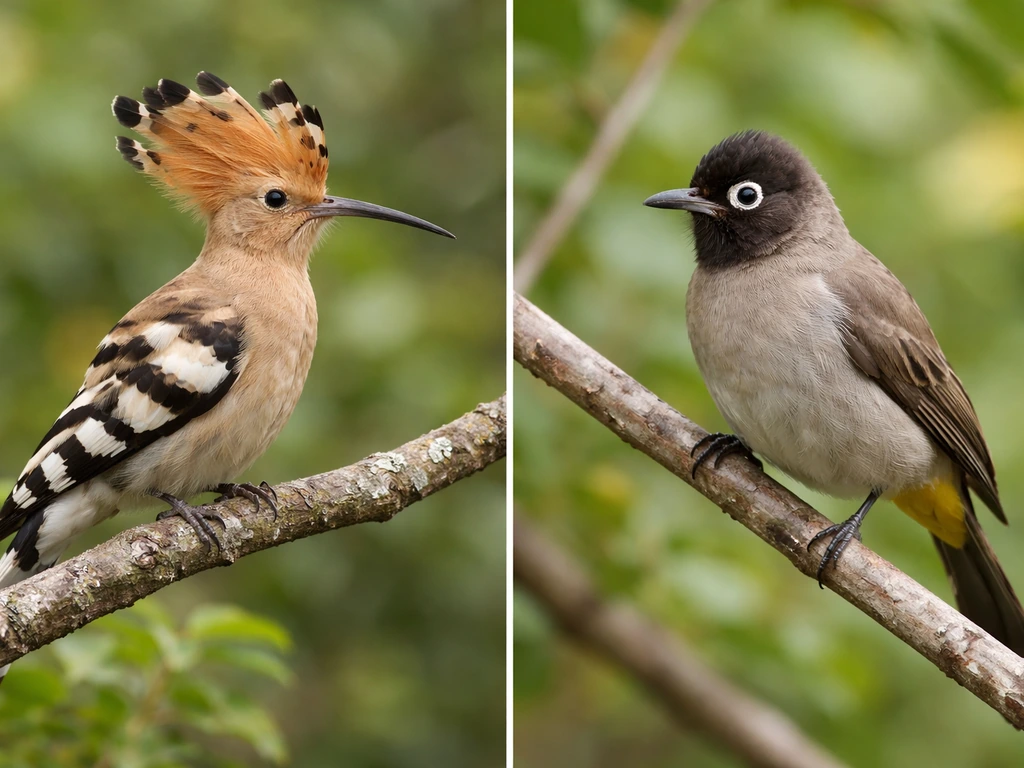
Just to be thorough, here is a quick comparison of the hoopoe against the white-spectacled bulbul, which was its closest competitor in the 2008 vote and occasionally comes up in online discussions.
| Attribute | Hoopoe (Duchifat) | White-Spectacled Bulbul |
|---|---|---|
| National bird status | Declared national bird by President Peres, May 2008 | Runner-up in 2008 national vote, no designation |
| Hebrew name | Duchifat (דוכיפת) | Bulbul (בולבול) |
| Biblical/cultural references | Yes, mentioned in Bible, Talmud, and Solomonic legend | Limited historical-cultural references |
| Visual recognition | Very distinctive: crested, bold orange/black/white | Common garden bird, less visually striking |
| IDF naming use | Yes, Duchifat Battalion and reconnaissance unit | None |
| Vote result in 2008 | Winner (approx. 155,000 voters) | Runner-up |
The recommendation here is simple: if someone asks you Israel's national bird, say the hoopoe without hesitation. The bulbul is a common and beloved bird in Israel, but it has no claim to the national bird title.
How to verify this and where to dig deeper
If you want to double-check the claim, a few sources will serve you well. The Jerusalem Post covered the May 29, 2008 announcement directly, with President Peres naming the hoopoe as the winner. The Jewish Telegraphic Agency (JTA) also reported on the same announcement. These are contemporary news reports from the date of the actual declaration, which makes them solid primary references.
For species-level facts about the bird itself, eBird's Israel Breeding Bird Atlas has a dedicated hoopoe profile with occurrence and breeding data specific to the country. Birds of the World is the most authoritative ornithological reference for species biology and curated scholarly sources on Upupa epops if you want to go deeper on natural history.
If you are exploring national birds more broadly and find the hoopoe story interesting, it is worth comparing it to similarly layered national bird selections elsewhere in the world. New Zealand's national bird has its own fascinating story, and the flightless bird New Zealand chose as its national emblem reflects a very different set of cultural values than Israel's choice of the hoopoe. These comparisons help put each country's decision in better perspective.
The bottom line: the hoopoe is Israel's national bird. It was chosen through a public vote of 155,000 citizens, declared by the president, referenced in Knesset materials, commemorated on official mint coins, and embedded in the country's military and cultural institutions. Ynet News reported that 155,000 people participated in the nationwide election and that the hoopoe won, described as Israel’s “new national bird.” 155,000 people participated in the nationwide election and the hoopoe won. The fact that it lacks a formal legal statute does not meaningfully change its status as Israel's recognized avian symbol, and no credible source points to any other bird.
FAQ
Is Israel’s national bird officially written into Israeli law?
It is the hoopoe (duchifat, דוכיפת), but there is no standalone statute in Israeli law that “legally” codifies it as a national bird. So in formal legal terms you should describe it as the nationally recognized symbol declared through the 2008 selection, rather than a bird mandated by legislation.
How should I state the national bird in a school project without getting the legal detail wrong?
If you need an “official” phrasing for school or presentations, use wording like “Israel’s nationally recognized national bird is the hoopoe (duchifat), announced in 2008.” This avoids the common mistake of claiming it is legally mandated, while still stating the correct practical answer.
What should I do if I see another bird listed online as Israel’s national bird?
A few online pages mention other birds, but the article notes those alternatives lack credible sourcing. If your assignment requires justification, stick to the 2008 hoopoe selection and describe that competing candidates were part of the ballot shortlist, rather than treating other names as equally official.
Does “duchifat” refer to a different bird than the hoopoe?
The national bird is the hoopoe species Upupa epops. When people cite a “Hebrew name” or just “duchifat,” it is still referring to the same species, so you can safely combine the English name and the Hebrew name in your answer.
How can I verify the national bird claim quickly and reliably?
If you are comparing sources, look for reporting or materials tied to the May 29, 2008 announcement, not generic “country symbol” pages. The practical decision aid is: date-linked announcement coverage plus institutional commemorations is stronger than unsourced listicles.
Why did the hoopoe win culturally, not just as a popular choice?
For “ancient connection” questions, explain that the hoopoe’s symbolic appeal is linked to mentions in Jewish and wider regional traditions, including passages associated with the Bible and Talmud, plus later legends. That cultural thread is part of why it resonated in the 2008 vote.
Is the national bird just a symbol, or does it show up in real Israeli institutions?
Yes. The article points out that the duchifat name appears in real institutions, including Israeli Defense Forces units. So if someone asks whether it is merely a decorative symbol, you can say it is used in organizational naming and public-facing cultural references.
Which bird is most often confused with Israel’s national bird?
The closest rival mentioned is the white-spectacled bulbul from the 2008 shortlist. If asked to name “the other bird people confuse with it,” you can mention the bulbul as the runner-up candidate, while reaffirming that it did not win.
Has Israel changed its national bird since 2008?
If you are asked about “what the national bird is today,” you should answer hoopoe, since the 2008 selection remains the consistent reference point across credible sources. The lack of legal codification does not imply the symbol changed.