
The hoopoe is Israel's national bird because it carries deep roots in Jewish scripture, Islamic tradition, and Middle Eastern folklore, and because 155,000 Israeli citizens voted for it in a public survey in 2008. It is not a default choice or a colonial-era assignment. Israelis actively picked it, and the reasons behind that choice go back thousands of years.
Why Is the Hoopoe the National Bird of Israel?

Marcus Chen
19 May 2026
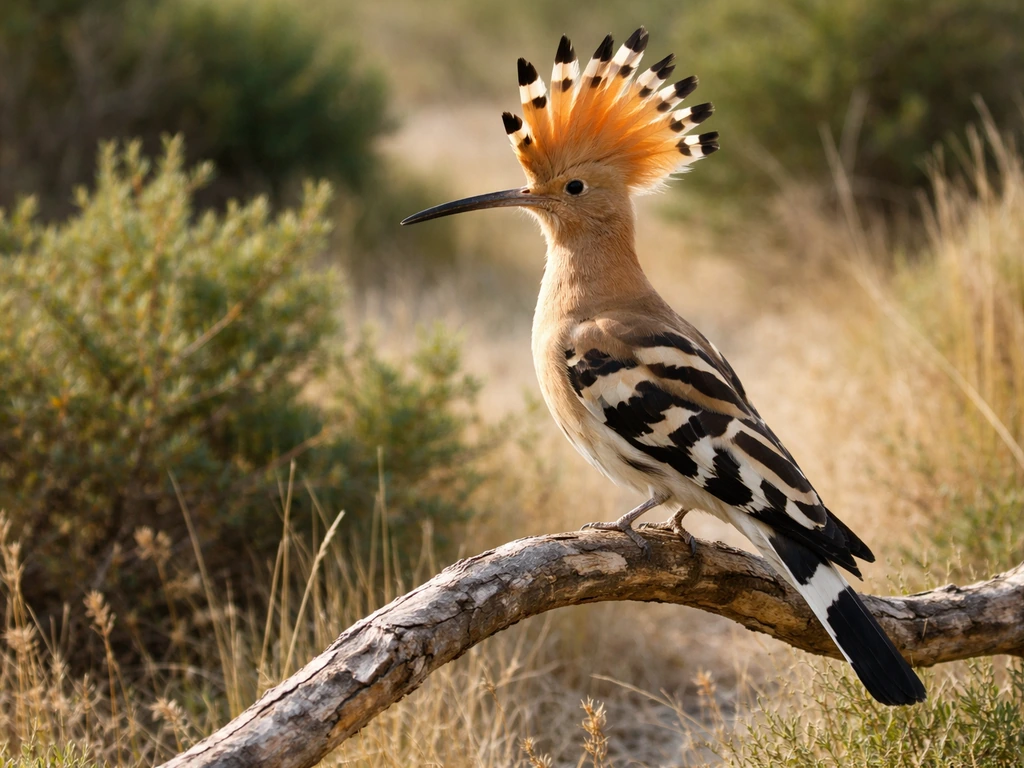
Israel's national bird: the hoopoe, known as Duchifat
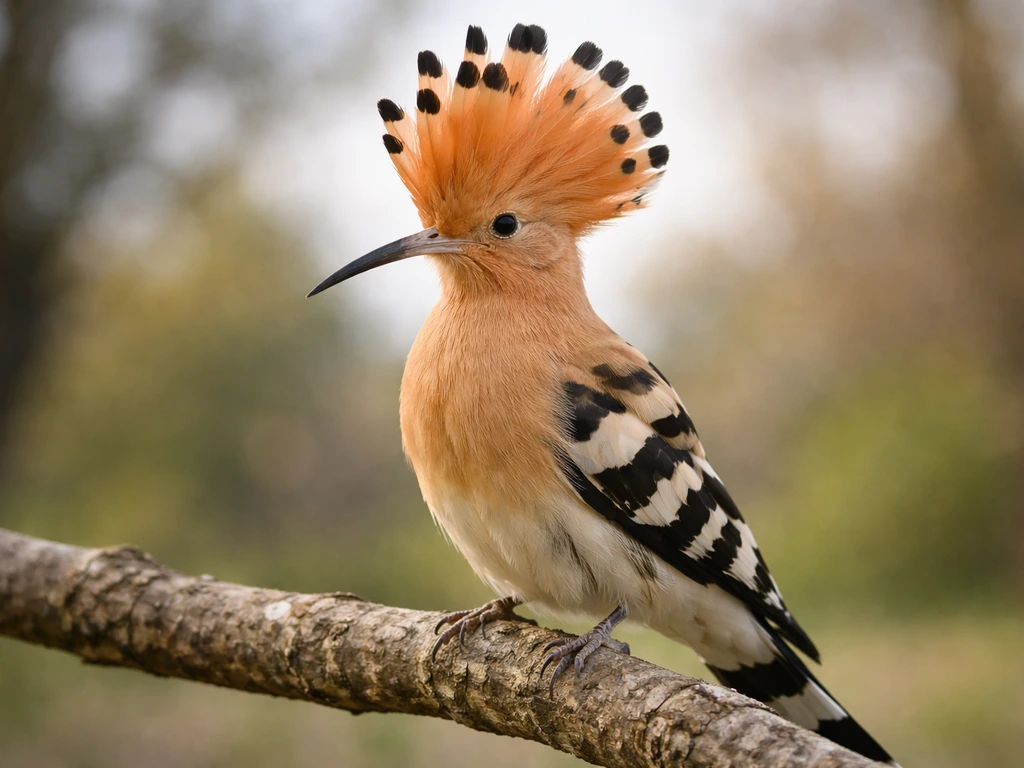
The bird is the Eurasian hoopoe, scientific name Upupa epops. In Hebrew it is called the Duchifat (דוכיפת), a word with ancient Aramaic roots that some interpret as meaning "two beaks" or referencing a double-crested appearance. If you have seen a hoopoe in person, the name makes sense the moment its fan-like crest fans open.
This is sometimes confused with other striking regional birds, but the hoopoe is unmistakable: pinkish-brown body, bold black-and-white striped wings, and that dramatic crest it raises and lowers like a crown. No other common Israeli bird looks quite like it, which is partly why it resonates so strongly as a national symbol.
What the hoopoe represents for Israel
The hoopoe was chosen to represent a country that sees itself as ancient and rooted, yet also unmistakably distinctive on the world stage. Its crest has long been read as a crown, a mark of royalty or wisdom. Its appearance in texts spanning Torah, Talmud, and the Quran positions it as a bird that belongs to the shared cultural memory of the region, not just to one tradition.
It also lives in Israel year-round. Unlike migratory species that only pass through, the hoopoe is a permanent resident, which matters symbolically. A national bird that actually stays is a more honest emblem than one that only visits.
The Society for the Protection of Nature in Israel explicitly framed the hoopoe's selection around its "rich history" in the region and its presence in Torah, Talmud, and both Jewish and Islamic stories. That cross-cultural reach made it a unifying rather than divisive choice.
Deep cultural and historical roots
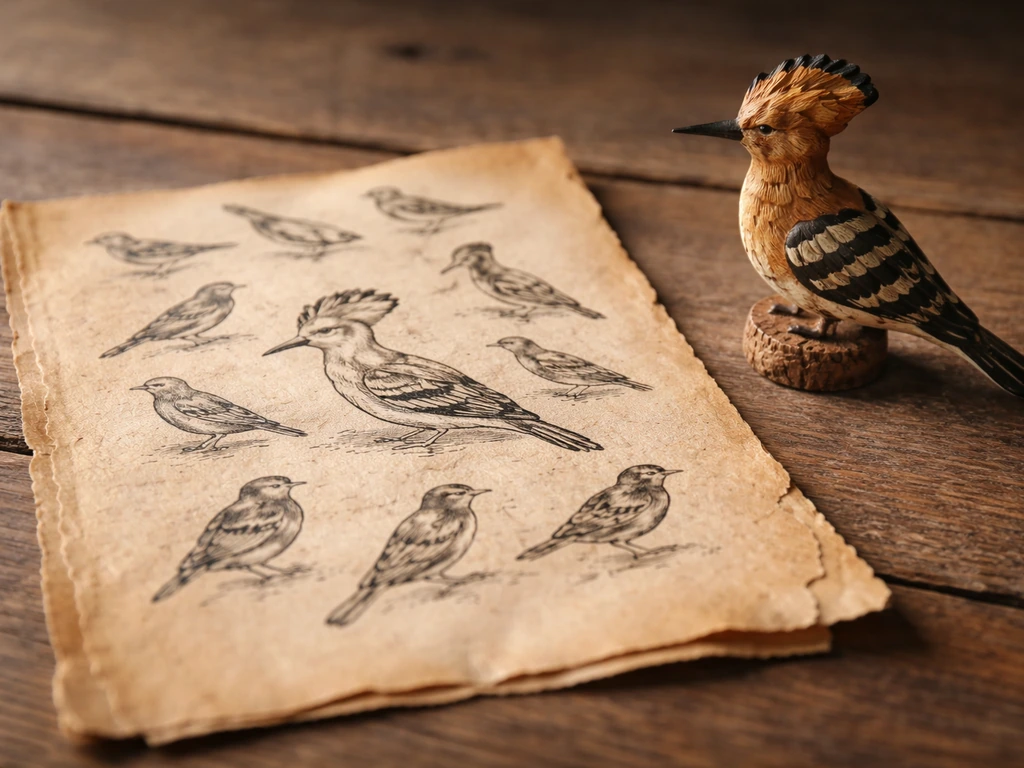
The hoopoe's association with this land goes back to antiquity. It appears in the Mosaic law texts of Leviticus 11:19 and Deuteronomy 14:18 as one of the birds listed among the ritually unclean, which tells you it was a familiar, well-known species to the people of that era. The Hebrew term "dukhiphath" in those passages is supported by ancient Greek (Septuagint) and Latin (Vulgate) translations as referring to the hoopoe.
Beyond the legal lists, the hoopoe appears in folklore and legend across the ancient Near East. It was a bird people noticed, named, and told stories about, which is exactly the kind of species that earns lasting cultural status.
The King Solomon connection and Quranic tradition
The most famous story linking the hoopoe to the region involves King Solomon. In Jewish and Islamic tradition, the hoopoe served as a royal messenger, most famously said to have carried Solomon's invitation to the Queen of Sheba. In the Quran (Surah An-Naml, "The Ants," verses 27:20 through 27:28), the hoopoe appears explicitly as Solomon's messenger, scouting distant lands and reporting back. This is not a minor mention. It is a central narrative moment in one of the Quran's most well-known chapters.
Jewish midrashic literature echoes similar themes, casting the hoopoe as a bird connected to wisdom, loyalty, and royal service. The combination of a "crown" on its head and the role of faithful messenger reinforced its symbolic profile across centuries of storytelling in the region.
Hoopoe traits that make the symbolism feel right
It helps to know what the bird is actually like in the wild, because the physical and behavioral traits reinforce the cultural story rather than contradicting it.
- The crest: the hoopoe's fan of black-tipped feathers can be raised into a dramatic crown shape or folded flat. In the context of royalty and Solomon's court, this visual detail has always felt significant to observers.
- The call: it produces a low, repetitive "hoo-hoo-hoo" that carries well across open ground. Israel's Ministry of Education describes its calls as loud and distinctive, easy to recognize even before you see the bird.
- Year-round presence: the hoopoe does not just pass through Israel. It breeds and lives there through all seasons, nesting in tree cavities, cracks in stone walls, and holes in old structures.
- Foraging behavior: hoopoes probe the ground with their long curved bills, hunting insects and larvae in soil. This active, purposeful foraging is part of why they are frequently spotted in gardens, parks, and agricultural land across Israel.
- Defense mechanism: nesting hoopoes use a notable defense, producing a foul-smelling secretion to deter predators, which adds a layer of practical toughness to an otherwise ornate-looking bird.
Put together, you have a bird that looks like royalty, sounds distinctive, stays put, and is tougher than it appears. That combination is not a bad profile for a national emblem.
How Israel officially selected the hoopoe
The formal timeline is straightforward. In 2008, as part of celebrations marking Israel's 60th anniversary as a modern state, the Society for the Protection of Nature in Israel organized a national public survey to choose a national bird. Around 155,000 citizens participated. The hoopoe won, outpolling the white-spectacled bulbul and other candidates.
On May 29, 2008, President Shimon Peres formally declared the hoopoe Israel's national bird at a ceremony at the President's Residence in Jerusalem. The announcement was covered by the Jerusalem Post, the Jewish Telegraphic Agency, and international outlets including the Los Angeles Times and Smithsonian. A Knesset exhibit catalog later documented the selection as part of the anniversary record.
What makes this selection feel more legitimate than many national-bird designations is the combination of a genuine public vote and a formal presidential declaration, both tied to a milestone anniversary. It was not quietly assigned by a committee or inherited from a colonial classification. Israelis chose it deliberately.
How this compares to other national bird selections
The process Israel used is actually quite similar to what New Zealand did with the kiwi, which was also confirmed through public engagement and has deep indigenous cultural meaning behind the choice. The national bird of New Zealand is the kiwi, and it cannot fly. The kiwi is important to New Zealand because it is a national icon tied to the country’s unique native wildlife and conservation story. New Zealand's national bird is the kiwi, a flightless bird native to the country. The difference is that the kiwi's connection to New Zealand identity is primarily ecological and indigenous, while the hoopoe's roots are textual and theological as much as they are ecological. Both birds end up saying something honest about the nations that chose them.
Where to verify and explore further
If you want to confirm the hoopoe's official status and dig deeper, here are the most useful places to look.
- The List of National Symbols of Israel on Wikipedia gives a concise overview of all Israeli national symbols, including the hoopoe designation with the 2008 date and Peres attribution.
- The Steinhardt Museum of Natural History at Tel Aviv University has materials specifically on the hoopoe as Israel's national bird, covering its ecology, crest behavior, and nesting habits in an educational format.
- The Society for the Protection of Nature in Israel (Teva.org.il) organized the original selection process and has materials explaining the hoopoe's cultural significance and natural history in the Israeli context.
- The Israel Nature and Parks Authority is a useful government-run reference for understanding the broader ecological landscape where the hoopoe lives and breeds.
- Smithsonian's photo contest archive includes a page explicitly titled "The Hoopoe, national bird of Israel," which serves as a quick international cross-check for the designation.
- For the religious textual side, the 1901 Jewish Encyclopedia and any annotated edition of Leviticus 11 or Deuteronomy 14 will walk you through the historical arguments for identifying "dukhiphath" as the hoopoe. For the Islamic tradition, Surah An-Naml (chapter 27) in the Quran is the primary text.
Israel's other national symbols alongside the bird include the olive tree (national tree), the anemone (national flower), and the Israeli gazelle (national animal). Looking at these together gives a clearer picture of the natural and cultural world the hoopoe represents as the country's avian emblem.
FAQ
Was the hoopoe chosen randomly, or was it part of a formal competition?
It was selected through a structured public process in 2008, with a large citizen vote organized during Israel’s 60th anniversary celebrations. The result was then made official through a presidential declaration, so it was both participatory and formally ratified, not a single organization’s top-down pick.
Does the hoopoe still qualify as a “national bird” if it is not native to every region of Israel?
Yes, because national-bird status is about the species’ broader cultural and historical association, not uniform presence in every microhabitat. The hoopoe also fits the emblem idea in the article because it stays in the country year-round, unlike purely migratory birds that only appear seasonally.
How sure are we that the Hebrew bird name in the biblical lists refers to the hoopoe?
The identification rests on historical linguistic interpretation and how ancient translations rendered the term. In the biblical passages listed in the article, the cross-check with ancient Greek and Latin renderings supports mapping the referenced bird to the hoopoe rather than to a lookalike species.
Could another bird have fit the symbolism better, like the ones it beat in the vote?
Other candidates were considered by voters, including the white-spectacled bulbul. The key differentiator that helped the hoopoe win, as presented in the article, was the combination of distinctive appearance, deep multi-tradition textual presence, and year-round residency, which together made the symbol feel broadly resonant.
Is the “crown” meaning based on how the hoopoe looks today, or is it purely interpretive?
It is tied to a real, repeatable visual behavior (the crest the bird raises and lowers), which gives the “crown” reading a concrete basis. That physical cue makes later symbolic interpretations easier to accept, because they align with what people actually see in the wild.
Does the hoopoe’s role as Solomon’s messenger show up in both Jewish and Islamic sources, and is it consistent?
The article describes strong overlap in the messenger theme, including the Quran’s explicit passage in Surah An-Naml about Solomon and the hoopoe as a scout and reporter. While storytelling details can differ across traditions, the consistent “loyal messenger with intelligence” motif is part of why the hoopoe becomes a shared cultural emblem.
Why do people sometimes mix up the hoopoe with other birds, and how can you tell it apart quickly?
The confusion usually comes from other birds with bold coloration or crests, but the hoopoe is typically identifiable by its pinkish-brown body, black-and-white wing striping, and its dramatic fan-shaped crest. If you remember it as “striped wings plus crest,” you can usually separate it from similarly colorful regional species.
If I want to verify the official designation, what’s the most reliable starting point?
Start with the formal government-facing confirmation described in the article, the presidential declaration on May 29, 2008. For deeper context, the article suggests looking at institutional documentation around the anniversary record, since that’s where the selection and process are preserved.
What does “national bird” mean in practice in Israel, beyond symbolism?
In practical terms, the label functions mainly as a national symbol rather than a protected-status category. The article emphasizes cultural and historical meaning and selection process, so if you’re asking about conservation law or protections for the hoopoe specifically, you would need to check wildlife regulations separately rather than assuming the symbol automatically confers legal protection.
Are there misconceptions about why Israel picked the hoopoe, like that it was a colonial relic?
Yes, one common misconception is that national symbols were inherited from external or colonial classifications. The article specifically addresses that it was not a default assignment, and it stresses deliberate Israeli choice through the 2008 public vote plus formal presidential confirmation.
Next Articles

National bird of New Zealand that cannot fly: kiwi
Kiwi is New Zealand’s national bird that can’t fly, explained with flightless wings, body traits, and key facts.

Why Is the Kiwi Bird Important to New Zealand?
Why the kiwi is New Zealand’s national bird: endemic symbol, national identity, and conservation importance explained.
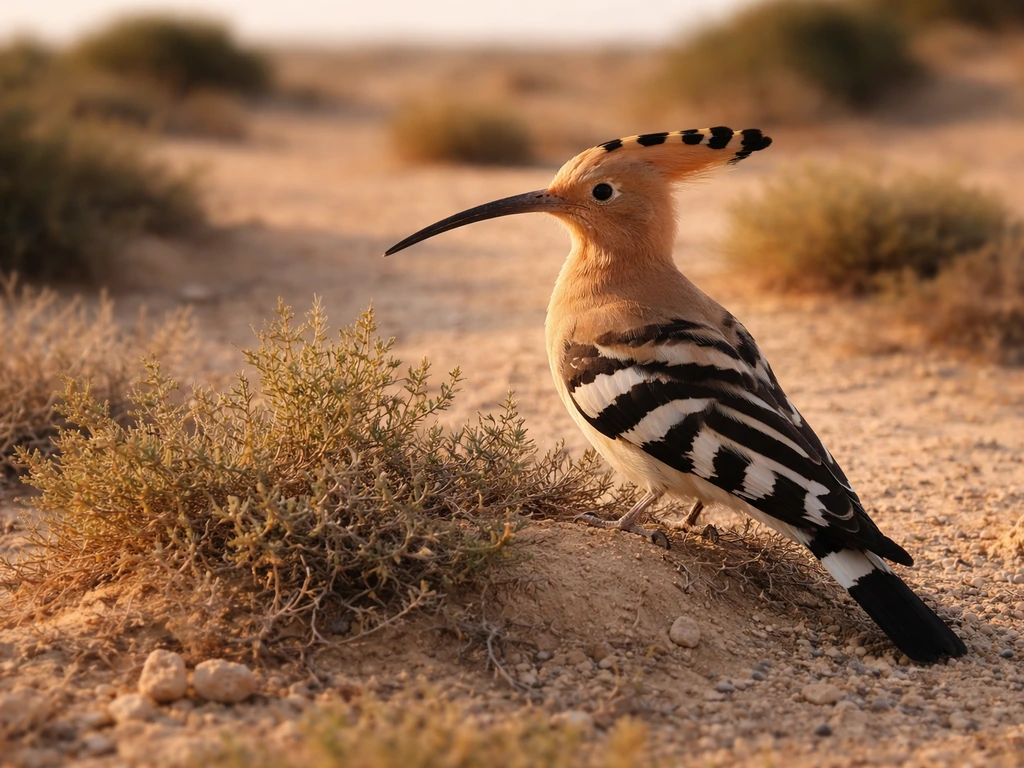
What Is the National Bird of Israel? Official Answer
Find Israel’s official national bird claim, the commonly cited symbol history, and key facts to verify conflicting answe