Cuba's national bird: the tocororo
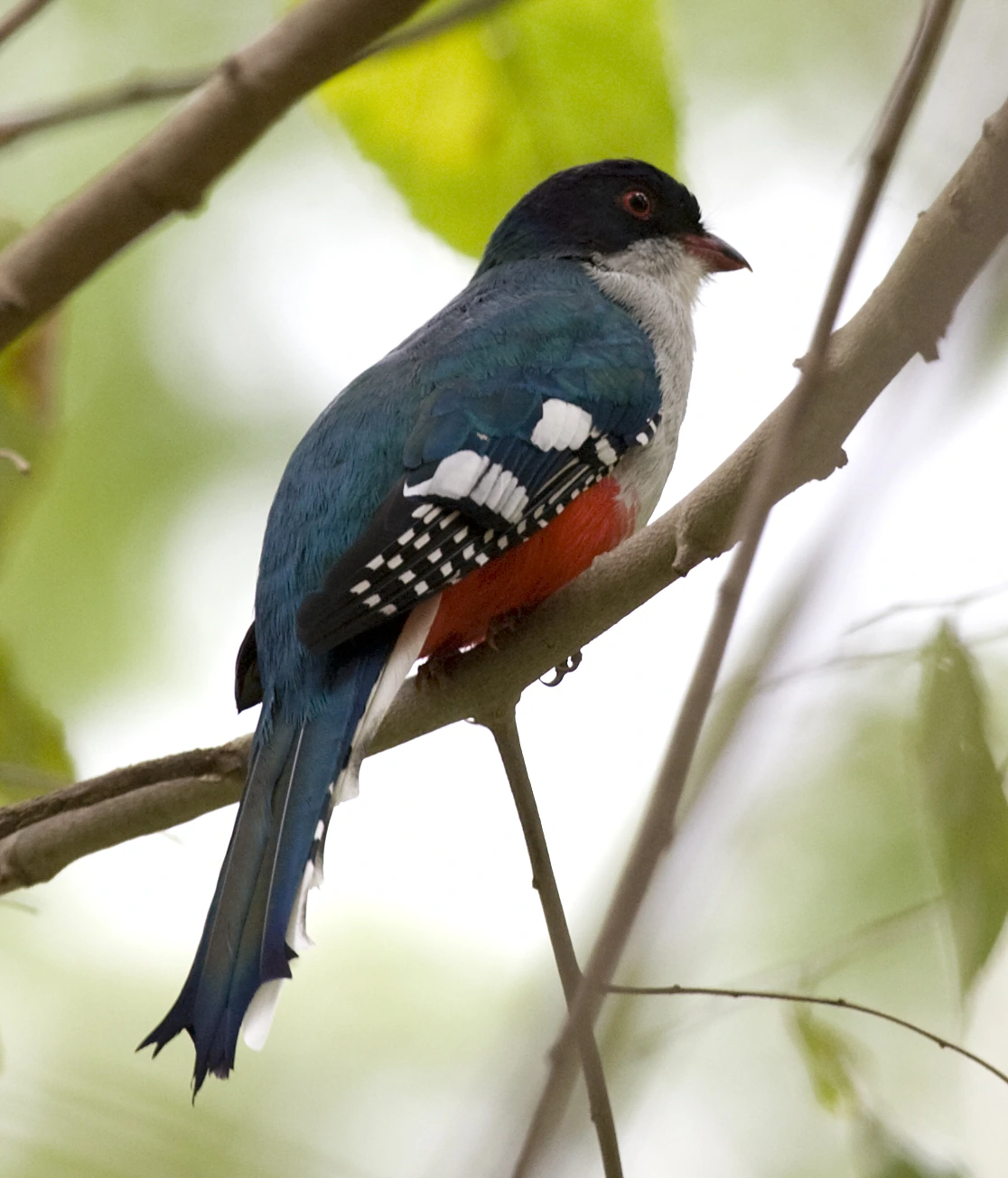
blank" rel="noopener noreferrer">Cuba's national bird is the Cuban trogon, locally known as the tocororo. Its scientific name is Priotelus temnurus, and it is one of the most visually striking birds in the Caribbean. If you've seen a photo of it, you'll understand instantly why it was chosen: the bird looks like it was painted in the exact colors of the Cuban flag.
Why the tocororo was chosen
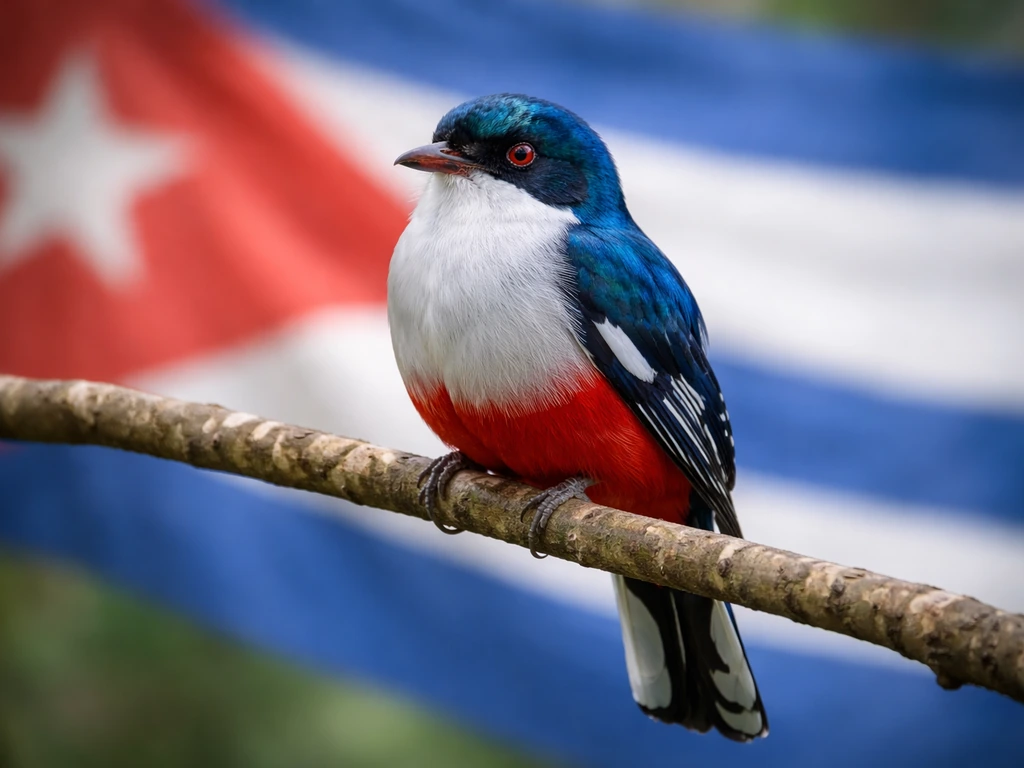
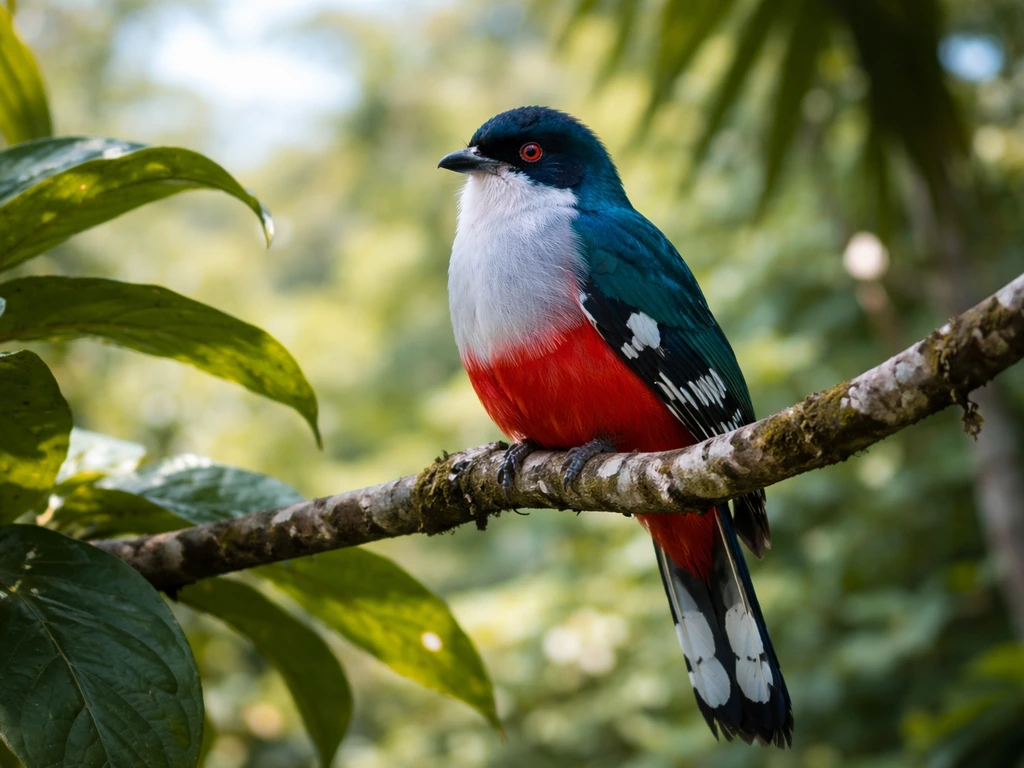
The reasoning behind the tocororo's designation is straightforward and comes up consistently across reputable sources. The bird's plumage directly mirrors the Cuban flag: a blue head, a white breast, and a red lower body. Those three colors match the flag's stripes and triangle precisely, making the tocororo a living symbol of national identity.
But color alone doesn't tell the whole story. The tocororo was also chosen because it cannot survive in captivity. It refuses to live in a cage, and many accounts describe it as dying rather than accepting confinement. For a country that placed great value on freedom and independence, that behavioral trait carried real symbolic weight. The bird that would rather die than be caged became a natural fit as Cuba's national emblem.
The history behind the designation
The tocororo's status as Cuba's ave nacional (national bird) has been recognized for decades. Cuban government records reference Resolución No. 81 from 1982, issued by the Ministry of Agriculture, which established protections around the capture and hunting of the tocororo. A later measure, Decreto-Ley 200 from December 22, 1999, reinforced the legal framework for protected species in Cuba, with the tocororo sitting at the center of that conservation identity.
The bird is referenced as the ave nacional in Cuban literature covering national parks, including the Alejandro de Humboldt National Park, one of Cuba's most biodiverse protected areas. Its role as a national symbol is woven into Cuban cultural and environmental writing at every level.
What the tocororo actually looks like
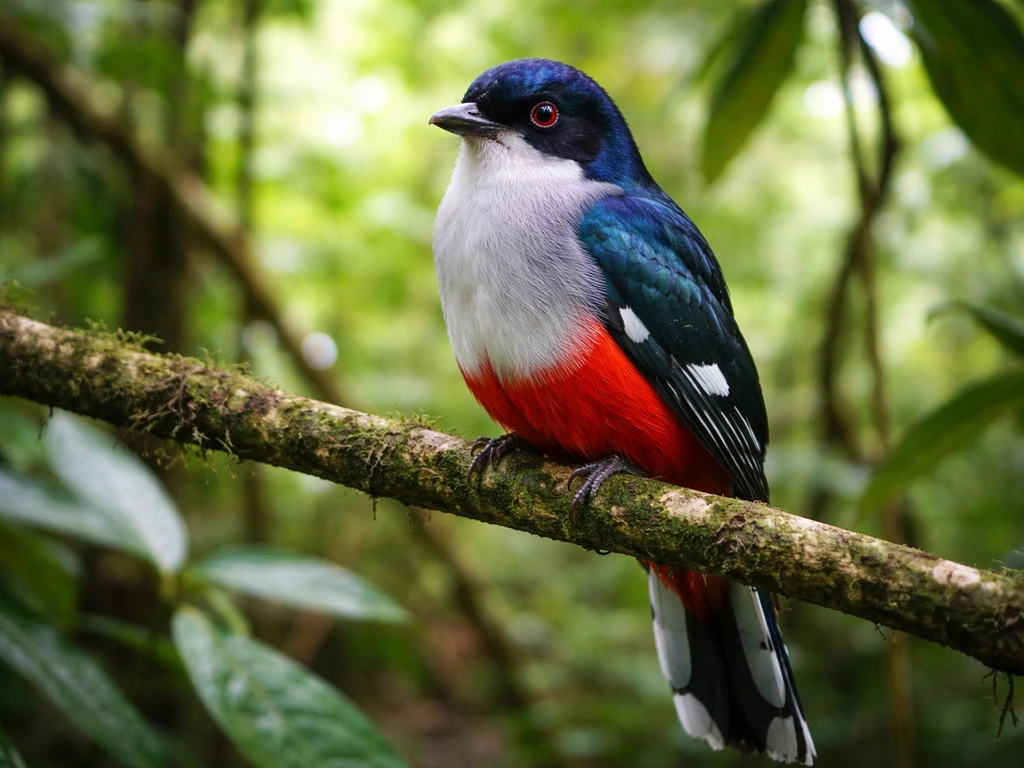
The tocororo is a medium-sized bird, measuring roughly 10 to 11 inches in length. It belongs to the trogon family, a group known for vivid, iridescent plumage and a distinctive upright perching posture. The Cuban trogon's blue-green upper parts, white chest, and crimson belly make it one of the most colorful birds in the region, and it's essentially unmistakable once you know what you're looking for.
The tocororo is a Cuban endemic, meaning it exists nowhere else on Earth. It lives in primary and secondary forests across the island, from lowland woodlands to higher elevation forest zones. Researchers have documented its reproductive behavior in areas like Los Sábalos in the Ciénaga de Zapata, where it uses mature trees for nesting. It's a forest-dependent species, so healthy tree cover is central to its survival.
In terms of conservation status, the tocororo is currently listed as Least Concern by BirdLife International and the IUCN. That's reassuring given its national symbol status, though continued forest preservation remains important for its long-term stability.
How to verify this for yourself
If you want to confirm the tocororo as Cuba's national bird from authoritative sources, you have several solid options. Encyclopaedia Britannica has a dedicated entry for the tocororo that explicitly states its national bird designation and explains the flag-color symbolism. The Smithsonian Institution's records reference Priotelus temnurus as Cuba's national bird in museum catalog documentation. BirdsCaribbean, a respected Caribbean conservation organization, names the Cuban trogon as the national bird in both its species sheets and endemic bird educational materials.
BirdsCaribbean's Annotated Checklist of the Birds of Cuba (2022) includes the species entry “Cuban Trogon/Tocororo/Priotelus temnurus” among the birds of Cuba, providing endemic and naming context BirdsCaribbean, a respected Caribbean conservation organization, names the Cuban trogon as the national bird.
The U. S. Fish and Wildlife Service also maintains a species profile for Priotelus temnurus that provides natural history and identification detail.
These aren't obscure sources. Between a major encyclopedia, a national museum, a regional conservation body, and a federal wildlife agency, you have more than enough cross-referenced confirmation to feel confident in the answer.
Cuba's tocororo among Caribbean national birds
One of the most interesting patterns in Caribbean national birds is how often countries choose endemics: species found only within their own borders. Cuba's tocororo fits that pattern perfectly, and so do its neighbors. If you're curious how Cuba compares to nearby islands, it's worth looking at Jamaica's national bird, the red-billed streamertail (Trochilus polytmus), a hummingbird known locally as the doctor bird, which is also endemic to that island.
Sharing the island of Hispaniola, both the Dominican Republic and Haiti have chosen national birds that reflect their unique ecosystems. The national bird of the Dominican Republic is the palmchat (Dulus dominicus), a species found only on Hispaniola. And interestingly, Haiti's national bird is the Hispaniolan trogon, which makes Cuba and Haiti a rare pair of neighboring countries that both chose trogon species as their national emblems.
Puerto Rico takes a different but equally meaningful approach. Puerto Rico's national bird, the Puerto Rican spindalis, was chosen to represent the island's distinct natural heritage. And further north, the national bird of the Bahamas rounds out the regional picture, showing how each Caribbean nation has used a bird to express something specific about its identity, landscape, or values.
Cuba's choice of the tocororo is particularly elegant because it works on two levels at once: the colors tell the flag story visually, while the bird's refusal to live in captivity tells the freedom story culturally. That combination makes it one of the more meaningful national bird designations in the entire region.
Quick reference: Cuba's national bird at a glance
| Attribute | Detail |
|---|
| Common name | Cuban trogon / tocororo |
| Scientific name | Priotelus temnurus |
| Length | 10–11 inches |
| Plumage colors | Blue head, white breast, red lower body |
| Habitat | Primary and secondary forests across Cuba |
| Endemic to | Cuba (found nowhere else on Earth) |
| Conservation status | Least Concern (IUCN / BirdLife International) |
| Key symbolism | Matches colors of the Cuban flag; refuses captivity |