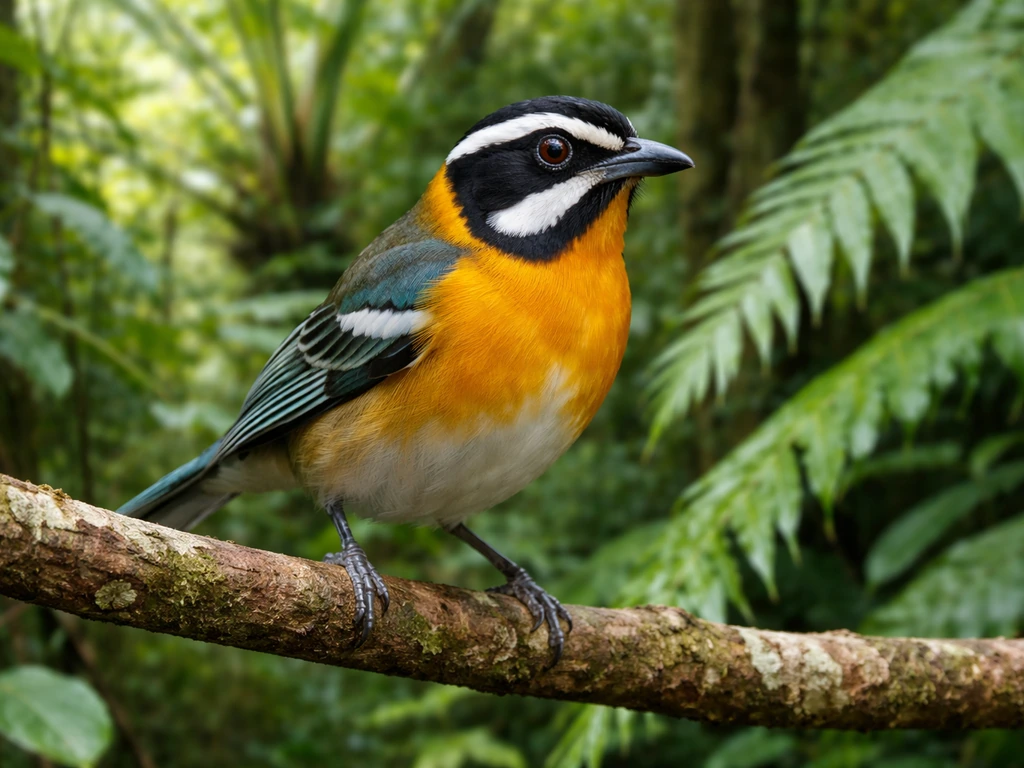
There is, however, a wrinkle worth knowing about. A second bird, the Puerto Rican tody (locally called the San Pedrito, or "little Saint Peter"), has been the subject of a separate legislative push to claim the national bird title. In 2021, a House project (Proyecto de la Cámara 518) was approved by Puerto Rico's Education, Arts, and Culture commission to adopt the San Pedrito instead. By 2022, Wikipedia's article on the Puerto Rican tody was reporting that the legislative assembly had approved it as the official national bird. So if you've seen conflicting answers online, that's exactly why. This article sorts it all out.
What the reina mora symbolizes for Puerto Rico
The reina mora represents the island's unique natural identity. Because it is a true endemic, it belongs entirely to Puerto Rico, which makes it a powerful emblem of the island's distinctiveness, especially in the context of ongoing debates about Puerto Rico's political status and cultural sovereignty. National symbols often carry extra meaning in places where identity is contested, and the reina mora fits that role well.
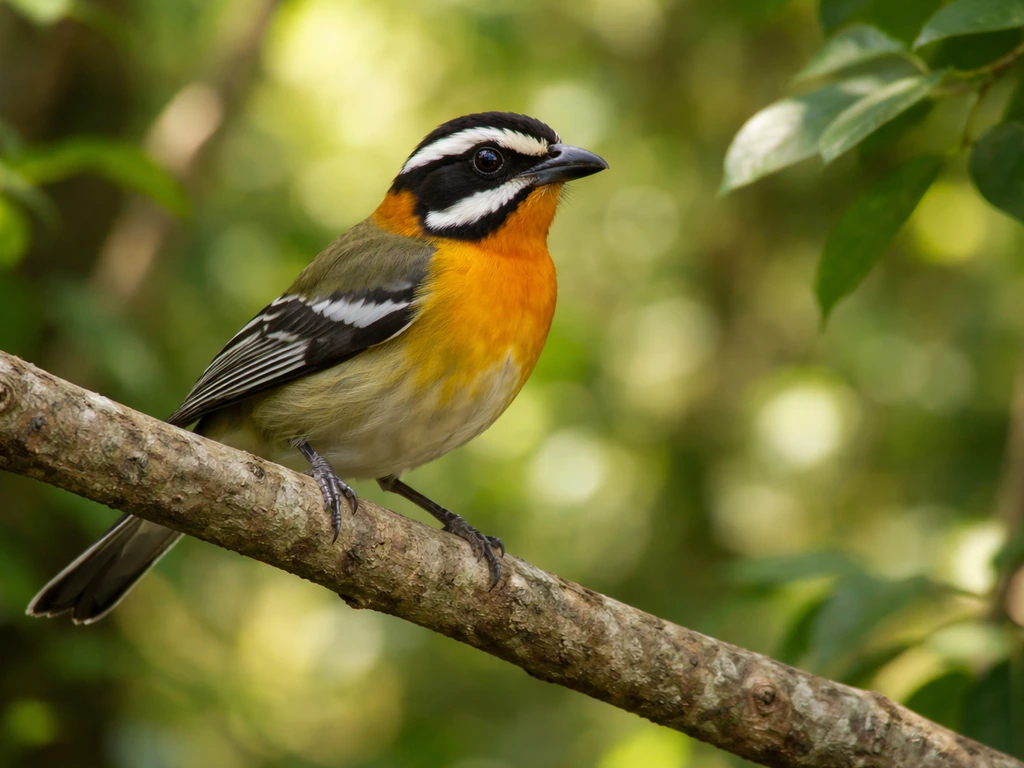
The bird's striking appearance also plays a role in its symbolic appeal. The male Puerto Rican spindalis displays bold black, white, orange, and olive-green plumage, making it one of the more visually memorable birds in the Caribbean. For Puerto Ricans, spotting a reina mora in the forest canopy feels distinctly local, a bird that is genuinely theirs. Official Puerto Rican government documents, including the Ley del Corredor Ecológico de San Juan (Ley 206-2003), list "la Reina Mora (Spindalis portoricensis)" by name among protected species, which tells you something about how embedded this bird is in Puerto Rico's environmental and cultural framework.
How Puerto Rico settled on this bird
The reina mora's status as Puerto Rico's national bird developed more through cultural tradition and institutional recognition than through a single dramatic legislative moment. The bird's endemic status made it a natural candidate, and it was cited in environmental legislation and referenced in federal documents, including U. U.S. Fish & Wildlife Service materials specifically label the species as “The Reina Mora (Puerto Rican spindalis),” pairing the “Reina Mora” common name with the Puerto Rican spindalis name for federal wildlife documentation. S. Fish and Wildlife Service materials that pair its English name with its Spanish common name, "The Reina Mora (Puerto Rican spindalis)," as a labeled species in the Puerto Rican wildlife narrative.
The San Pedrito challenge complicates the picture. Supporters of the tody argued that Puerto Rico lacked a formally declared national bird at the statutory level, and the Change. org petition backing the San Pedrito explicitly framed it that way.
The House bill moved through committee in 2021, and proponents also pushed to correct the tody's scientific name from the historically mistaken Todus mexicanus (named so because the French naturalist René Primevère Lesson incorrectly attributed the species to Mexico) to something more accurately reflecting its Puerto Rican identity, such as Todus borinquensis.
Whether the Senate fully enacted the San Pedrito legislation into binding law is not definitively confirmed by authoritative sources, which is why you'll still find the reina mora listed as the national bird in many reliable places.
Key facts about the Puerto Rican spindalis
Appearance and identification
The Puerto Rican spindalis is a somewhat small woodland bird that moves deliberately through the canopy. Males are easy to pick out with their black-and-white striped head, orange chest and collar, and olive-green back. Females are much more muted, dressed in olive-gray tones, and are actually often confused with the Puerto Rican tanager. If you're trying to ID one in the field, focus on the male's bold color contrast or watch for the species' deliberate, unhurried movement through the branches.
Habitat and range
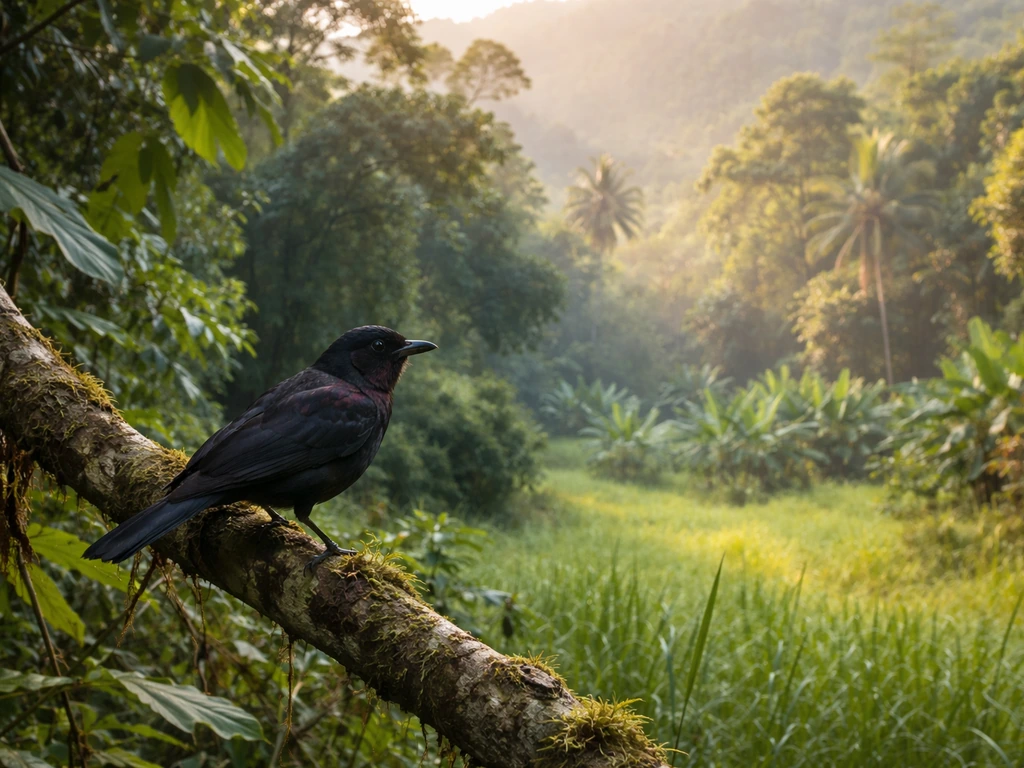
The reina mora is found across Puerto Rico's main island, from forest edges and plantations to well-known areas like the Maricao forest and El Yunque National Forest. It rarely occurs above 1,000 meters in elevation, so you're most likely to encounter it in lowland and mid-elevation forests. It feeds primarily on fruits and flowers, with insects making up a smaller part of its diet.
Voice and behavior
If you hear it before you see it, listen for a continuing series of high-pitched, thin, sibilant notes. Males typically sing from treetops at dawn, projecting calls at 8 kHz or higher. Females sing softer "whisper songs." The species also engages in mobbing behavior, where flocks band together to drive off predators threatening eggs or young birds, which is a useful thing to know if you see a group of small birds making a fuss in the canopy.
| Feature | Puerto Rican Spindalis (Reina Mora) | Puerto Rican Tody (San Pedrito) |
|---|
| Scientific name | Spindalis portoricensis | Todus mexicanus |
| Spanish common name | Reina mora | San Pedrito |
| Male coloring | Black, white, orange, olive-green | Bright green back, red throat, white belly |
| Diet | Fruits, flowers, some insects | Insects (caught by aerial sallying) |
| Habitat | Forest canopy, plantations, mixed forest | Forest interior, ravines, dense vegetation |
| National bird status | Traditionally recognized national bird | Proposed as official national bird (2021–2022 legislative effort) |
| Endemic to Puerto Rico | Yes | Yes |
How to verify the official designation and avoid the myths

This is genuinely one of those national bird questions where the answer depends on which source you trust. The Wikipedia list of national birds, for example, actually marks Puerto Rico's spindalis entry with "No" in its official status column, reflecting the uncertainty around formal legislative confirmation. That kind of nuance is easy to miss if you just skim a quick-answer source.
Here's how to verify things responsibly. First, check Puerto Rico's Departamento de Recursos Naturales y Ambientales (DRNA) website directly. The DRNA has used the reina mora's name in official legislation, and any formal change to the national bird designation would be reflected there. Second, look for the full text of the relevant House and Senate bills from 2021 and 2022 in Puerto Rico's legislative record. If the San Pedrito bill passed both chambers and was signed into law, that would be the controlling answer. Third, the U.S. federal regulatory system (including the Code of Federal Regulations) uses the scientific name Spindalis portoricensis in official contexts for Puerto Rican wildlife, which at least confirms the spindalis's recognized standing.
The broader Caribbean context is also worth keeping in mind. Puerto Rico's situation, where a traditional national bird coexists with a newer legislative proposal, is not entirely unique in the region. If you want to see how neighboring islands have handled similar questions, it's worth reading about the national bird of the Dominican Republic, which shares Hispaniola with Haiti and has its own distinct symbol story.
The wider Caribbean bird symbol picture
Puerto Rico sits in a part of the world where nearly every island has chosen an endemic bird as its national emblem, usually for the same reason: endemism signals uniqueness and belonging. Cuba, for instance, took a similarly distinctive approach, and if you're curious how it compares, learning about the national bird of Cuba gives useful regional context. The same applies to smaller island nations nearby, like the Bahamas, where the national bird of the Bahamas was chosen with a similarly strong emphasis on local identity.
Haiti, which shares the island of Hispaniola with the Dominican Republic, also has an interesting national bird story worth exploring if you want to trace how colonial history and independence narratives shaped these choices. You can read about Haiti's national bird for a sense of how that process unfolded. And Jamaica, another Caribbean island with a proud tradition of native wildlife symbolism, chose a bird that reflects the island's lush biodiversity, much like Puerto Rico did with the reina mora. The story behind the Jamaican national bird is a good read if you want to see the pattern play out across the region.
Where to go from here
If you just needed the quick answer: Puerto Rico's traditionally recognized national bird is the Puerto Rican spindalis (reina mora, Spindalis portoricensis). If you want the legally precise answer, go to the DRNA or Puerto Rico's legislative record to check whether the San Pedrito legislation was formally enacted into law. The reina mora is the safer, more widely cited answer, and it's the one backed by decades of cultural recognition and official environmental documentation. The San Pedrito movement is real and significant, but its final legal status remains something to verify directly rather than take on faith from Wikipedia alone.