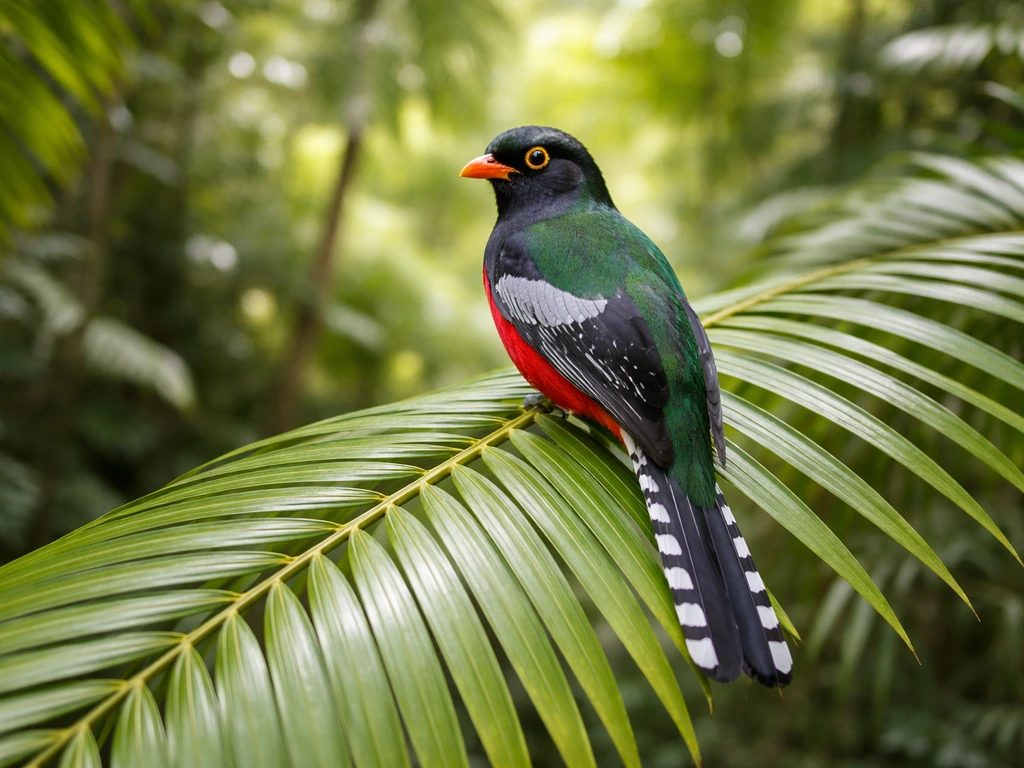
Haiti's national bird is the Hispaniolan trogon, known scientifically as Priotelus roseigaster. You may also see it called 'cacos' or, in Haitian Creole, 'kanson wouj' (which loosely translates to 'red pants'). That last nickname gives you a hint at what makes this bird so striking.
What Is Haiti’s National Bird and What It Symbolizes

Marcus Chen
18 Apr 2026
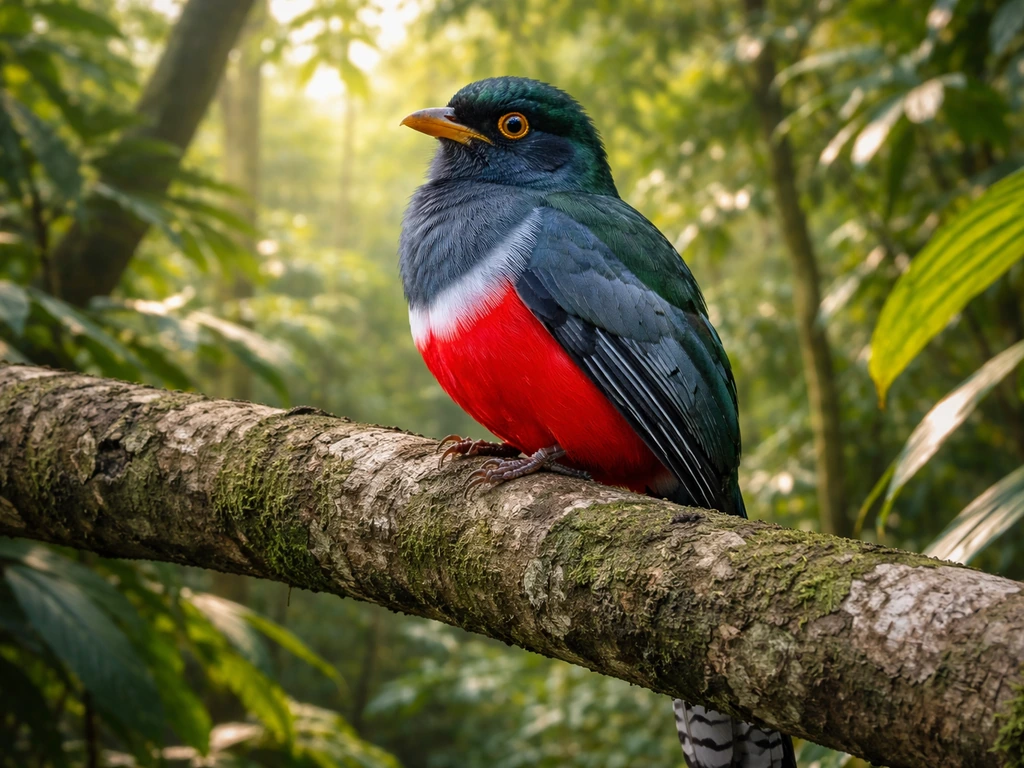
What the Hispaniolan Trogon Looks Like
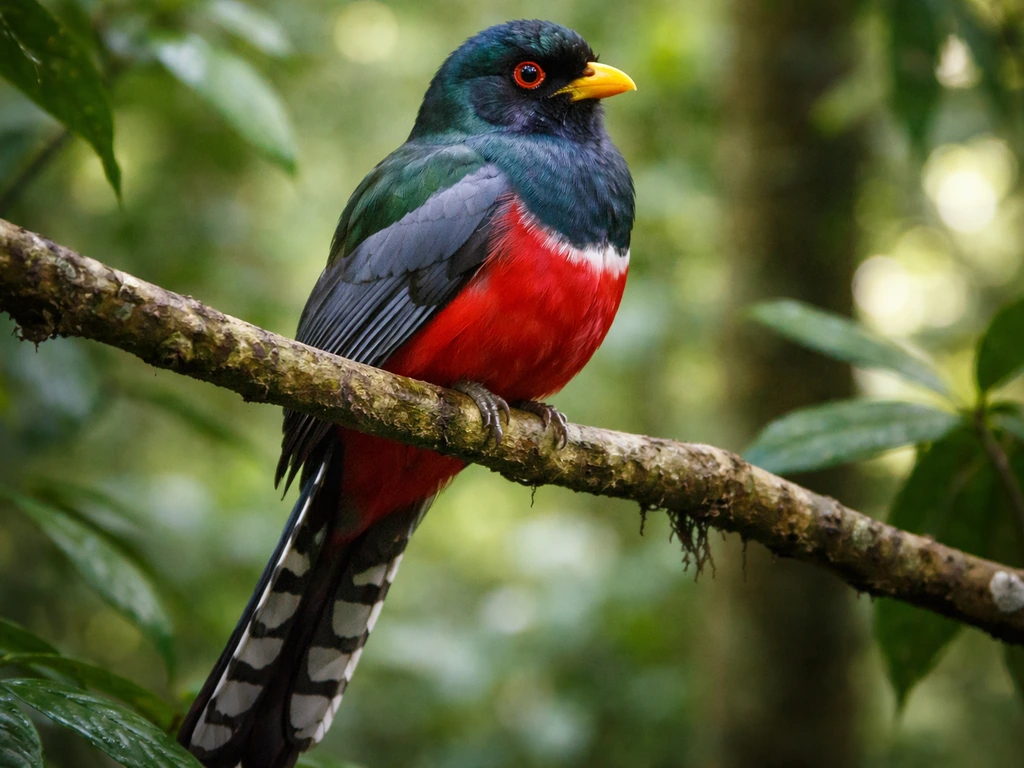
The Hispaniolan trogon is genuinely hard to miss if you know what you're looking for. It has a vivid crimson-red belly, a green and blue-grey upper body, and a long, broad tail. That bold red underside is exactly why Haitians gave it the Creole name 'kanson wouj.' The species is medium-sized, forest-dwelling, and tends to perch quietly in the canopy, which can make it tricky to spot despite its colors.
In terms of diet, the trogon feeds primarily on insects, but it also eats small vertebrates like anoles and fruits, particularly those from the West Indian sumac. It is a forest specialist, meaning it depends on intact woodland habitat to survive, which is a fact that matters a great deal for Haiti's conservation picture.
Where the Bird Lives (and Why That's a Problem)
The Hispaniolan trogon is found only on the island of Hispaniola, which is the island shared by Haiti and the Dominican Republic. That makes it an endemic species: it exists nowhere else on Earth. Within Hispaniola, the bird is more commonly found in the mountainous forested regions of the Dominican Republic. In Haiti, populations have declined sharply due to ongoing deforestation and habitat loss, which has pushed the species into smaller and more fragmented patches of forest.
The American Bird Conservancy and BirdLife International both flag habitat loss as the primary threat to the species in Haiti specifically. Haiti has lost an enormous share of its tree cover over the past century, and that directly squeezes the trogon out of the landscape. For birders hoping to see the bird, the Dominican Republic's mountain forests currently offer the most reliable sightings.
What the Bird Symbolizes for Haiti
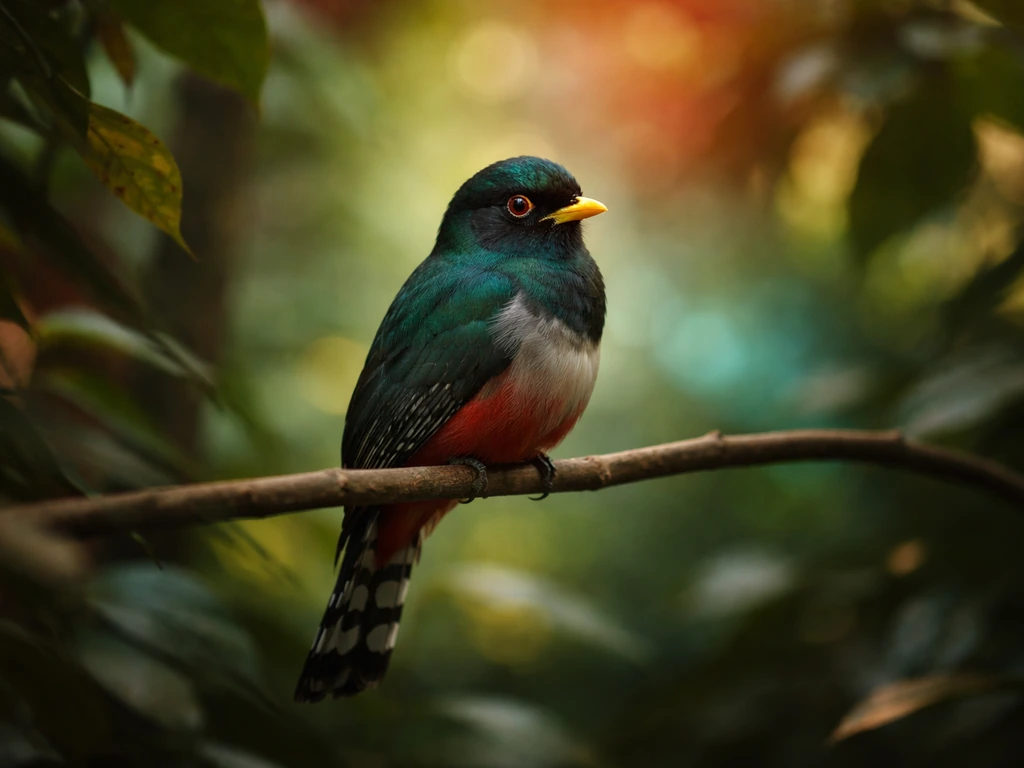
The symbolism packed into this bird goes deeper than its colors. The trogon represents Haiti's unique natural heritage and biodiversity: because it exists only on Hispaniola, it signals something that belongs specifically to this island and nowhere else in the world. Choosing an endemic species as a national emblem is a way of saying 'this is ours.'
But there is also a powerful revolutionary layer to the bird's meaning. The name 'cacos' was the nickname given to Haitian guerrilla fighters, particularly those who resisted foreign occupation in the late 19th and early 20th centuries. The connection goes like this: the trogon hides silently under leaves and then strikes quickly. Haitian insurgents were said to fight the same way, hiding and then attacking by surprise. The bird became a symbol of resistance and tactical cunning, not just natural beauty.
That dual symbolism, natural uniqueness combined with a spirit of defiant resistance, makes the Hispaniolan trogon a particularly meaningful choice for a country with Haiti's history.
How It Became a National Symbol
The formal designation of the Hispaniolan trogon as Haiti's national bird grew from its deep roots in Haitian culture and language. The bird had long been embedded in the national consciousness through the 'cacos' terminology tied to resistance movements. Its endemicity to Hispaniola made it a logical choice to represent Haitian identity, since it is a creature that could not symbolize any other place on Earth.
The French-language Wikipedia characterizes it as the 'emblème national de la République d'Haïti,' and it appears in consolidated lists of Haiti's national symbols alongside other emblems like the national flower and coat of arms. The bird's Creole name 'kanson wouj' also keeps it embedded in everyday Haitian cultural reference, giving it staying power beyond formal designation.
Why the Trogon and Not Another Bird
It is worth asking why Haiti chose this particular species over other Caribbean birds. The short answer comes down to endemicity and cultural resonance. A bird that is native only to Hispaniola carries more symbolic weight for national identity than one shared across multiple countries or regions. The Hispaniolan trogon ticks both boxes: it is biologically unique to the island, and it already had a living nickname in Haitian history and language before any formal national-symbol process.
Caribbean neighbors have made similar logic-driven choices. Jamaica, Cuba, Puerto Rico, and the Dominican Republic have each picked birds that reflect their specific ecosystems or cultural stories. If you are curious about another island's national bird, the answer for the Bahamas is different and has its own story what is the national bird of the bahamas. You can learn what Cuba’s national bird is by checking the related article on Cuba’s national bird Cuba's national bird.
If you are also curious about another island national symbol, you can look up what the national bird of the Dominican Republic is. Puerto Rico's national bird is a different species, so it's worth checking if you want the island's specific symbol. If you mean the Jamaican national bird, that is the Jamaican tody. Haiti's choice follows that same pattern, grounding the national bird in something real and local rather than purely decorative.
Quick Reference: Key Facts About the Hispaniolan Trogon
| Feature | Detail |
|---|---|
| Scientific name | Priotelus roseigaster |
| Common names | Hispaniolan trogon, cacos, kanson wouj |
| Plumage | Red belly, green and blue-grey upper body, long broad tail |
| Range | Endemic to Hispaniola (Haiti and Dominican Republic only) |
| Habitat | Forest-dependent; prefers intact mountain woodland |
| Diet | Insects, small vertebrates (e.g., anoles), and fruits |
| Conservation status | Threatened by deforestation, especially in Haiti |
| National symbol for | Haiti |
How to Verify This and Learn More
If you want to confirm Haiti's national bird through reliable sources, here are the best places to check. The American Bird Conservancy has a dedicated species page for the blank" rel="noopener noreferrer">Hispaniolan trogon that explicitly identifies it as Haiti's national bird and covers its ecology and conservation status. BirdsCaribbean publishes resources on endemic West Indian birds and names the trogon specifically.
In particular, BirdsCaribbean resources on endemic birds for Haiti explicitly name Priotelus roseigaster as the national bird Priotelus roseigaster as the national bird of Haiti.
The U. S. Fish and Wildlife Service maintains a species account for Priotelus roseigaster that gives you the formal taxonomic identity. Wikipedia's page on the national symbols of Haiti lists it directly, and the Environmental Literacy Council also confirms the identification and the symbolism.
For deeper reading on the cultural and historical side, searching for 'cacos Haiti history' will pull up accounts of the Haitian resistance movements and the role that nickname played. The Haitian Times has published accessible articles in both English and Haitian Creole on the trogon's significance and its current conservation challenges, under the title referencing 'Kanson Wouj.'
If you are a birder hoping to see this species in the wild, your best bet today is the mountain forests of the Dominican Republic, particularly in areas with intact broadleaf woodland. Organizations like BirdsCaribbean publish trip reports and range maps that can help you plan a sighting trip or connect with local guides on Hispaniola.
FAQ
Is Haiti’s national bird definitely the Hispaniolan trogon, Priotelus roseigaster?
Yes. In standard references that track national symbols, the species named as Haiti’s national bird is the Hispaniolan trogon (Priotelus roseigaster), often tied to Haiti-specific cultural nicknames like “kanson wouj.” If you see a different bird listed, it is usually a mix-up with another island’s national bird or a different “national emblem” list that is not using the same source.
Why do I sometimes see the name “kanson wouj” or “cacos” tied to the bird?
Those are Haitian cultural nicknames rather than official scientific labels. “Kanson wouj” points to the bird’s vivid red belly, while “cacos” connects the trogon to historical guerrilla imagery (hiding, then striking). None of these nicknames change the species ID, but they can affect what you find in searches and local conversations.
Are there other species in the same group that could be confused with Haiti’s trogon?
Possibly, especially in field guides that cover broader West Indian bird lists. The key is the scientific name (Priotelus roseigaster) plus the hallmark look, the crimson-red underside with a green and bluish-gray upper body and a long, broad tail. If a sighting report does not mention those traits, it might be a different trogon species or a misidentification.
Where in Haiti would I have the best chance to see the national bird today?
Practical sightings are much more reliable outside Haiti, mainly in the Dominican Republic’s mountainous forest regions with more intact woodland. Within Haiti, deforestation has fragmented habitat, so even when birds are present, encounter rates can be low and dependent on remaining forest patches.
What habitat features should I look for when trying to spot a Hispaniolan trogon?
Focus on intact broadleaf woodland in mountainous areas, since the species is a forest specialist and tends to perch quietly in the canopy. Dense understory and heavily disturbed areas typically reduce visibility, because the bird is less likely to be present where forest cover is broken.
Does the bird’s diet affect where it can be seen?
Indirectly. Because it eats insects and also fruit (notably from West Indian sumac), areas where sumac or similar fruiting plants persist can support more foraging activity. Even then, the bird may still be hard to detect because it often stays still and canopy-focused.
If the bird exists only on Hispaniola, does that mean it is the same across both Haiti and the Dominican Republic?
The species is present on Hispaniola as a whole, but population density is not equal. The Dominican Republic’s mountain forests currently offer more consistent presence, while Haiti has experienced sharper declines and fragmentation due to habitat loss. So the bird can be on the island, but not equally easy to find in both countries.
What is the best way to verify the claim that it is Haiti’s national bird?
Use a combination approach: check a national symbol list that explicitly names the Hispaniolan trogon for Haiti, confirm with a species account that matches Priotelus roseigaster, and then cross-check ecology details like forest habitat and endemic range. If the source names the trogon but does not match the scientific name or the endemic range to Hispaniola, treat it as unreliable.
Does the national bird designation have any impact on conservation efforts?
It can help with awareness, but it does not automatically stop habitat loss. The biggest on-the-ground factor remains intact forest cover and protection of remaining woodland patches. In other words, the bird’s emblem status is meaningful culturally, yet the survival of its populations depends on habitat management and enforcement.
I found a source claiming a different national bird for Haiti. How should I resolve the discrepancy?
Check whether the page mixes up “national bird” with other categories like “national symbol,” “national emblem,” or a list of “nationally important birds.” Then confirm the species name, Priotelus roseigaster, and look for whether the explanation matches Haiti-specific cultural references like “kanson wouj.” When the explanation does not align with those, it is likely using a different framework or an outdated list.
Next Article
What Is the National Bird of the Dominican Republic?
National bird of the Dominican Republic is the Hispaniolan trogon, with symbolism, adoption history, and how to verify.