Quick answer: Dominican Republic vs Dominica (they are not the same)
The national bird of the Dominican Republic is the Cigua Palmera, known in English as the Palmchat (Dulus dominicus). It was officially declared the national bird on January 14, 1987, under Decreto No. 31-87, signed by President Joaquín Balaguer and published in Gaceta Oficial No. 9702.
Before going further, it is worth clearing up one of the most common mix-ups in Caribbean geography. The Dominican Republic and Dominica are two completely different countries. Dominica is a small island nation in the Lesser Antilles, and its national bird is the Sisserou, also called the Imperial Amazon (Amazona imperialis), a large and striking parrot. If you searched for the national bird of "Dominica" and landed here, that is the bird you are looking for. But if you were asking about the Dominican Republic, the country that shares the island of Hispaniola with Haiti, then the Cigua Palmera is your answer. The two names cause confusion constantly, so you are definitely not alone in needing the clarification. For context on nearby Caribbean nations, you can also read about Haiti's national bird, which shares the same island as the Dominican Republic.
The official national bird: Cigua Palmera (Palmchat)
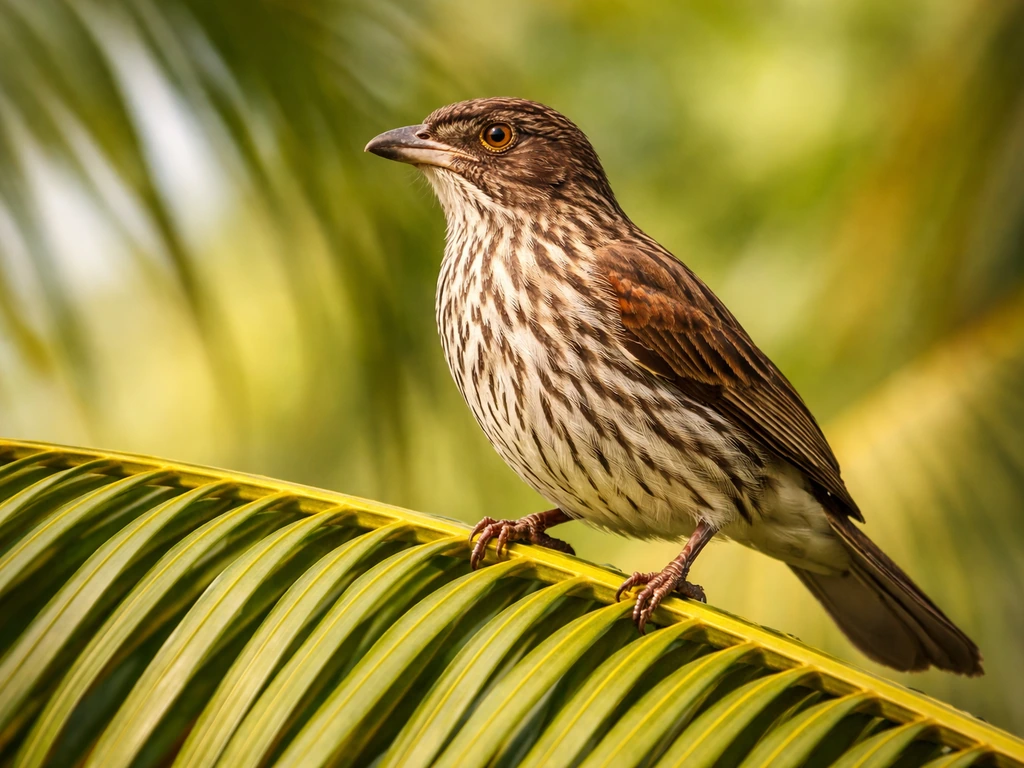
The Cigua Palmera goes by a few names depending on where you look. In Spanish, it is Cigua Palmera. In English, the accepted common name is Palmchat. The scientific name is Dulus dominicus. All three refer to the same bird, and it is worth knowing all three if you are doing research, because different sources use different names.
The legal foundation is Article 1 of Decreto No. 31-87, which reads: "Se declara la Cigua Palmera (Dulus dominicus), el ave nacional dominicana." That translates directly to: "The Cigua Palmera (Dulus dominicus) is declared the national bird of the Dominican Republic." The decree also establishes a permanent protection order ("veda permanente") on the species, meaning hunting or capturing it is prohibited by law.
The Jardín Botánico Nacional of the Dominican Republic (the national botanical garden) refers to it explicitly as "Nuestra Ave Nacional" (Our National Bird) and confirms both the January 14, 1987 date and the decree number. That institution is one of the most reliable domestic sources for confirming this information quickly.
Why the Palmchat was chosen: symbolism and meaning
The decree does not just name the bird. It explains why, and the reasoning is genuinely interesting. The "considerando" (rationale) section of Decreto No. 31-87 highlights two key points: the Cigua Palmera is exclusive to the island of Hispaniola, and it is the only member of its entire family, Dulidae. There is no other bird like it anywhere else in the world.
That uniqueness is a big part of what makes it a meaningful national symbol. Choosing a bird that exists nowhere else on Earth makes a statement about the country's distinct identity and natural heritage. The Cigua Palmera is not just native to Hispaniola, it belongs entirely to it. That exclusivity maps well onto the idea of national pride.
Culturally, the bird is also a familiar, everyday presence for Dominicans. It is not a rare or elusive species that most people never see. The Palmchat builds bulky stick nests at the tops of palm trees, often in communal structures shared by multiple pairs. These nests are a common sight across the island's landscape, which means the bird is woven into daily life in a way that reinforces its connection to the national identity. Research out of Princeton that focuses on the ecology and conservation of the Palmchat emphasizes this cultural familiarity alongside the bird's ecological importance.
The Dominican Ministry of Environment and Natural Resources includes the Cigua Palmera in its environmental education materials, listing it among the country's biodiversity symbols. It also features in official educational guides used in schools, which means generations of Dominican children grow up learning about the bird as part of their national identity.
How the national bird was adopted: historical context

The formal adoption happened on January 14, 1987, during the presidency of Joaquín Balaguer, one of the most influential and longest-serving political figures in Dominican history. The decree was published in the Gaceta Oficial No. 9702 on the same date, making it part of the official public record.
The 1987 timing fits into a broader pattern of Caribbean and Latin American nations formalizing their national symbols during the latter half of the twentieth century. Many countries in the region made similar declarations during this era as part of strengthening national identity frameworks. The inclusion of a permanent hunting ban in the same decree is also notable. It shows that the designation was not purely ceremonial. The government paired the symbolic act with a conservation measure, recognizing that the bird's status as a national symbol came with a responsibility to protect it.
Dominican Republic vs Dominica: side by side
| Feature | Dominican Republic | Dominica |
|---|
| National bird (common name) | Palmchat (Cigua Palmera) | Sisserou (Imperial Amazon) |
| Scientific name | Dulus dominicus | Amazona imperialis |
| Bird type | Passerine (songbird family) | Parrot |
| Habitat | Hispaniola (shared with Haiti) | Island of Dominica, Lesser Antilles |
| Uniqueness | Only member of family Dulidae | Critically endangered parrot, endemic to Dominica |
| Official designation date | January 14, 1987 | Long-standing national symbol |
| Legal basis (RD) | Decreto No. 31-87 | N/A (different country) |
The confusion between these two is understandable because the names are so similar, but the countries, the birds, and the contexts are completely different. When in doubt, the simplest check is: Dominican Republic is the larger country on Hispaniola, and its bird is the Palmchat. Dominica is the small island in the Eastern Caribbean, and its bird is a parrot.
Interesting facts about the Cigua Palmera
- The Palmchat (Dulus dominicus) is the only species in the family Dulidae, making it one of the most taxonomically unique birds in the Western Hemisphere.
- It is found only on the island of Hispaniola, meaning you will not encounter it anywhere else in the wild.
- The species builds large communal stick nests, sometimes housing dozens of breeding pairs in a single structure at the top of a palm tree.
- Despite being the national bird of the Dominican Republic, the Palmchat also lives in Haiti, since both countries share Hispaniola.
- The scientific name Dulus dominicus directly references Hispaniola (Dominicus referring to Santo Domingo, the historical name for the island).
- Its permanent protection status under the 1987 decree means it is illegal to hunt, capture, or harm the bird in the Dominican Republic.
How to verify this and where to learn more
If you want to confirm this information from official sources, the most direct route is the text of Decreto No. 31-87 itself, which is available through FAOLEX (the FAO's legal database) and the BVEARMb digital repository, both of which host the full decree text with Article 1 clearly stated. The Jardín Botánico Nacional website is the easiest domestic Dominican source to cross-reference.
For English-language reference, searching "Palmchat" (the common English name) will connect you with ornithological databases and resources that describe the species in detail. The scientific name Dulus dominicus is the most precise identifier if you are searching databases like the Cornell Lab of Ornithology or similar resources.
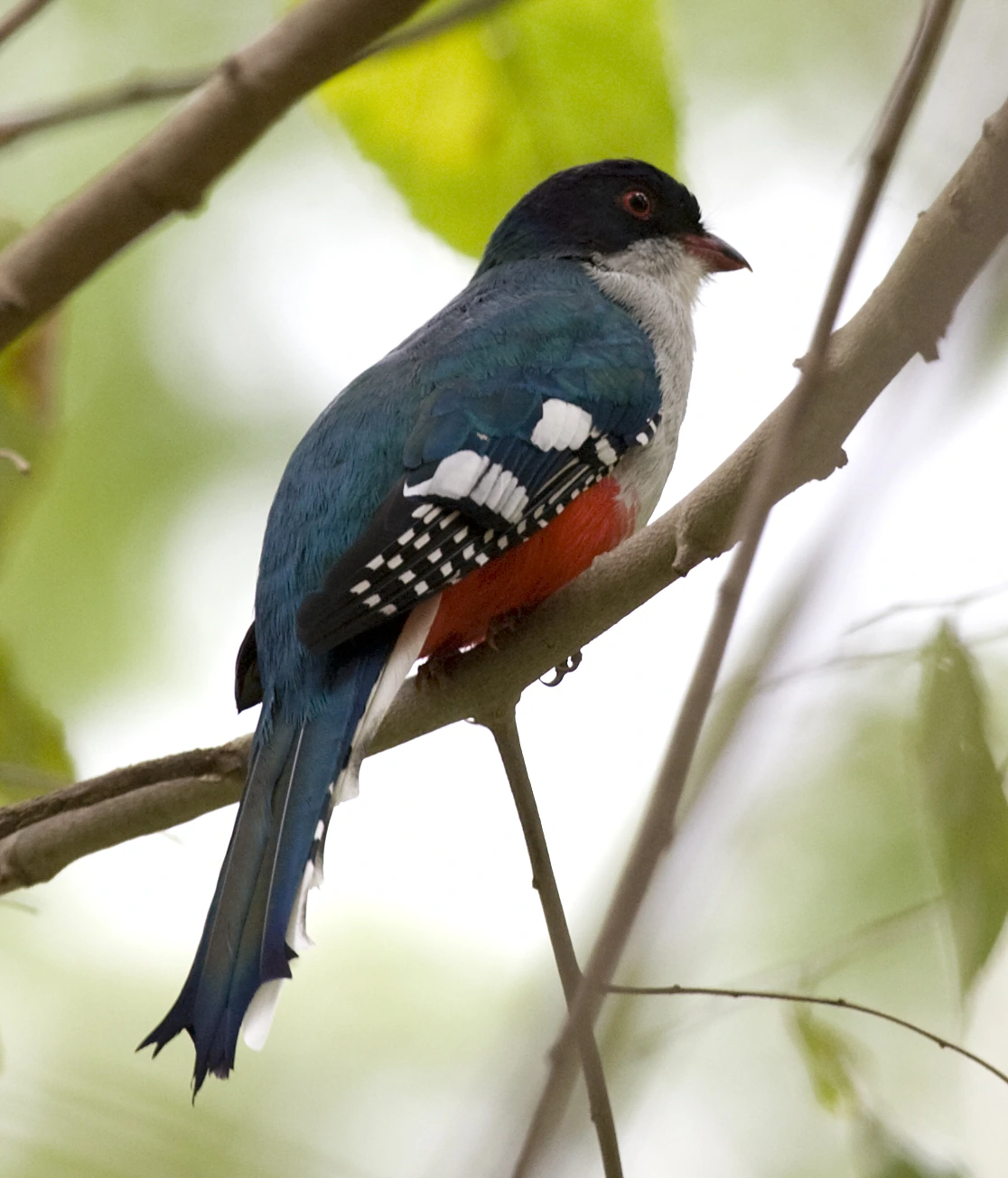
If you are exploring national birds across the Caribbean more broadly, the region has some genuinely fascinating choices. Puerto Rico's national bird, the Reinita Mora, tells a completely different story about island identity and conservation. Cuba's national bird, the Tocororo, was chosen partly because its feathers match the colors of the Cuban flag, which is one of the more vivid selection stories in the region. You might also find it interesting to look at Jamaica's national bird, the Doctor Bird, one of the most visually striking hummingbirds in the world. And if you want to stay close geographically, the national bird of the Bahamas offers another interesting example of how Caribbean nations have approached this kind of symbolic designation.
The short version: the Dominican Republic's national bird is the Cigua Palmera (Palmchat, Dulus dominicus), declared officially on January 14, 1987, under Decreto No. 31-87. It is unique to Hispaniola, the only member of its family, and protected by permanent law. Do not confuse it with Dominica's Sisserou parrot, which is a completely different bird from a completely different country.