The national bird of the Bahamas is the American Flamingo, known scientifically as Phoenicopterus ruber and sometimes called the Caribbean flamingo or West Indian flamingo. It is officially listed under the Bahamas' national symbols as "Flamingo – National Bird" on the Government of the Bahamas' own national symbols page, and the designation is echoed by the Bahamas Embassy to the United States and the Bahamas National Trust.
What Is the National Bird of the Bahamas? Meaning

Marcus Chen
23 Apr 2026
The official designation and where it comes from
The flamingo's status as the Bahamas' national bird is documented in several authoritative places. The Government of the Bahamas lists it directly on its national symbols page. The Bahamas Embassy to the United States includes it in its official national-symbols presentation. The Bahamas National Trust, the country's leading conservation body, refers to the species as the national bird on its Inagua National Park pages, using the formal name "West Indian Flamingo | Phoenicopterus ruber."
Like most of the Bahamas' national symbols, the flamingo's designation was formalized around the time the country gained independence in 1973. That moment was when the Bahamas systematically codified its national emblems, turning symbols that already carried deep cultural weight into officially recognized identifiers of the new nation.
How the flamingo became a national symbol: a conservation story
The backstory here is genuinely compelling, and it explains a lot about why the flamingo means so much to Bahamians. By the early 1950s, the American flamingo had been nearly wiped out across the Caribbean. In the Bahamas specifically, the population had collapsed to roughly 100 individuals, concentrated on the remote island of Great Inagua in the south of the archipelago.
In 1950, the Audubon Society sent ornithologist Robert Porter Allen to Inagua to investigate what it would take to halt the decline. His findings helped trigger a coordinated recovery effort involving wardens (notably Samuel and James Nixon), the Audubon Society, and what would eventually become the Bahamas National Trust. The Bahamas Embassy to the United States’ National Symbols page ties the flamingo’s national-bird status to conservation efforts in Inagua, including wardens employed through the Bahamas National Trust (founded in 1959). The Trust itself was founded in 1959, partly with flamingo protection as a core mission, and Inagua National Park was established to protect the flamingo's critical breeding habitat.
The Bahamas National Trust describes what followed as a "forty-year journey back from the edge of extinction." Today, the flamingo population on Inagua alone is estimated at approximately 70,000 birds. That turnaround, from 100 birds to 70,000, is one of the more remarkable conservation successes in the Caribbean, and it's inseparable from how Bahamians think about the flamingo as a national symbol.
What the flamingo means in Bahamian culture
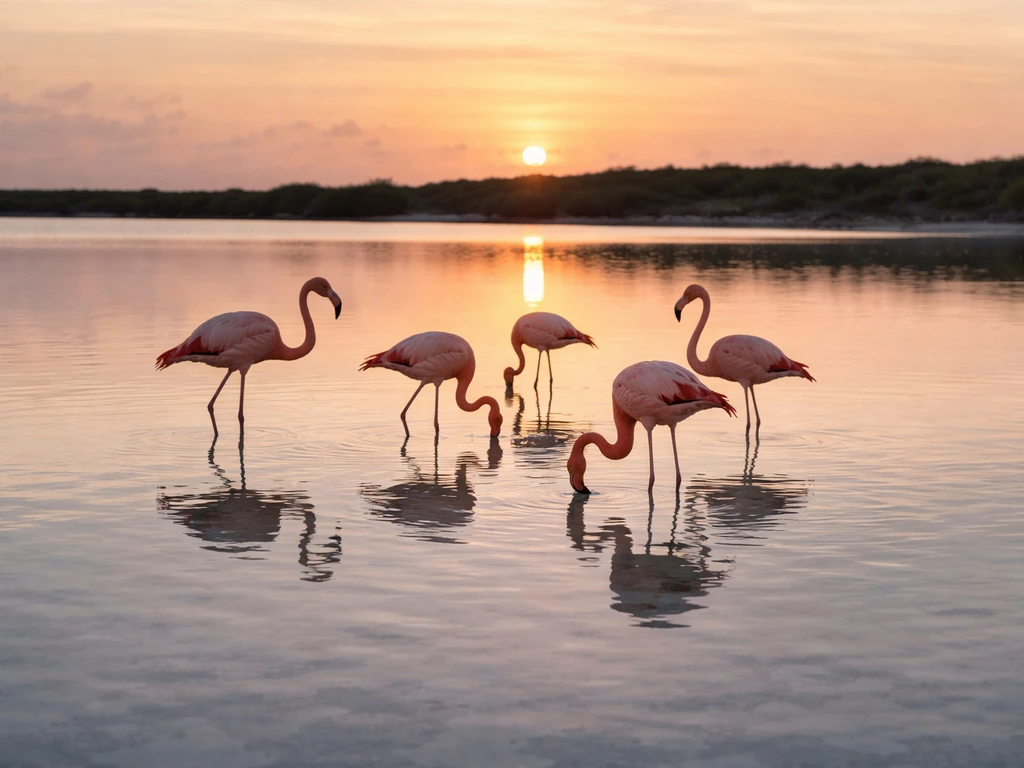
The flamingo isn't just a pretty bird that happens to live in the Bahamas. Its symbolic weight comes from that story of near-loss and recovery. Choosing it as the national bird is in some ways a statement about national stewardship, about a country that came close to losing one of its most distinctive wild residents and chose to pull it back.
The Bahamas Embassy explicitly ties the flamingo's national-bird status to conservation and the ongoing role of the Bahamas National Trust in protecting and managing the population. So the symbol carries a forward-looking message alongside its historical one: this is a nation that takes care of its natural heritage.
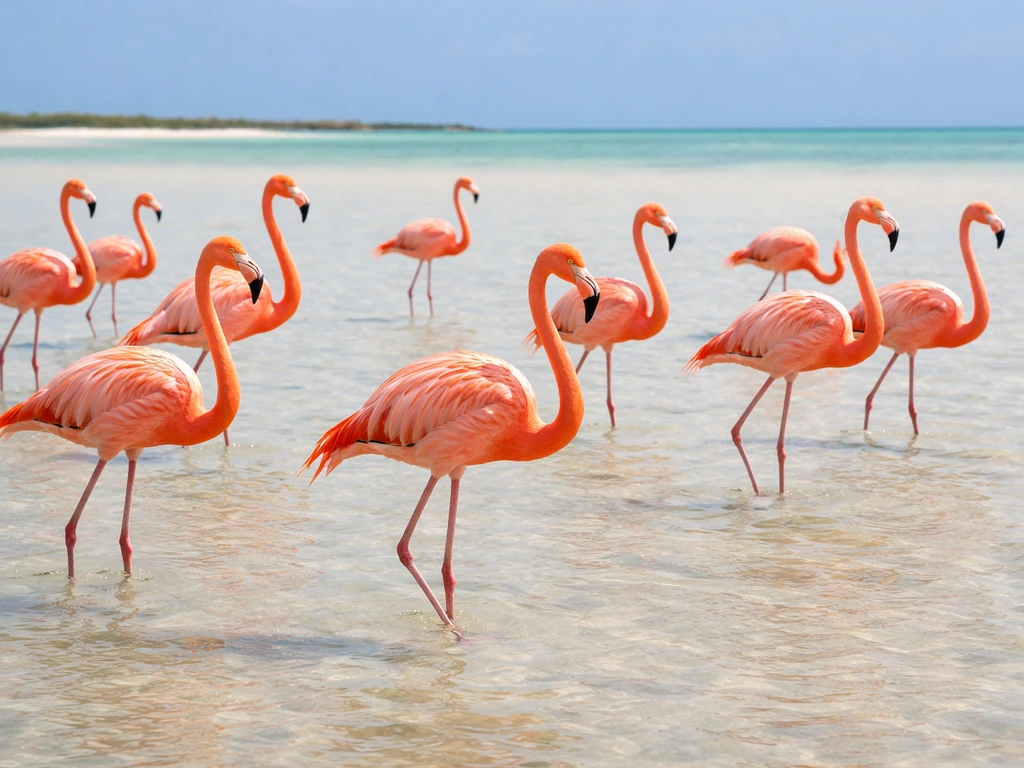
Visually, the flamingo is also unmistakably Bahamian in the public imagination. Its vivid pink coloring, long neck, and habit of gathering in massive flocks on shallow coastal lakes and salt flats map perfectly onto the landscape of the southern Bahamas. It appears in tourism branding, on signage, and in local art in ways that few other animals do. A PLOS ONE assessment of the American flamingo describes its iconic role for tourism and related economic activity in countries where the species occurs, including the Bahamas as a main breeding site tourism branding.
What the bird actually looks like and where to find it
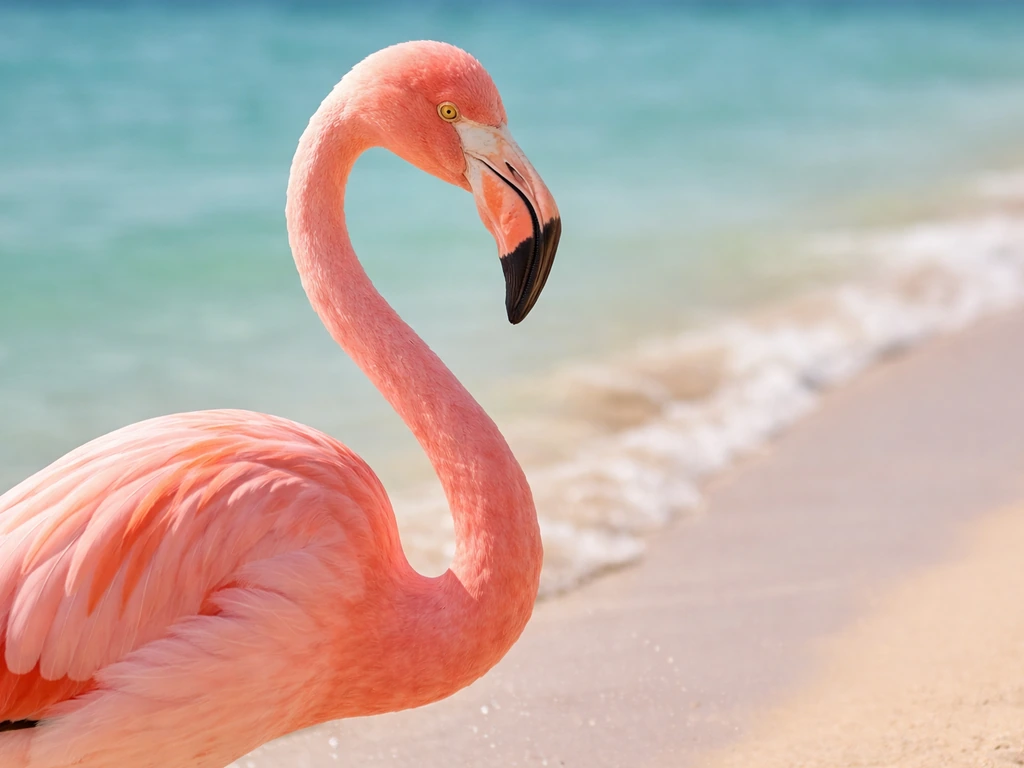
The American flamingo is the largest flamingo species found in the Western Hemisphere. Adults stand roughly 3.5 to 4 feet tall and are famous for their deep pink to reddish-pink plumage, long curved necks, and distinctively bent bills designed for filter feeding. That color comes from pigments in the algae and invertebrates they eat, which is why captive flamingos without the right diet can fade to white.
In the Bahamas, the flamingo's stronghold is Great Inagua, specifically the shallow lakes and salt flats of Inagua National Park. Lake Windsor (sometimes called Lake Rosa) is the core breeding area. The birds nest in large colonies, building mud mounds where they raise a single chick per pair. Interestingly, flamingos from the Bahamas historically migrated to Florida Bay, a pattern that tapered off around 1900 but has seen some revival as numbers have recovered.
One detail worth knowing: the Morton Salt Factory on Grand Inagua operates evaporation ponds that flamingos use as foraging habitat alongside the natural lake system. Conservation in this case has had to work alongside industry, which adds another layer to the story of the Bahamas' relationship with its national bird.
Quick species reference
| Detail | Information |
|---|---|
| Common names | American Flamingo, Caribbean Flamingo, West Indian Flamingo |
| Scientific name | Phoenicopterus ruber |
| Size | Roughly 3.5 to 4 feet tall |
| Plumage | Deep pink to reddish-pink in healthy adults |
| Primary Bahamas habitat | Inagua National Park, Great Inagua (Lake Windsor / salt flats) |
| Estimated Inagua population | Approximately 70,000 |
| Diet | Filter feeds on algae, brine shrimp, and small invertebrates |
| Nesting | Colonial nester; single egg per pair on mud mounds |
How to verify this and where to read more
If you want to confirm the flamingo's status from primary sources rather than taking any website's word for it, here are the most reliable places to check. The Government of the Bahamas' national symbols page (through the official Govnet BS portal) lists "Flamingo – National Bird" directly. The Bahamas Embassy to the United States includes the flamingo on its national symbols page at BahamasEmbDC.org. The Bahamas National Trust's Inagua National Park page uses the formal designation and provides conservation context.
For deeper species information, Cornell Lab of Ornithology's All About Birds has a full American Flamingo profile, and Audubon's own site covers both the species biology and the Bahamas-specific recovery story. Britannica and the American Bird Conservancy are also solid references for taxonomy and ecology.
The Bahamas sits in a fascinating part of the Caribbean bird world. If you are also curious about Jamaica, you might be asking what is the Jamaican national bird. Cuba’s national bird is the Cuban Tody, a small but distinctive species found in the island’s forests what is the national bird of cuba. Puerto Rico's national bird is different from Jamaica's, so it's worth checking which species the island has chosen as its own symbol what is puerto rico's national bird. If you're exploring national birds across the region, the choices made by neighboring islands are worth comparing. Jamaica, Cuba, Puerto Rico, the Dominican Republic, and Haiti each picked birds that reflect very different local ecosystems and national identities, and the contrast with the Bahamas' flamingo says a lot about how geography and history shape these decisions. Haiti's national bird is the palmchat. If you are curious about another country in the region, you can also look up what is the national bird of dominican republic the Dominican Republic.
The flamingo's selection tells a story unique to the Bahamas: a bird that was nearly gone, saved through deliberate effort, and elevated to a national emblem partly because of that very struggle. It's one of the more meaningful origin stories in the world of national bird symbolism.
FAQ
Is the national bird of the Bahamas just a flamingo in general, or a specific type?
No. The Bahamas national bird is the American Flamingo (Phoenicopterus ruber), sometimes called the Caribbean or West Indian flamingo. Other flamingo species exist globally, but the national-symbol designation in the Bahamas is tied specifically to this species.
What name should I use, American Flamingo or West Indian flamingo?
In most official contexts you will see “Flamingo – National Bird.” The Bahamas National Trust also uses the formal “West Indian Flamingo” name when discussing the species in the context of Inagua National Park, even though it is the same national-bird designation.
Was the flamingo named national bird right after independence in 1973, or earlier?
The designation was formalized around independence in 1973, but the conservation story behind it predates that moment. The nearly 1950s-era collapse and the later recovery effort are part of why the symbol became so meaningful, even though the official codification happened after independence.
Why did the Bahamas choose this bird over other iconic birds?
The core reason the flamingo remains the national bird is its recovery success tied to national stewardship. That also means you will usually see the symbol discussed alongside protection efforts at Great Inagua and Inagua National Park, rather than as a general bird that happens to live there.
Where in the Bahamas can you most reliably see the national bird?
Great Inagua, particularly the shallow lakes and salt flats in Inagua National Park, is the main stronghold for breeding and colony nesting. If you visit elsewhere in the Bahamas, you may see flamingos, but for breeding habitat and the symbol’s origin story, Inagua is the central location.
Do flamingos in the Bahamas use any man-made habitats?
The birds can use human-made features too. In the Grand Inagua area, evaporation ponds associated with the Morton Salt Factory provide additional foraging habitat alongside natural lake systems, showing that the conservation story sometimes overlaps with industry.
Why are some captive flamingos less pink than wild ones?
Yes, diet affects their color. In the wild, pink comes from pigments in algae and invertebrates they eat, while captive flamingos without the right diet can fade toward a lighter or whitish look, which can cause confusion if you compare photos.
How can I confirm the national bird from primary sources?
If you want to verify the national-bird claim without relying on tourism sites, check official government and conservation listings: the Government of the Bahamas national symbols entry, the Bahamas Embassy’s national-symbols page, and the Bahamas National Trust pages tied to Inagua National Park.
Next Article
What Is Haiti’s National Bird and What It Symbolizes
Haiti’s national bird is the palm chat, symbolizing resilience and Haiti’s natural heritage through its historic emblem