Nicaragua's national bird is the Guardabarranco, known in English as the turquoise-browed motmot. Its scientific name is Eumomota superciliosa. That is the official answer, confirmed by multiple Nicaraguan government sources, and there is no real dispute about it once you look at the primary records.
What Is the National Bird of Nicaragua? Symbol, Facts

Marcus Chen
17 Apr 2026
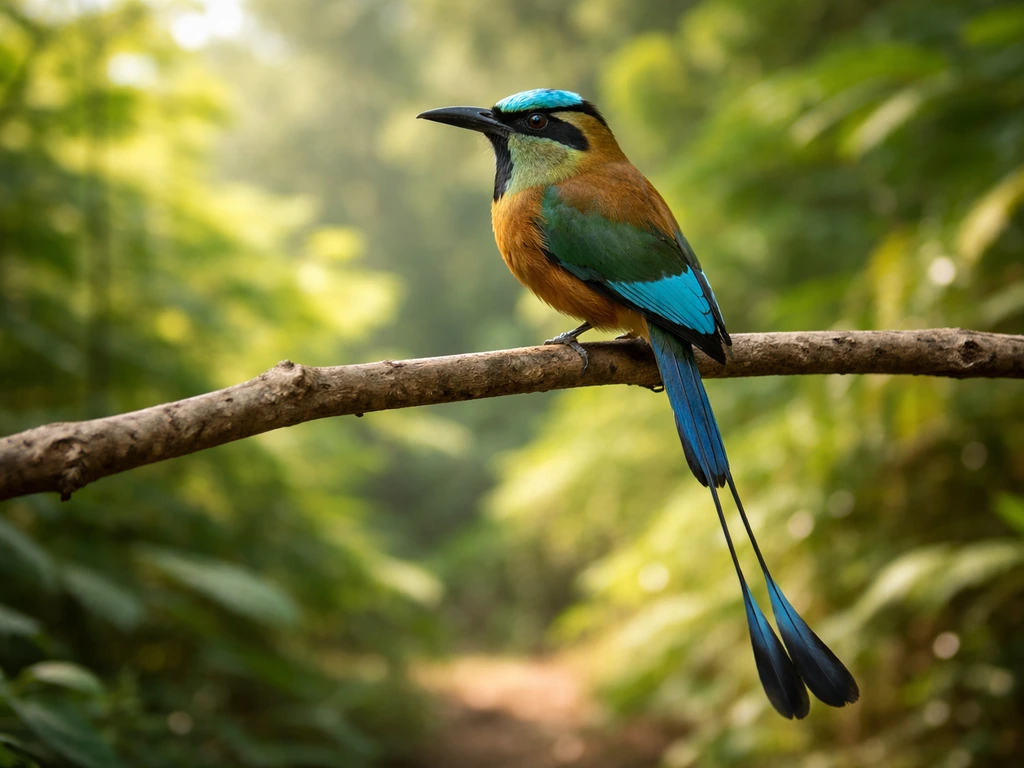
What exactly is the Guardabarranco?
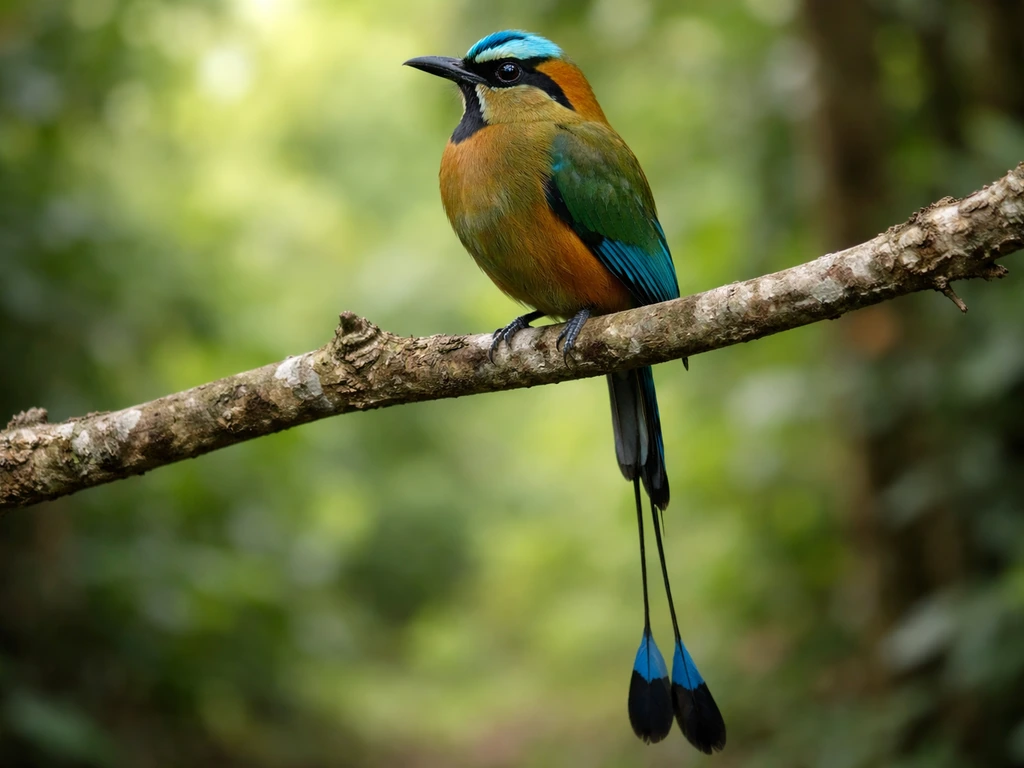
The Guardabarranco is a medium-sized bird, measuring about 34 cm in length and weighing around 65 grams. Those numbers come directly from Nicaraguan educational and government-linked sources, so they are the measurements you will see repeated in official materials.
The single most distinctive feature is its tail. The two central tail feathers grow longer than the rest and end in bare-shaft sections tipped with wider, paddle-shaped tips, creating what Nicaraguan sources call "raquetas" (rackets). Once you know what to look for, that tail makes the bird instantly recognizable in the field, even from a distance.
Beyond the tail, the bird wears vivid, layered colors. The turquoise brow stripe is so prominent it gave the species its English common name, and the rest of the plumage mixes greens, blues, and rufous-orange tones across the body. It is the kind of bird that stops you in your tracks when you see it perched on a branch. The Guardabarranco is found across Central America from southeast Mexico (including the Yucatán) down through Guatemala, El Salvador, Honduras, and Nicaragua all the way to Costa Rica, so it is a genuinely regional bird, not just a Nicaraguan one.
How and when it became Nicaragua's national bird
The formal legal history here is actually a two-step story, which is why you will sometimes see different dates mentioned.
The first official step was Decreto No. 1891, published in La Gaceta, Diario Oficial No. 194 on 27 August 1971. Nicaragua's Ministry of Education (MINED) cites this decree as the original instrument that declared the Guardabarranco as the national bird, which is why the bird has carried that status since 1971.
The second step came decades later. Nicaragua's National Assembly later acknowledged that the earlier recognition had not been fully codified into formal legislation in the way modern national-symbol law required. To close that gap, lawmakers passed Ley No. 795, officially titled "Ley que Declara al Guardabarranco, Ave Nacional de Nicaragua." Article 1 of that law reads plainly: "Declárese al Guardabarranco (Eumomota Superciliosa), Ave Nacional de Nicaragua." The law was approved on 15 June 2012 and published in La Gaceta No. 118 on 25 June 2012.
So the bird has been recognized as a national symbol since 1971, and that recognition was reinforced and formalized again through proper legislative process in 2012. Both dates are correct depending on which document you are reading.
Why Nicaragua chose this bird
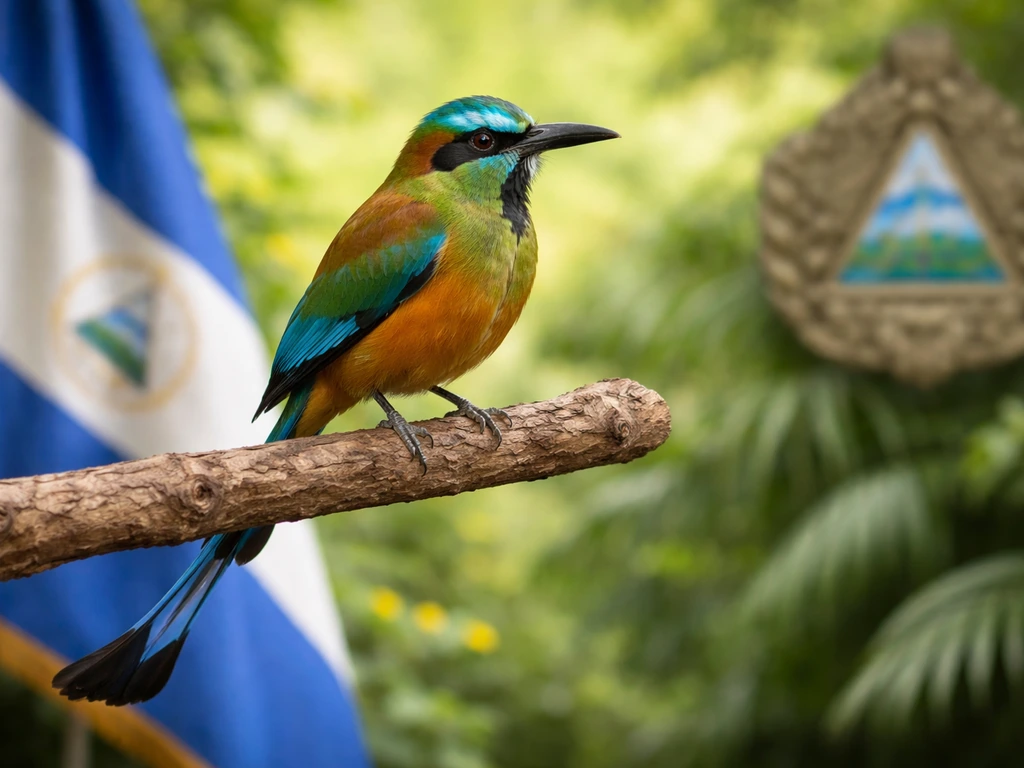
Official national-symbol materials from Nicaragua's Institute of Nicaraguan Culture (INC) list the Guardabarranco as a "símbolo patrio," placing it in the same category as the flag and coat of arms. That framing tells you something important: this is not just a wildlife choice. It is a statement about national identity.
The Guardabarranco is native to Nicaragua's landscapes, it is visually striking and immediately recognizable, and its colorful plumage connects to a broader Central American tradition of valuing brilliantly colored birds as emblems of natural richness. If you compare this to neighboring countries, you can see a regional pattern: El Salvador's national bird is also the turquoise-browed motmot, making Nicaragua and El Salvador the only two countries in the world that share the same national bird species. That fact alone says a lot about how deeply embedded this bird is in Central American cultural identity.
The name "Guardabarranco" translates roughly to "ravine guard" or "keeper of the gorge," a reference to the bird's habit of nesting in burrows dug into steep earthen banks and ravines. That image, a bold, colorful bird guarding the land, carries natural symbolic weight for a country proud of its landscapes and natural heritage.
Interesting facts worth knowing
- Nicaragua and El Salvador are the only two countries in the world with the same national bird: both officially recognize the turquoise-browed motmot (Eumomota superciliosa).
- The "raquetas" tail plumes are not just decorative. The bird actively swings its tail like a pendulum, a behavior researchers believe signals awareness to predators, essentially saying "I see you."
- The Guardabarranco nests in horizontal burrows it digs into earthen banks, sometimes up to 1.5 meters deep, which is unusual for a bird of its size and color.
- The bird's 34 cm length is largely tail. The body itself is more compact, which makes the tail plumes even more dramatic relative to the rest of the bird.
- Visitors to Nicaragua's Miraflor Natural Reserve can spot the Guardabarranco in its natural habitat, making it one of the more accessible national birds to observe on a visit to the country.
- Despite the two-step legal history (1971 decree and 2012 law), there is no documented dispute about the species. Every official Nicaraguan source agrees: Guardabarranco, Eumomota superciliosa.
The Guardabarranco among its Central American neighbors
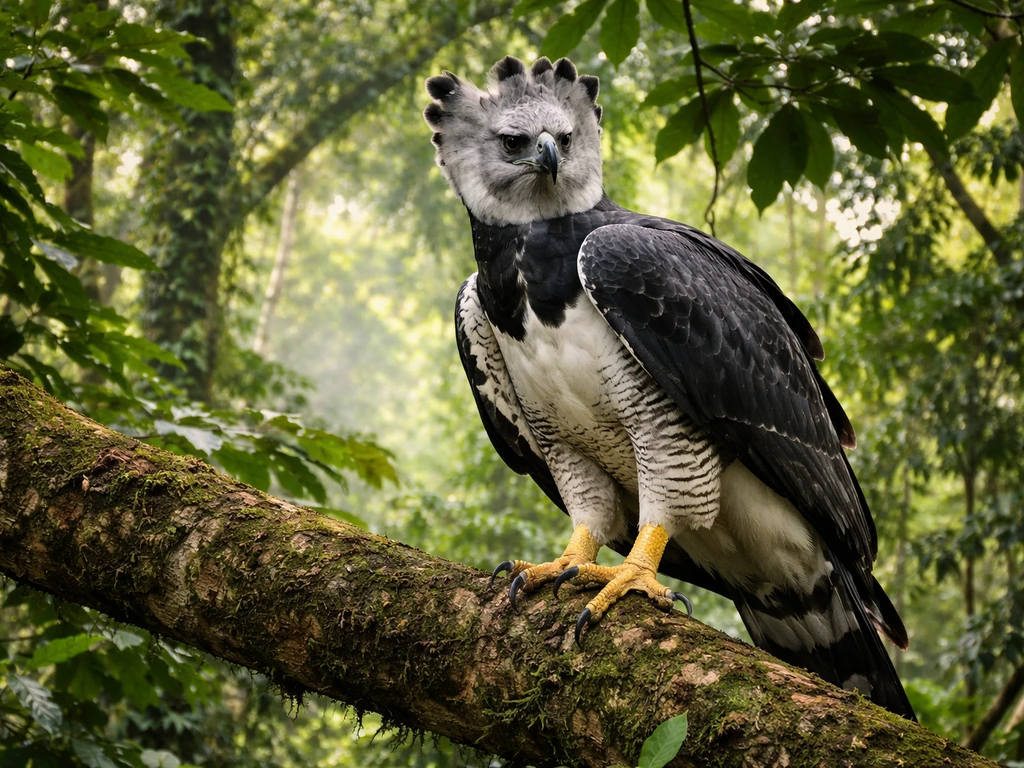
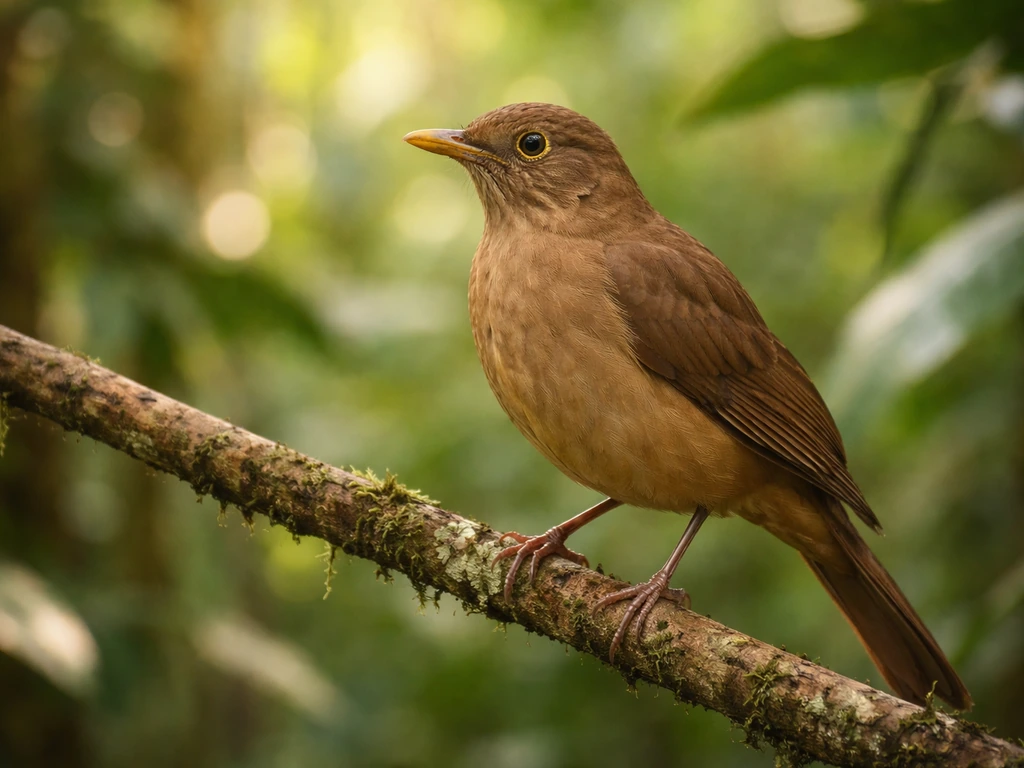
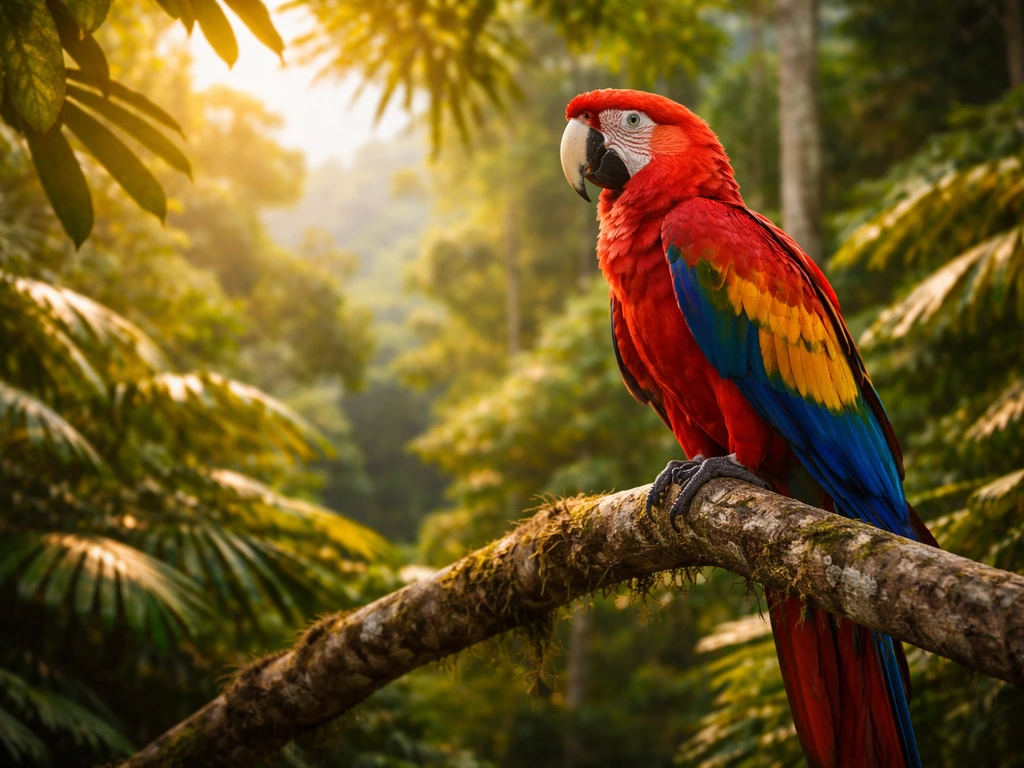
It is worth placing Nicaragua's choice in the regional context, because the national birds of Central America tell a connected story about how these countries relate to their shared ecosystems. Honduras's national bird, the scarlet macaw, is a similarly vivid, large-billed species chosen for its striking appearance and cultural resonance. Moving south, Costa Rica's national bird, the clay-colored thrush, takes a very different approach, favoring a common, beloved songbird over a showstopper. And Panama's national bird, the harpy eagle, goes for raw power and rarity. Nicaragua sits in the middle of this spectrum, choosing a bird that is both visually spectacular and genuinely part of everyday Nicaraguan landscapes.
How to confirm this and dig deeper
If you need to verify this for a school project, a quiz, or just personal certainty, here are the most reliable places to check and what to look for at each one.
| Source | What it says | Why it is reliable |
|---|---|---|
| MINED Nicaragua (Ministry of Education) | Names the Guardabarranco as national bird, cites Decreto No. 1891, La Gaceta No. 194, 27 Aug 1971 | Official government education ministry |
| INC (Instituto Nicaragüense de Cultura) | Lists GUARDABARRANCO (Eumomota Superciliosa) in the national symbols catalog | Government cultural institution, official símbolos patrios catalog |
| Asamblea Nacional de Nicaragua (legislative portal) | Page titled 'Asamblea Nacional Declara Ave Nacional al Guardabarranco' documents the formal legislative declaration | Primary legislative source |
| PAHO legal compendium | Reproduces full text of Ley No. 795, Article 1, declaring Guardabarranco as national bird | International health organization's legal document archive, includes Nicaragua environmental law text |
| eBird (Science.eBird.org) | Range map for Eumomota superciliosa confirms the species' presence across Nicaragua | Peer-reviewed ornithological data platform |
For a quick search, try "Guardabarranco Ave Nacional Nicaragua decreto 1891" to pull up the MINED and INC sources directly. If you want to go deeper on the bird itself, searching "Eumomota superciliosa range map" on eBird will show you exactly where in Central America this species lives and how common it is across Nicaragua's different regions.
If you want to see the bird in person, Miraflor Natural Reserve in northern Nicaragua is a documented spot where visitors have observed the Guardabarranco. It is a forested highland reserve, which matches the kind of habitat this species prefers: wooded areas with earthen banks or ravines where it can nest.
The bottom line is straightforward. Nicaragua's national bird is the Guardabarranco (Eumomota superciliosa). It has been official since 1971, reconfirmed by law in 2012, and is listed in every major Nicaraguan government symbol catalog. The bird is a medium-sized, vividly colored motmot with a distinctive racket-tipped tail, found throughout Nicaragua and across Central America. Any credible national-symbols list that names a different bird for Nicaragua is simply wrong.
FAQ
Why do some websites list a different national bird for Nicaragua?
The national bird is the Guardabarranco (Eumomota superciliosa). If you see a different bird listed in a quiz or worksheet, it is usually confusing Nicaragua’s symbol with a regional bird or an outdated list, so you should check for the legal instruments (Decreto 1891 and Ley 795) rather than relying on general websites.
How can I verify the national bird is officially declared, not just claimed?
You can quickly confirm the Guardabarranco is official by looking for the specific legal reference in Nicaragua’s national-symbol materials, or by searching the exact law title that declares the bird (Ley No. 795). The key point is that official status is tied to the named species Eumomota superciliosa, not a generic “motmot” description.
What should I use in my answer, Guardabarranco or the English name?
The bird’s English common name is “turquoise-browed motmot,” but the Spanish name used in official materials is “Guardabarranco.” For schoolwork, match both names to the same scientific name (Eumomota superciliosa) to avoid mistakes caused by translations.
If my teacher asks for a single year, what should I write, 1971 or 2012?
The national-bird status has two commonly cited dates because one document established the symbol (1971), and a later law reinforced and formally codified it (2012). If an assignment asks for “the year it was chosen,” you can mention 1971 as the original recognition and 2012 as the formal confirmation, clarifying both.
What visual feature is the best way to confirm I’m seeing the national bird?
If your goal is to identify the bird in the wild, focus on the tail first, the two central tail feathers with racket-like paddle tips. Color can vary with light and distance, so using the tail structure as your main identifier reduces misidentification.
If the Guardabarranco also lives in other countries, does that change its national status for Nicaragua?
The Guardabarranco is not limited to Nicaragua, it ranges across multiple Central American countries. That means a bird you see in a neighboring country could still be the same species, so range alone cannot prove you are looking at Nicaragua’s symbol, scientific name and identification traits matter.
What does it mean that the Guardabarranco is listed as a “símbolo patrio”?
Nicaragua’s “símbolo patrio” framing indicates it is treated like an national identity symbol rather than just a conservation emblem. If you need a one-sentence explanation for an essay, describe it as an officially recognized national symbol cataloged alongside core national insignia categories.
What does “Guardabarranco” mean, and does it relate to bird behavior?
The name “Guardabarranco” refers to its nesting in burrows in steep earthen banks or ravines. If you’re writing a short bio, include that nesting behavior as part of why the bird fits Nicaragua’s landscape imagery, not just its appearance.
How do national bird lists differ from conservation or protected species lists in Nicaragua?
A common mix-up is confusing national birds with national animals or protected species lists. National bird status is specifically the “Ave Nacional de Nicaragua,” so if you find a different species in an environmental program or park brochure, it may be conservation-focused rather than an official national symbol.
What’s the safest way to cite the national bird in a homework or report?
If you want to cite it for a school project, cite the exact decree or law name and number, then state the scientific name Eumomota superciliosa. This is more reliable than citing only a species description, because it anchors your claim to the official declaration.