
The bald eagle (Haliaeetus leucocephalus) is the national bird and emblem of the United States. It has appeared on the Great Seal of the United States since 1782 and is now formally designated as the national bird under U.S. Code, Title 36, Section 306.
Which Bird Is the Emblem of the US? Bald Eagle Explained

Marcus Chen
30 May 2026
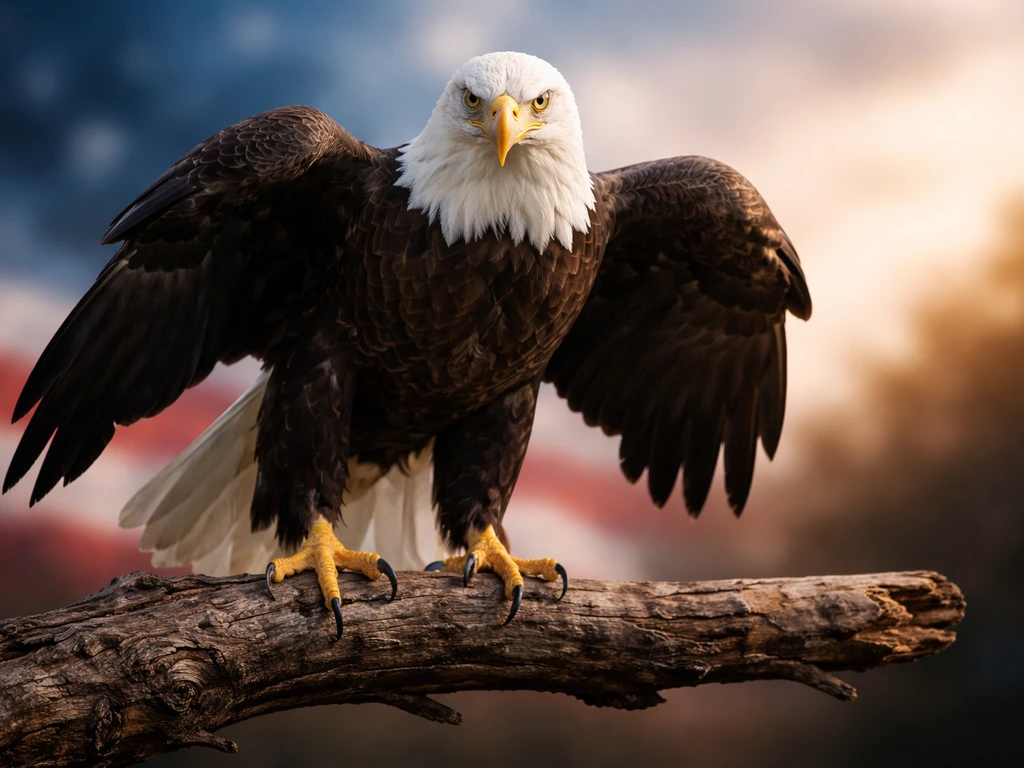
The U.S. national bird: the bald eagle
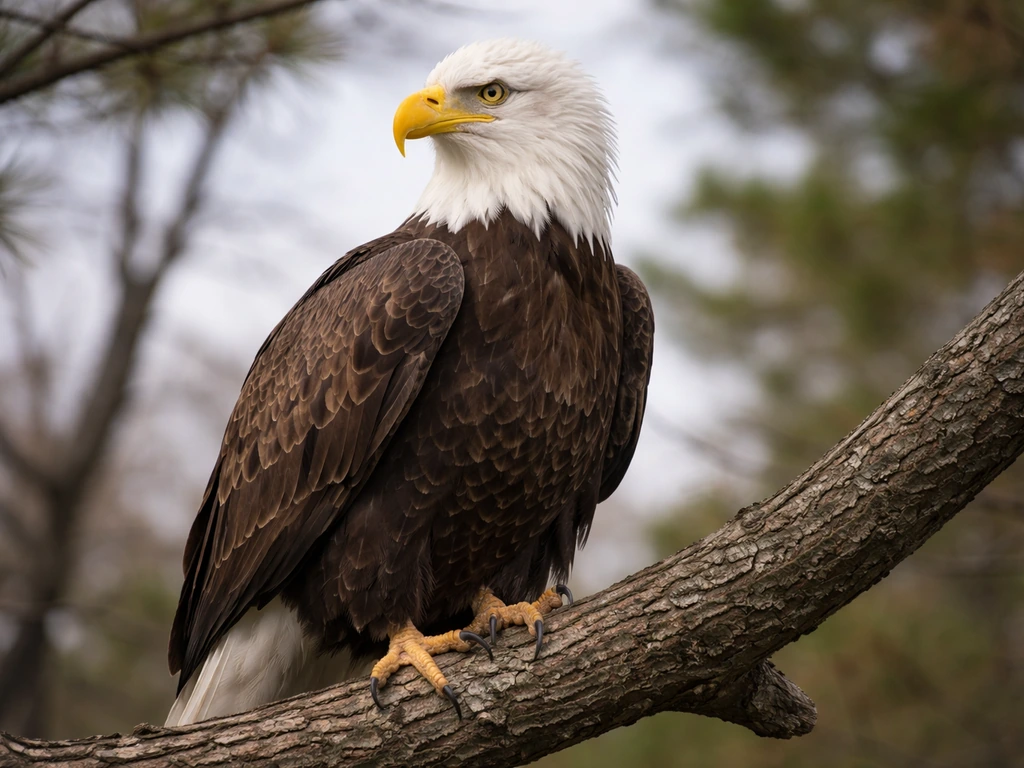
If you need the one-word answer for a quiz, a school project, or just plain curiosity: it's the bald eagle. No other bird holds this official status for the United States. The NPS describes it plainly as "the national bird and symbol of the United States of America," and U.S. federal law now backs that up in writing. You'll find the bald eagle on the President's flag, on official government documents, on the back of the dollar bill, and embedded in the imagery of virtually every major federal agency.
What the bald eagle actually represents
When Congress was pulling together symbols for the new nation in 1782, they needed a bird that could carry serious symbolic weight. The bald eagle, according to the National Wildlife Federation, stood for strength, courage, and freedom. It was also native to North America, which mattered. The founders wanted something distinctly American, not borrowed from European heraldry.
The U.S. Fish and Wildlife Service puts it well: when the young republic went looking for a national emblem, the bald eagle "checked every box." It was large and imposing, it was unique to the continent, and it had a natural authority that felt right for a nation asserting its independence. On the Great Seal, the eagle holds an olive branch in its right talon (representing peace) and a bundle of 13 arrows in its left talon (representing military readiness). That design captures the tension the founders wanted to express: a preference for peace, but a willingness to fight.
There is one famous dissent worth knowing. A letter attributed to Benjamin Franklin criticized the bald eagle as having a "bad moral character" because it steals fish from other birds. Franklin preferred the turkey. That story has been repeated so often it's practically folklore, though Franklin never formally proposed the turkey as a rival candidate. The bald eagle was chosen anyway, and the debate was settled quickly.
How and when the bald eagle became the U.S. emblem
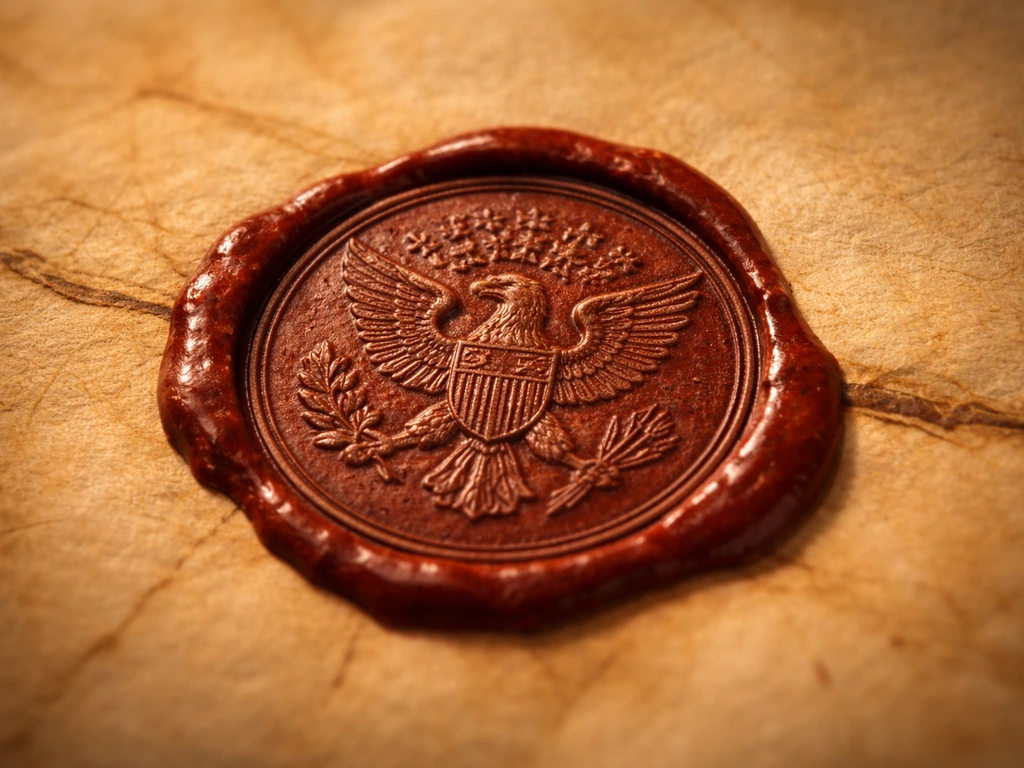
The key date is June 20, 1782. That's when the Continental Congress officially adopted the Great Seal of the United States, which placed the bald eagle front and center. The National Archives confirms this date, and History.com describes the seal's front side as showing the bald eagle holding the olive branch and arrows alongside a shield, a motto (E Pluribus Unum), and a constellation of 13 stars above its head.
The official explanation of the seal's symbolism comes from Charles Thomson, who served as Secretary of the Continental Congress and wrote the formal remarks accompanying the adopted design. His explanation is the authoritative source for what each element means, including why the eagle was placed at the center.
From 1782 onward, the bald eagle functioned as the national emblem in every practical sense: on seals, on currency, and in official government imagery. But here's the part that surprises most people: the bald eagle was not formally designated as the "national bird" in U.S. law until December 2024.
The 2024 law and a common point of confusion
For over 240 years, the bald eagle was widely treated as the national bird, but no single law said so explicitly. That gap was closed on December 23, 2024, when Congress passed Public Law 118-206, titled "Designation of Bald Eagle as National Bird." President Biden signed it into law on December 24, 2024. The Associated Press noted at the time that the law "corrected" the long-standing oversight: the bald eagle had never been officially designated as the national bird, even though it had appeared on the Great Seal since 1782. The designation is now codified in U.S. Code, Title 36, Section 306, which reads simply: "The bald eagle (Haliaeetus leucocephalus) is the national bird."
So if someone argues that the U.S. technically had no official national bird before 2024, they're technically right. But for all practical purposes, the bald eagle has been the recognized national emblem since 1782. The 2024 law just made it unambiguous.
It's also worth noting the difference between "national bird" and "national emblem." The bald eagle was designated the national emblem (through the Great Seal) in 1782 and became the official national bird in 2024. These are related but distinct designations. Both now point to the same bird.
Quick facts worth knowing
- Scientific name: Haliaeetus leucocephalus
- Formally designated national bird: December 23, 2024 (Public Law 118-206)
- National emblem via Great Seal: June 20, 1782
- Legal citation for national bird status: 36 U.S.C. § 306
- What it holds on the Great Seal: 13 arrows (left talon) and an olive branch (right talon)
- Wild lifespan: up to 28 years in the wild; up to 36 years in captivity (NPS record)
- Conservation history: listed as endangered in 43 states in 1967; populations have since recovered significantly
- Federal protection: the Bald and Golden Eagle Protection Act (first enacted June 8, 1940, codified at 16 U.S.C. § 668) makes it illegal to take, possess, or disturb bald eagles or their feathers, nests, or eggs without a permit
The conservation angle is worth a moment. By the mid-20th century, the bald eagle was nearly gone from much of the continental United States, due to hunting, habitat loss, and the effects of the pesticide DDT. The U.S. Fish and Wildlife Service notes that the eagle was "almost lost" in many parts of the country. Its recovery since then, through legal protection and active conservation work, is considered one of the great success stories of American wildlife management.
Where to verify this and explore other national birds
If you want to double-check the official designation, the most authoritative sources are 36 U.S.C. § 306 (available through the U.S. Code on Cornell's Legal Information Institute or Congress.gov), USA.gov's page on American national symbols, and the U.S. Fish and Wildlife Service's profile on the bald eagle. All three will confirm what's covered here.
The bald eagle is one of the most recognizable national birds in the world, but every country has its own story. If you're curious how other nations have chosen their emblems, this site covers national birds across the globe, from the secretary bird of South Africa to Papua New Guinea's bird of paradise. The secretary bird is the national emblem of South Africa secretary bird of South Africa. Many countries also feature their national bird on their flag, which is another thread worth exploring if you're going deeper into the topic of avian national symbols. If you're wondering how this works elsewhere, you can also look up which bird appears on a flag and what country it represents what bird is on a flag and which country. You can find the country for the question “what country has a bird on its flag” by looking at specific national symbols and flags bird on their flag. On some national and regional flags, you can even spot a bird centered in the design, which is what this question is getting at what flag has a bird in the middle? (bird in the middle).
Whether you're a student, a trivia fan, or just someone who stumbled onto this question, the answer is clear: the bald eagle is the bird of the United States, recognized both as a national emblem since 1782 and as the official national bird since 2024.
FAQ
Is the bald eagle the national bird of the U.S. in every legal context (for example, state laws and school materials)?
Federally, the designation is in 36 U.S.C. § 306, but states and schools may have their own official “state birds” or teaching materials that do not reference the federal label. So it is correct to say the bald eagle is the national bird, but you may still see different birds for state-level symbols in classrooms.
What is the difference between “national bird” and “national emblem,” and can one bird hold both roles?
Yes. “National emblem” refers to an official symbol used by the government, and for the U.S. the Great Seal has the bald eagle since 1782. “National bird” is a specific wildlife designation in federal law, formally added in 2024, even though the same eagle was already functioning as the country’s emblem in practice.
Did the U.S. ever consider another bird before choosing the bald eagle?
A well-known story attributes a turkey preference to Benjamin Franklin, but that account is more folklore than an official proposal. The credible takeaway is that the final selection for the Great Seal was made in 1782 and the bald eagle became the central symbol then.
Why did it take so long to codify “national bird” in federal law?
The eagle was treated as the national bird for generations, but the article’s key point is that no single statute explicitly used the phrase until December 2024. The gap was about wording in law, not about the eagle’s long-established symbolic role on official government imagery.
Can the bald eagle be called the U.S. “national bird” before December 23, 2024?
For everyday accuracy, many people historically used “national bird” informally because of the Great Seal usage since 1782. But if you are being strictly legal or for a formal citation, the official national bird designation dates to the 2024 law coming into effect through 36 U.S.C. § 306.
Is there any confusion with the U.S. “national bird” versus birds on flags or seals?
Yes, because other national symbols can include birds on flags, coins, or agency logos even if they do not change the official “national bird” status. The most reliable way to avoid confusion is to distinguish “official national bird” under federal code from “depicted in official imagery” under the Great Seal and other government uses.
If someone asks for the scientific name, what should I use?
The commonly given scientific name is Haliaeetus leucocephalus. In trivia or citations, use that exact binomial since it is the standard scientific label for the bald eagle species.
Does the U.S. have an official national bird besides the bald eagle?
No. The federal designation states the bald eagle is the national bird, so there is not an additional official national-bird species in U.S. law. If you see another bird mentioned, it is likely a state bird, a mascot, or a symbolic figure used in a specific context.
Next Articles
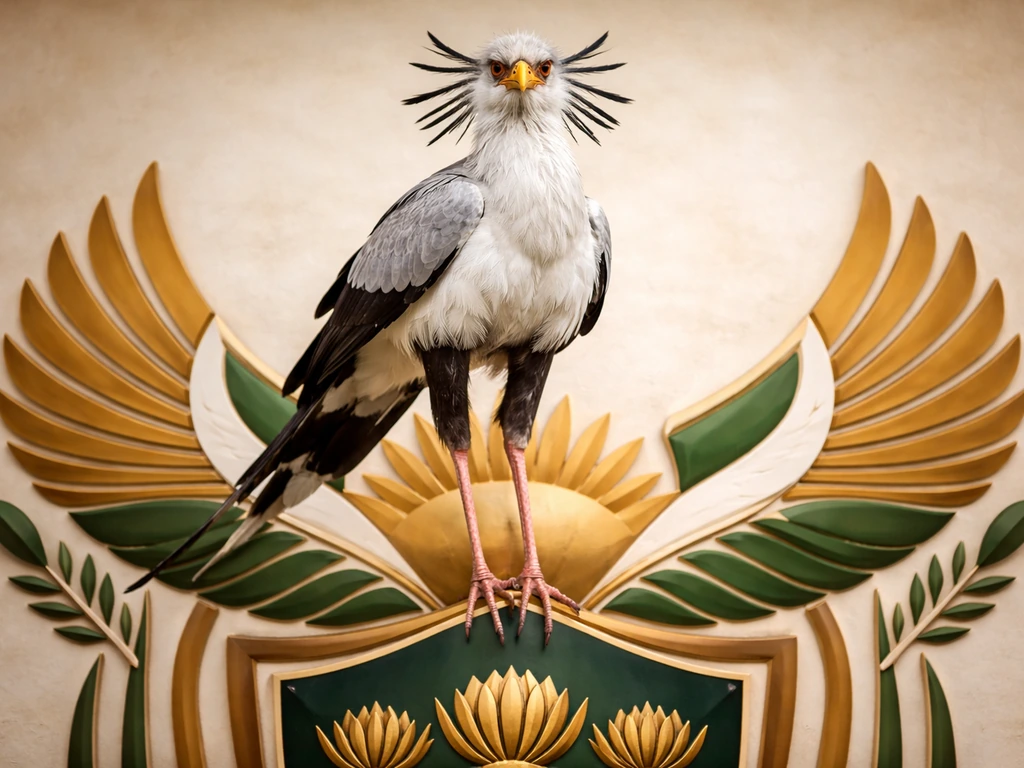
Secretary Bird Is the National Emblem of Which Country
Find out which country uses the secretary bird as its national emblem and how to verify the claim reliably.

Which Nation’s Flag Features a Bird of Paradise?
Learn which country’s flag shows a bird of paradise, where it appears, and how to verify the symbolism and history.

What Country Has a Bird on Its Flag? How to Identify It
Identify which country has a bird on its flag using emblem location, bird type, and how to verify its national bird.