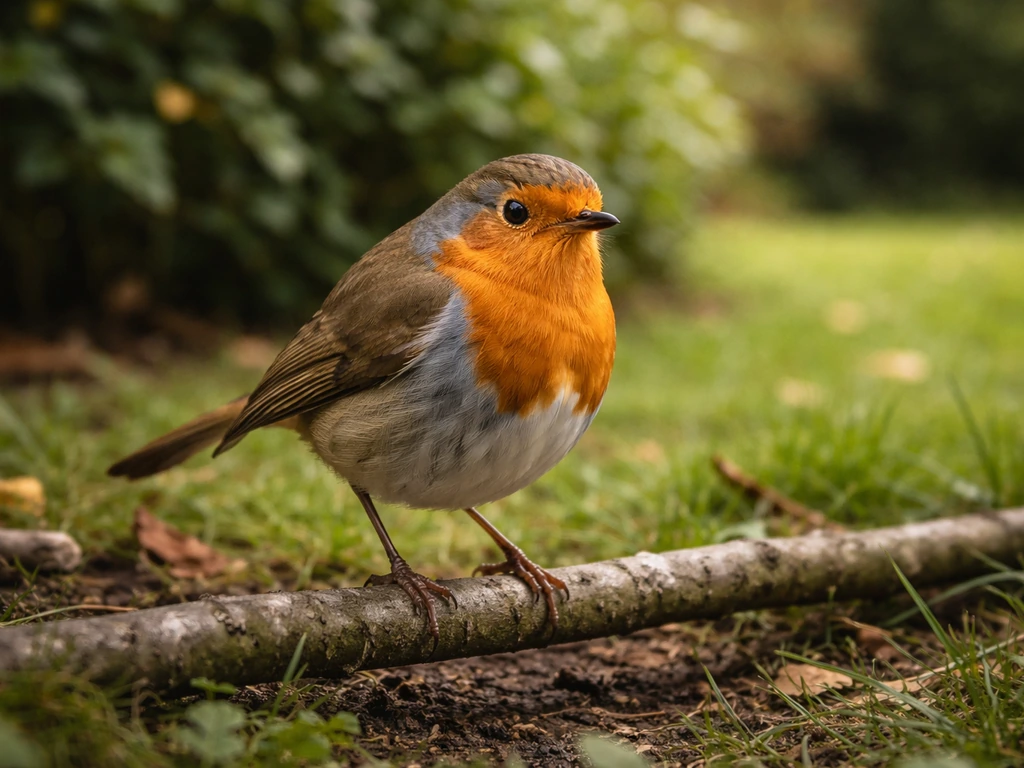
London does not have an official national bird. It is a city, not a country, so there is no government body that formally designates a national bird for it the way countries do. The bird most commonly associated with London in popular culture is the feral pigeon, which has lived alongside the city for over a thousand years. If you are looking for the UK's national bird, that would be the robin, though even that designation is unofficial, the result of a popular vote in 2015 rather than a government decree.
What Is the National Bird of London? Answer and Facts

Marcus Chen
28 May 2026
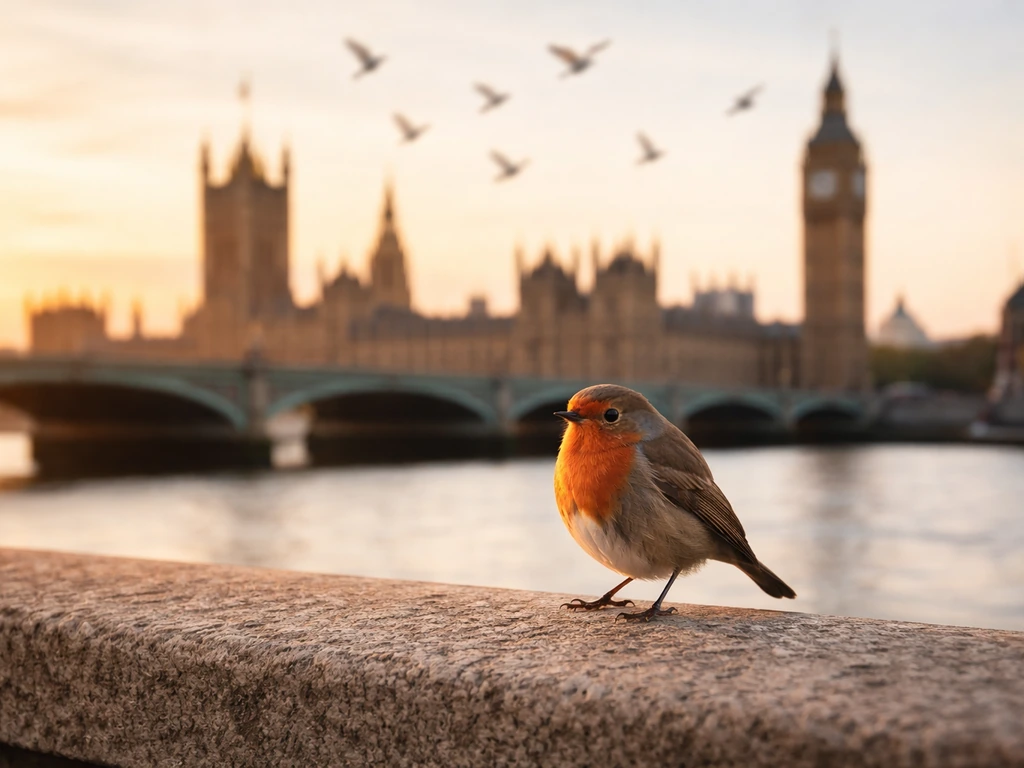
Does London even have a national bird?
This is the core confusion worth clearing up first. London is a city and a regional administrative area governed by the Greater London Authority. It is not a sovereign state, and it does not issue national symbols the way a country does. There is no equivalent of an act of parliament or official royal proclamation that names a bird as London's national emblem. If you search online and find a confident answer like 'London's national bird is X,' that claim almost certainly has no formal government backing.
The UK itself is in an unusual position here. Unlike the USA with its bald eagle or India with its peacock, the United Kingdom never officially named a national bird through any statutory or governmental process. The robin is widely described as the UK's national bird, but that label comes from a poll, not legislation. The Guardian and the BBC both covered the 2015 'Vote National Bird' campaign, which saw more than 200,000 people cast votes and the robin come out on top. It was a cultural moment, not a government announcement.
What people usually mean when they ask this question
When someone types 'national bird of London' into a search engine, they are usually asking one of three slightly different things. First, they might be conflating London with the UK as a whole, treating the capital city as a stand-in for the country. Second, they might be curious about which bird is most visually or culturally tied to London as a place. Third, they might have seen a confident claim online and want to verify it.
The answer shifts depending on which question you are actually asking. If you want the bird most associated with the United Kingdom, it is the robin. If you want the bird that most iconically represents the city of London in its streets, squares, and cultural imagery, it is the pigeon. Neither answer comes with an official certificate, but both are defensible and widely repeated.
London's key bird symbols, by context
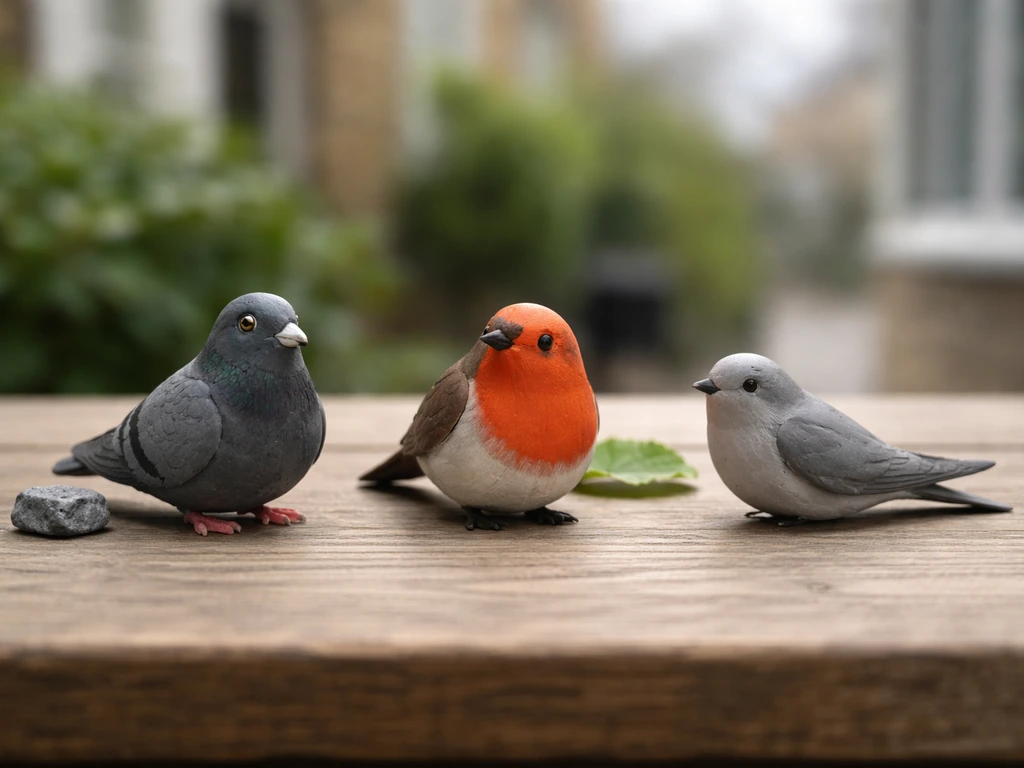
It helps to separate the different layers of 'London' bird symbolism, because the city, the country, and the cultural imagination all point to different birds.
| Context | Bird | Status |
|---|---|---|
| City of London (cultural/historical) | Feral pigeon | Unofficial city symbol, no formal designation |
| United Kingdom (national) | Robin (European robin) | Unofficial, based on 2015 popular vote and a 1960 informal declaration |
| London wildlife recording | Multiple species tracked by LNHS | Scientific/atlas records, not symbolic designations |
| City of London heraldry | No bird (dragons are the emblem) | Formal coat of arms uses dragon supporters, not birds |
The City of London's official heraldry is worth a specific mention because it sometimes gets tangled up in these searches. The City's coat of arms, recorded from the early 17th century, features a pair of dragons as supporters, not birds. The flag flying from formal City buildings derives from this coat of arms and includes a sword associated with St Paul. There is no bird anywhere in the official civic symbolism of the City of London.
Why pigeons became London's unofficial bird
The pigeon's association with London runs remarkably deep. The London Museum has documented evidence of pigeons in the city dating back to Roman times, including a Roman clay pigeon model discovered in the City of London. That is more than a thousand years of continuous urban coexistence. Pigeons watched London grow from a Roman settlement to a medieval city to a global metropolis, and they are still there today on every major street corner.
Trafalgar Square became the most famous pigeon location in the world during the 20th century. For decades, feeding the pigeons there was one of the most iconic tourist activities in London, immortalised in photos, films, and postcards. The image of thousands of pigeons rising from the square became shorthand for London itself in popular culture. Feeding in the square was eventually banned in 2003, but the symbolic connection stuck.
Pigeons are not glamorous, and they are certainly not the result of any deliberate symbolic selection process. But that is part of what makes them a fitting emblem for a messy, ancient, endlessly adaptive city. They were not chosen. They just stayed.
The robin and why it gets linked to London
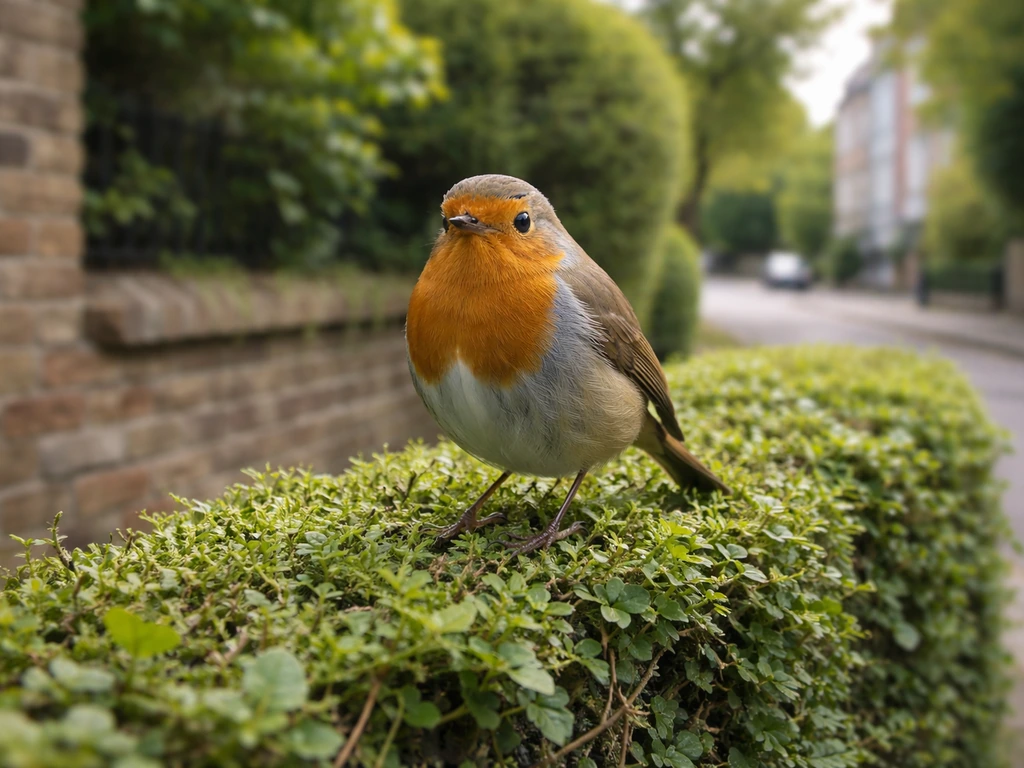
The European robin is the bird that comes up most often when people search for a 'national bird' connected to Britain, which includes London by association. Its informal national status dates back to 1960, when it was first publicly declared Britain's national bird in a popular media context, and was reinforced in 2015 when a campaign led by birder David Lindo drew over 200,000 votes, with the robin coming first. Songbird Survival also describes the robin as Britain’s national bird twice, in 1960 and again in 2015 reinforced in 2015. Audubon covered the campaign at the time and made clear it was an organised vote, not a government designation.
The robin has a long cultural history in Britain as a winter symbol, appearing on Christmas cards, in folklore, and in garden mythology. It is often described as bold and friendly because it tends to follow gardeners closely in search of disturbed earth and worms. In London's parks and green spaces, robins are genuinely common and visible year-round, which adds to the sense that this small bird belongs to the British urban landscape. But its association is with Britain as a whole, not specifically with London as a city.
If you are interested in why the robin became Britain's de facto national bird symbol, that story connects closely to the broader question of why countries choose particular birds as emblems at all. The UK's case is unusual precisely because it never made a formal choice, which is explored in more detail in the dedicated article on the national bird of the UK.
How bird emblems are usually chosen, and why London's case is different
For most countries, a national bird is designated through some kind of official process: a government proclamation, a parliamentary decision, or a royal decree. The USA named the bald eagle in 1782. India made the peacock its national bird in 1963. Guatemala's quetzal is embedded in the country's coat of arms and currency. These are formal, documented acts by sovereign governments.
London has no equivalent mechanism. It is governed by the Greater London Authority and the individual London borough councils, neither of which have the remit or tradition of designating national symbols. The absence of an official London bird is not an oversight. It simply reflects the fact that cities do not usually operate at the level of national symbolism. That is the job of the country.
What London does have is civic heraldry and a rich layer of cultural association built up over centuries. The dragons of the City of London coat of arms are the closest thing to an official symbolic emblem the city has, and even those emerged gradually through recorded historical use rather than a single formal grant.
How to check for yourself whether any bird has official status
If you want to verify a claim about London's national bird, or the UK's national bird, the test is simple: look for the official source. Here is what to look for and where to look.
- Check the Greater London Authority website (london.gov.uk) for any official city emblems or symbols. You will not find a national bird listed there.
- Check the UK Government website (gov.uk) for any statutory designation of a national bird. As of today, no such law or proclamation exists.
- Look at coverage from the BBC, The Guardian, or Smithsonian Magazine on the 2015 robin vote. These sources explicitly frame it as a public campaign, not a government announcement.
- Search the City of London Corporation's official pages for their coat of arms and heraldic record. You will find dragons, a sword, and no birds.
- Cross-reference any confident claim about a 'London national bird' against the London Natural History Society's London Bird Report, which documents actual species recorded in the Greater London area. This is a scientific record, not a symbolic designation.
- If a website lists a 'national bird of London' without citing an official government source, treat the claim as cultural shorthand rather than fact.
The honest answer is that you will not find an official national bird of London because none exists. This aligns with Zoological London’s overview that there is no official “national bird of London.” blank" rel="noopener noreferrer">official national bird of London because none exists. Russia, for example, does name a national bird officially what is russia's national bird. What you will find is a city with a deep cultural attachment to pigeons, a country with an informal national bird in the robin, and a lot of websites that blur the line between the two. Knowing the difference is the point.
The bottom line
If someone asks you what the national bird of London is, the most accurate answer is that there is not one. London is a city, not a nation, and it has no official bird emblem. The bird most culturally associated with London is the pigeon, for historical reasons stretching back over a thousand years. The bird most associated with Britain as a whole is the robin, but even that is an unofficial popular designation rather than a formal government decision.
For a deeper look at the UK-wide question, the article on the national bird of the UK covers the full story of the robin's informal selection, and the dedicated piece on why the robin is the national bird of England gets into the cultural reasoning behind the association. For a deeper look at the UK-wide question, see what is the national bird of uk and how the robin became the most commonly cited choice.
For the Ukraine-wide question of what is the national bird of Ukraine, you can check the official national symbol listings for the up to date answer.
FAQ
Is there an official government-approved national bird for London?
No, London does not have an official national bird because it is governed as a city and regional authority, not as a sovereign state. If you see a single name presented as an “official” answer, it is very likely a cultural or internet claim rather than a government designation.
How can I tell if a “London national bird” claim is real or just a meme?
The closest “verification rule” is to separate official civic heraldry from popular nicknames. For the City of London, the heraldic supporters are dragons (not birds), and the idea of a “city national bird” does not appear in that formal symbolism.
If London has no official bird, what should I answer when someone asks for the UK national bird instead?
If what you actually want is a bird for the UK, use robin as the commonly cited symbol, but remember it is informal. It came from a public vote and media campaigns, not a formal legislative or royal act.
Why is the pigeon the bird most associated specifically with London the city?
The pigeon is the bird most associated with the city itself, because its long-term presence is visible in everyday London life and in landmark imagery like Trafalgar Square. It is not “chosen” as an emblem, it is a persistent part of the city’s urban ecology and culture.
Can tourists still feed the pigeons at Trafalgar Square?
Feeding pigeons at Trafalgar Square was banned in 2003, so any “tourist tradition” photos can be misleading if you visit expecting to feed them there. You can still see pigeons widely across the city, but local rules may restrict feeding in certain spots.
Are robins common in London, and do they replace pigeons as the city symbol?
Robins are common in London parks and green spaces, so they can feel “London-like” to visitors, but the robin’s broader association is with Britain overall. That is why it often shows up as the “national bird” answer online even though it is not officially London-specific.
What should I ask for to make sure I’m answering the right question about “national bird”?
If you want to avoid confusion, ask the follow-up question “Do you mean London the city, or the UK the country?” London points to pigeon as the cultural urban match, while the UK points to robin as the informal national-style symbol.
What wording is safest if I’m writing about London’s “national bird” online?
Use “national bird” only when the source is talking about a country or an official national emblem process. For cities like London, the safer wording is “most associated with London” or “culturally linked,” because city governments typically do not establish national-style symbols.
Next Article
Why Is the Robin the National Bird of England?
Why robin symbolizes England, not official UK status: history, Christmas folklore like postman robin, and how to verify.