Quick answer: when the eagle became the national bird
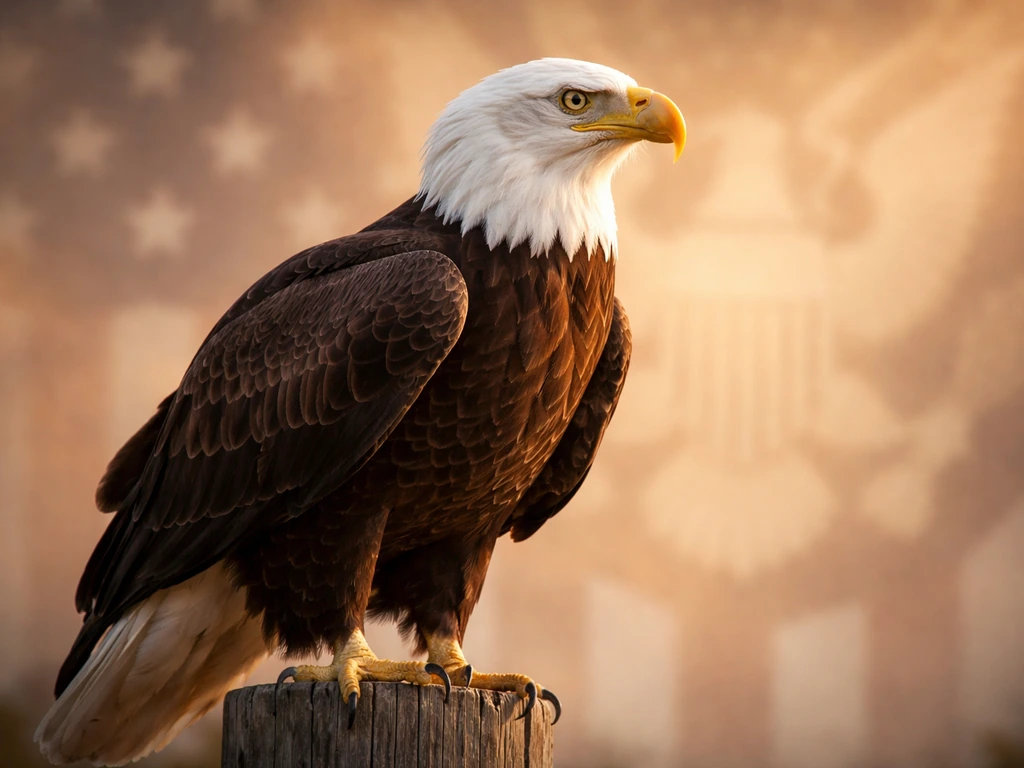
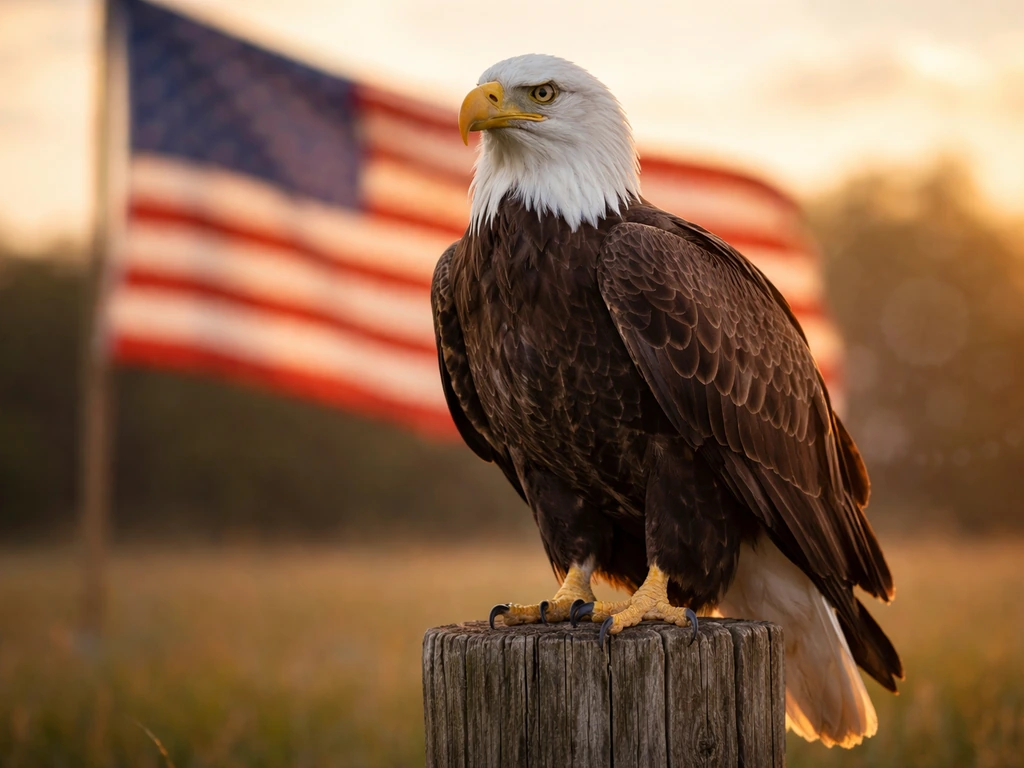
The bald eagle became the official national bird of the United States on December 23, 2024. That is the date President Biden signed Public Law 118–206 into law, which added 36 U.S.C. § 306 to the federal code with one clear sentence: "The bald eagle (Haliaeetus leucocephalus) is the national bird." Before that date, the bald eagle was widely treated as the national bird by tradition and presidential proclamation, but it had never been formally written into federal statute. December 23, 2024 is when Congress made it official, in black-and-white law.
If you want to go deeper on the full legislative story, the article on when did the bald eagle become the national bird covers every step of that journey in detail. But if you just need the date and the source, December 23, 2024, Public Law 118–206, is your answer.
What "eagle" means in this context
When most people search "when did the eagle become the national bird," they are asking about the United States, and the eagle in question is specifically the bald eagle (Haliaeetus leucocephalus). It is worth being clear about this because other countries also use eagles as national symbols. Mexico, for example, uses the golden eagle on its flag and coat of arms, and the story behind why the golden eagle is the national bird of Mexico is a completely different history rooted in Aztec legend. The Philippine Eagle is another well-known national bird symbol with its own distinct background.
Public Law 118–206 even includes the scientific name in the statutory text specifically to remove any ambiguity. When U.S. law says "the national bird," it means the bald eagle, a species native only to North America. So if you are researching the U.S. national bird, every answer in this article refers to that species.
How the official designation actually happened

The bill that became Public Law 118–206 started as Senate Bill S. 4610, introduced on June 20, 2024 (a date chosen deliberately, as you will see below). Congress.gov lists S. 4610 (118th Congress) as “A bill to amend title 36, United States Code, to designate the bald eagle as the national bird.”. Here is how it moved through Congress:
- June 20, 2024: S. 4610 introduced in the Senate.
- July 29, 2024: The Senate passed the bill.
- December 16, 2024: The House of Representatives passed the bill.
- December 23, 2024: The bill was presented to and signed by the President, becoming Public Law 118–206.
The law amends Title 36 of the United States Code, which is the section of federal law that covers patriotic and national observances. Adding the bald eagle there puts it in permanent legal company with the national anthem, the national motto, and the national flag. Before this law existed, there was no single statute a person could point to that formally named the bald eagle the national bird. That gap is now closed.
Why the bald eagle was chosen
Public Law 118–206 includes a "Findings" section that lays out Congress's reasoning directly. The core argument is that the bald eagle has represented the United States for over 240 years and is woven into virtually every layer of American civic and cultural life. Specifically, Congress cited:
- The bald eagle represents independence, strength, and freedom, values the founders associated with the new nation.
- It is unique to North America, making it a fitting symbol for a country that wanted to distinguish itself from European traditions.
- It has appeared on every branch of the U.S. military's insignia and across federal agencies for generations.
- It is deeply significant to Indigenous peoples across the continent, integral to spiritual practices, ceremonies, and regalia.
- Bald eagle festivals are held in over 100 locations across the United States each year.
That combination of civic symbolism, military identity, Indigenous cultural significance, and sheer geographic uniqueness is what makes the bald eagle stand apart as a national symbol. If you want a fuller breakdown of the symbolism side of this question, the piece on why bald eagles are the national bird goes into much more depth on each of those reasons.
Why it's called the national bird of the USA
Search variants like "why is the eagle our national bird," "why is the eagle the American bird," and "why eagle is national bird of USA" all point to the same thing: the bald eagle's role as a symbol of American identity. The wording shifts a little depending on who is asking and from where, but the underlying question is always about the United States and the bald eagle specifically.
The phrase "national bird" is now the legally correct term thanks to Public Law 118–206. Before December 2024, it was common to call the bald eagle the national bird by convention, and President Reagan even used that exact phrase in a 1982 proclamation marking the bald eagle's bicentennial as a national symbol. But calling it the "national bird" in statute is new. The law made the informal formal.
It is also worth noting that the bald eagle is described as a majestic bird not just in cultural writing but in the law's own findings. The bald eagle is a majestic bird in ways that go well beyond appearance: its wingspan can reach up to 8 feet, it mates for life, and it was pulled back from the brink of extinction through federal protection before ultimately being removed from the endangered species list in 2007.
A timeline from early symbol to official national bird

The path from "widely recognized symbol" to "written into law" took over 240 years. Here are the key milestones:
| Date | Event |
|---|
| June 20, 1782 | The Continental Congress approves Charles Thomson's design for the Great Seal of the United States, which features a bald eagle at its center. This is the earliest official adoption of the bald eagle as a U.S. symbol. |
| September 15, 1789 | Congress passes an Act providing for official use of the Great Seal and designates the Secretary of State as its custodian, cementing the eagle's role in federal identity. |
| June 20, 1982 | President Reagan signs Proclamation 4893, designating June 20, 1982 as National Bald Eagle Day, noting in the proclamation that "on June 20, 1782, the bald eagle became our Nation's symbol and national bird." |
| June 20, 2024 | S. 4610 is introduced in the U.S. Senate, formally proposing to designate the bald eagle as the national bird in statute. |
| July 29, 2024 | The Senate passes S. 4610. |
| December 16, 2024 | The House of Representatives passes S. 4610. |
| December 23, 2024 | Public Law 118–206 is signed, adding 36 U.S.C. § 306 to federal code. The bald eagle is now officially and legally the national bird of the United States. |
The 1782 date is what Reagan's proclamation and Congress's own findings point to as the symbolic starting point. But the December 23, 2024 date is when it became law. Both dates matter, but they answer slightly different questions: 1782 is when the eagle became America's symbol; 2024 is when it became the national bird by statute.
The Great Seal connection
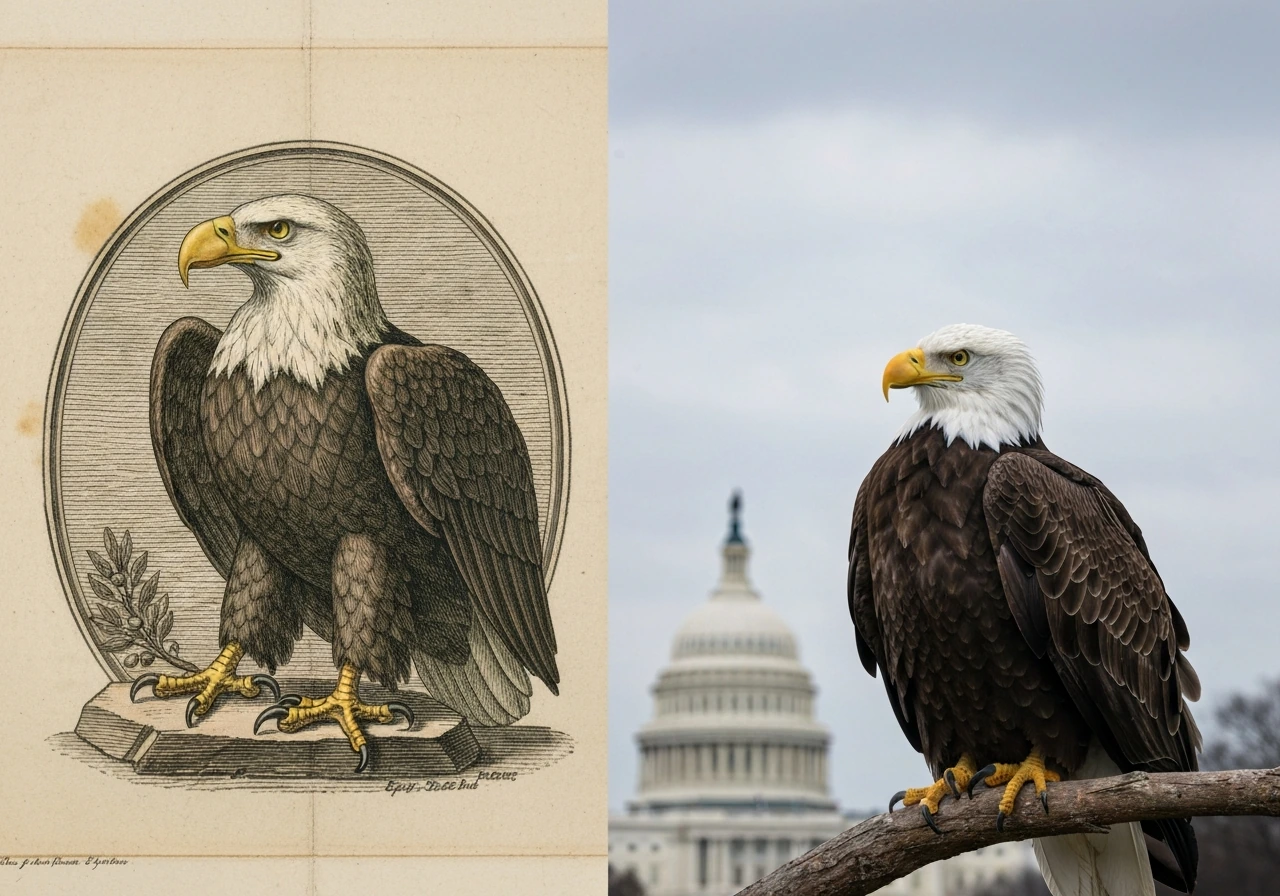
The Great Seal of the United States is the clearest thread connecting 1782 to today. Charles Thomson's design, approved by the Continental Congress on June 20, 1782, placed a bald eagle front and center on the seal's face (called the obverse). The eagle holds an olive branch in one talon and a bundle of arrows in the other, representing the nation's desire for peace but readiness for war. That image has appeared on the President's flag, the $1 bill, and the official seal of nearly every federal department ever since.
Congress's findings in Public Law 118–206 explicitly cite the June 20, 1782 Great Seal adoption as part of the rationale for the law. In other words, the 2024 legislation was not introducing a new idea. It was formalizing 242 years of practice.
The eagle as a national symbol across countries
It is genuinely interesting that eagles appear as national symbols in so many countries, because it shows how universally the bird has been associated with power and sovereignty. The bald eagle's story in the U.S. is unique because of its North American exclusivity, but other nations have built equally rich traditions around their own eagle species. The story behind why the Philippine Eagle is the national bird of the Philippines, for instance, illustrates how a country can choose a bird that represents not just power but also environmental stewardship and national pride in biodiversity.
Each country's eagle story is shaped by its own history, geography, and values. In the U.S. case, the bald eagle's selection was tied directly to the founding generation's desire for a symbol that was distinctly American, native to the land, and visually powerful enough to carry the weight of a new nation's identity.
Where to verify this for yourself
If you need a primary source for any of this, the authoritative documents are straightforward to find. Public Law 118–206 is available as a PDF through the official U.S. Government Publishing Office (GovInfo). The bill's full legislative history, including every vote date, is on Congress.gov under S. 4610 of the 118th Congress. The Great Seal's original 1782 design is documented by the National Archives as a milestone document in U.S. history. All three sources are free and publicly accessible.
For the purposes of any research, school project, or just settling a debate, the short answer is this: the bald eagle became the official national bird of the United States on December 23, 2024, through Public Law 118–206, codified at 36 U.S.C. § 306. Everything before that date, including the 1782 Great Seal adoption and decades of proclamations and tradition, was the long buildup to that moment.