The Philippine eagle became the national bird of the Philippines because it is the only large apex predator found exclusively in Philippine forests, and its strength, rarity, and freedom embody what Filipinos see in themselves as a people. President Fidel Ramos made it official on July 4, 1995, through Proclamation No. 615, which spelled out the reasons in plain terms: the eagle is a natural treasure found nowhere else on Earth, a flagship species for Philippine wildlife conservation, and a living symbol of the Filipino spirit.
Why the Philippine Eagle Is Our National Bird and What It Symbolizes

Marcus Chen
15 May 2026
What the proclamation actually says
Proclamation No. 615 is the foundational document here, and it is worth quoting directly because the government was unusually specific about its reasoning. The proclamation states that the Philippine eagle exemplifies the Filipino people through its "uniqueness, strength, power, and love for freedom." It also describes the bird as the "best biological indicator of the quality of our forest ecosystems" and a flagship species for conserving Philippine biodiversity. On top of that, the proclamation notes the eagle's "immense ecological, aesthetic, educational, historical, recreational and scientific value" to the nation.
That is a lot of reasons packed into one presidential declaration, but the core logic is simple: the bird is rare, it is powerful, it lives only in the Philippines, and it mirrors the qualities the country wants to project as a national identity. If you are writing a school report, those four points from Proclamation No. 615 are your backbone.
What the eagle symbolizes for Filipinos
The symbolism here runs on two tracks: personal identity and ecological pride. On the identity side, Filipinos connect with the eagle's reputation for freedom and fierce independence. A bird that rules the forest canopy, answers to no predator, and exists nowhere else in the world maps naturally onto a sense of national uniqueness. The proclamation's phrase "love for freedom" resonates particularly strongly for a country that spent centuries under colonial rule.
On the ecological side, the Philippine eagle is a keystone species sitting at the very top of the forest food chain. Its health tells you something real about the condition of the forests below it. Choosing this bird as a national symbol is also, implicitly, a statement about the value of Philippine rainforests. The eagle cannot survive without those forests, so protecting one means protecting the other. That ecological connection gives the symbolism a practical dimension that goes beyond flags and logos.
How the selection actually happened
In the Philippines, national symbols are typically declared through executive proclamations or legislation, rather than through public votes or referendums. Proclamation No. 615, signed July 4, 1995, is the legal instrument that gave the Philippine eagle its official status. Before that date, the bird had already been building a legal and cultural profile for decades.
The groundwork started earlier. Republic Act No. 6147 had already declared the eagle a protected bird and funded studies on its habitat and food requirements. Then in 1978, President Ferdinand Marcos signed Proclamation No. 1732, which officially changed the bird's English name from "Monkey-eating Eagle" to "Philippine Eagle." The proclamation explained that the old name "denigrates its qualities" and that the new name better reflects the country's pride in the species, since the bird "can be found only in the Philippines." So by the time Ramos signed the national bird proclamation in 1995, the country had already spent nearly two decades elevating this bird's status through law.
This pattern, where national symbols are elevated gradually through protective legislation before receiving a final official declaration, is not unique to the Philippines. You see a similar arc with other countries' national birds, including the long institutional history behind the bald eagle's status in the United States. The bald eagle became the national bird of the United States through a formal selection in the nineteenth century, and most histories point to 1782 as the key year when did the bald eagle become the national bird.
Species facts that make the choice meaningful
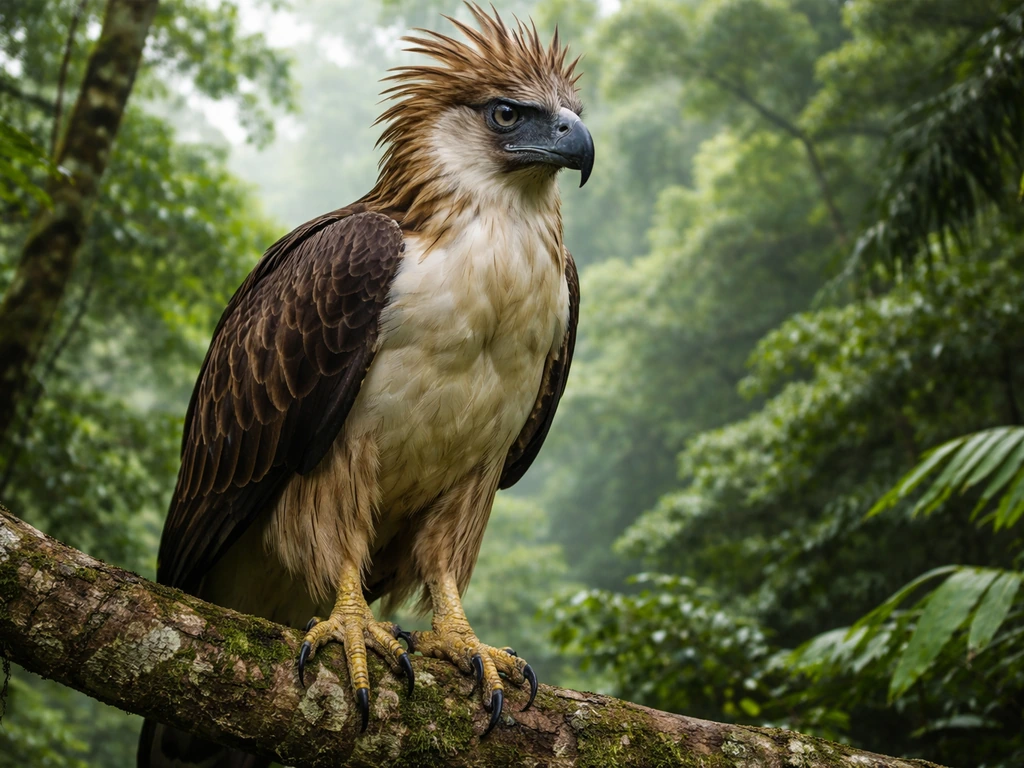
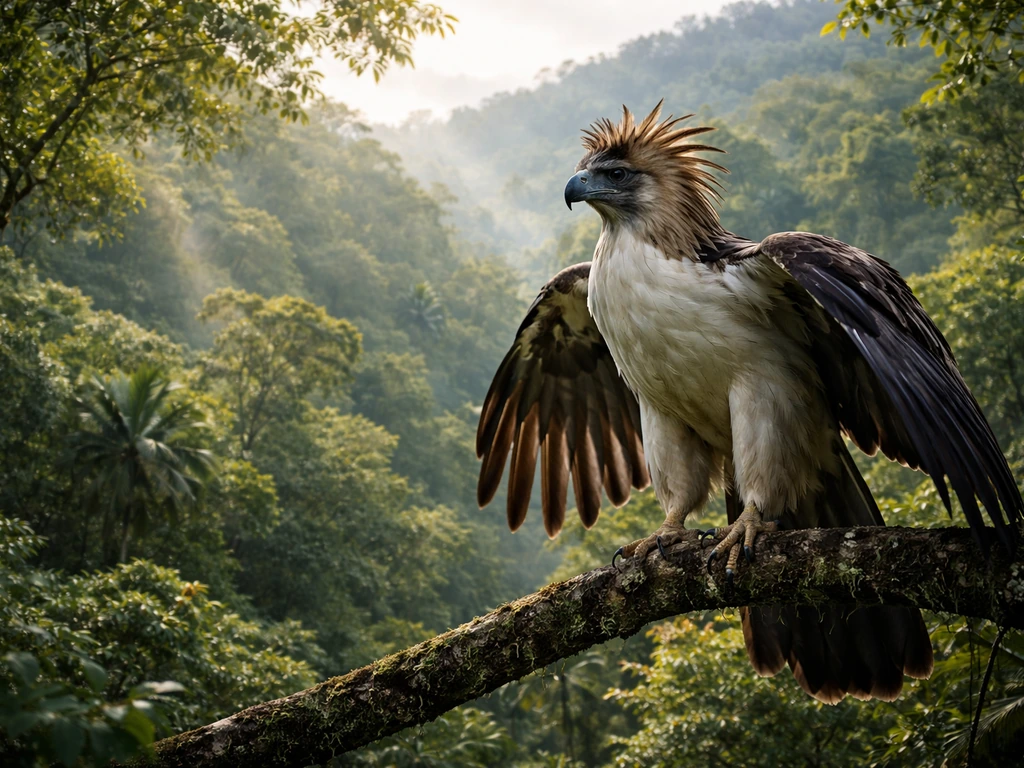
The Philippine eagle (Pithecophaga jefferyi) is genuinely one of the most impressive birds of prey on the planet. At roughly 1 meter tall with a wingspan of about 2 meters and a weight of up to 8.2 kilograms, it is among the largest eagles in the world. It is also the largest forest raptor in the Philippines by a significant margin. Its diet consists mainly of flying lemurs, along with forest mammals, reptiles, and birds, placing it firmly at the top of its ecosystem.
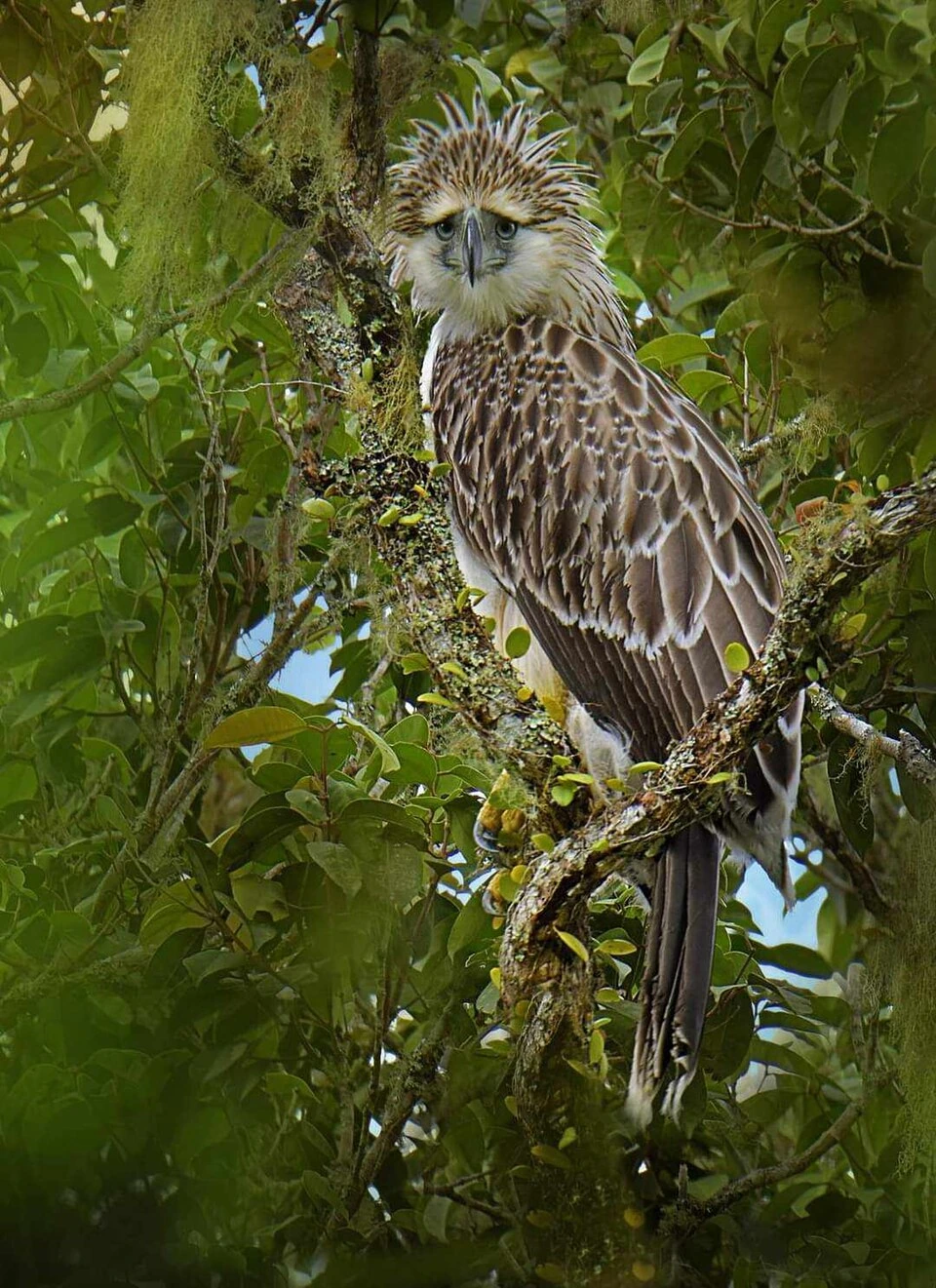
The eagle is endemic to just four Philippine islands: Luzon, Mindanao, Samar, and Leyte. Mindanao supports the largest portion of the remaining population. Its habitat is old-growth lowland and montane rainforest, including areas in the Sierra Madre and Cordillera ranges in Luzon. This tight geographic restriction is exactly why endemism plays such a central role in the symbolism: you cannot find this bird anywhere else on Earth.
The conservation picture is serious. The IUCN has listed the Philippine eagle as Critically Endangered since 1994, meaning it faces an extremely high risk of extinction in the wild. The IUCN Red List explains that Red List categories and criteria are applied using an blank" rel="noopener noreferrer">objective risk-assessment process, which helps students justify how a Critically Endangered (CR) status is determined. The primary threats are illegal logging, habitat loss, and hunting. The Philippine Eagle Foundation also highlights blank" rel="noopener noreferrer">illegal logging and habitat loss as key human-driven threats to the species. That critically endangered status actually reinforces the symbolism in a sobering way: protecting the national bird and protecting Philippine forests are the same fight.
Why this bird and not another
The Philippines has no shortage of bird diversity, so it is fair to ask why the Philippine eagle beat out other candidates. A few things set it apart decisively.
| Factor | Philippine Eagle | Other Philippine Birds |
|---|---|---|
| Endemism | Found only in the Philippines | Many species are shared with neighboring countries |
| Size and visibility | Largest forest raptor in the country, about 1 meter tall | Most native birds are significantly smaller |
| Ecological role | Apex predator and keystone species in the forest ecosystem | Most species occupy lower trophic levels |
| Conservation status | Critically Endangered (IUCN) | Varies; many are not at immediate extinction risk |
| Cultural resonance | Officially linked to freedom, strength, and national uniqueness by presidential proclamation | Not connected to a formal national narrative in the same way |
No other Philippine bird combines all of these qualities: exclusive endemism, apex ecological status, physical impressiveness, and a documented history of legal protection and national pride. The Proclamation was not picking a pretty bird for a logo. It was anchoring the national identity to the most powerful and irreplaceable creature in the country's forests.
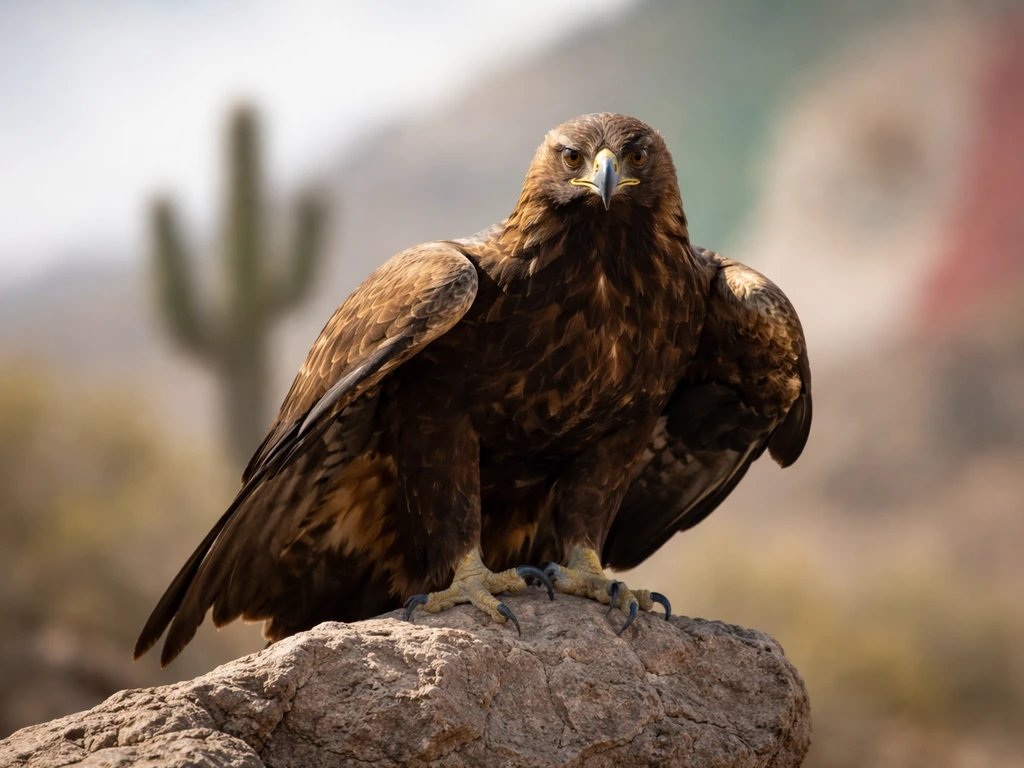
This logic is actually not so different from why countries like Mexico chose the golden eagle or why the United States landed on the bald eagle. The bald eagle is a majestic bird, and it is similarly used to represent national identity in the United States. The same kind of reasoning explains why is the golden eagle the national bird of Mexico. The bald eagle, for example, is the national bird of the United States, and its long association with American identity is often explained by its symbolism and history. Apex raptors carry natural weight as national symbols because they project power, freedom, and dominance without needing much explanation. The Philippine eagle takes that template and adds a layer of exclusivity that those other eagles cannot claim: it literally exists nowhere else.
Key talking points for school reports and presentations
If you need to write a paragraph, give a speech, or answer an exam question about this topic, here are the most useful points to hit, in order of importance.
- The legal source: Proclamation No. 615, signed by President Fidel Ramos on July 4, 1995, officially declared the Philippine eagle the national bird.
- The core reason: The eagle is endemic to the Philippines (found only on Luzon, Mindanao, Samar, and Leyte) and is described in the proclamation as a 'natural treasure found only in the Philippines' and a source of national pride.
- The symbolic reason: Proclamation No. 615 states the eagle's 'uniqueness, strength, power, and love for freedom' exemplifies the Filipino people.
- The ecological reason: The eagle is the best biological indicator of Philippine forest health and a flagship species for biodiversity conservation.
- The conservation urgency: The bird has been Critically Endangered on the IUCN Red List since 1994, making its protection a matter of genuine national priority.
- The name history: Its earlier name 'Monkey-eating Eagle' was officially replaced by 'Philippine Eagle' through Proclamation No. 1732 in 1978, nearly two decades before it became the national bird.
- The species basics: About 1 meter tall, roughly 2-meter wingspan, up to 8.2 kg, and the largest forest raptor in the country.
For citation purposes, Proclamation No. 615 is available through the Supreme Court E-Library and Lawphil, both of which host the official text. The National Commission for Culture and the Arts (NCCA) also documents the eagle's national symbol status in its Philippine Fast Facts series, which is a useful secondary source for school work.
The bottom line is that the Philippine eagle was chosen because it is the most powerful, the most unique, and the most irreplaceable bird in the country. No other choice would have communicated the same combination of national exclusivity, ecological importance, and symbolic strength. That is a defensible, well-documented answer you can use with confidence.
FAQ
Is the Philippine eagle officially the national bird, or is it just a national symbol?
It is officially the national bird because its status was created by Proclamation No. 615 (signed July 4, 1995). National symbols can include unofficial cultural icons, but in this case the proclamation is the legal basis for the bird’s official name.
Why does the proclamation emphasize “biological indicator” and not just beauty or strength?
A “biological indicator” means the eagle’s health reflects the condition of the forest ecosystem it depends on. If the eagle’s population declines, it often signals broader problems like habitat degradation that affect many other species too.
Does the Philippine eagle’s “love for freedom” symbolism relate to the country’s colonial history only?
Not only. While the phrase resonates with freedom from colonial rule, it also connects to ecological freedom in a practical way (needing large, intact forest territories to hunt and breed). That means the symbolism includes both identity and conservation urgency.
What does it mean that it is endemic to only four islands, and why is that important?
Endemic to four islands (Luzon, Mindanao, Samar, and Leyte) means the species naturally occurs only in those locations. That tight range supports the “irreplaceable” idea, because the global survival of the species depends heavily on Philippine forests.
If it is critically endangered, why still use it as a national symbol instead of choosing a more common bird?
The proclamation logic links symbolism with action. A critically endangered flagship species can rally public support for habitat protection, because saving the eagle also helps protect the rainforest ecosystem it represents.
What are the most common threats mentioned for the eagle, and which ones connect directly to forestry?
The main threats are illegal logging, habitat loss, and hunting. Illegal logging and habitat loss connect directly to forestry because they reduce old-growth lowland and montane rainforest, the habitat the eagle needs to hunt and nest.
How do laws before 1995 matter for the “why” behind the national-bird choice?
Earlier protections built credibility for the species. Republic Act No. 6147 declared the eagle a protected bird and funded studies, and Proclamation No. 1732 changed its English name to reflect national pride. By 1995, the species already had a legal and cultural foundation.
Was the eagle’s name “Monkey-eating Eagle” considered offensive, or just inaccurate?
The earlier English name was framed as denigrating the bird’s qualities, meaning it carried a negative impression. The later change aimed to better reflect Philippine pride and emphasize the species exists only in the Philippines, which the article notes the proclamation highlighted.
How can I answer “why did it beat other candidates” in a short exam response?
Use the four-part backbone: exclusive endemism, apex status in the ecosystem, physical impressiveness, and a history of legal protection plus national pride. Then add one sentence tying rarity to national identity (it exists nowhere else, so it fits the idea of uniqueness).
If I am writing a paragraph, what is the best way to structure it for maximum marks?
Start with the official reason (uniqueness and apex ecological role), then explain the symbolism (freedom, independence, Filipino identity), then include the conservation link (forests must be protected to save the species). Finish with the legal timeline (protections before 1995, then Proclamation No. 615).
How should I handle the species scientific name in my writing?
You can include it once for precision (Pithecophaga jefferyi) and then rely on the common name afterward. Avoid listing multiple scientific details, since the core exam focus is why it was chosen and what it symbolizes.