The bald eagle became the official national bird of the United States on December 23, 2024, when President Biden signed Public Law 118–206 into law. That law amended Title 36 of the United States Code by adding a new section, 36 U.S.C. § 306, which explicitly names "the bald eagle (Haliaeetus leucocephalus)" as the national bird. So if you want the exact date with a primary-source citation, that is the one to use.
When Did the Bald Eagle Become the National Bird?

Marcus Chen
2 Apr 2026
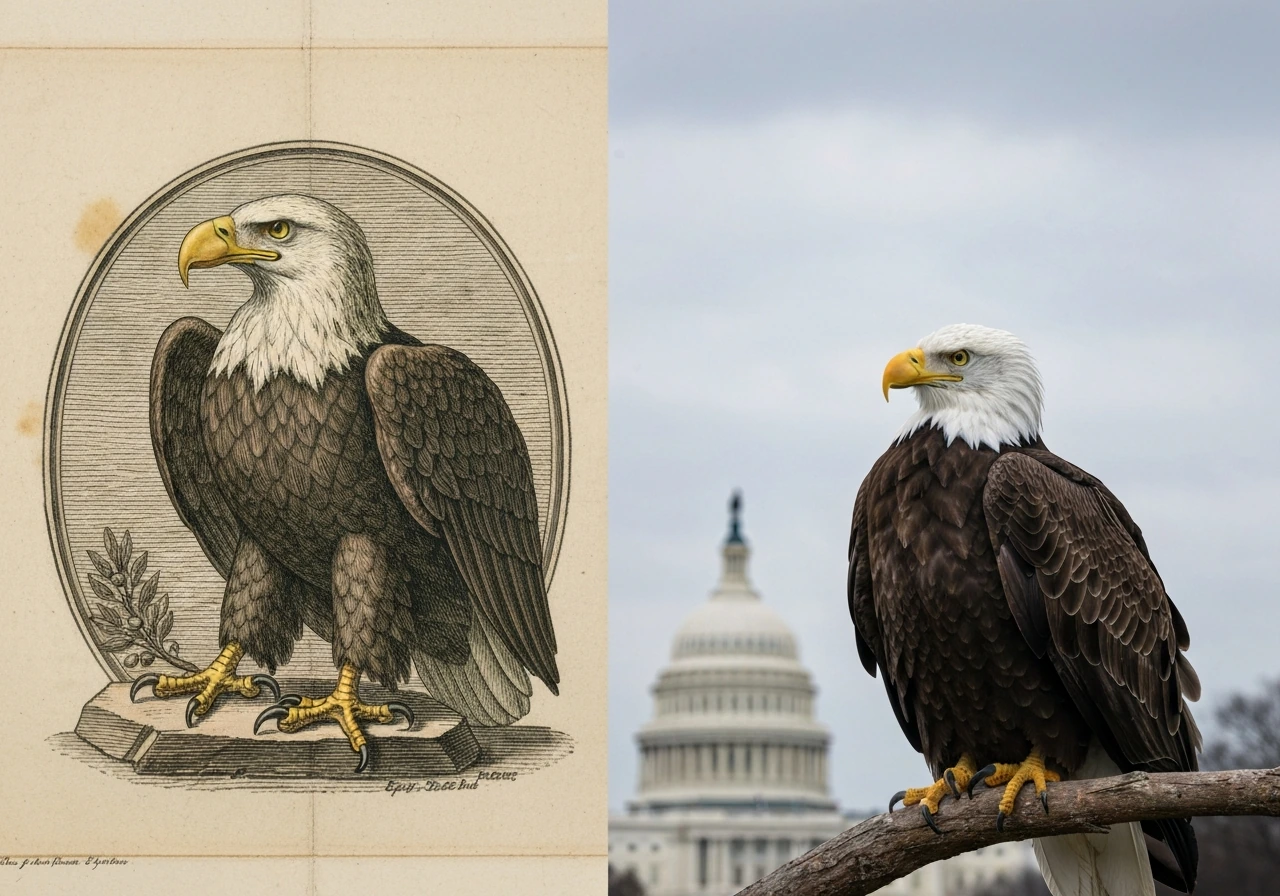
Here is the part that surprises most people: the bald eagle had been a powerful national symbol for well over two centuries before this law existed. It appeared on the Great Seal starting in 1782, on currency, military insignia, and federal buildings. But none of that made it the "national bird" in a formal, codified sense. That gap between symbolic tradition and legal designation is worth understanding before you dig any deeper.
The official adoption date and a quick timeline
The cleanest way to see this is as two separate milestones separated by 242 years.
| Date | Event | What it meant |
|---|---|---|
| June 20, 1782 | Continental Congress officially adopts the Great Seal of the United States, with the bald eagle as its centerpiece | The eagle becomes a national symbol, but no "national bird" designation exists yet |
| December 23, 2024 | Public Law 118–206 is signed, adding 36 U.S.C. § 306 to the U.S. Code | The bald eagle is legally and formally designated the national bird of the United States |
As of today, April 2, 2026, the bald eagle has held its official national bird status for just over 15 months. It held its unofficial, symbolic status for 242 years before that. Both dates matter depending on what you are trying to answer, so keep both handy.
Who actually made the decision
The 2024 designation was a legislative act, meaning Congress did the work and the President signed it. The bill, S.4610, passed both chambers and was enacted as Public Law 118–206. There is no single famous person to credit here, it was a collective congressional decision, though the Senate sponsors of S.4610 drove it across the finish line.
The 1782 story is a little more colorful. After three separate committees worked on it over six years, Secretary of the Continental Congress Charles Thomson submitted a revised design that placed the bald eagle front and center. Thomson's design, combined with input from Philadelphia artist William Barton, became the basis of what Congress approved on June 20, 1782. GovInfo’s Great Seal feature also notes that the Great Seal was officially adopted by Congress on June 20, 1782 Congress approved on June 20, 1782. So Thomson is the person most directly credited with putting the eagle on the Great Seal, even though no single person "chose" it entirely alone.
Benjamin Franklin is often cited (usually incorrectly) as having opposed the eagle in favor of the turkey. Franklin did write a private letter making that argument, but it had no effect on the official process. The Continental Congress adopted the eagle design regardless, and Franklin was not involved in the final selection committee.
Why the bald eagle was chosen
The symbolism was deliberate and specific. The bald eagle was chosen because it is a species found only in North America, which made it a uniquely American symbol in a way that a lion or an eagle common to European heraldry was not. That exclusivity mattered enormously to a new country trying to establish a distinct national identity separate from European powers.
Beyond geography, the eagle carried long-standing associations with strength, freedom, and longevity. Its ability to soar at high altitudes, its sharp vision, and its commanding presence made it a natural fit for a nation that wanted to project power and independence. The bald eagle is a majestic bird by any measure, and the founders leaned into exactly that quality when selecting it as the face of the Great Seal.
The 2024 legislation reinforced these same ideas. Congress included historical findings in S.4610 explicitly connecting the eagle's symbolism to American values of freedom and resilience, which is why the bill moved with broad bipartisan support. If you want a deeper look at the reasoning behind the choice, why bald eagles are the national bird covers that symbolism in much more detail.
How the selection process actually unfolded
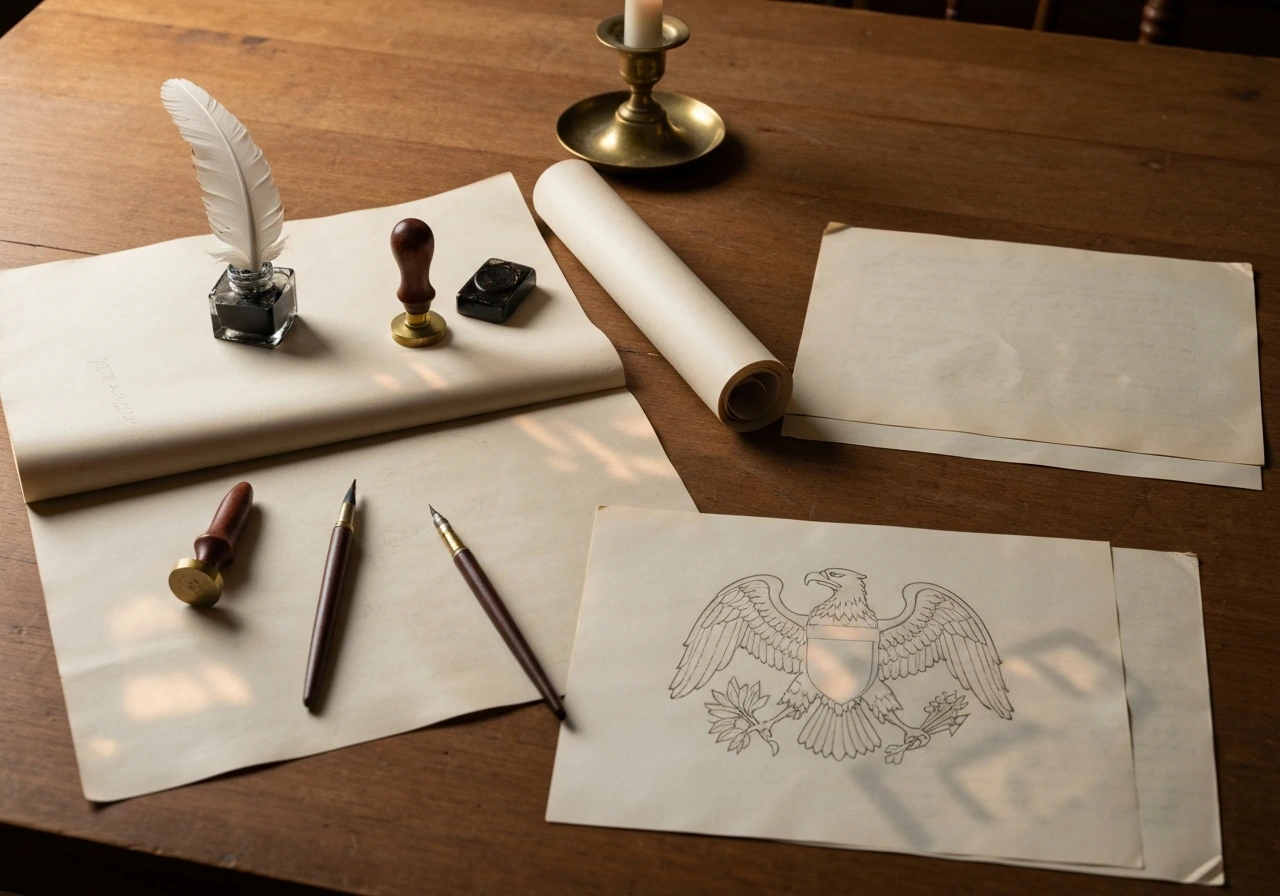
The 1782 Great Seal process
- The Continental Congress appointed a first committee on July 4, 1776 (the same day as the Declaration of Independence) to design a national seal. That committee, which included Benjamin Franklin, John Adams, and Thomas Jefferson, produced a design that went nowhere.
- A second committee was appointed in 1780. Its design also stalled.
- A third committee was appointed in 1782. William Barton, a Philadelphia heraldry expert, contributed a new design featuring an eagle.
- Charles Thomson, the Secretary of Congress, revised Barton's design, placing a distinctive American bald eagle (rather than a generic heraldic eagle) at the center.
- On June 20, 1782, the Continental Congress officially adopted the seal based on Thomson's submitted design.
The 2024 legislative process
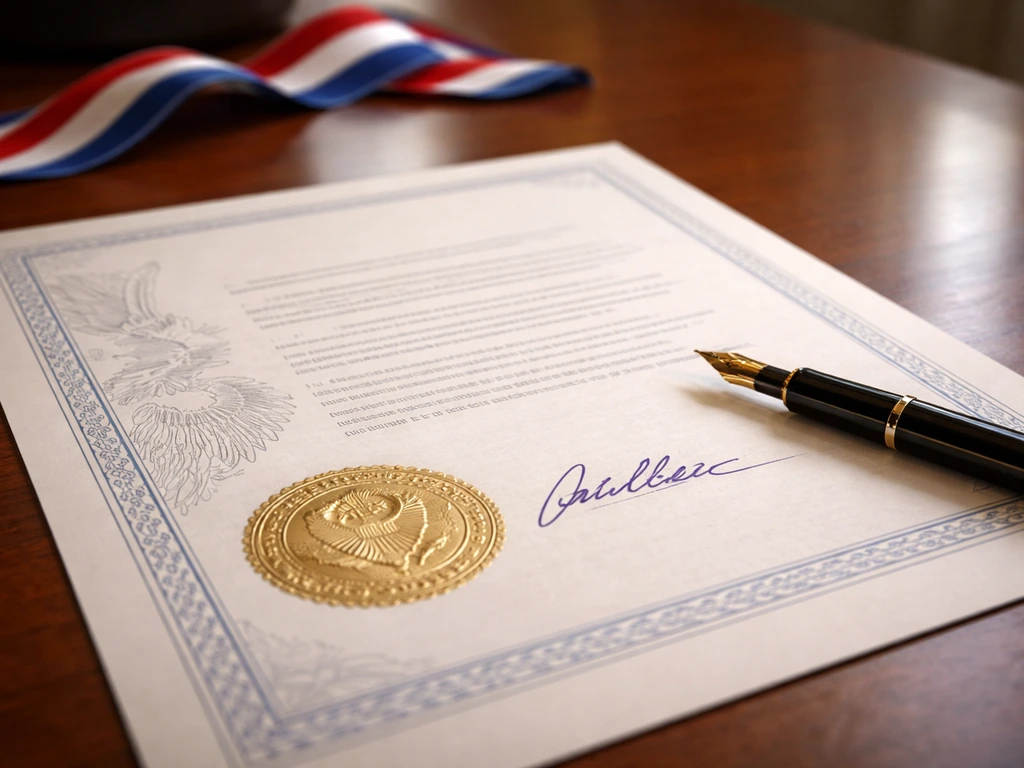
- Senator Jeff Merkley introduced S.4610 in the 118th Congress.
- The bill passed the Senate and then the House.
- President Biden signed it into law on December 23, 2024, as Public Law 118–206.
- The law amended Title 36, U.S. Code, to add Section 306, formally codifying the bald eagle as the national bird.
What "officially" means here, and how this fits with other national symbols
The U.S. has several official national symbols codified in Title 36 of the U.S. Code: the national anthem ("The Star-Spangled Banner"), the national motto ("In God We Trust"), the national flower (the rose, designated in 1986), and now the national bird. Before December 2024, the bald eagle appeared nowhere in that list as "national bird," even though it had been on the Great Seal for 242 years. That distinction between cultural symbol and legal designation is what the 2024 law resolved.
It is also worth noting that the U.S. is not alone in using an eagle as a national emblem. When the eagle became the national bird in other countries follows a very different path in each case, shaped by local history and culture. Mexico's national bird story, for instance, is rooted in Aztec mythology and looks nothing like the American legislative process. If you are curious about that comparison, the story of why the golden eagle is the national bird of Mexico is a fascinating contrast to the U.S. approach.
Not every country uses an eagle, either. Some of the most striking national bird choices around the world reflect entirely unique cultural values. The Philippine eagle's designation as a national bird is a good example of a country choosing based on ecological pride and conservation messaging rather than military symbolism.
Where to verify this with primary sources
If you need to cite this for a school project, a trivia night, or anything else that requires a primary source, here is exactly where to look. The official text of Public Law 118–206 is available on Congress.gov by searching for S.4610 or the public law number. The full text of 36 U.S.C. § 306 is findable on the U.S. Code database at uscode.house.gov. For the 1782 Great Seal history, the National Archives maintains primary documents on the Great Seal's original design and adoption. GovInfo also has a clear feature article on the bald eagle that explains both the 1782 and 2024 milestones in plain language.
The short version for anyone in a hurry: the bald eagle has been a national symbol since June 20, 1782, but it became the official, legally designated national bird of the United States on December 23, 2024, through an act of Congress. A Reddit AskAnAmerican discussion snippet cites the Great Seal date and notes “June 20, 1782” in connection with the “national bird” idea. Both dates are correct depending on the question being asked, and now you know which one to use and why.
FAQ
Does the bald eagle’s Great Seal appearance in 1782 mean it became the national bird then?
No, 1782 reflects official use as a national symbol, not a codified “national bird” status. The formal legal designation as “the national bird” did not occur until the December 23, 2024 amendment adding 36 U.S.C. § 306.
What exact wording does the law use for the national bird designation?
It specifies “the bald eagle (Haliaeetus leucocephalus).” If you are quoting for an assignment, use that scientific name as shown in the statute rather than just “bald eagle.”
If I need one date for a worksheet, which should I write, 1782 or 2024?
Use December 23, 2024 if the question asks when it “became the national bird” in a legal sense. Use June 20, 1782 if the question asks when it first became a key national symbol on the Great Seal.
Was there any earlier federal law that listed a “national bird” before 2024?
Not in Title 36 as a codified national symbol category. The eagle was used on federal materials for a long time, but it was not formally placed in Title 36’s “national symbols” list as the national bird until the new section was added in 2024.
Why do some sources claim it became the national bird in the 20th century?
Those claims usually mix up unofficial tradition, repeated federal use, and various heritage recognitions with the later legal codification. Check whether the source is talking about symbolic adoption versus the statutory change that took effect on December 23, 2024.
Did Congress need to pass the bill because the eagle was already used on government seals and buildings?
Yes, because symbolic use and legal designation are different. The 2024 act specifically amended Title 36 to close the gap by naming a national bird in the U.S. Code, something symbolism alone could not do.
Is December 23, 2024 the date the law was signed, or when it took effect?
In most practical contexts, you can treat it as the effective designation date because that is when the President signed the public law that created 36 U.S.C. § 306. If you need a legal effectiveness date for a strict citation, verify the law’s effective date language in the full text.
Who are the key people to credit for the eagle’s appearance on the Great Seal?
The design process is tied most directly to Charles Thomson (revised design submitted for the seal) and also includes input associated with artist William Barton. It is not accurate to attribute the final outcome to a single individual decision.
Was Benjamin Franklin officially involved in selecting the Great Seal design?
No. While Franklin wrote a private letter arguing against the eagle, the official adoption proceeded without his participation in the final selection committee, so the letter did not determine the outcome.
Does the 2024 law change any historical or conservation protections for bald eagles?
Typically, it is about national symbolism, not wildlife regulation. For legal protection and hunting or handling rules, you would need to look at wildlife and environmental statutes and regulations, not the national-bird designation section in Title 36.
Next Article
What Is the National Bird of Zimbabwe? Symbolism and Facts
Discover Zimbabwe’s national bird, its distinctive traits, and the history and symbolism behind the emblematic choice.