
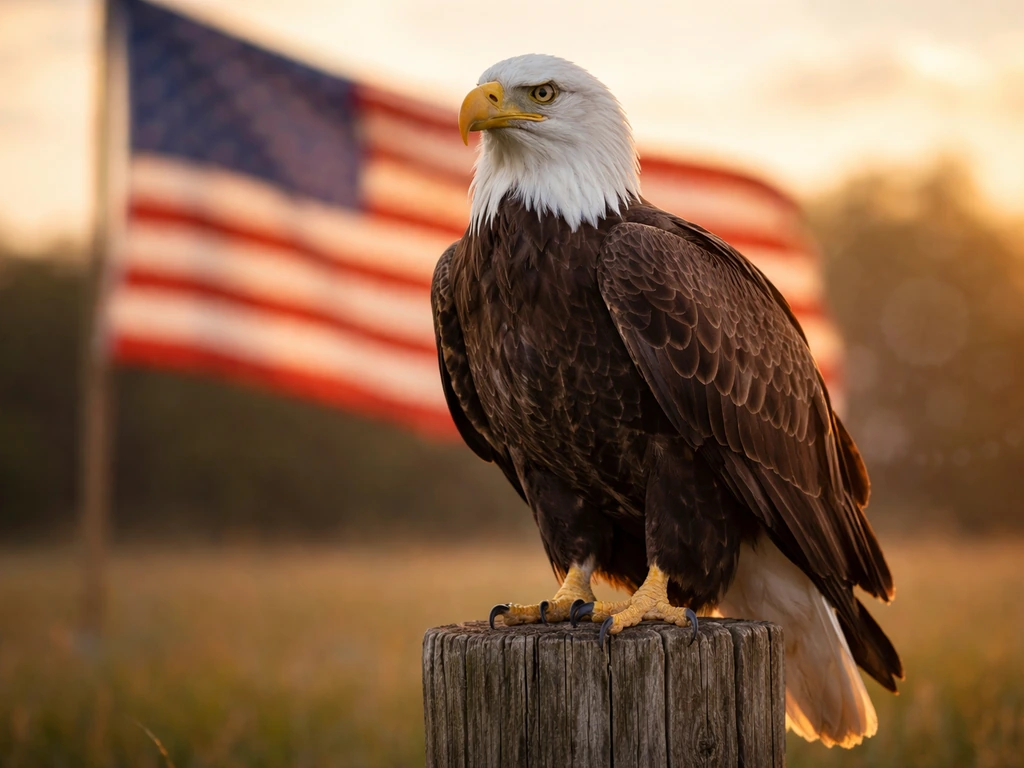
The bald eagle is America's national bird because it was seen as a uniquely American symbol of independence, strength, and freedom at a time when the new nation was defining its identity. That reasoning is now written into federal law. Public Law 118-206, signed on December 23, 2024, officially added 36 U.S.C. § 306 to the U.S. Code, which states plainly: 'The bald eagle (Haliaeetus leucocephalus) is the national bird.' If you have been searching for a definitive answer, that is it.
Why Are Bald Eagles the National Bird of America?

Marcus Chen
2 Apr 2026
What 'national bird' actually means in the U.S.
A national bird is a species that a country officially designates to represent its values, history, or natural heritage. It is a symbolic title, not a conservation classification. In the United States, the designation carries cultural weight and legal recognition, but it is separate from wildlife protection laws. The bald eagle has been wrapped in American symbolism for over 200 years, but the formal 'national bird' title in statute is surprisingly recent.
It is also worth separating the national bird label from other official roles the eagle plays. The bald eagle appears on the Great Seal of the United States, on the presidential seal, on currency, and on government insignia. Those uses are governed by different laws. The 'national bird' designation is its own distinct status, and for most of American history, it existed only as an informal tradition rather than a line in the U.S. Code.
Why the bald eagle was chosen
The core argument for the bald eagle has always been the same: it is native only to North America, it is visually striking and unmistakable, and it projects the qualities the founders wanted the country to represent. The congressional findings attached to Public Law 118-206 spell this out directly, citing that bald eagles are a historical symbol representing independence, strength, and freedom, and that they are unique to North America. The Congressional Record debate and findings for Public Law 118-206 include a “Public Law / Congressional findings” style section listing reasons such as independence, strength, and freedom and noting the bald eagle is unique to North America congressional findings attached to Public Law 118-206 spell this out directly.
That combination mattered a lot in the early republic. The new government wanted symbols that were distinctly American, not borrowed from European heraldry. A large, powerful raptor found nowhere else in the world fit that goal perfectly. the bald eagle is a majestic bird is not just a casual observation; it is the foundation of the entire symbolic argument. The bird's white head and tail, dark body, and wingspan of up to eight feet made it instantly recognizable and visually commanding.
Compare that to other countries that have chosen eagles as national emblems. why is the golden eagle the national bird of Mexico comes down to very different cultural roots, tied to an Aztec legend, which shows how the same family of birds can carry completely different meanings depending on the national story behind the choice. The bald eagle's selection was rooted in Enlightenment ideals and the specific moment of American independence, not mythology.
The historical timeline: earlier proposals and how we got here
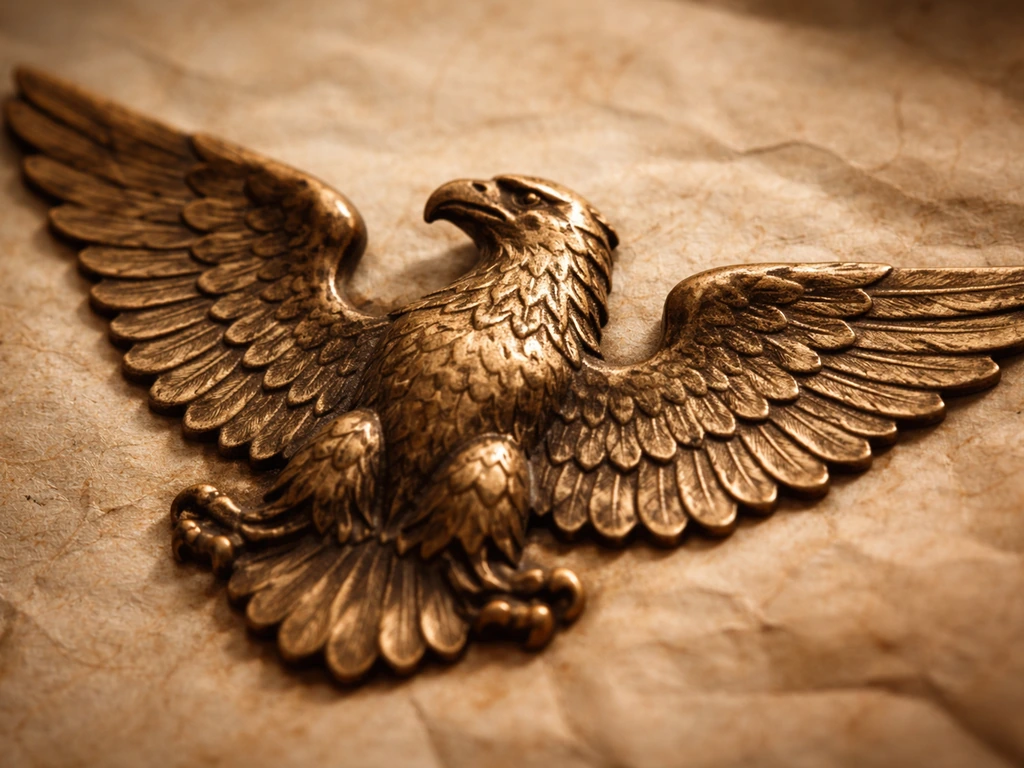
The bald eagle's connection to official American symbolism goes back to June 20, 1782, when it was adopted as the centerpiece of the Great Seal's coat of arms. That is often where the confusion about its status starts. Many people assume that because it was on the Great Seal in 1782, it was already the national bird. It was not. Being on the Great Seal made it a national symbol, but not the nationally designated bird in a statutory sense.
For a detailed look at how that long gap unfolded, when did the bald eagle become the national bird walks through the full chronology. The short version: the bird held unofficial status as a national symbol for over two centuries before lawmakers formalized the designation.
The famous dissenter in the early debate was Benjamin Franklin, who reportedly preferred the turkey as a more honest symbol of American character, viewing the eagle as a bird of poor moral character that steals food from other birds. His opinion, expressed in a private letter in 1784, was never a formal proposal and did not come close to changing the outcome. It has, however, become one of the most repeated stories in American natural history.
| Year | Event | What it meant |
|---|---|---|
| 1782 | Bald eagle adopted for the Great Seal of the United States | National symbol, but no formal 'national bird' designation |
| 1940 | Bald and Golden Eagle Protection Act passed | Federal legal protection, not a national bird title |
| 2024 (Dec. 23) | Public Law 118-206 signed | First statutory designation as the national bird under 36 U.S.C. § 306 |
Official status: what the law actually says
The current legal basis is 36 U.S.C. § 306, added by Public Law 118-206 in December 2024. The text is brief and unambiguous: 'The bald eagle (Haliaeetus leucocephalus) is the national bird.' That is the official, codified designation you can look up on Cornell's Legal Information Institute or directly through Congress.gov.
Separate from that title, the bald eagle has been federally protected since 1940 under the Bald and Golden Eagle Protection Act (16 U.S.C. 668-668d). That law, which also covers golden eagles, prohibits taking, selling, or possessing eagles or any of their parts, including feathers, nests, and eggs, without a federal permit. Violations carry criminal penalties. This protection law is often what people actually encounter when researching eagles in a legal context, so it is worth knowing it is a distinct piece of legislation from the national bird designation.
If you are curious how the eagle designation compares to similar official adoptions in other countries, when did the eagle become the national bird covers the broader history of eagles in national bird designations across different nations, which puts the American timeline in useful perspective.
What the bald eagle symbolizes
The congressional findings in Public Law 118-206 list three core symbolic qualities: independence, strength, and freedom. Those three words essentially summarize why the bird resonated with the founders and why it continued to represent the country through wars, economic cycles, and cultural shifts.
- Independence: the bird is native only to North America, making it an exclusively American symbol with no ties to the old world
- Strength: as a large apex predator with a wingspan reaching up to eight feet, it projects physical power
- Freedom: eagles soar at high altitudes and range widely, which has long been read as a visual metaphor for liberty
Beyond those three pillars, the bald eagle also carries a conservation comeback story that adds modern meaning to the symbol. The species was listed as endangered in 1978 after DDT use collapsed reproduction rates, and it was removed from the Endangered Species list in 2007 after population recovery efforts succeeded. That arc, from near-extinction back to abundance, has become part of the bird's symbolic narrative: resilience alongside freedom.
It is interesting to compare this to how other countries build symbolism into their national bird choices. For example, why Philippine eagle is our national bird involves a very similar combination of national pride, uniqueness to the country's geography, and the bird's commanding physical presence, even though the cultural context is entirely different.
Clearing up the common misconceptions
A few beliefs about the bald eagle's status come up constantly, and most of them are either half-true or completely off. Here is a quick breakdown.
"It was always the national bird"
Not in law. The bald eagle was informally treated as America's bird for over 200 years because of its role on the Great Seal, but the statutory designation did not exist until December 2024. GovInfo's own documentation notes that it was not until Public Law 118-206 was enacted that the eagle was officially designated as the national bird. So if someone tells you it has 'always been' the national bird, they are describing cultural tradition, not legal fact.
"Benjamin Franklin wanted the turkey instead"
Franklin did express a preference for the turkey in a private 1784 letter to his daughter, but he was commenting on the eagle design on a Society of the Cincinnati badge, not formally lobbying against the Great Seal choice. The Great Seal had already been adopted in 1782. Franklin never made a public or official proposal to substitute the turkey, and the story has been significantly exaggerated over time.
"The 1940 Protection Act made it the national bird"
The Bald and Golden Eagle Protection Act gave the bald eagle federal legal protection, but it did not designate it as the national bird. Those are two different legal concepts. Protection under 16 U.S.C. § 668 is about conservation and criminal penalties. The national bird title under 36 U.S.C. § 306 is about symbolic designation. Both matter, but they are not the same thing.
"It was already the national bird before 2024"
Many Americans believed this, reasonably, because the eagle appeared on every government seal and official document for centuries. But belief and statute are different things. The formal designation is genuinely new. That does not diminish the eagle's long history as America's de facto symbol; it just means the paperwork caught up with the tradition in December 2024.
Where to verify this yourself
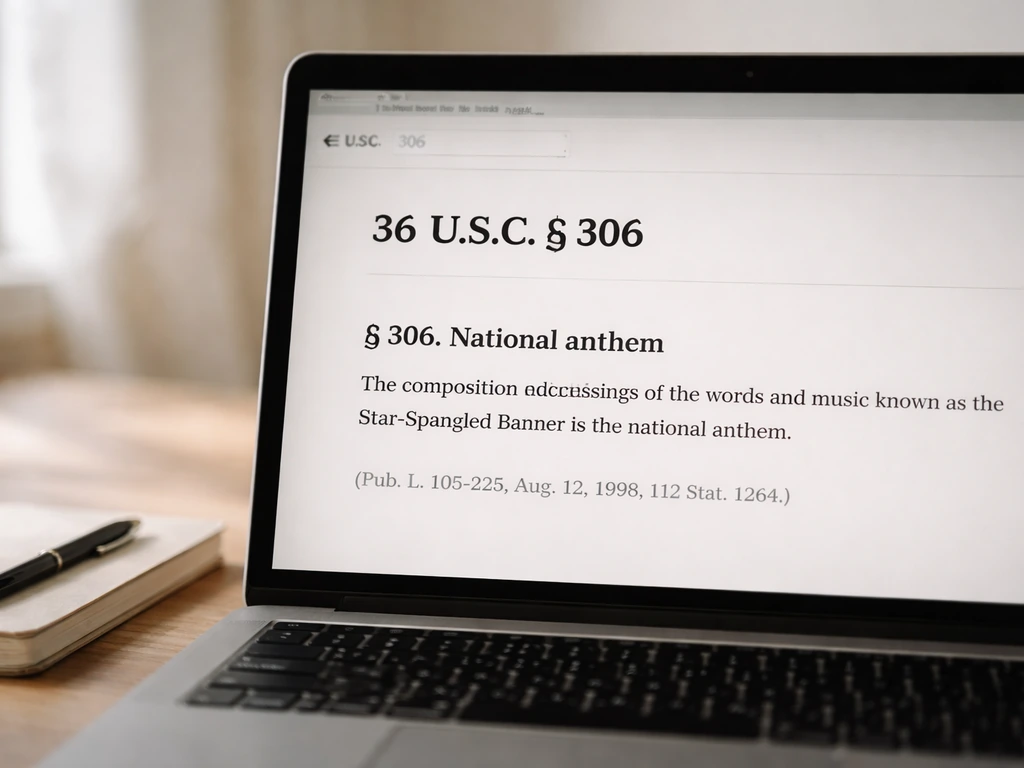
If you want to confirm any of this directly, the most reliable sources are straightforward to access. Look up 36 U.S.C. § 306 on the Cornell Legal Information Institute (law.cornell.edu) or on the official U.S. Code at uscode.house.gov. You can read the full text of Public Law 118-206, including its Findings and Designation sections, on Congress.gov or through GovInfo (govinfo.gov). For the protection law, 16 U.S.C. § 668 is also on Cornell LII, and the U.S. Fish and Wildlife Service has a plain-language summary of the Bald and Golden Eagle Protection Act on its website.
For historical background on the Great Seal's adoption in 1782, the State Department's official history page is the primary government source. For a deeper dive into how the national bird concept applies across different countries and cultures, this site's reference pages on individual national birds give useful context for how and why nations choose these emblems, and what they say about national identity.
FAQ
Does the “national bird” law give bald eagles more protection than other eagles?
A national bird designation is a symbolic and statutory label, but it does not automatically change how the species is protected. Bald eagles are primarily regulated through the Bald and Golden Eagle Protection Act (16 U.S.C. 668-668d), and that protection applies regardless of the “national bird” status.
If bald eagles are the national bird, can I legally possess feathers or parts?
No. The national bird designation does not mean every state or agency can freely use the eagle without rules. Federal protections, permitting requirements, and restrictions on possession of parts (such as feathers) come from the eagle protection statute, not from the national bird text.
Why do some people say the bald eagle has always been the national bird?
The eagle was used on the Great Seal beginning in 1782, but that is not the same as statutory designation. The federal “national bird” title is codified only with 36 U.S.C. § 306, added in December 2024.
Where can I check the official legal wording if I want to verify it myself?
The designation is written into federal statute (36 U.S.C. § 306), which controls the official answer. If you see conflicting claims, they are usually mixing up the Great Seal’s symbolism, the 200-year informal tradition, or confusion with other eagle laws.
Is the bald eagle on the Great Seal legally the same thing as being the national bird?
Not exactly. The Great Seal coat of arms and many government uses are governed by separate rules or legal authorities, while the national bird designation is its own status under 36 U.S.C. § 306. You can think of it as “symbolic title” versus “broader emblem usage.”
Did the bald eagle become the national bird because it recovered from being endangered?
The national bird designation is one thing, and conservation status is another. The species’ endangered and recovery history (for example, DDT-related decline and later delisting) explains modern meaning, but it does not define the statutory reason for choosing the symbol.
If I want to use the bald eagle for a school or commercial project, what legal risk should I watch for?
Yes, within limits. Even if the eagle’s national bird label is broadly recognized, specific activities like taking, transporting, or displaying eagle parts can trigger criminal penalties unless you have the required federal authorization or meet a permitted exception.
Was Benjamin Franklin trying to replace the eagle with a turkey as the national symbol?
Franklin’s turkey preference is often repeated, but it was not a formal public plan to replace the Great Seal choice. The Great Seal centerpiece was already adopted in 1782, and the later turkey comment did not change the official outcome.
Next Articles
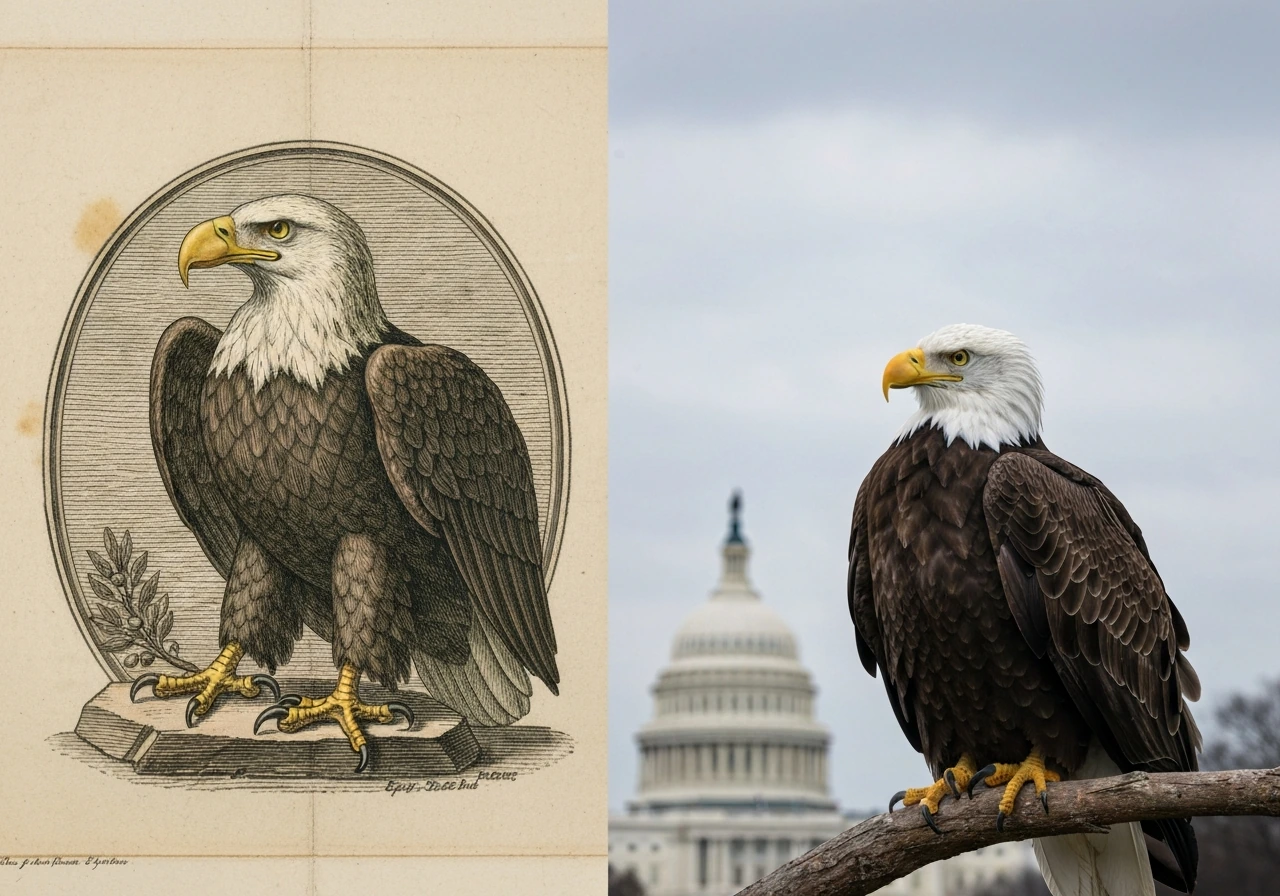
When Did the Bald Eagle Become the National Bird?
Exact adoption date of the bald eagle as US national bird, who decided it, why it was chosen, and how to verify.
What Is the National Bird of Zimbabwe? Symbolism and Facts
Discover Zimbabwe’s national bird, its distinctive traits, and the history and symbolism behind the emblematic choice.
What Is the National Bird of Botswana? Bird ID, Meaning
Answers Botswana national bird name with species ID, how to recognize it, where to spot it, and its cultural meaning