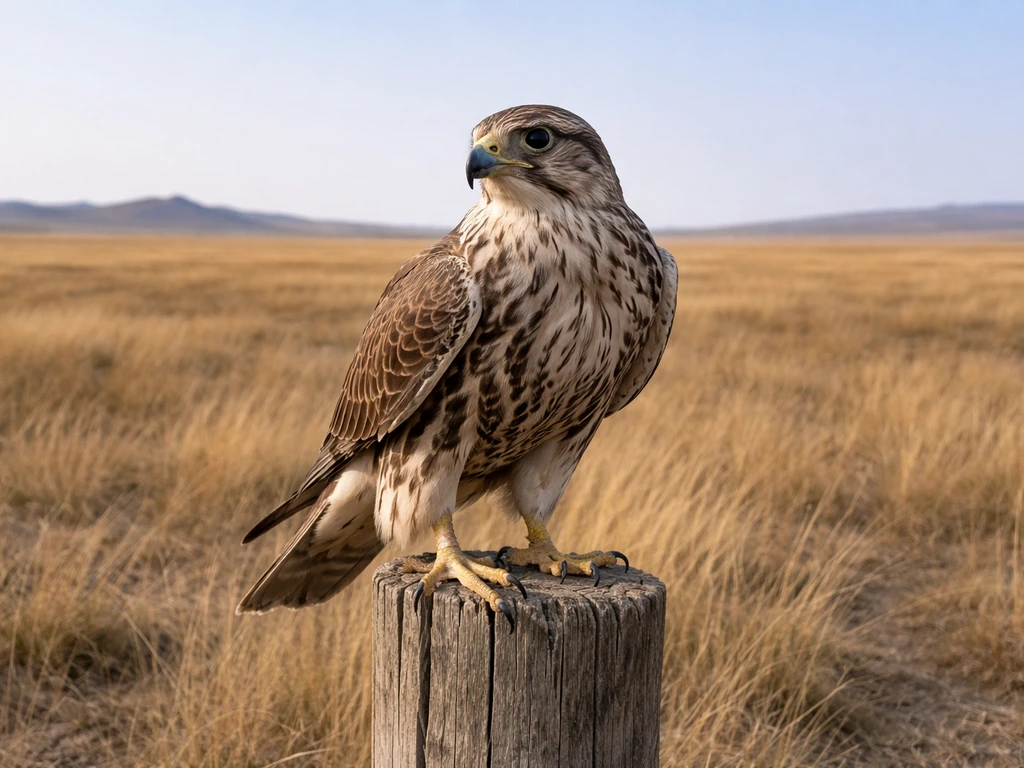
Mongolia's national bird is the saker falcon, scientific name Falco cherrug. The Mongolian government officially designated it as the national bird in 2012. The Ministry of Culture page in Mongolian identifies the national bird as “Идлэг шонхор” (Falco cherrug) and describes it as part of the national-bird selection process blank" rel="noopener noreferrer">The Mongolian government officially designated it as the national bird in 2012.. In Mongolian, it's called "Идлэг шонхор" (pronounced roughly "Idleg shonkhor"), and that's the name you'll find in official government documents and on the Ministry of Culture's website. In Mongolian, Falco cherrug is given the local name “Идлэг шонхор,” which aligns with the official common name used in Mongolia “Идлэг шонхор”.
What Is the National Bird of Mongolia? History and Facts

What 'national bird' actually means here
A national bird is a government-designated avian symbol that represents a country's identity, values, or natural heritage. It's different from a national animal (Mongolia's is the Przewalski's horse) or a national emblem. The saker falcon sits alongside other Mongolian national symbols like the national flower (the Saussurea involucrata, a mountain herb) as an official cultural emblem. The bird designation specifically honors the species' deep historical and ecological roots in Mongolian life, not just its appearance on a government seal.
It's worth knowing the distinction because you'll sometimes see the snow lion or the horse cited as symbols of Mongolia in different contexts. Those are separate categories. The saker falcon is specifically the national bird, full stop.
When Mongolia chose the saker falcon
The official designation came in 2012, made by the Government of Mongolia. The choice wasn't arbitrary or sudden. By 2012, the saker falcon was already a globally recognized species under conservation pressure, and Mongolia was home to one of the world's largest wild populations. Designating it as the national bird was partly a conservation statement and partly a formal acknowledgment of what Mongolians had known for centuries: this bird is woven into the country's identity.
Mongolia didn't follow the same path as some other countries, where a national bird emerges from colonial-era naturalist surveys or post-independence committee decisions. The saker falcon was already culturally embedded long before the 2012 formalization. The government designation essentially put official language around a relationship that had existed for over a millennium.
What the saker falcon means in Mongolian culture
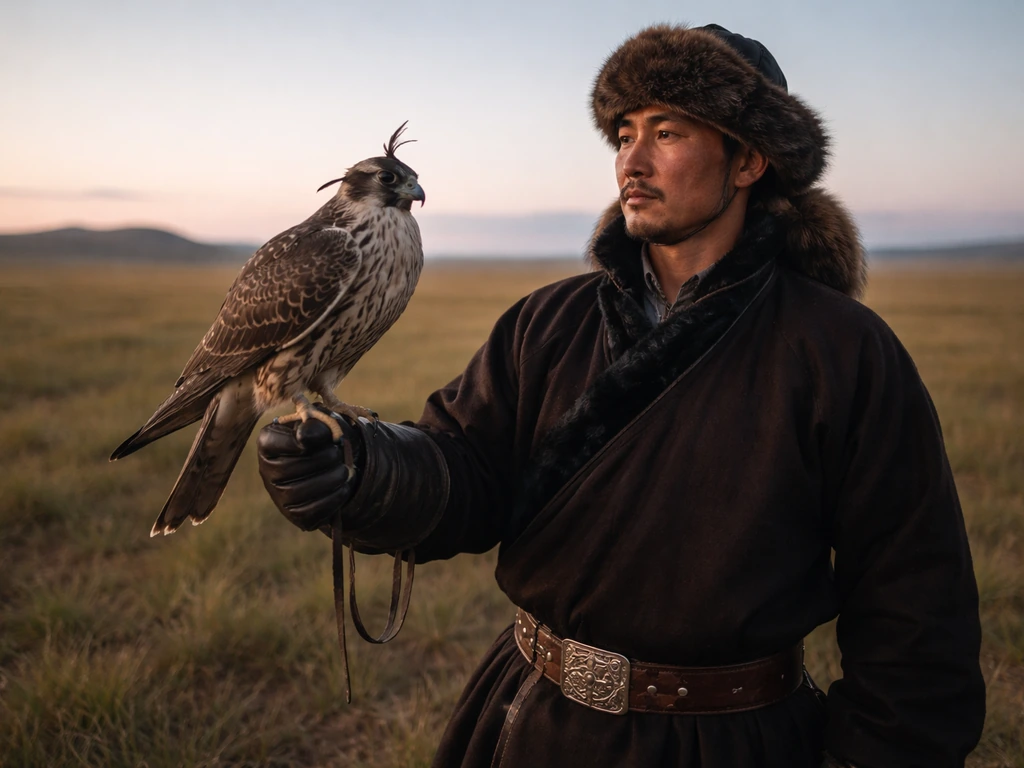
Falconry in Mongolia is one of the oldest living traditions in the world, and the saker falcon has been at its center for at least 4,000 years. Nomadic herders on the steppe have used trained sakers to hunt, a practice that UNESCO inscribed on its Intangible Cultural Heritage list. The bird isn't just a tool in that tradition; it's a partner and a status symbol. Owning and training a skilled saker falcon was historically a mark of prestige among Mongolian nobility and warriors.
Genghis Khan is said to have kept thousands of falcons, and falconry gifts were a form of diplomatic currency across Central Asia and the Middle East during the Mongol Empire era. The saker specifically was prized for its speed, power, and trainability. That historical prestige carries forward today. Mongolian eagle hunters (who primarily use golden eagles in western Mongolia) are well known internationally, but the saker falcon tradition runs just as deep across the broader steppe.
Symbolically, the saker represents freedom, speed, power, and the wide-open landscape of the Mongolian steppe. These are core values in Mongolian cultural identity, making the bird a natural fit as a national emblem.
Species facts worth knowing
If you want to recognize or study the saker falcon, here are the key facts:
| Feature | Detail |
|---|---|
| Scientific name | Falco cherrug |
| Common name | Saker falcon |
| Mongolian name | Идлэг шонхор (Idleg shonkhor) |
| Size | 47–55 cm body length; wingspan 105–129 cm |
| Weight | 730–1300 g (females larger than males) |
| Appearance | Brown upperparts, pale underparts with streaking, pale head |
| IUCN status | Endangered |
| Range in Mongolia | Across steppe and semi-desert zones; also mountain edges |
| Diet | Primarily small mammals (voles, ground squirrels) and birds |
| Nesting | Often uses old nests of other large birds on cliffs or trees |
The saker is one of the largest falcons in the world. It hunts by pursuing prey in fast, low flights across open terrain rather than the steep stoops associated with the peregrine falcon. This makes it particularly well suited to Mongolia's vast, flat steppe landscape. Mongolia holds a significant share of the global wild saker population, which is why international conservation organizations work closely with the Mongolian government on monitoring and protection programs.
Why the saker falcon fits Mongolia so well
The connection between Mongolia and the saker falcon works on multiple levels at once. Ecologically, the Mongolian steppe is prime saker habitat: open grasslands, abundant prey, and nesting sites on rocky outcrops and cliff faces. Mongolia genuinely is one of the bird's most important strongholds on earth, not a coincidental association.
Culturally, no other bird in Mongolia carries the same historical weight. The saker has been named in Mongolian oral histories, depicted in traditional art, and celebrated in nomadic festivals for generations. The eagle hunters of western Mongolia often get more international attention, but the saker falcon tradition spans the entire country and reaches back further in documented history.
The bird's status as endangered also adds a layer of contemporary relevance. Illegal trapping for the Middle Eastern falconry market has put serious pressure on wild populations. By naming the saker its national bird, Mongolia tied national pride to conservation responsibility, giving wildlife protection programs a cultural dimension that resonates with Mongolians themselves.
Compare this to other national bird choices across Asia, where the symbolism is often more aesthetic or mythological. Bhutan's national bird (the raven) and Cambodia's national bird (the giant ibis) both reflect distinct ecological and cultural narratives specific to those countries. Cambodia's national bird is the giant ibis. Mongolia's saker falcon choice sits in this same tradition of matching a bird's real-world presence to a nation's lived identity. Mauritius has its own national bird, and it is a different species than Mongolia's saker falcon the national bird.
How to verify the answer and learn more
If you want to confirm this information or go deeper, here's where to look:
- Mongolia's Ministry of Culture website (culture.gov.mn) lists national symbols including the saker falcon under its Mongolian name "Идлэг шонхор" paired with the scientific name Falco cherrug.
- The Wikipedia article on "National symbols of Mongolia" gives a concise summary of the 2012 designation and lists the bird alongside other official national symbols.
- BirdingMongolia.mn is a field-level resource that confirms species naming, distribution within Mongolia, and behavior notes specific to the Mongolian context.
- The IUCN Red List entry for Falco cherrug gives the global conservation status (Endangered) and range maps showing Mongolia as a core habitat area.
- If you encounter alternate spellings or names: "Cherrug" comes from an Arabic or Persian root for the bird, and you may see "Saker" spelled as "Sakar" in older texts. All refer to the same species.
One common point of confusion: some sources list the "Mongolian" or "steppe" eagle as a symbol of Mongolia because of the eagle hunting tradition. Golden eagles are deeply important to Mongolian nomadic culture, especially in western regions, but they are not the national bird. The saker falcon (Falco cherrug) holds that official designation. The national bird of Fiji is different from Mongolia’s official national bird the saker falcon. If a source says otherwise, it's worth checking whether they're confusing cultural symbols with the formally designated national bird.
FAQ
Is the national bird of Mongolia ever referred to as the steppe eagle or “Mongolian eagle” in official places?
No. The formally designated national bird is the saker falcon (Falco cherrug). “Steppe eagle” and similar names usually come from cultural associations with eagle hunting, but they are not the government-designated bird.
What does “Идлэг шонхор” mean, and is it always used in the same way?
“Идлэг шонхор” is the Mongolian name used for the national saker falcon in official contexts. The wording can appear alongside descriptions of the bird, but in government references it points to the same saker falcon species.
When did Mongolia officially choose the national bird, and has it changed since then?
Mongolia made the official designation in 2012. The article’s information treats this as the current, active designation, and it is not presented as having been revised afterward.
Why is the saker falcon’s conservation status relevant to why it became the national bird?
Beyond symbolism, Mongolia’s designation also signals responsibility because wild sakers have faced pressure from illegal trapping for falconry markets. Tying national pride to the species helps support monitoring and protection efforts.
Does the national bird designation mean the bird is protected from all hunting everywhere?
Not automatically. The designation supports conservation-oriented policies, but specific restrictions on capture or hunting depend on laws and enforcement in particular regions. If you are studying or traveling, follow local wildlife and falconry regulations rather than assuming the national-bird label guarantees blanket rules.
How is the saker falcon different from other falcons commonly mentioned in Mongolia, like peregrines?
The saker hunts in fast, low pursuit flights over open ground, which fits steppe landscapes. That hunting style contrasts with species that rely on different flight patterns (for example, steep stoops), so the behavior is part of why it is well suited to Mongolia.
Is the national bird always the same as the bird used in Mongolian falconry festivals and practices?
Often, yes, but practices may vary by region and tradition. The key distinction is that “saker falcon” is the national bird designation, while some well-known regional hunting traditions in Mongolia focus more on golden eagles, especially in western areas.
What is the safest way to verify conflicting online claims about Mongolia’s national bird?
Look for sources that explicitly state the government designation and the scientific name Falco cherrug. If a claim names an eagle or snow lion without identifying the saker falcon as the official national bird, it may be mixing cultural symbols with the formal designation.
What Is the National Bird of Zimbabwe? Symbolism and Facts
Discover Zimbabwe’s national bird, its distinctive traits, and the history and symbolism behind the emblematic choice.