
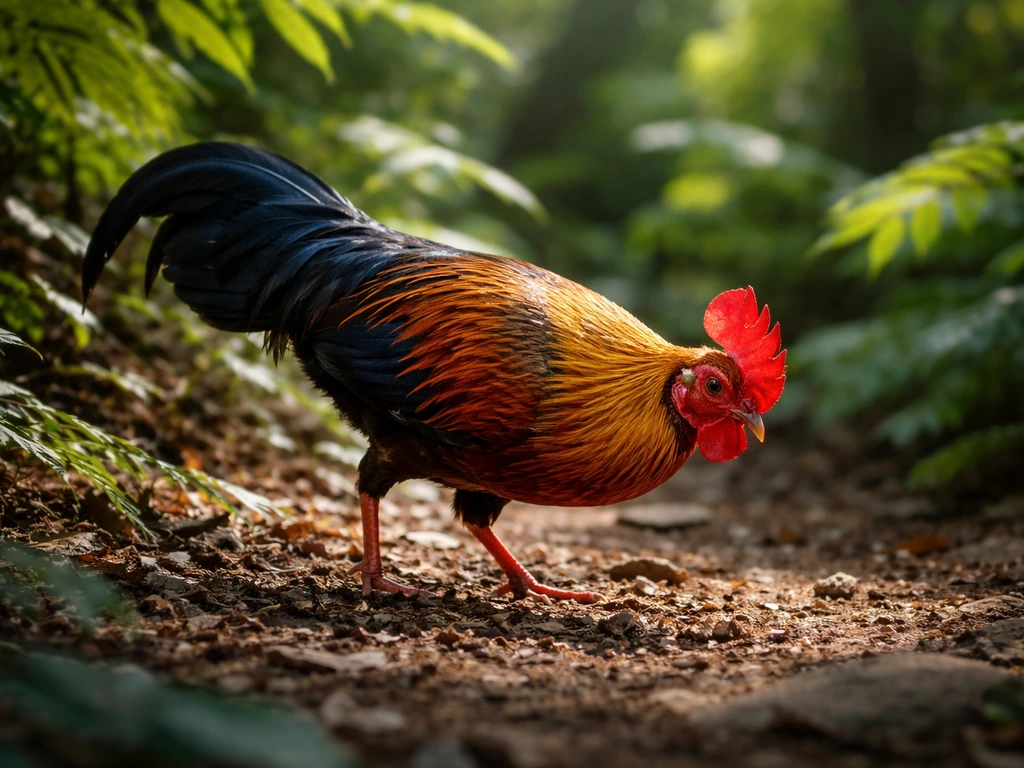
blank" rel="noopener noreferrer">The national bird of Sri Lanka is the Sri Lankan junglefowl, also called the Ceylon junglefowl or Lafayette's junglefowl. Bhutan also has an official national bird, often listed as the Takin's Himalayan neighbor in national symbol guides national bird of Bhutan. Its scientific name is Gallus lafayettii. This is an endemic species, meaning it is found nowhere else on Earth except Sri Lanka, which is a big part of why it carries such strong national significance.
What Is the National Bird of Sri Lanka? Symbolism, Facts

Marcus Chen
11 Jun 2026
How and when it was officially designated
The Sri Lankan junglefowl is recognized as the official national bird through Sri Lanka's national symbols framework, and it appears on the Sri Lanka Government's official eServices portal as well as on Embassy of Sri Lanka pages worldwide. While Sri Lanka does not always publicize a single dramatic "designation date" the way some countries do, the junglefowl's status as national bird is consistently referenced across official government and institutional sources. If you want to verify it yourself, the Sri Lanka Government's own country overview page is the most authoritative place to check.
What the junglefowl symbolizes in Sri Lankan culture
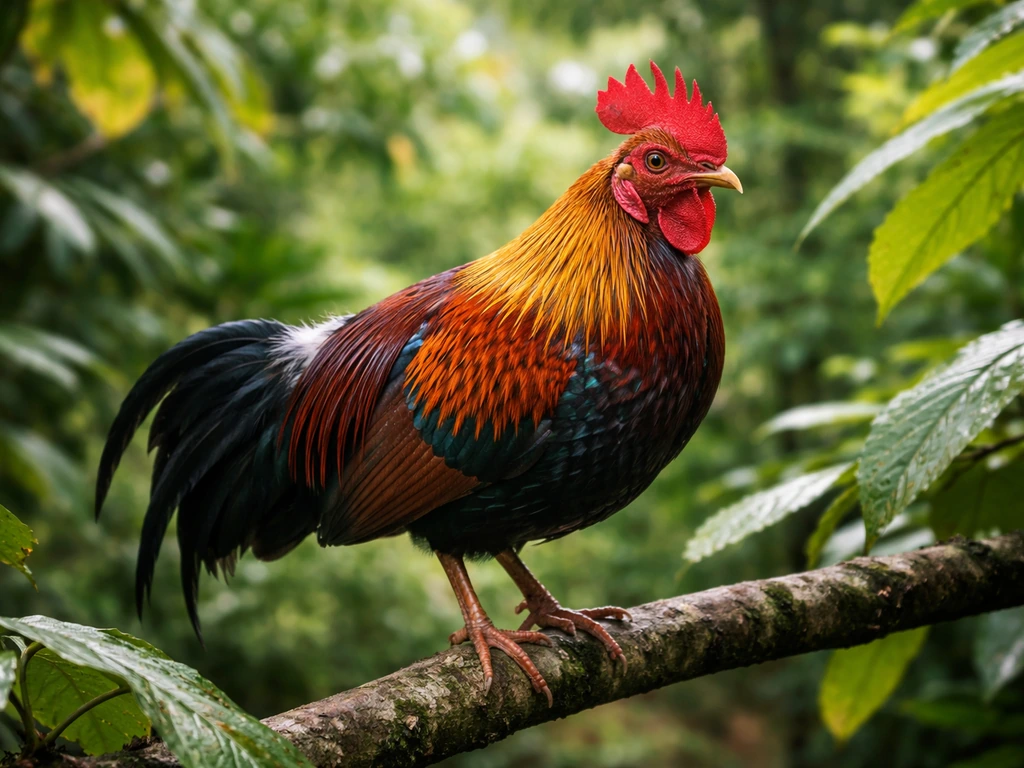
The Sri Lankan junglefowl carries layered symbolism for the island nation. Its vibrant, almost jewel-like plumage reflects the rich biodiversity and natural beauty that Sri Lanka is known for. The male bird is particularly striking, with deep red, orange, and golden feathers, a bright red comb, and an iridescent green-black tail. This visual boldness makes it a natural fit as a national emblem.
Beyond appearance, the bird represents resilience and independence. The junglefowl thrives in the dense forests and scrubland of Sri Lanka, navigating challenging terrain with ease. That self-reliant quality resonates with Sri Lanka's own identity as a small island nation that has maintained a distinct culture and civilization for thousands of years.
The bird also carries a practical cultural link: the Sri Lankan junglefowl is believed to be one of the wild ancestors of domestic chickens, which have been central to agriculture and daily life across Asia for millennia. This connection to everyday life and sustenance gives the junglefowl a grounded, community-level meaning beyond just aesthetic appeal.
Historical and cultural context
Sri Lanka has one of the oldest continuous recorded histories in South Asia, and birds have featured in its literature, religion, and art for centuries. The junglefowl appears in the traditional landscapes described in Sinhala poetry and folklore, often linked to the forests and hills of the island's interior. Its crowing at dawn is part of the rural Sri Lankan soundscape that has shaped cultural memory for generations.
Buddhism, the dominant religion in Sri Lanka, places value on all living creatures, and birds in particular are seen as auspicious and symbolic of freedom. The junglefowl, as a wild bird that cannot be easily tamed, reinforces this association with natural freedom. It is not a bird of palaces or temples but of the untamed forest, which gives it an authenticity as a national symbol that speaks to the island's deep natural heritage.
The bird's endemic status also matters historically. Colonial-era naturalists noted the Ceylon junglefowl as something entirely unique to the island, distinguishing it from the red junglefowl found across South and Southeast Asia. That uniqueness reinforced a sense of Sri Lankan distinctiveness, separate from broader regional identities. It is worth noting that several other island nations in the region have similarly chosen endemic birds as national symbols, a pattern you also see with the national birds of Mauritius and Fiji. Fiji’s national bird is the Fiji dove, also known as the columba, which is an important native species on the islands. Mauritius also has an official national bird, the echo parakeet.
Key characteristics that set it apart
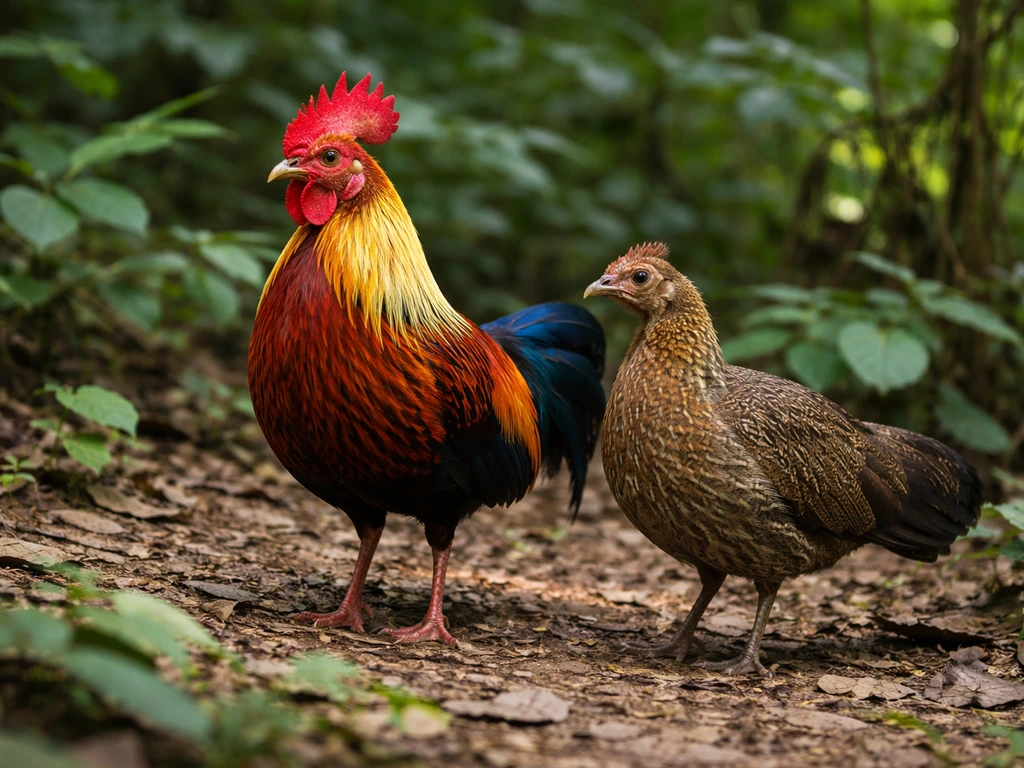
The Sri Lankan junglefowl is a medium-sized bird, with the male noticeably larger and more colorful than the female. Here is what makes it visually distinct and ecologically interesting:
- The male has a bright red comb and wattles, but the comb has a distinctive yellow or orange center, setting it apart from other junglefowl species.
- Plumage on the male ranges from deep red and chestnut on the body to glossy blue-green and black on the tail feathers.
- The female is much more subdued, with brown and buff streaked feathers that provide excellent camouflage in forest undergrowth.
- Adults typically measure around 66 to 72 cm in length for males, with females considerably smaller.
- The species is found in forests, scrub jungle, and agricultural borders across all of Sri Lanka, from sea level up to about 2,000 meters elevation.
- It is diurnal and tends to forage on the ground for seeds, insects, berries, and small reptiles.
- The call of the male is loud and distinctive, a sharp crowing sound recognizable to anyone who has spent time in Sri Lankan forests.
Because it is endemic and fairly widespread across the island, birdwatchers visiting Sri Lanka have a good chance of spotting it, especially in national parks like Yala, Wilpattu, and Sinharaja Forest Reserve. It is not considered endangered, which means the national symbol is genuinely thriving in the wild.
Interesting facts and common mix-ups
A few things trip people up when they first look into this topic, so it is worth addressing them directly. If you are wondering about Mongolia specifically, the answer is different from Sri Lanka's national bird what is the national bird of mongolia.
The most common confusion is between the Sri Lankan junglefowl and the Indian peafowl (the peacock). Peacocks are incredibly visible in Sri Lanka, they appear in temples, roam freely in some areas, and are deeply woven into Hindu iconography on the island. Because of that visibility, some people assume the peacock must be the national bird. It is not. The peacock is the national bird of India, not Sri Lanka. The national bird of Cambodia is different from Sri Lanka's junglefowl, so it's easy to mix up details when comparing countries. The Sri Lankan junglefowl is the correct answer.
Another mix-up involves the red junglefowl (Gallus gallus), which is a closely related species found across South and Southeast Asia including parts of India. The Sri Lankan junglefowl is a separate, distinct species (Gallus lafayettii), endemic only to Sri Lanka. They look similar at first glance, but the yellow-centered comb on the male Sri Lankan junglefowl is a reliable distinguishing feature.
Some readers also wonder whether the Sri Lankan junglefowl is simply a wild chicken. In a broad evolutionary sense, yes. Gallus lafayettii is in the same genus as the ancestors of domestic chickens. But calling it a wild chicken undersells it significantly. It is a striking, wild, endemic species with its own ecology and behavior, not a feral domestic bird.
Finally, the scientific name spelling varies slightly across sources. You will see both Gallus lafayettii and Gallus lafayetii used. Both refer to the same bird. The name honors the French naturalist Marquis de Lafayette, and the variation is simply an inconsistency in how his name was transcribed into Latin nomenclature over time.
A quick reference summary
| Attribute | Detail |
|---|---|
| Common name | Sri Lankan junglefowl / Ceylon junglefowl / Lafayette's junglefowl |
| Scientific name | Gallus lafayettii |
| Endemic to | Sri Lanka only |
| Habitat | Forests, scrub jungle, agricultural edges; sea level to ~2,000 m |
| Key visual feature | Bright red comb with yellow/orange center (male) |
| Conservation status | Least Concern (not endangered) |
| Often confused with | Indian peafowl (peacock) or red junglefowl (Gallus gallus) |
| Official source | Sri Lanka Government eServices portal, Sri Lanka Embassy pages worldwide |
FAQ
How can I tell the Sri Lankan junglefowl apart from the Indian peafowl when I spot them in Sri Lanka?
Look at the body and comb, the junglefowl is a forest ground bird with a small head and a bright red comb, the male has jewel-like red, orange, and golden tones. The peafowl is much larger, with long tail coverts used for display and a more obvious, peacock-like silhouette, plus it is often associated with open temple grounds.
Is the Sri Lankan junglefowl ever considered endangered, or is it actually doing well in the wild?
It is generally not treated as endangered, especially because it is relatively widespread across the island. That said, local birdwatching success can still vary by season and habitat quality, so protected forest reserves usually offer more reliable sightings than urban edges.
Do male and female Sri Lankan junglefowl look different enough that I might think they are different species?
Yes. Males are typically larger and dramatically more colorful, with deeper red and golden tones, while females are more subdued and harder to spot at a glance. If you only see a duller bird, you might miss that it is the same species.
Where is the best place to see the Sri Lankan junglefowl if I have limited time (for example, just one national park visit)?
If you can choose one, focus on places with dense forest and scrub habitat, Yala and Wilpattu are popular for sightings, and Sinharaja is known for higher-elevation forest conditions. Early morning is usually best because the birds are active around dawn.
Could the “junglefowl” name make me expect it to live only in dense jungle?
Not exactly. While it is strongly linked to forest habitats, it also uses scrubland and forest edges. So if a park has mixed vegetation rather than uninterrupted rainforest, you may still encounter it.
What is the most reliable way to verify the national bird claim if I am comparing different websites?
Use Sri Lanka government or official country overview pages when available, because some travel and education sites repeat the same information without showing the designation basis. Also confirm the name matches “Sri Lankan junglefowl” and the scientific designation Gallus lafayettii (or its common spelling variant).
Why do I see two scientific spellings, Gallus lafayettii and Gallus lafayetii, is that a different bird?
They refer to the same species. The variation is a transcription difference in how the name of Marquis de Lafayette was Latinized over time, so the correct interpretation is that it is the same endemic junglefowl.
Is the Sri Lankan junglefowl the same as the red junglefowl (Gallus gallus) or a regional subspecies?
No, it is treated as a distinct endemic species, Gallus lafayettii. They can look similar at first glance, but they are separated taxonomically, and field identification cues like the male comb details help distinguish them.
If someone says it is a “wild chicken,” what is the more precise way to describe it?
It is a wild relative in the same genus line that domestic chickens descend from, but it is not a feral domestic bird. The more accurate description is an endemic wild junglefowl with its own ecology, behavior, and habitat preferences.
Does the junglefowl’s endemic status mean it cannot be found outside Sri Lanka at all?
In natural terms, yes, it is endemic, meaning its native range is limited to Sri Lanka. You might still see it in captivity elsewhere, but that is not the same as a wild, native population outside the island.
Next Articles
What Is the National Bird of Cambodia? Meaning and Facts
National bird of Cambodia is the sarus crane. Learn its meaning, official status, and where to spot it in Cambodia.
What Is the National Bird of Mongolia? History and Facts
Learn Mongolia’s national bird identity, its symbolism and history, plus tips to recognize and verify the right species.
What Is the National Bird of Zimbabwe? Symbolism and Facts
Discover Zimbabwe’s national bird, its distinctive traits, and the history and symbolism behind the emblematic choice.