
blank" rel="noopener noreferrer">Indonesia's national bird is the Javan hawk-eagle, known locally as "Elang Jawa" and scientifically as Nisaetus bartelsi (also historically listed as Spizaetus bartelsi). It was officially designated as Indonesia's national rare fauna in 1993 by a presidential decree, and it holds a special place in Indonesian identity because it served as the real-life model for the country's famous national emblem, Garuda Pancasila.
What Is the National Bird of Indonesia? Garuda Symbolism

Marcus Chen
14 Jun 2026

What the Javan hawk-eagle looks like
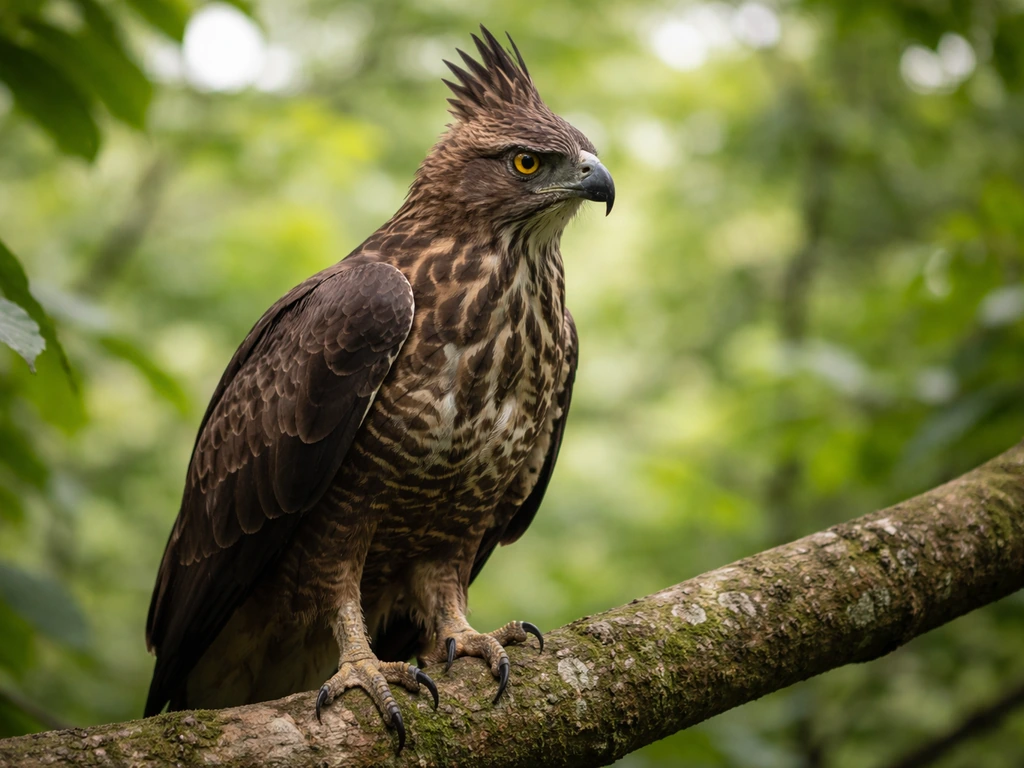
The Javan hawk-eagle is a medium-sized raptor in the family Accipitridae, the same family that includes hawks and eagles worldwide. It has a striking dark brown plumage, a prominent crest on its head, and the powerful, upright bearing you'd expect from a bird that inspired a national emblem. If you're trying to picture it, think of a compact, intensely alert eagle built for maneuvering through dense forest canopy.
The bird is endemic to the island of Java, meaning you won't find it naturally occurring anywhere else on Earth. It lives in humid tropical forests, which makes Java's continued deforestation a real concern for the species. Its Indonesian name, Elang Jawa, translates simply to "Javan eagle" and is the name you'll see in official government documents.
What the Javan hawk-eagle symbolizes for Indonesia
The deeper reason this bird matters isn't just its rarity or beauty. The Javan hawk-eagle is widely recognized as the real-life inspiration behind Garuda Pancasila, Indonesia's national emblem. Garuda is a mythological bird-deity from Hindu and Buddhist tradition, but when Indonesian designers developed the national emblem, the physical form of Garuda was modeled on the Elang Jawa. That connection runs deep in Indonesian culture.
Garuda Pancasila symbolizes the strength and greatness of the Indonesian nation, embodying the values of the state ideology known as Pancasila. Because the Javan hawk-eagle visually underlies this emblem, it carries that same symbolic weight: power, freedom, and national pride. For Indonesians, seeing an Elang Jawa isn't just a wildlife encounter, it's a glimpse of a living national symbol.
How and when it became the official national bird

The formal designation came through Keputusan Presiden Nomor 4 Tahun 1993, a presidential decree issued in 1993 titled "Satwa dan Bunga Nasional" (National Fauna and Flowers). That decree explicitly names "Elang Jawa (Spizaetus bartelsi)" as Indonesia's national rare/precious animal. So the official status is grounded in law, not just tradition.
The cultural groundwork, however, goes back much further. Garuda Pancasila itself was adopted as the national emblem on February 11, 1950, and publicly introduced by President Sukarno on February 15, 1950. The emblem's design went through a competitive process in the late 1940s and early 1950s, with Sultan Hamid II producing the winning design and later refinements finalizing the look. The Javan hawk-eagle was already tied to national identity through this emblem long before the 1993 decree made it official.
The Garuda confusion and how to clear it up
A lot of people searching for Indonesia's national bird end up tangled between "Garuda" and the actual bird species. Here's how to think about it clearly: Garuda is a mythological figure, the divine eagle-like creature from Hindu-Buddhist tradition, and it appears in Indonesian culture, currency, the national airline name, and the national emblem. It is not a real bird species.
The Javan hawk-eagle is the real bird that Garuda Pancasila's visual design was modeled on. So when someone asks for the national bird in the biological sense, the answer is the Javan hawk-eagle (Nisaetus bartelsi / Elang Jawa). When someone refers to Garuda as the national bird, they're usually pointing to the emblem or the mythological symbol, not a species you'd find in a field guide.
To verify this yourself, you can check two reliable sources. The Indonesian government's regulation database for Keputusan Presiden No. 4 Tahun 1993 (peraturan.bpk.go.id) lists Elang Jawa explicitly. The U.S. Fish and Wildlife Service species profile for Nisaetus bartelsi also confirms the bird's identity and conservation status. Cross-referencing the scientific name Nisaetus bartelsi (or the older name Spizaetus bartelsi) against both will give you a confident, unambiguous answer.
Facts worth remembering about the Elang Jawa

- The Javan hawk-eagle is found only on Java, making it one of Indonesia's most geographically restricted endemic species.
- Its scientific name has two versions in literature: Nisaetus bartelsi (current) and Spizaetus bartelsi (older classification), both referring to the same bird.
- The 1993 presidential decree that named it a national rare animal brought it more public attention, though researchers have noted this increased attention created some complex conservation dynamics.
- Because of habitat loss from deforestation on Java, the species is classified as endangered on the IUCN Red List.
- Garuda Pancasila was officially adopted on February 11, 1950, meaning the Javan hawk-eagle's symbolic role in Indonesian identity predates its legal designation as national fauna by more than four decades.
- The bird's fierce crest and upright posture are features that map directly onto the powerful image of Garuda in the national emblem.
Where to go from here
If Indonesia's national bird sparked your curiosity about other Southeast Asian countries, the region has some fascinating choices worth exploring. If you're also looking for similar national symbols in East Asia, you may be wondering what is the national bird of Taiwan Indonesia's national bird. The Philippines chose the Philippine eagle, one of the world's largest and most powerful raptors. If you’re wondering what the national bird of the Philippines is, it’s the Philippine eagle. Malaysia's national bird is the rhinoceros hornbill, a striking species with a dramatic casque on its bill. If you want to know what is the national bird of malaysia, it is the rhinoceros hornbill Malaysia's national bird. Singapore recognizes the Crimson Sunbird, a far smaller but brilliantly colored bird. Singapore's national bird is the Crimson Sunbird. Each of these picks reflects something distinct about the country's geography, culture, and values, much like the Elang Jawa does for Indonesia.
For Indonesia specifically, a good next step is looking into the Garuda Pancasila's full design history if you want to understand how deeply the Javan hawk-eagle is woven into Indonesian visual culture. Beyond that, conservation organizations tracking Nisaetus bartelsi offer a practical angle: understanding why the species is endangered gives you a clearer picture of what Indonesia stands to lose, and what efforts are underway to protect it.
FAQ
Is Garuda Pancasila actually the national bird of Indonesia, or is it just the national emblem?
Garuda is a mythological eagle-like figure used in the national emblem, it is not a real bird species. The national bird in the biological sense is Elang Jawa, the Javan hawk-eagle.
Why do some people say the national bird is Garuda instead of Elang Jawa?
People usually mix up the emblem symbol with the wildlife species. Garuda appears on currency, the emblem, and other national branding, so it can be mistaken as a species-based “national bird.”
What is the correct scientific name to look for when researching the national bird?
The commonly used scientific name is Nisaetus bartelsi. You may also see the older listing Spizaetus bartelsi, so searching both names can help confirm you are reading about the same species.
Is the Javan hawk-eagle the national bird of Indonesia everywhere in the country?
Yes, it is Indonesia’s national symbol, but the species itself is endemic to Java. That means it naturally occurs only on Java, even though Indonesia includes many other islands.
What habitat does the national bird rely on, and why does that matter for conservation?
It depends on humid tropical forests in Java. Ongoing deforestation reduces available nesting and hunting habitat, which is why habitat protection is a key part of conservation.
Where can I realistically see Elang Jawa in the wild?
Because it is endemic to Java and lives in dense forest, sightings are uncommon and location-dependent. If you are planning a visit, focus on Java protected forest areas and check current local guidance on birding access and seasons.
What should I do if I see conflicting information online about Indonesia’s national bird?
Check whether the source is talking about the wildlife species or the emblem symbol. For the species, verify the name “Elang Jawa” and its scientific name, then compare the common name against both Nisaetus bartelsi and Spizaetus bartelsi.
Does the national bird status mean the bird is legally protected in practice?
National designation provides a strong legal and symbolic basis, but day-to-day protection depends on enforcement and specific conservation measures in Java. For practical impact, look for habitat and enforcement initiatives in the species’ range.
Next Articles
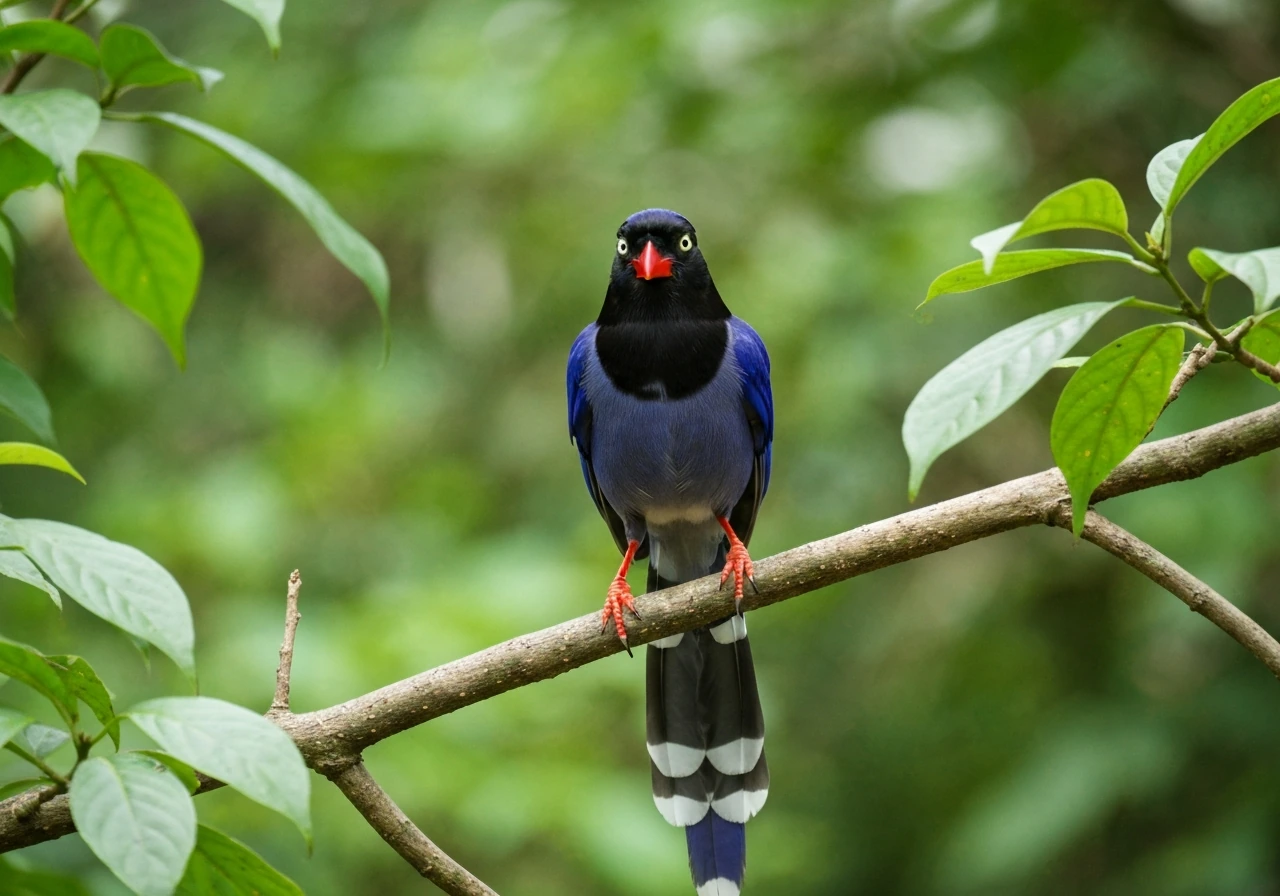
What Is the National Bird of Taiwan? Meaning and Facts
Answer and meaning: Taiwan’s national bird is the Formosan blue magpie, with history, symbolism, and spotting tips.
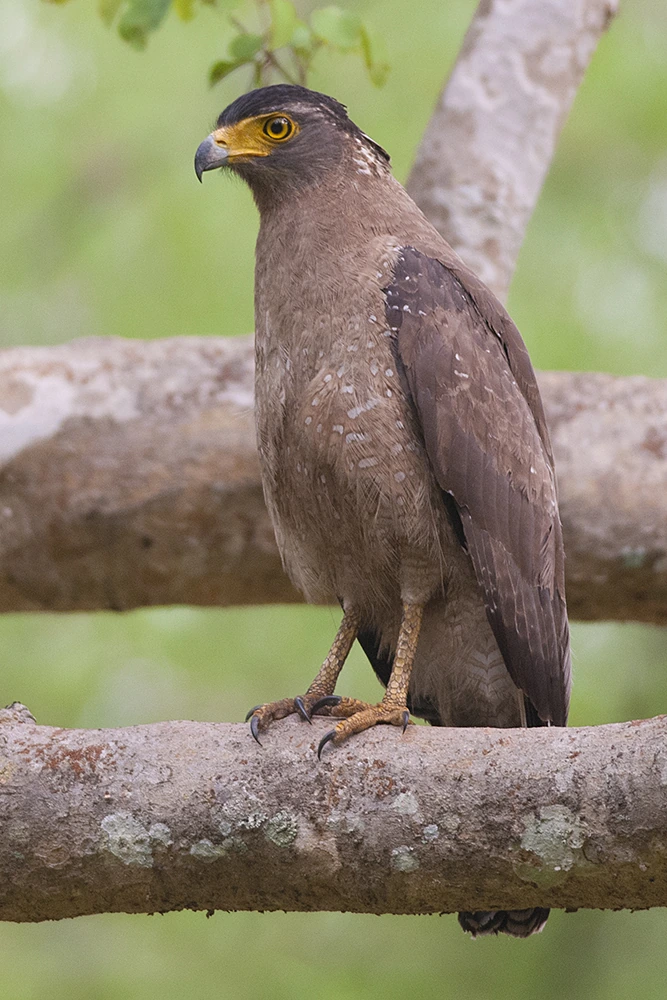
What Is the National Bird of Singapore? Meaning and History
National bird of Singapore is the crested serpent eagle. Learn its meaning, history, and key features.
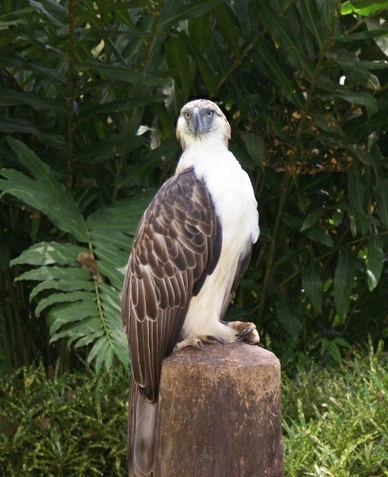
What Is the National Bird of the Philippines
Learn which bird is the Philippines national bird, why it was chosen, and how to verify the official designation.