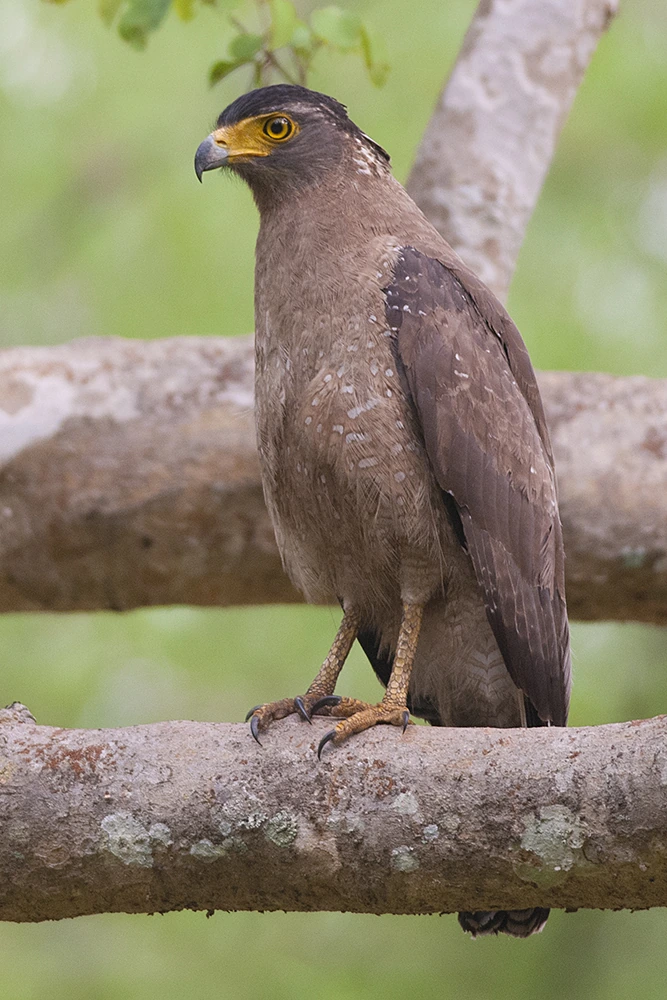
Taiwan's national bird is blank" rel="noopener noreferrer">the Taiwan Blue Magpie, also called the Formosan Blue Magpie (scientific name: Urocissa caerulea). Indonesia’s national bird is the Javan hawk-eagle what is the national bird of indonesia. It was chosen through a public vote in 2007, winning with 491,572 votes, and has since been widely recognized as the national bird of Taiwan (officially the Republic of China, or ROC).
What Is the National Bird of Taiwan? Meaning and Facts

Marcus Chen
7 Jun 2026
Is it official? Clearing up the naming confusion
This is where a lot of people get tripped up. Taiwan's political situation means you'll see it referred to as "Taiwan," "Chinese Taipei," or the "Republic of China (ROC)" depending on the context. The national bird designation follows the same pattern: it's tied to the Republic of China government and the Taiwanese public, not to any international body or mainland China. If you are wondering about Malaysia specifically, the country has its own official national bird as well national bird of Malaysia.
Strictly speaking, the Taiwan Blue Magpie is considered an "unofficial" national bird because it was selected through a public poll rather than a formal act of parliament. But that distinction matters less than you might think. The Overseas Community Affairs Council (OCAC), a ROC government agency, refers to it as the "National Bird of Taiwan (ROC)" in official educational materials. For a quick geographic comparison, if you’re wondering what the national bird of Singapore is, that’s a different official national symbol altogether. National Geographic calls it Taiwan's national bird. The Taipei Times covered its selection as a national milestone. At this point, it functions as Taiwan's national bird in every practical sense.
What the Taiwan Blue Magpie actually looks like
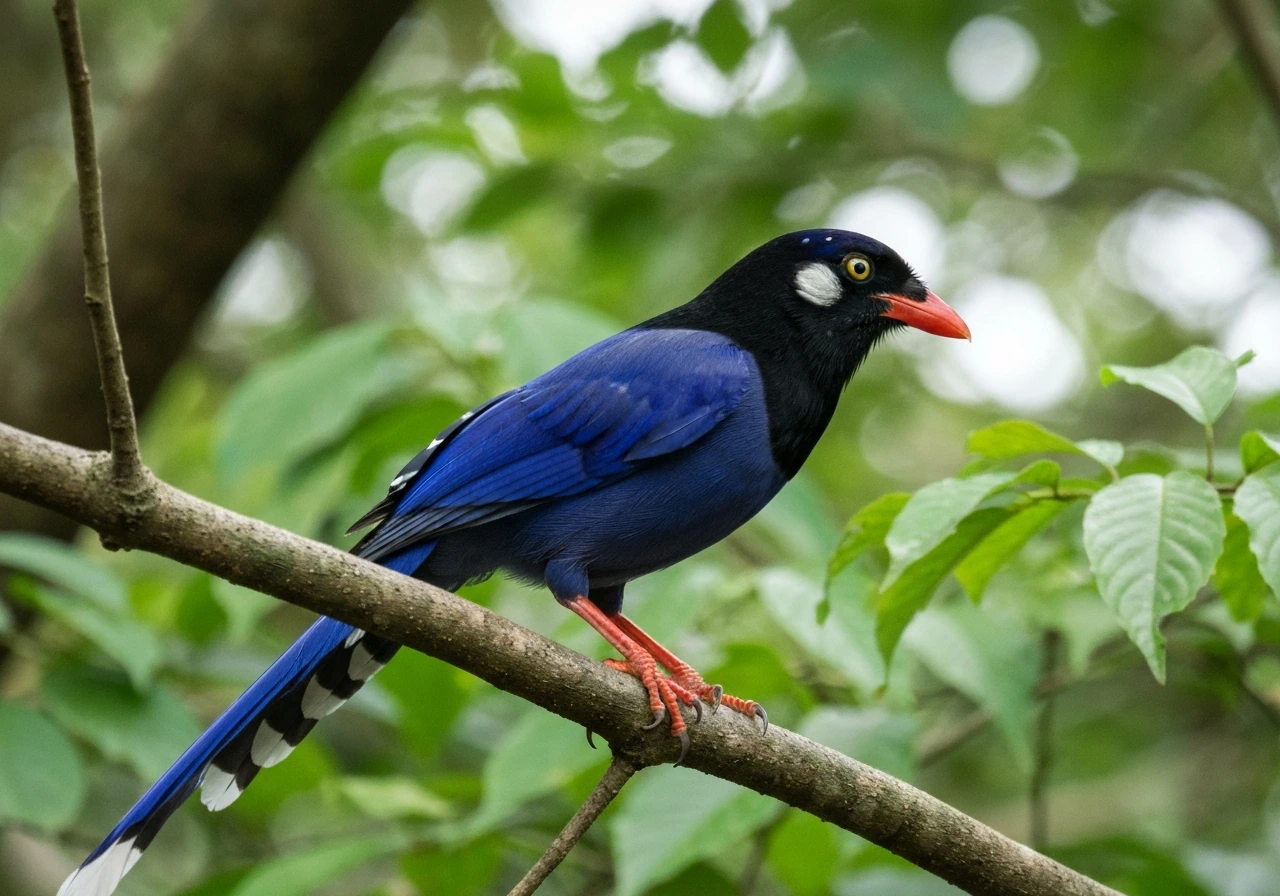
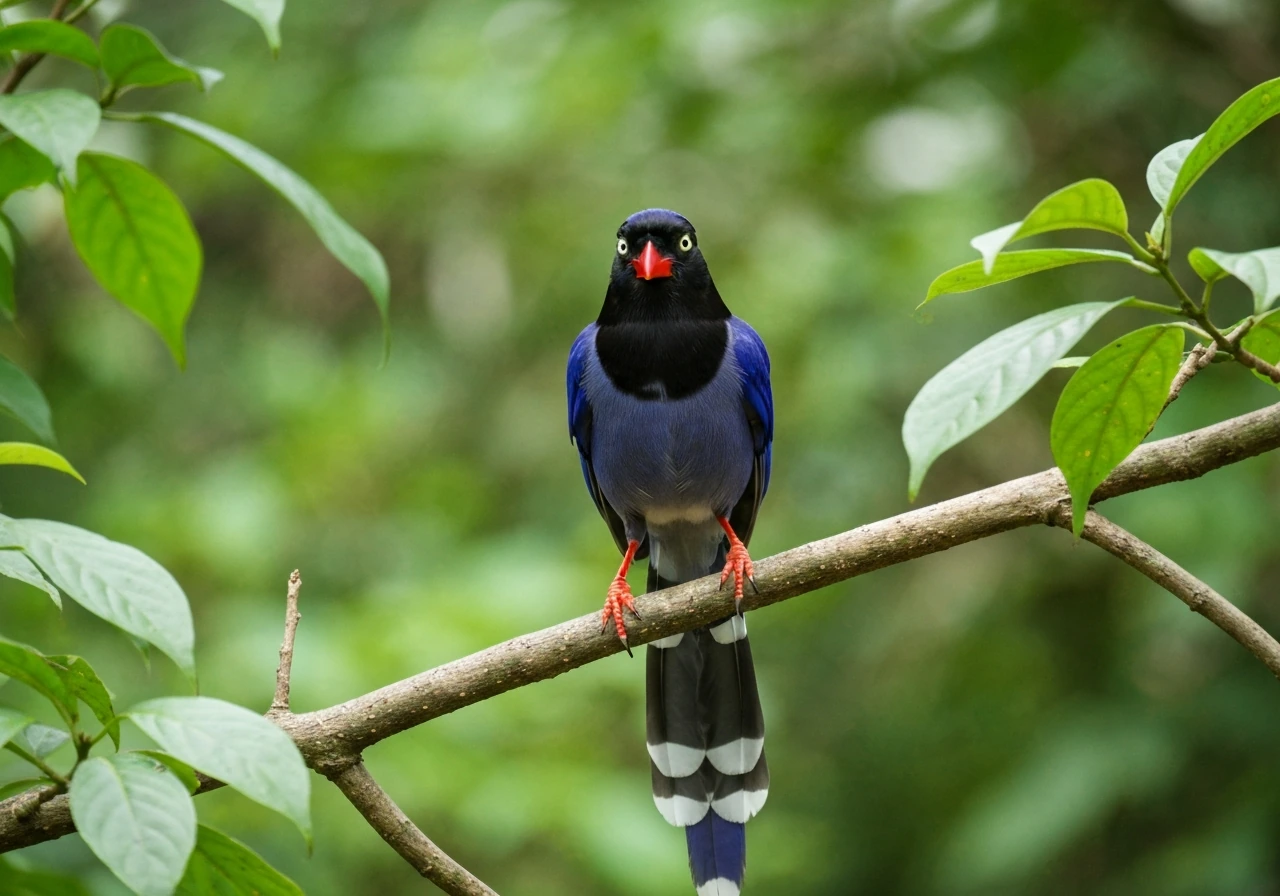
If you've never seen one, the Taiwan Blue Magpie is genuinely striking. It's a large bird, measuring around 64 to 65 centimeters from beak to tail tip, which puts it well above average size for a magpie. The most distinctive feature is that extraordinarily long tail, which accounts for roughly half the bird's total length and trails behind it in flight like a banner.
The coloring is what really sets it apart. The body is a rich, vivid blue, the head and upper chest are jet black, and the bill and legs are a bright red-orange. The tail feathers are tipped with white, which creates a bold contrast when the bird is in motion. It's one of those species that looks almost too colorful to be real when you first spot it.
The Taiwan Blue Magpie is endemic to Taiwan, meaning it exists naturally nowhere else in the world. It lives in the broadleaf forests of Taiwan's mountainous interior, typically at elevations between 300 and 1,200 meters, though it can be found higher. It's a social bird, usually traveling in noisy groups of six to ten individuals.
Why the Taiwan Blue Magpie was chosen
The symbolism here is layered in a way that makes a lot of sense once you understand Taiwan's relationship with its own identity. The Taiwan Blue Magpie is found only in Taiwan. That endemism is a powerful statement for a nation that has spent decades asserting a distinct cultural and political identity. Choosing a bird that belongs to Taiwan and Taiwan alone carries real weight.
Beyond uniqueness, the bird's behavior reinforces its symbolic appeal. Taiwan Blue Magpies are known for being fiercely protective of their young. The whole flock will cooperate to defend a nest against threats, including much larger predators. That group loyalty and courage mapped neatly onto values Taiwanese people wanted to represent nationally.
Its appearance also plays a role. The vibrant blue, black, and red coloring gives it a regal, memorable look. For a nation choosing an emblem, a visually striking, endemic, and behaviorally compelling bird is hard to beat.
How and when the selection happened

The national bird vote was organized in Taiwan and ran through early 2007. It was a public participation initiative, open to voters who could cast ballots for their preferred bird candidate. The results were announced at a media event on May 2, 2007. The Birding In Taiwan voter-results page reports that the Taiwan National Bird Vote winning species was the Formosan Magpie (Taiwan Blue Magpie, Urocissa caerulea) with 491,572 votes, announced at a media event on May 2, 2007 Taiwan National Bird Vote winning species was the Formosan Magpie with 491,572 votes announced May 2, 2007. The Taiwan Blue Magpie came out on top with 491,572 votes, beating out competing species.
The Taipei Times reported on the outcome shortly after, framing it as Taiwan naming its national bird. In the years following, conservation coverage began referencing the Formosan Blue Magpie specifically in its role as a national symbol, which helped cement its status in public consciousness even without a legislative act to formalize it.
It's worth noting the timing. 2007 was a period of active conversation about Taiwanese identity and national symbols. The bird vote fit into a broader cultural moment of Taiwanese people defining their own national narrative on their own terms.
Where you'll see the Taiwan Blue Magpie in culture
Since 2007, the Taiwan Blue Magpie has appeared regularly in the country's cultural output. It shows up in tourism materials promoting Taiwan's natural environments, particularly the mountain forest ecosystems of the island's interior. National Geographic's bird-watching coverage of Taiwan highlights the species prominently, often as the headline attraction for birders visiting the island.
Conservation groups in Taiwan have also leaned into its national bird status. Coverage of habitat protection and forest conservation in Taiwan frequently invokes the Formosan Blue Magpie as a flagship species, the one animal that symbolizes what's at stake if Taiwan's native forests are degraded. That's a common pattern with national birds globally, and Taiwan's follows it well.
For birders specifically, spotting a Taiwan Blue Magpie in the wild is considered a highlight of any trip to Taiwan. The Alishan area, Sun Moon Lake surroundings, and Taroko Gorge region are among the spots where experienced guides take visitors looking for the species. Its loud, chattering call often announces its presence before you actually see it.
If you're interested in how Taiwan's choice compares to neighboring countries in the region, it's worth noting the contrast with how other Asian nations approach their national bird selections. The Philippines chose the Philippine Eagle, a fierce apex predator. The Philippine Eagle is the national bird of the Philippines. China designates the Red-crowned Crane. Indonesia went with the Javan Hawk-Eagle (Garuda). Singapore recognizes the Crimson Sunbird. Malaysia's national bird is the Rhinoceros Hornbill. Malaysia's national bird is the Rhinoceros Hornbill, not a bird from Taiwan. Taiwan's choice of an endemic, colorful, socially bonded magpie reflects a distinctly different set of national values: community, uniqueness, and resilience rather than power or grandeur.
Quick takeaways
- Taiwan's national bird is the Taiwan Blue Magpie (Formosan Blue Magpie), scientific name Urocissa caerulea.
- It was chosen via public vote and announced on May 2, 2007, with 491,572 votes.
- It is endemic to Taiwan, found nowhere else naturally in the world.
- It is considered an unofficial national bird (chosen by public vote, not legislation), but is treated as official by government agencies and international media alike.
- Key identifying features: vivid blue plumage, black head, red-orange bill and legs, very long white-tipped tail, total length around 64-65 cm.
- Symbolizes Taiwan's uniqueness, community loyalty, and defensive courage.
- Best places to see it in the wild: mountain forests of central and northern Taiwan, including areas around Alishan and Taroko Gorge.
- To verify, check sources like the OCAC (Taiwan's Overseas Community Affairs Council), National Geographic's Taiwan birding coverage, or the Taipei Times archives from 2007-2008.
FAQ
Is the Taiwan Blue Magpie the official national bird of Taiwan, or just a popular choice?
It was selected by a public vote, so it is often described as “unofficial” in a strict legal sense. In practice, the Republic of China government and major educational and media outlets treat it as the national bird, including use in formal learning materials.
Why do some sources call it “Formosan Blue Magpie” instead of “Taiwan Blue Magpie”?
Both names refer to the same species (Urocissa caerulea). “Formosan” is an older geographic term tied to Taiwan, so you may see it in conservation reports and birding literature, especially when emphasizing the bird’s endemic status.
What does “Republic of China (ROC)” mean when talking about Taiwan’s national symbols?
ROC is the official name used by Taiwan’s government. In many contexts, national symbols are described as ROC, even when the everyday wording is “Taiwan,” so you might see the bird labeled as “National Bird of Taiwan (ROC)” to match that framing.
Could the national bird be different depending on where you see it referenced (tourism vs. schools vs. international articles)?
Usually, it stays the Taiwan Blue Magpie, but the label can vary. Schools and government-related materials often use the ROC framing, while tourism and international bird media more commonly use “Taiwan Blue Magpie” or “national bird of Taiwan.”
Is the Taiwan Blue Magpie found anywhere outside Taiwan naturally?
No, it is endemic, meaning it occurs naturally only in Taiwan. If you see it mentioned elsewhere, it is typically about captivity or observation, not native range.
What kind of habitat should I look for if I want to spot it?
Look in Taiwan’s broadleaf forests in the mountainous interior. The typical elevation range is roughly 300 to 1,200 meters, and the loud calls often come before you see the birds, especially when they move in groups.
When is the best time of day or season to see Taiwan Blue Magpies?
Birders most often have success during active daytime foraging, when the flock is calling and moving between trees. Specific seasonal timing varies by year, so using a local guide for the region you plan to visit (for example, Alishan or Taroko) can make a big difference.
How rare is it, and does “national bird” mean it is easy to find?
Being a national emblem does not automatically mean it is easy to spot. Even though it can be encountered in known areas, it still depends on habitat condition, local density, and your ability to locate feeding and roosting spots.
Is there a difference between the “national bird” and other symbols like national animals or conservation flagship species?
Yes. A national bird is a national symbol, while “flagship species” is a conservation strategy used to draw attention to habitat protection. In Taiwan’s case, coverage often uses the magpie in both roles, but the goals are not identical.
If I’m traveling for birding, where should I go first?
If you want the best odds based on commonly guided routes, prioritize areas known for sightings such as Alishan, the Sun Moon Lake surroundings, and Taroko Gorge. Planning around local guides also helps with micro-locations and timing within forest terrain.
Next Article
What Is the National Bird of Singapore? Meaning and History
National bird of Singapore is the crested serpent eagle. Learn its meaning, history, and key features.