
Malaysia's national bird is the Rhinoceros Hornbill, known scientifically as Buceros rhinoceros and called 'Burung Kenyalang' or 'Enggang Badak' in Malay. It's a striking, large bird with black plumage, bold white markings, and a dramatic horn-like casque sitting on top of its bill, that casque is what gives it the 'rhinoceros' part of its name.
What Is the National Bird of Malaysia? Answer and Meaning

Marcus Chen
16 Jun 2026
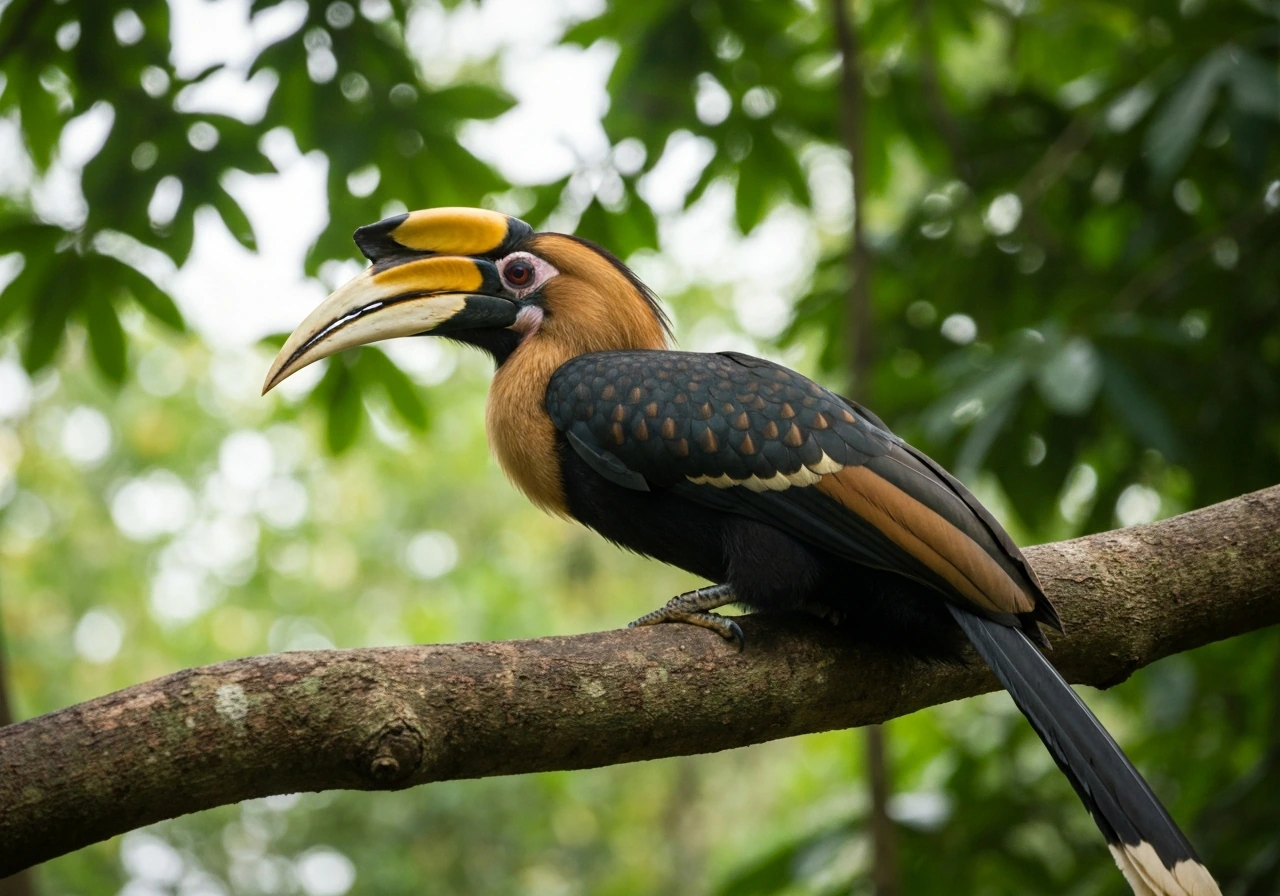
The official name and where to confirm it
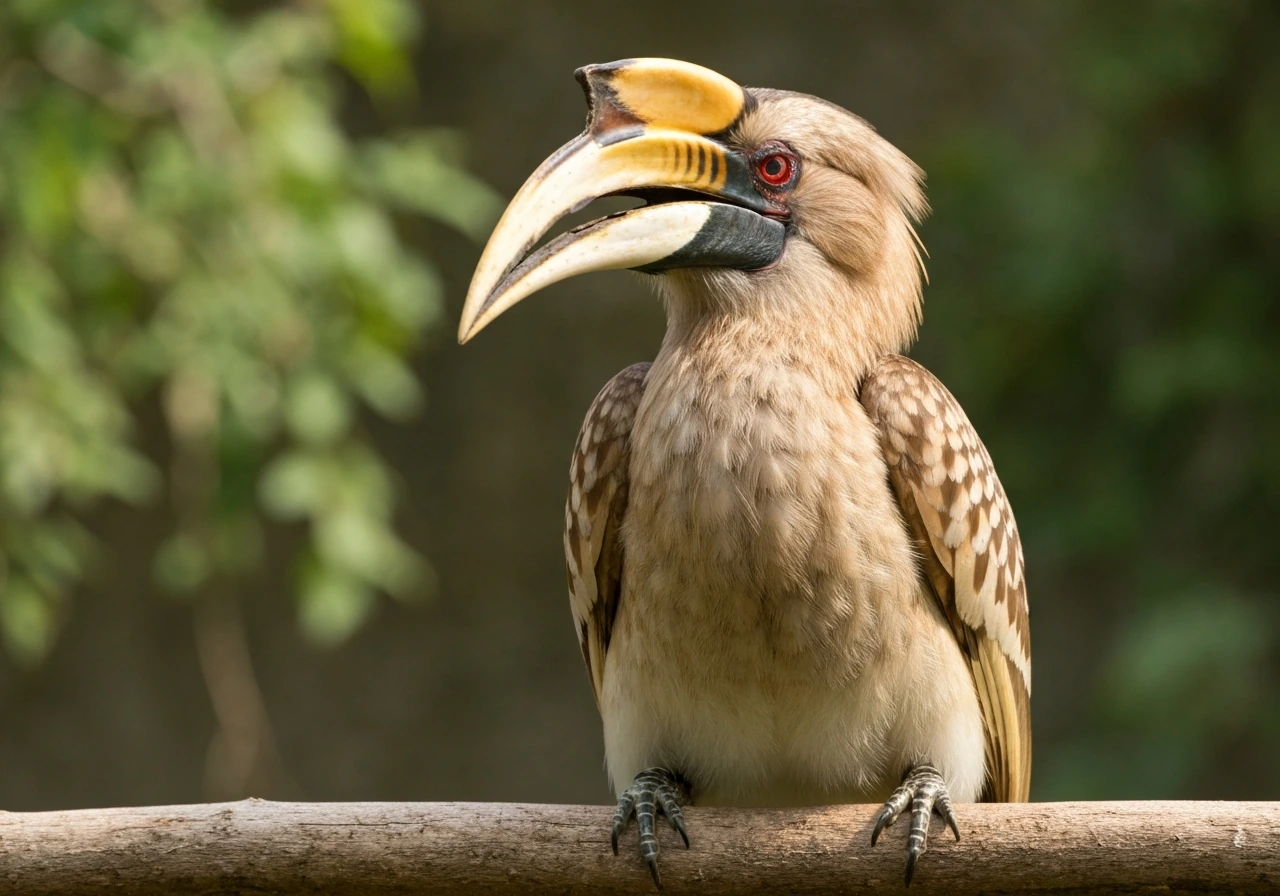
The bird's full common name is the Rhinoceros Hornbill. Its scientific name is Buceros rhinoceros. In Malay, you'll see it written as either 'Burung Kenyalang' (the Iban name that became widely used) or 'Enggang Badak,' with 'badak' meaning rhinoceros. Both names refer to the same species.
If you want to verify this officially, Malaysia's national symbols are recognized through government channels, including the MyGovernment portal (mygovernment.gov.my), which documents the country's formal national emblems. BirdLife International's species factsheet for Buceros rhinoceros also explicitly identifies it as Malaysia's national bird, and it's a reliable reference for species-level confirmation. The Malaysian government formalizes national symbols through gazette processes, the national emblem, for example, was legally established via Government Gazette P.U (B) 563 dated September 20, 1990, which gives you a sense of how these designations are handled officially.
One thing worth knowing: the Rhinoceros Hornbill is also the state bird of Sarawak, and it even appears on Sarawak's coat of arms as a supporter. So the same species carries both national and state-level symbolic weight, which is genuinely unusual.
How and when it was chosen
The Rhinoceros Hornbill was declared Malaysia's national bird in the 1990s. A Malay-language report from Utusan Borneo confirms this, stating that 'Burung enggang badak telah diisytiharkan sebagai burung kebangsaan Malaysia pada tahun 1990-an', it was declared Malaysia's national bird in the 1990s. The exact single decree has not been widely published in English-language sources, but the 1990s timeline is consistent across Malaysian educational and official sources.
The choice wasn't random. The Rhinoceros Hornbill is native to Peninsular Malaysia and Borneo, making it genuinely representative of the country's geography and biodiversity. It's deeply woven into the culture of Sarawak, which is home to the Iban people, a community for whom the hornbill (kenyalang) holds profound spiritual and ceremonial meaning. Choosing this bird was a way of recognizing both the ecological richness of Malaysia's rainforests and the cultural heritage of its Bornean states.
What the Rhinoceros Hornbill symbolizes in Malaysia
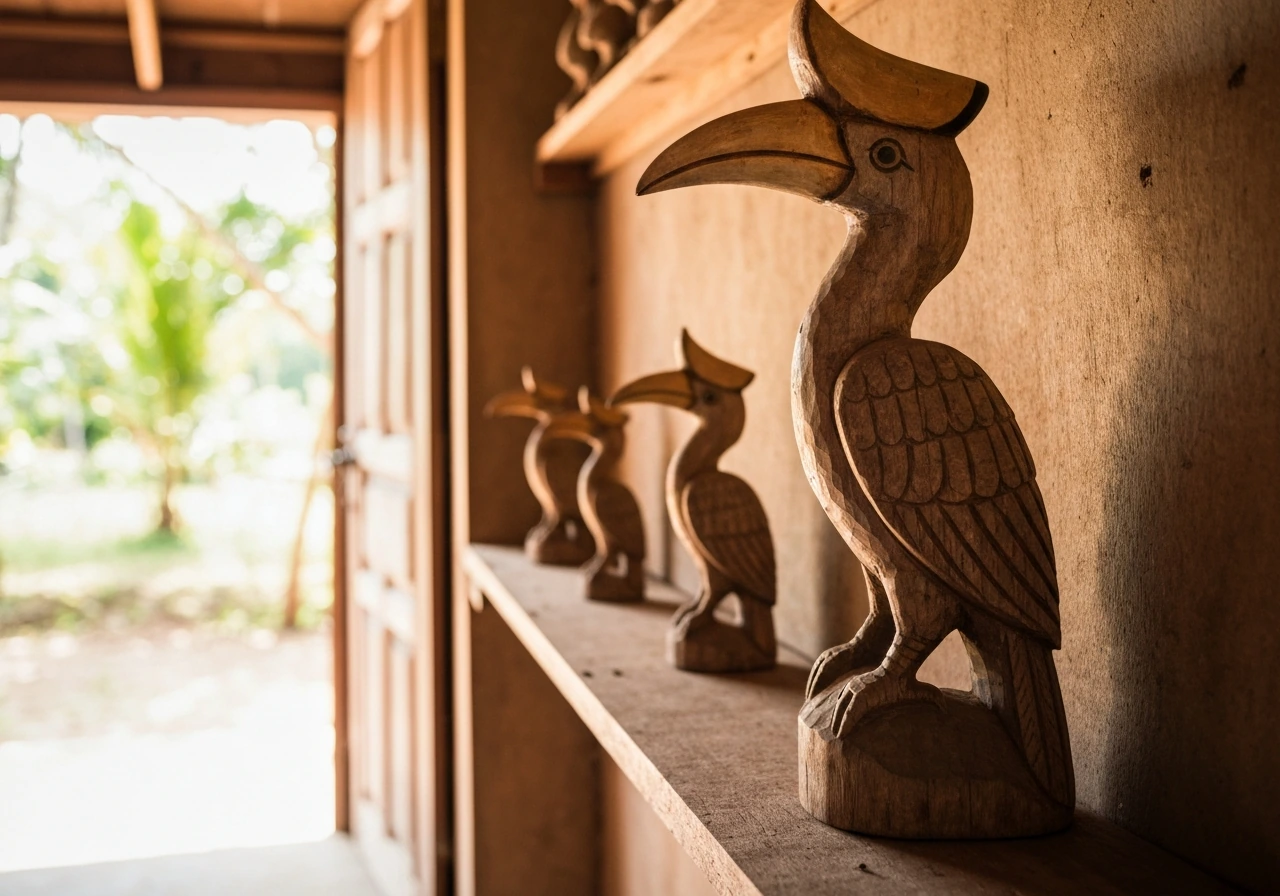
In Sarawak, the Rhinoceros Hornbill is so central to identity that the state is commonly called the 'Land of Hornbills.' For the Iban people, carved wooden hornbill figures (also called kenyalang) are used in the Gawai Kenyalang festival as spiritual intermediaries, believed to carry messages to the gods. The bird isn't just decorative, it carries real ceremonial weight.
At a national level, the Rhinoceros Hornbill represents Malaysia's biodiversity, the strength of its tropical forests, and the cultural diversity of its people. The bird's bold, unmistakable appearance, that upward-curving casque, the powerful bill, the dramatic black and white coloring, makes it a fitting emblem for a country that takes pride in its natural heritage. It appears regularly in tourism materials, educational content, and conservation campaigns as a symbol of what Malaysia's rainforests are worth protecting. Tourism Malaysia's International Hornbill Expedition 2013 press release also highlights hornbills as important in Malaysia and links them to conservation priorities in protected areas and key habitats Tourism Malaysia press release.
The Metropolitan Museum of Art in New York even holds Iban hornbill sculptures in its collection, describing them as stylized representations of the kenyalang, a sign of how far this bird's cultural reach extends beyond Malaysia's own borders.
Facts and trivia worth knowing
- The casque on top of the bill isn't just decorative — it amplifies the bird's calls and is used in territorial displays.
- Rhinoceros Hornbills are large birds, living in tropical and subtropical forests at elevations up to about 1,400 meters.
- Their diet is mostly fruit, supplemented by insects and small animals — they play an important role as seed dispersers in rainforest ecosystems.
- The IUCN Red List currently classifies Buceros rhinoceros as Vulnerable (VU), meaning it faces real conservation pressure from deforestation and hunting.
- The species has already gone locally extinct in Singapore, a sobering reminder of what habitat loss can do.
- A common confusion worth knowing: the Rhinoceros Hornbill (Buceros rhinoceros) is a different species from the Great Hornbill (Buceros bicornis). They look similar and share the same genus, but they're distinct — and mixing them up in the context of Malaysian national symbolism is a surprisingly common mistake online.
- In Iban culture, only the most respected warriors and leaders were traditionally permitted to wear rhinoceros hornbill feathers as headgear.
How Malaysia's choice compares to its neighbors
Malaysia's choice of the Rhinoceros Hornbill is interesting when you look at the region. Southeast Asia has produced some of the world's most visually distinctive national bird choices, and the hornbill stands out even among those. Indonesia, for example, went with the Javan Hawk-Eagle (known as Garuda in its mythological form), a bird with deeply ancient Hindu-Buddhist roots. Indonesia's national bird is the national symbol that helps define its identity, often asked about as what is the national bird of Indonesia. The Philippines chose the Philippine Eagle, an apex predator that symbolizes strength and national pride in a very different way. If you're wondering what the Philippines chose as its national bird, it's the Philippine Eagle The Philippines chose the Philippine Eagle. Singapore's national bird is the Crimson Sunbird, small, vivid, and urban-friendly, a sharp contrast to the large forest-dependent hornbill that Malaysia chose. If you are comparing Malaysia with Singapore, Singapore's national bird is widely given as the Crimson Sunbird.
What makes Malaysia's pick distinctive is that it ties national identity directly to the rainforest. The Rhinoceros Hornbill can't survive without old-growth tropical forest, it needs large trees for nesting and a continuous canopy for foraging. Choosing it as the national bird is, in effect, a statement about what Malaysia values in its natural landscape. That's a more ecologically loaded choice than many countries make.
| Country | National Bird | Scientific Name | Key Symbolism |
|---|---|---|---|
| Malaysia | Rhinoceros Hornbill | Buceros rhinoceros | Rainforest heritage, Bornean culture, biodiversity |
| Indonesia | Javan Hawk-Eagle (Garuda) | Nisaetus bartelsi (mythological) | Strength, ancient Hindu-Buddhist mythology |
| Philippines | Philippine Eagle | Pithecophaga jefferyi | Power, national pride, ecological uniqueness |
| Singapore | Crimson Sunbird | Aethopyga siparaja | Vibrancy, urban nature, tropical color |
| China | Red-crowned Crane | Grus japonensis | Longevity, good fortune, cultural elegance |
If you're building out knowledge of Southeast Asian national birds specifically, the contrast between Malaysia's hornbill and its neighbors' choices tells you a lot about how each country frames its own identity through nature.
FAQ
Are there any other birds that people commonly mistake for Malaysia’s national bird?
Yes. Because the names “Burung Kenyalang” and “Enggang Badak” are used in multiple contexts, people sometimes assume they refer to a general hornbill category. Malaysia’s national bird specifically refers to the Rhinoceros Hornbill (Buceros rhinoceros), not every kenyalang species or hornbill in Malaysian bird lists.
What does “Burung Kenyalang” mean, and does it always point to the same species?
“Burung Kenyalang” is commonly used for the hornbill associated with Malaysia’s national symbolism, but in everyday speech it can be used more broadly for hornbills. When you are matching official national symbolism, confirm the species is Buceros rhinoceros (Rhinoceros Hornbill) rather than relying on the common label alone.
Where is the Rhinoceros Hornbill found in Malaysia?
It is tied to both sides of Malaysia’s geography, with its range covering Borneo and Peninsular areas. The cultural emphasis in Sarawak is also strong, but the national symbol choice reflects a species associated with Malaysian rainforests rather than a bird limited to only one state.
Is the Rhinoceros Hornbill the national bird of Malaysia and also a state bird?
Correct, it serves both roles. The same species is recognized as the state bird of Sarawak, and it appears on Sarawak’s coat of arms. This means you can see the symbolism repeatedly across national and state-level materials.
Why is the hornbill’s habitat important for understanding the “national bird” choice?
The Rhinoceros Hornbill depends on intact, old-growth style tropical forest conditions, especially large trees for nesting and sufficient canopy for movement and feeding. If you are thinking about conservation, this dependence is the practical reason the national emblem often shows up in rainforest protection messaging.
Has Malaysia’s national bird designation changed since the 1990s?
The available accounts consistently place the declaration in the 1990s, and nothing in the broader public record suggests a later replacement. That said, the single formal decree may not be widely available in English, so the safest approach for certainty is to rely on government symbol documentation when needed.
What is the scientific name, and how should I write it correctly?
The species scientific name is Buceros rhinoceros. In most scientific references it is italicized, with the genus capitalized and the species lowercase, which helps avoid confusion with other hornbill species that share similar common names.
If I am traveling or studying, where might I see Malaysia’s national bird besides birding guides?
You can also spot it in cultural and regional context, particularly in Sarawak-related festivals and imagery, since the Iban kenyalang symbolism is closely linked to the same bird. In education and tourism, it often appears as a bold rainforest emblem even if you are not looking specifically for species facts.
Next Articles

What Is the National Bird of Indonesia? Garuda Symbolism
Garuda is Indonesia’s national bird, symbolizing strength, unity, and national identity behind its adoption.
What Is the National Bird of Taiwan? Meaning and Facts
Answer and meaning: Taiwan’s national bird is the Formosan blue magpie, with history, symbolism, and spotting tips.
What Is the National Bird of Singapore? Meaning and History
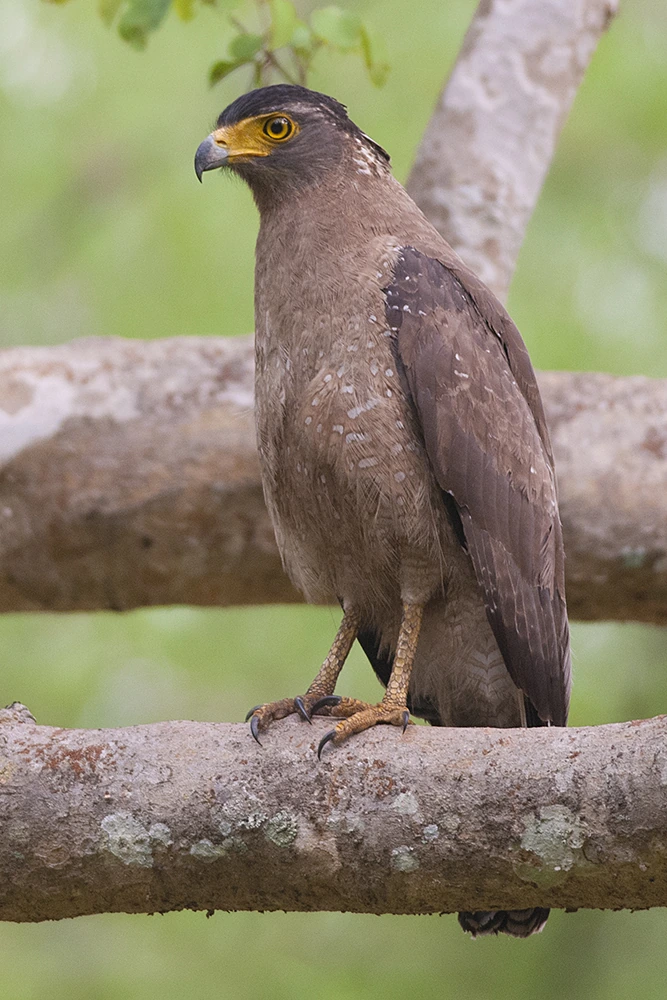
National bird of Singapore is the crested serpent eagle. Learn its meaning, history, and key features.