
The bird on the Serbian flag is a double-headed eagle, specifically a silver (white) two-headed eagle inherited from the medieval Nemanjić dynasty and ultimately rooted in Byzantine imperial symbolism. You will find it displayed on the coat of arms that sits at the center of the Serbian flag, not as a standalone bird like on some other national flags.
What Bird Is on the Serbian Flag? Identification Guide

Marcus Chen
19 May 2026
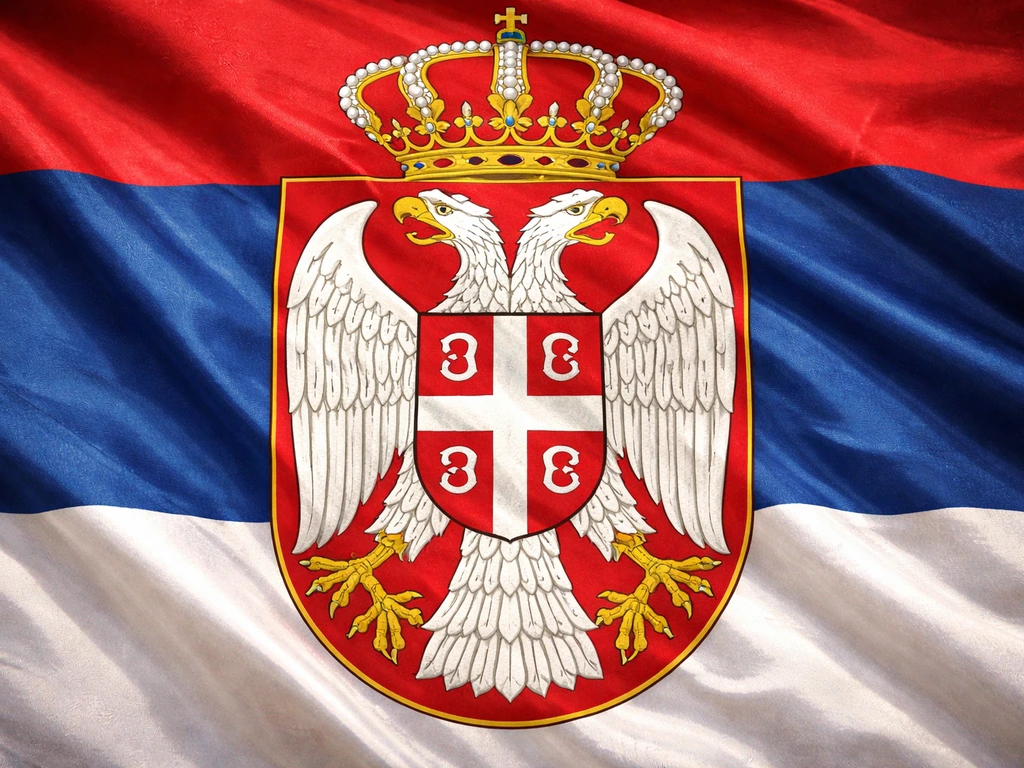
Where exactly to look: the coat of arms, not just the flag
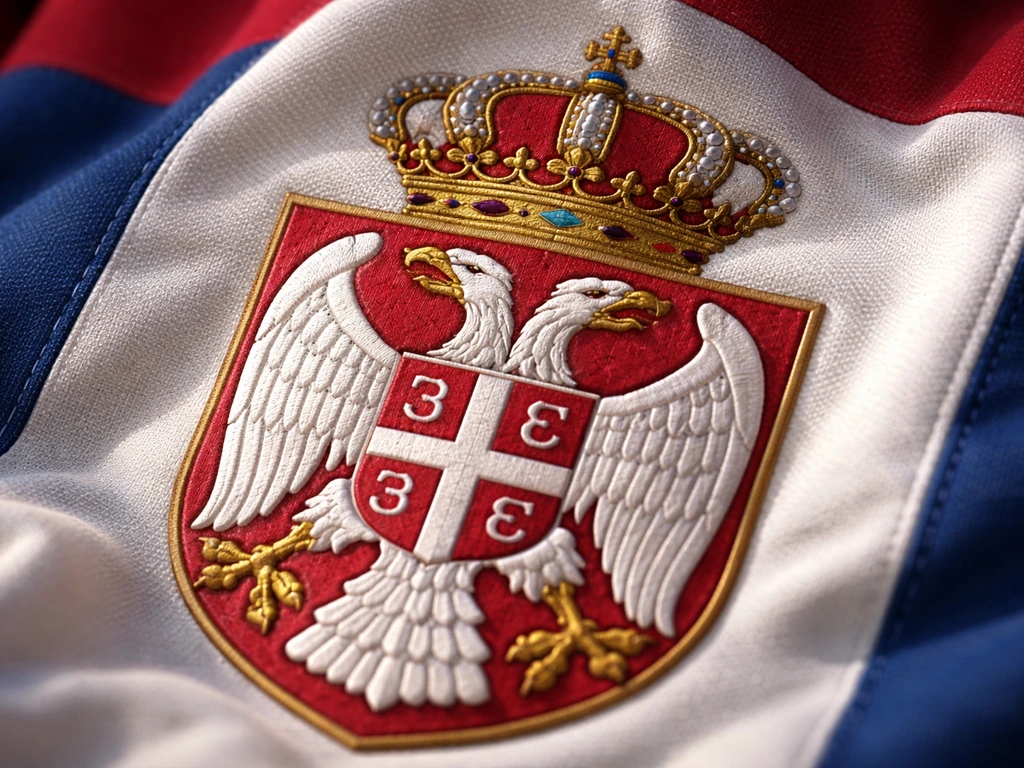
The Serbian flag is a horizontal tricolor of red, blue, and white stripes. The bird does not appear across the whole flag. Instead, it is part of the coat of arms placed slightly left of center on the flag. That coat of arms is the thing to focus on.
When you look at the coat of arms, here is what you are seeing from the outside in:
- A silver (white) double-headed eagle with wings spread, facing outward on both sides. This is the eagle itself.
- A royal crown sitting above the eagle's two heads.
- A red shield on the eagle's chest (the central escutcheon).
- Inside that shield: a silver cross with four firesteels (historically called "ocila") in each quadrant. This cross-and-firesteel combination is the Serbian cross.
The official heraldic description specifies the eagle as silver, armed (meaning its talons and beak are depicted in a contrasting tincture), and described as "beaked and langued," which is just heraldic language for the beak and tongue being shown in a specific color. If the eagle you are looking at does not have two heads and a chest shield bearing a cross with four symmetrical symbols, you are looking at a different country's emblem.
What the double-headed eagle actually means for Serbia
The double-headed eagle is not just a decorative choice. In Serbian tradition, it represents sovereignty, power, and the continuity of statehood. The two heads facing opposite directions symbolize authority looking both east and west, a concept deeply tied to the Byzantine Empire, which used the same motif to express dominion over two realms.
For Serbia specifically, the eagle signals a direct cultural and political connection to Byzantium, the Eastern Roman Empire that heavily shaped Serbian religion, art, and governance throughout the medieval period. Adopting the Byzantine eagle was a way for Serbian rulers to claim legitimacy and prestige within the Eastern Christian world.
The Serbian cross with four firesteels inside the chest shield adds another layer. The firesteels (sometimes called "tinderboxes" or interpreted as stylized letter C's for "Cyril" in Serbian) represent the national motto: "Only Unity Saves the Serbs." Together, the eagle and cross form a symbol that is as much about national identity and religion as it is about rulership.
How the Serbian eagle symbol developed over time
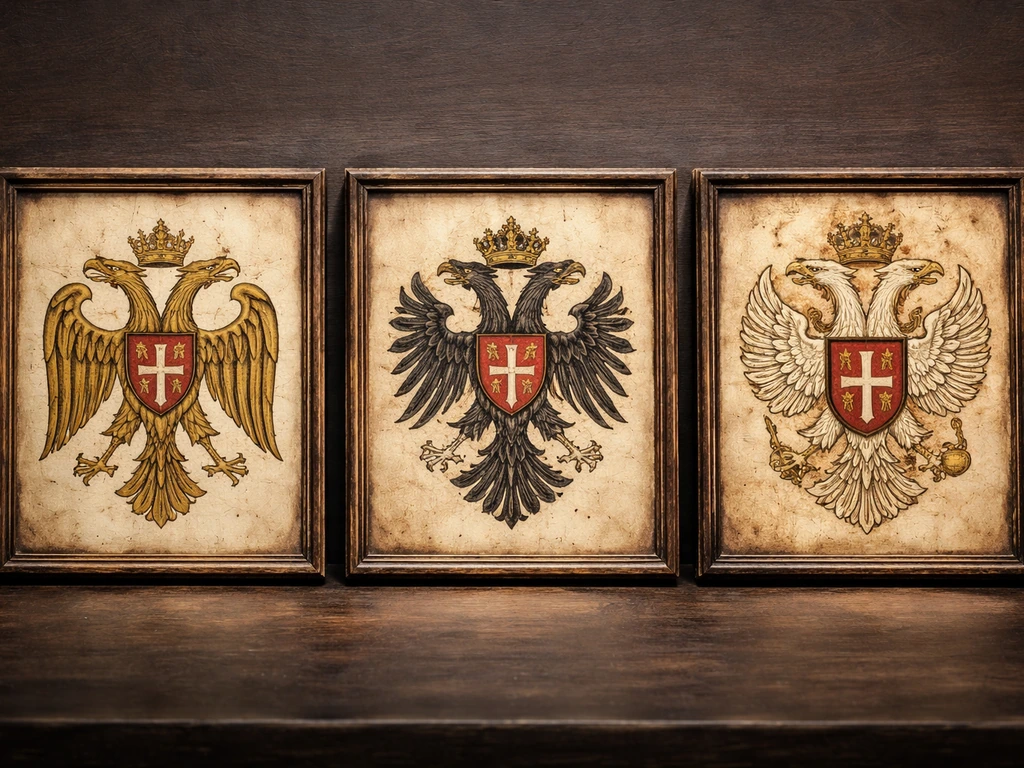
The blank" rel="noopener noreferrer">double-headed eagle entered Serbian heraldry during the reign of the Nemanjić dynasty, the royal house that ruled Serbia from the late 12th century through the mid-14th century. This was the golden age of medieval Serbia, culminating in the empire of Stefan Dušan (ruled 1331 to 1355), who styled himself Emperor of the Serbs and Greeks, consciously mirroring Byzantine imperial traditions.
After the fall of the Serbian medieval state following the Battle of Kosovo in 1389 and the eventual Ottoman conquest, the eagle symbol did not disappear. It was preserved in the Serbian Orthodox Church, in diaspora communities, and in the heraldic traditions kept alive by Serbian nobles and clergy. When Serbia re-emerged as an autonomous principality in the 19th century and later as a kingdom, the eagle was deliberately restored as a link to that pre-Ottoman, medieval Serbian identity.
Modern Serbia's coat of arms, as used on the current flag, was formally adopted in 2004 following the dissolution of the State Union of Serbia and Montenegro. The design closely follows the historical precedent, keeping the silver two-headed eagle and Serbian cross combination that had roots going back nearly 800 years.
How to confirm you have the right bird today
If you want to verify this quickly and confidently, here is what to do:
- Pull up the official Serbian government website (srbija.gov.rs) and navigate to the national symbols section. It explicitly identifies the two-headed eagle and its Byzantine origins.
- Check Wikipedia's "Coat of arms of Serbia" article, which includes the full heraldic blazon and a clear image of both the greater and lesser versions of the arms.
- Look at CRW Flags (Flags of the World, or FOTW), which is one of the most reliable vexillological references online. It reproduces the official blazon and shows the eagle's specific attributes.
- Compare the image you have against the checklist: two heads, silver/white color, royal crown above, red chest shield, cross with four firesteels inside. All five elements should be present.
One practical tip: Serbia uses both a "greater" and a "lesser" coat of arms. The lesser version is the one most commonly seen on the flag and in everyday use. The greater version is more elaborate, with additional supporters and regalia around the outside. Both feature the same double-headed eagle at their core, so either version confirms the identification.
Easy to mix up: other Balkan eagles and crests
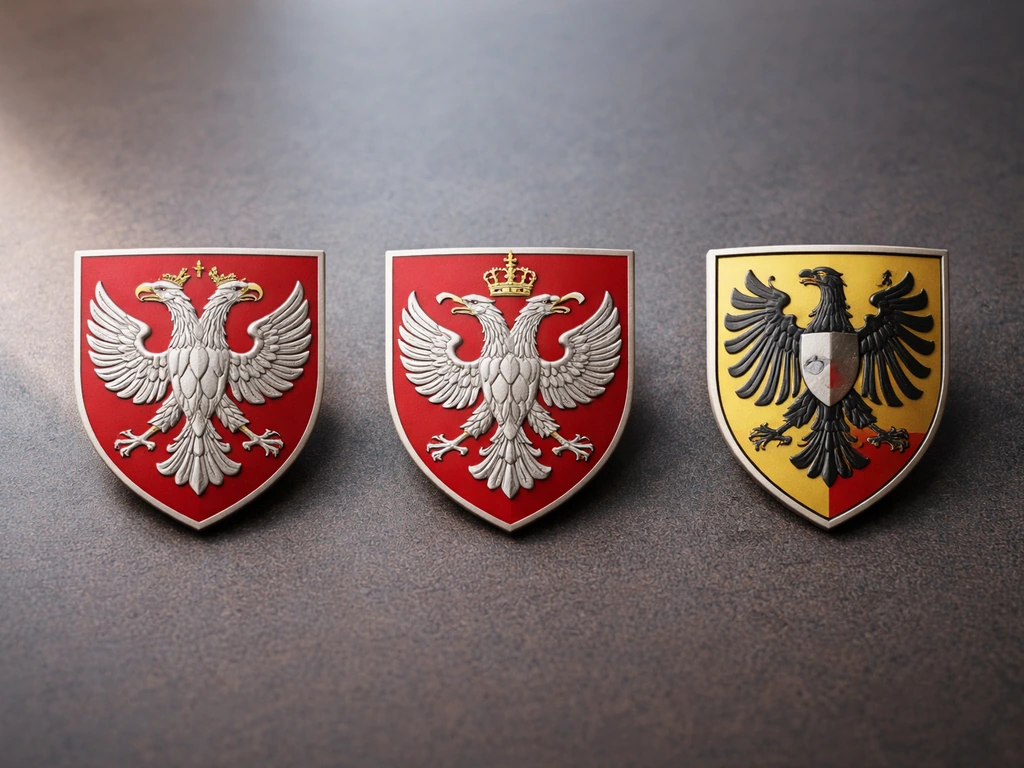
This is where a lot of people get tripped up. Several Balkan and Central European countries use eagle imagery on their flags or coats of arms, and without looking at the details, they can look similar at a glance.
| Country | Eagle Type | Key Distinguishing Feature |
|---|---|---|
| Serbia | Double-headed silver eagle | Red chest shield with Serbian cross and four firesteels |
| Albania | Double-headed black eagle | Solid black eagle on red background, no chest shield or cross |
| Montenegro | Double-headed golden eagle | Lion on chest shield, royal mantle surrounding the crest |
| Poland | Single-headed white eagle | One head, crown on top, no chest shield |
| Germany | Single-headed black eagle | One head, stylized modern design, no chest details |
| Russia (historical) | Double-headed black/gold eagle | Different shield, imperial orb and scepter in talons |
Albania is the most common source of confusion because it also uses a double-headed eagle. However, the Albanian eagle is solid black on a red field with no chest shield at all. Serbia's eagle is silver (white) and prominently features the Serbian cross on its chest. That chest shield is the fastest way to tell them apart.
Montenegro uses a double-headed eagle too, but its eagle is golden/yellow rather than silver, and its chest shield features a lion rather than a cross. If you are browsing Balkan flag imagery, Montenegro and Serbia are probably the two most likely to be confused with each other.
It is also worth noting that Poland and Germany use eagles on their national symbols as well. It is also worth noting that Poland and Germany use eagles on their national symbols as well. If you are wondering what bird is on the German flag, it is a single-headed eagle Germany use eagles on their national symbols. Poland's white eagle is single-headed, and Germany's eagle is a stylized single-headed black bird with a very modern, graphic look. For the question what bird is on the Polish flag, the answer is the white eagle shown on Poland's national coat of arms Poland's white eagle. The national bird of Poland is the white eagle. Germany's national bird is commonly described as a black eagle, which is used in its national symbols Germany's eagle. Neither should realistically be confused with the Serbian double-headed eagle, but they come up in discussions about European heraldic birds. The Polish flag, for instance, has its own eagle story worth exploring separately, as does the German eagle's long and complicated history.
The quick confirmation checklist
To summarize everything into a fast reference you can use right now:
- Bird type: Double-headed eagle (two heads facing opposite directions)
- Color: Silver or white
- Crown: Royal crown above both heads
- Chest detail: Red shield containing the Serbian cross (a white cross with four firesteels)
- Flag position: On the coat of arms, slightly left of center on the red-blue-white tricolor
- Confirmed by: srbija.gov.rs, Wikipedia (Coat of arms of Serbia), and CRW Flags (FOTW)
If the eagle you are looking at matches all of those points, you have the Serbian flag's bird correctly identified. The double-headed white eagle with the Serbian cross on its chest is one of the most historically layered national symbols in Europe, connecting modern Serbia directly to Byzantine imperial tradition through nearly eight centuries of continuous use.
FAQ
Is the bird on the Serbian flag ever shown as a single-headed eagle?
No, the Serbian flag’s coat of arms uses a double-headed eagle, if you see only one head it is a different coat of arms version or a different country’s emblem. The double heads facing opposite directions are one of the quickest identifiers.
Where exactly on the flag should I look to find the bird?
Look at the coat of arms in the center-left area of the flag. The eagle is not spread across the whole tricolor, so if the bird appears as a standalone figure covering the stripes, it is likely not the standard Serbian flag design.
Does the eagle’s color have to be silver or white to count as the Serbian flag?
Yes. Serbian depictions typically show the eagle as silver or white. If the eagle is clearly gold or yellow, or the chest shield colors do not match the Serbian cross design, you may be looking at a non-Serbian variation.
What should the eagle’s chest shield contain on the Serbian coat of arms?
On Serbia’s emblem, the chest shield includes the Serbian cross with four firesteels. If there is a different shield design (for example, a lion), that emblem usually belongs to another country even if it also has a double-headed eagle.
Are the “greater” and “lesser” coat of arms different birds?
They share the same central double-headed eagle. The difference is in the amount of surrounding detail, so you do not need to memorize extra elements, you can still confirm the bird by checking that the eagle is double-headed with the Serbian cross shield.
How can I tell if a Serbian flag image I found online is unofficial or altered?
Check that the coat of arms is placed correctly on the tricolor and that the eagle has two heads plus the cross shield. Common alterations include changing the eagle color, removing the chest shield, or shifting the emblem so it sits differently on the stripes.
Could a Serbian diaspora or historical flag show a different style of the same bird?
Yes, the eagle motif can appear in different artistic styles across church, diaspora, and historical heraldry, but it should remain double-headed and tied to the Serbian cross shield concept. If the motif loses the two heads or the chest shield’s cross identity, it is no longer the same emblem tradition.
What is the fastest way to distinguish the Serbian eagle from Albania or Montenegro?
Use the chest shield first. Albania’s double-headed eagle has no Serbian cross shield, and Montenegro’s chest shield shows a lion and the eagle is typically gold rather than silver.
Next Articles
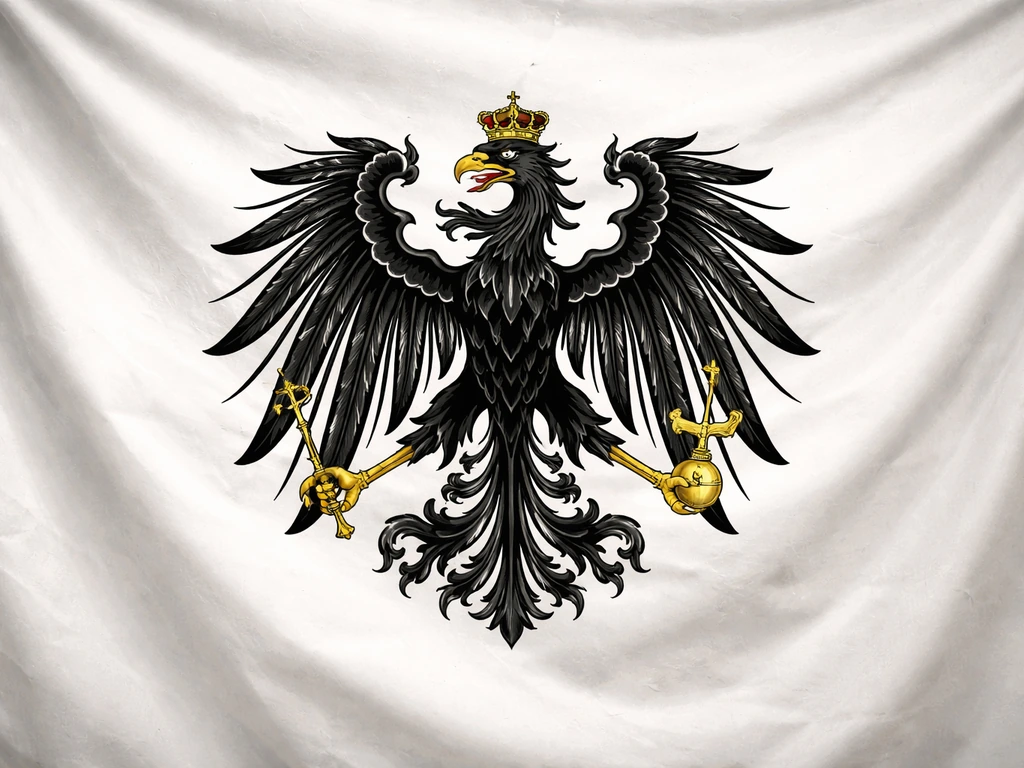
What Bird Is on the Prussian Flag? Identify the Emblem
Identify the bird emblem on the Prussian flag, with visual checks and history to confirm the correct heraldic symbol.
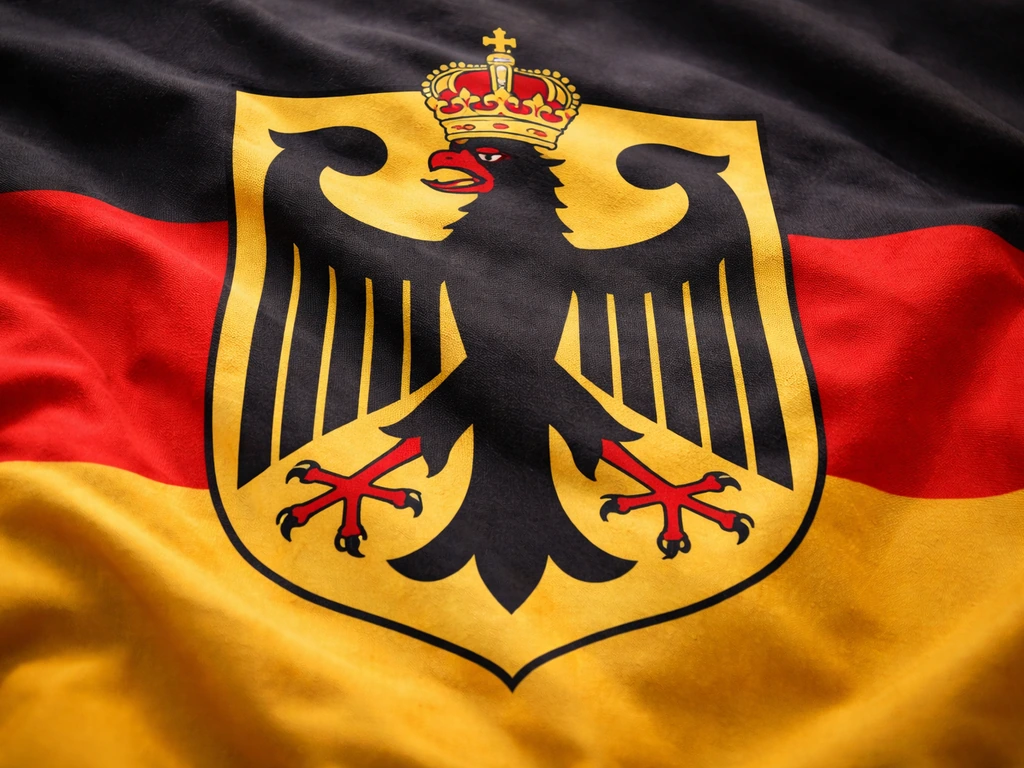
What Bird Is on the German Flag? Eagle Explained
Discover what bird is on the German flag, the heraldic eagle, plus how to confirm it and its symbolism history.
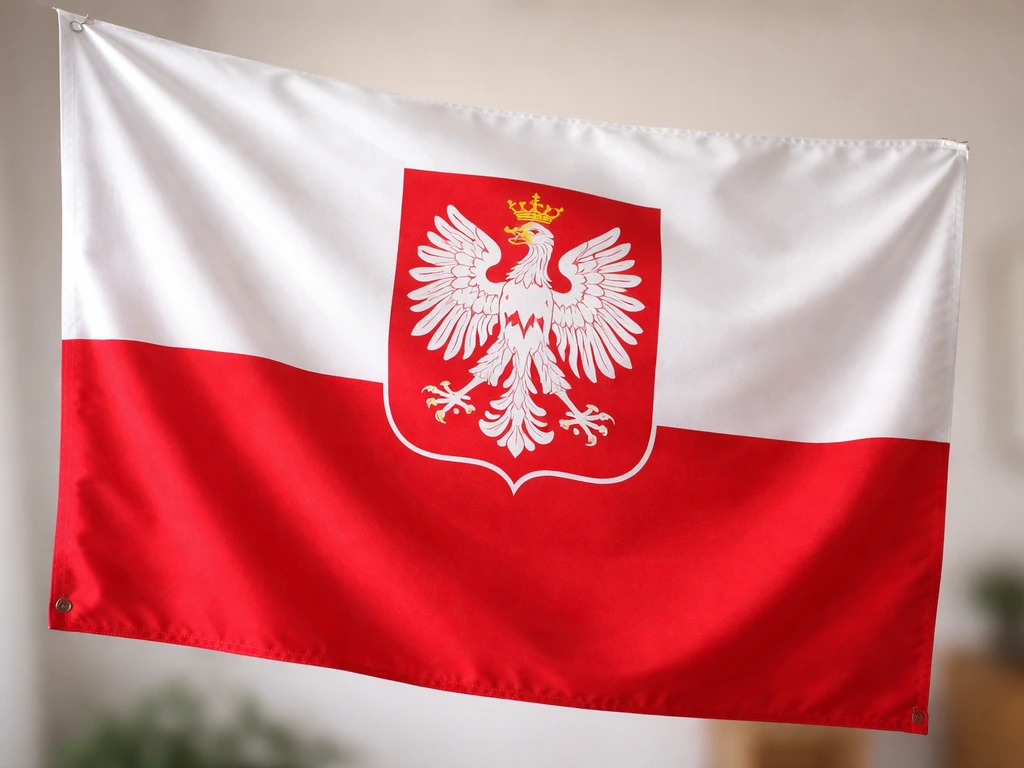
What Bird Is on the Polish Flag? Eagle Symbol ID
Identify the bird on the Polish flag and learn why the eagle emblem became Poland’s national symbol.