Poland's national bird: the white-tailed eagle
Poland's national bird is the white-tailed eagle, known in Polish as the bielik. Its scientific name is Haliaeetus albicilla. Britannica describes the white-tailed sea eagle as also known as Haliaeetus albicilla white-tailed sea eagle also known as Haliaeetus albicilla. This is not just a symbolic choice on paper, the white eagle has been central to Polish national identity for centuries, appearing on the country's coat of arms (the godło) and woven into the country's founding legends. If you've come here just for the quick answer, that's it. But the story behind why this bird became Poland's emblem is genuinely fascinating, so keep reading.
What exactly is the white-tailed eagle
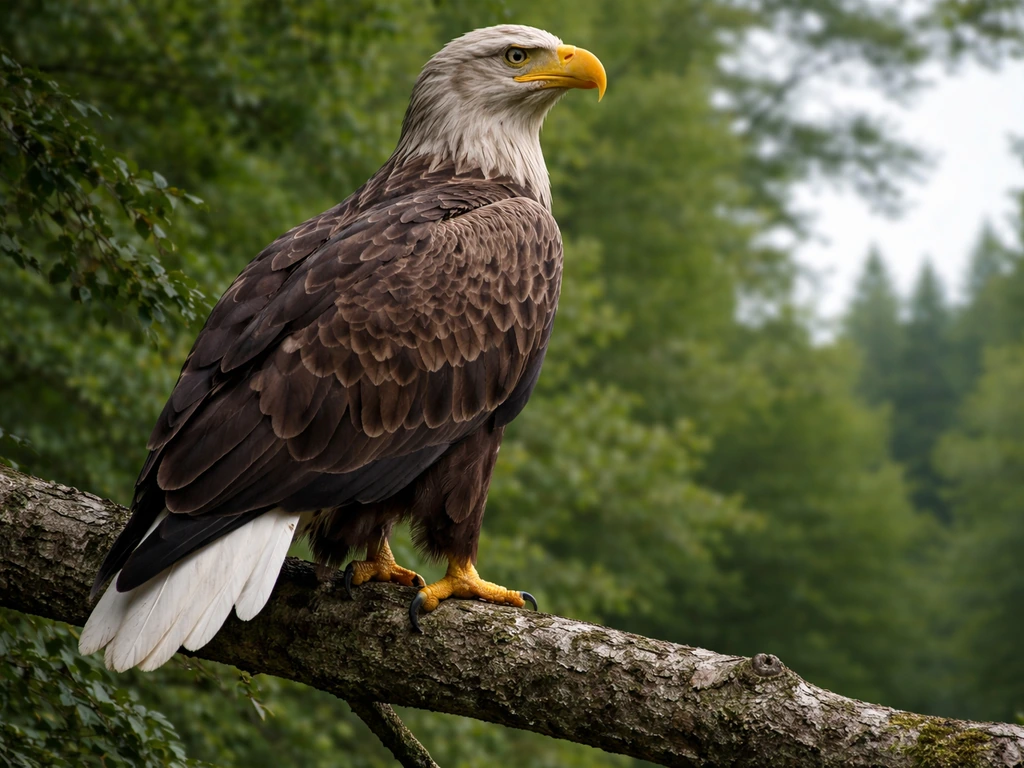
The white-tailed eagle (Haliaeetus albicilla) goes by a few names depending on where you look. Major conservation organizations like BirdLife International refer to it as the "White-tailed Sea-eagle," while agencies like the U.S. Fish and Wildlife Service use "White-tailed Eagle" as the standard common name. In Poland, it's simply called bielik. All of these names point to the same species: a massive bird of prey in the same genus as the bald eagle, just based across Europe and Asia rather than North America.
It's worth being clear on this because you'll occasionally see the Polish national symbol described as a "white eagle" in historical and heraldic contexts. That phrase refers to the stylized eagle depicted on the coat of arms, not a separate species. The real bird behind the symbol is the white-tailed eagle, Haliaeetus albicilla.
What the white eagle means to Poland
The white eagle is arguably Poland's most powerful national symbol. It sits at the center of the country's coat of arms: a crowned white eagle on a red background, a design that has remained remarkably consistent across centuries of political upheaval. Poland was partitioned out of existence for over 120 years in the 18th and 19th centuries, yet Poles kept the eagle as an emblem of national identity and resistance. When independence was restored in 1918, the eagle came back with it. That kind of staying power says a lot about what the bird means to the nation.
The symbolism ties into broader themes of strength, sovereignty, and continuity. Eagles in heraldry across Europe have long represented royal and state power, but Poland's connection to the white eagle feels especially personal because of how closely it's tied to the idea of the Polish nation surviving despite being wiped off the map politically. the bird featured on the Polish flag carries that same weight, it's not decoration, it's a statement of identity.
The legend and the history behind the choice
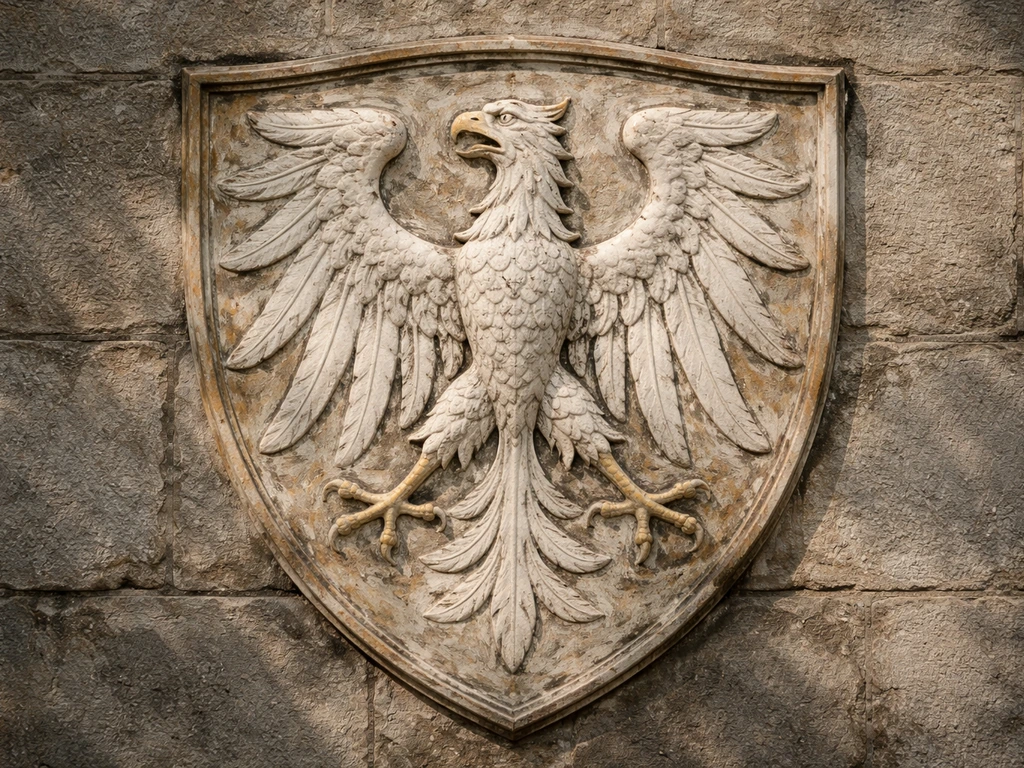
The most famous origin story ties the white eagle to Lech, the legendary founder of Poland. According to the legend, Lech came across a white eagle's nest, with the eagle's wings spread wide against the setting sun, the rays of light giving the eagle a golden glow. Lech took this as a sign and chose the white eagle as his emblem, founding his settlement at that spot, which became Gniezno, the first capital of Poland. The city's name is said to derive from the Polish word "gniazdo," meaning nest.
Whether or not you take the legend literally, the heraldic history is solid. The crowned white eagle on a red field has been part of Polish royal and national heraldry since at least the medieval period. The design is now codified in official Polish law through the Coat of Arms Act, which governs how the emblem can be rendered officially. You can also see the eagle on the pennant of the President of the Republic of Poland, where it appears as a heraldic banner based directly on the national coat of arms: the crowned white eagle on red.
For context, it's worth noting how Poland's heraldic eagle tradition compares to neighboring countries. Germany's national bird is the golden eagle, and eagle imagery also features heavily in the heraldry of the broader region. The Prussian connection is particularly interesting given the shared history, the bird on the Prussian flag is a black eagle, quite distinct from Poland's white eagle in both appearance and symbolism. Similarly, Serbia's flag also features a white eagle, making it a fascinating parallel in Slavic heraldic tradition.
How to recognize a white-tailed eagle in the wild
If you want to go beyond the symbol and actually understand the bird, here are the key field identification points according to Poland's State Forests (Lasy Państwowe), which maintains detailed educational records on the species:
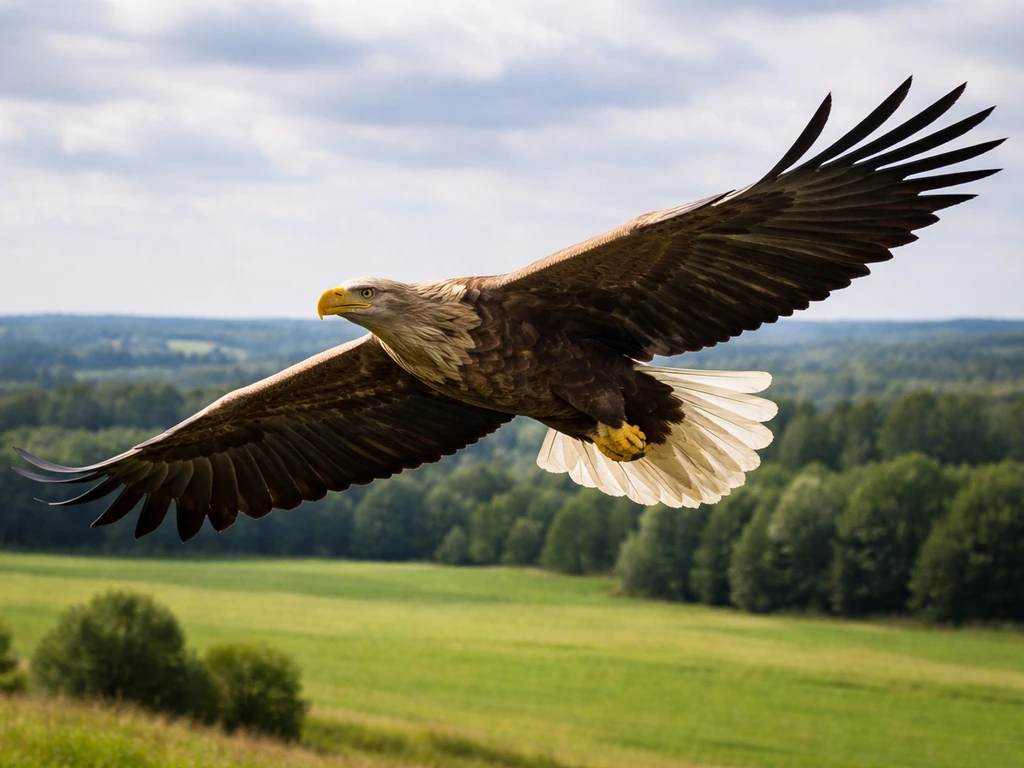
- Wingspan: up to 250 cm, making it one of the largest eagles in Europe
- Wings: long and broad with a straight trailing edge, often described as "barn door" shaped in flight
- Tail: short and wedge-shaped; in adult birds (from around year 5 or 6) it becomes entirely white, which is the most distinctive feature
- Bill: large, hooked, and bright yellow in adults
- Head: pale straw-colored or whitish in adults
- Juvenile plumage: dark brown overall, gradually lightening over approximately six years as the bird matures
One practical tip: don't confuse a young white-tailed eagle with other large brown raptors. The white tail only becomes fully white in mature adults. Young birds are all dark brown, so if you're hoping to spot the iconic white tail in the field, you're looking for an adult.
Where to find white-tailed eagles in Poland
The white-tailed eagle is a breeding bird in Poland, not just a passage migrant. You're most likely to spot them in specific habitats: the Odra River valley in western Poland, along the Baltic coast, the Mazury lake district in the northeast, and eastern Poland more generally. These are areas with the combination of large water bodies and forests that the species needs for nesting and hunting. Poland has an active national monitoring program for the bird's breeding productivity, with a particular focus on the Baltic coastal zone.
White-tailed eagle vs. golden eagle: a quick comparison
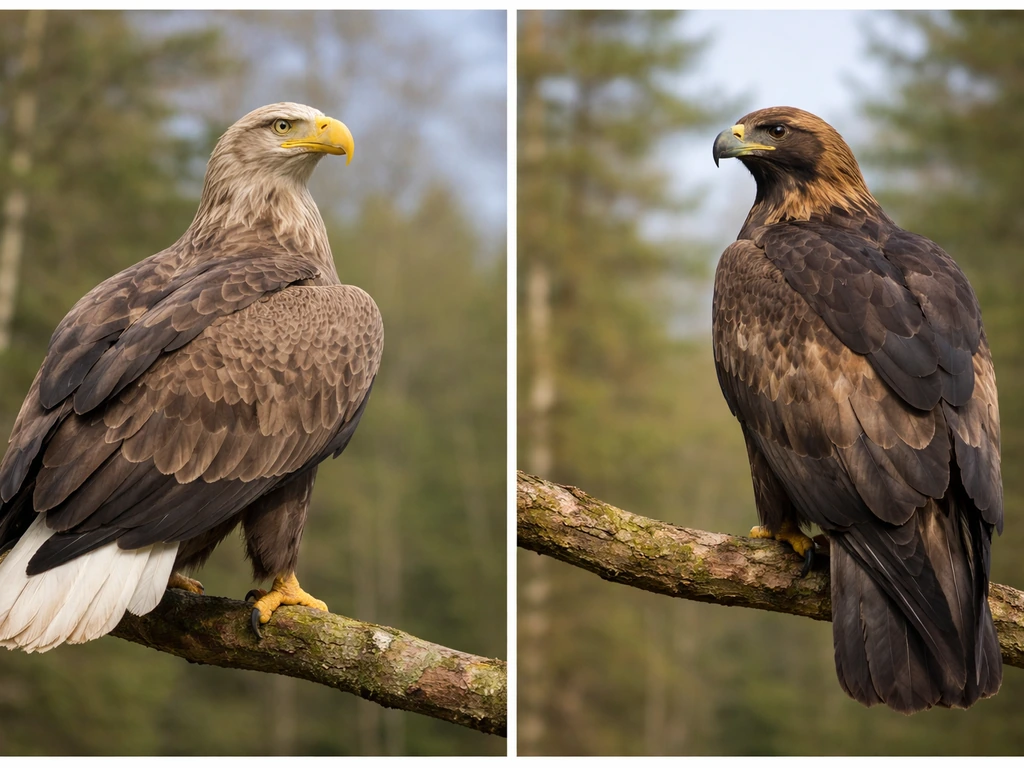
People sometimes confuse these two species, especially since both appear in European heraldry. Here's a side-by-side breakdown of the key differences:
| Feature | White-tailed Eagle (Poland's national bird) | Golden Eagle (Germany's national bird) |
|---|
| Scientific name | Haliaeetus albicilla | Aquila chrysaetos |
| Tail | Short, wedge-shaped; white in adults | Longer, rounded; not white |
| Bill | Large, yellow, hooked | Smaller, gray-yellow |
| Head color (adult) | Pale straw/whitish | Golden-brown nape |
| Wing shape in flight | Long, broad, straight trailing edge | Slightly more pointed |
| Typical habitat | Rivers, lakes, coastlines, wetland forests | Mountains, open uplands |
| Heraldic association | Poland (white eagle on red) | Germany (black eagle on yellow) |
If you're curious about the German side of this comparison, the bird depicted on the German flag has its own distinct heraldic history worth exploring.
How to verify this and learn more
If you want to confirm the species identification from credible sources, the clearest route is to cross-reference Poland's State Forests (Lasy Państwowe) educational pages, which explicitly identify the bielik as Haliaeetus albicilla and describe its role as a national symbol. For the coat of arms connection, the official Polish government sources and any standard reference on Polish national symbols will confirm the white eagle's central role. The U.S. Fish and Wildlife Service and BirdLife International's European Red List both independently confirm the common name and scientific name pairing for the species.
For birdwatching purposes, Poland's national bird monitoring program (Monitoring Ptaków Polski, run by GIOŚ) tracks white-tailed eagle breeding productivity across the country, particularly along the Baltic coast. This is a good resource if you want to understand current population status and where the birds are most active.
The bottom line: Poland's national bird is the white-tailed eagle (bielik, Haliaeetus albicilla). It's been the country's symbol for at least 700 years of documented heraldic history, it's a real breeding species found across Poland, and it's one of the most recognizable birds of prey in Europe. Whether you're here for the cultural history or the birdwatching angle, there's a lot more to this bird than just a flag emblem.