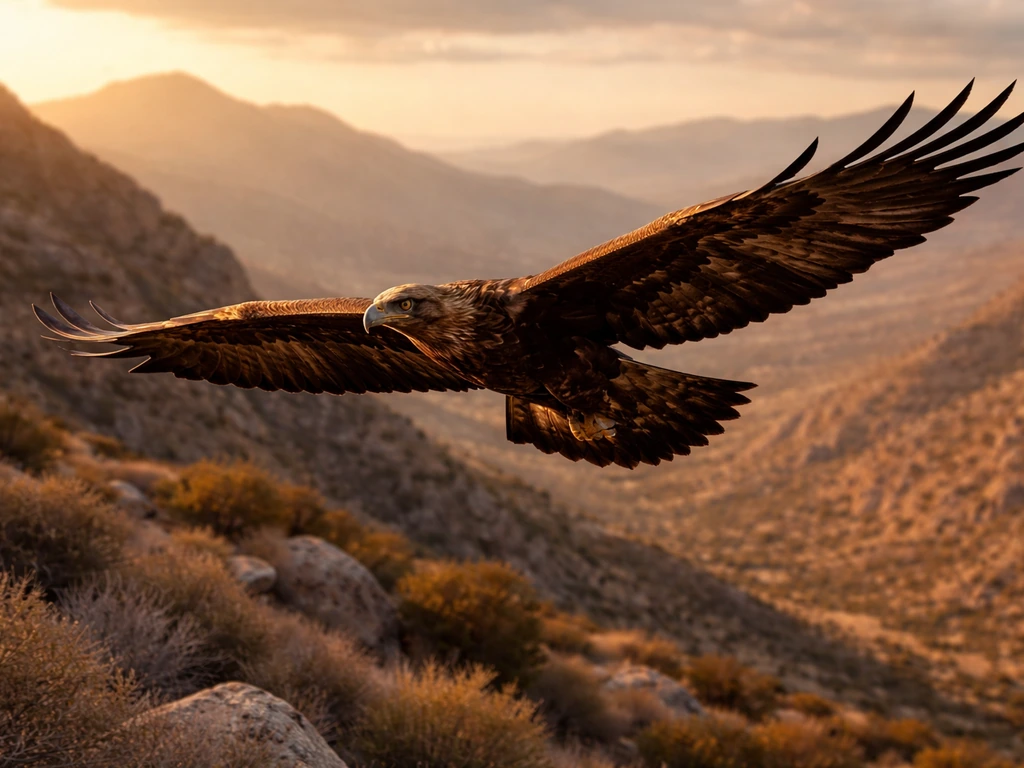
The national bird of Hungary is the saker falcon (Falco cherrug). Turkey's national bird is different from Hungary's saker falcon, so it's worth checking the country's official emblem directly national bird of Hungary. It is an officially recognized national symbol, and if you have seen a cross-country list of national birds, Hungary's row will consistently show "Saker falcon, Falco cherrug" with confirmed official status.
What Is the National Bird of Hungary? Meaning, History, ID

Marcus Chen
5 Jun 2026
What the saker falcon represents for Hungary
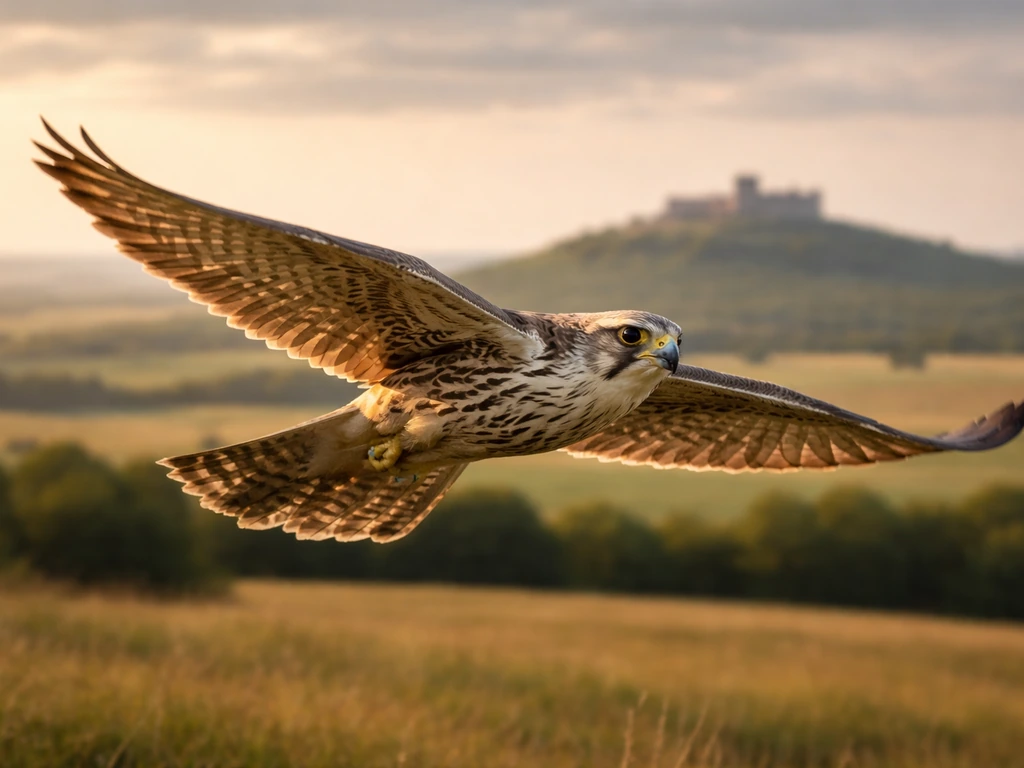
The saker falcon is not just a pretty bird that someone picked at random. It sits at the very heart of Hungarian identity, connecting a living wild species to one of the country's most enduring mythological symbols: the Turul. In Hungarian tradition, the Turul is a powerful, mythological bird of prey, almost always depicted as a large falcon, that represents divine providence and guidance (isteni gondviselés és iránymutatás). Modern ornithological scholarship and cultural historians widely agree that the Turul was most likely inspired by the saker falcon, known in Hungarian as kerecsensólyom.
That connection gives the saker falcon a symbolic weight that goes well beyond birdwatching. It ties Hungary's national bird to ideas of strength, divine guidance, and ancestral origin. The Turul was described in medieval chronicles as appearing on King Attila's shield, and it has been used as an emblem of Hungary's ruling dynasty for centuries. When you see the saker falcon named as Hungary's national bird, you are seeing the real, living animal behind that deep mythological legacy.
How it became a national symbol
The saker falcon's status as a national symbol grew organically from centuries of Hungarian culture rather than from a single legislative act. The Turul bird has been embedded in Hungarian heraldry, coats of arms, and dynastic legend since the medieval period. Over time, as Hungary developed a more formal national identity, especially through the 19th and early 20th centuries, the falcon figure became increasingly prominent in public monuments and institutional emblems.
One concrete marker of this is the famous Turul statue at Buda Castle in Budapest, created by sculptor Gyula Donáth and erected in 1905. The statue stands 10.5 metres tall with a wingspan of 12.5 metres, and it was designed as a deliberate statement of national identity, linking Hungary's present to its mythological founding story. The choice of the falcon form for such a prominent monument was not accidental. It reflected a broader cultural consensus that this bird, and by extension the living saker falcon, embodied the Hungarian spirit.
Cultural stories and the bird's presence in Hungarian life
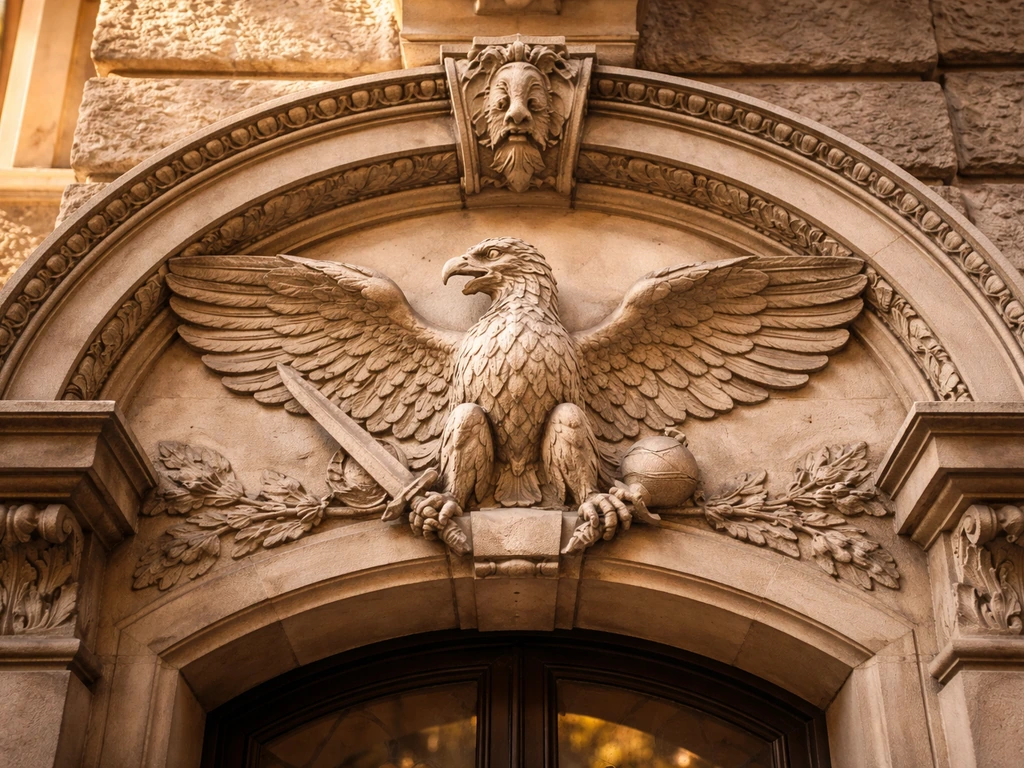
The Turul appears everywhere in Hungary, and once you know what to look for, you will spot it constantly. Beyond the Buda Castle statue, Turul imagery is found on the Szabadság Bridge and on the gates of the Hungarian Parliament. The Hungarian Defence Forces emblem shows the Turul with extended wings, holding the sword of King Saint Stephen, making it an active institutional symbol today, not just a historical relic.
In 2012, Prime Minister Viktor Orbán personally inaugurated a new Turul monument at Ópusztaszer (Ópusztaszeri Nemzeti Történeti Emlékpark), one of Hungary's most significant historical memorial sites. That event underlines how central the bird symbol remains to Hungarian national expression. There is also a claim that the largest bird statue in Europe is a Turul, located in Tatabánya (formerly Bánhida), which gives you a sense of how seriously Hungary takes this avian emblem.
The founding legend attached to the Turul describes it as appearing to the ancestors of the Árpád dynasty, Hungary's original ruling house, acting as a divine guide and protector. That origin story has kept the falcon central to Hungarian cultural memory for well over a millennium.
Getting to know the saker falcon as a real bird
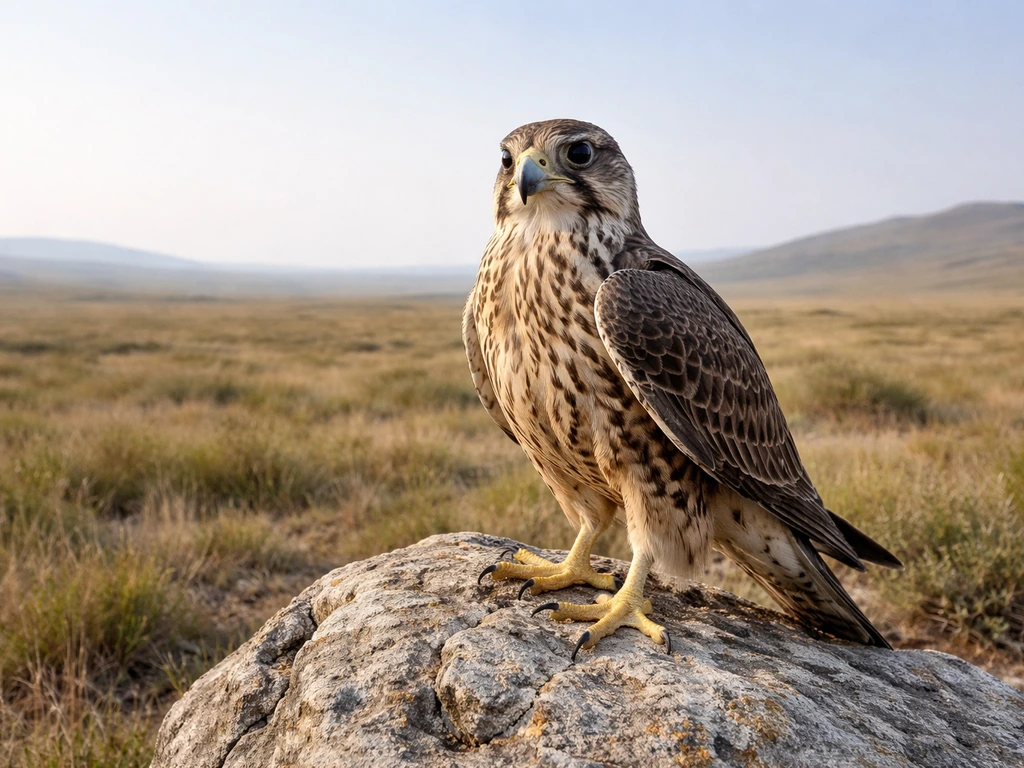
The saker falcon is a large, powerful raptor. It is noticeably bigger than a peregrine falcon and has a broad-winged, heavy-bodied build compared to many other falcons. In the field, look for a pale brown upperside with streaked underparts and a relatively plain head without the strong moustache mark of a peregrine. Adults have a pale creamy-white crown that stands out when the bird is perched.
In Hungary, sakers favour open and forested steppe habitats, grasslands, and dry country with scattered trees or cliff faces. They will also nest on electricity pylons, and conservation groups in Hungary have installed artificial nesting platforms on high-voltage power poles specifically to support the population. When nesting on natural cliff sites, pairs typically place their nests between 8 and 50 metres above the base. For birders, that means scanning open steppe grasslands and watching pylons and cliff ledges, especially during the breeding season.
Diet is heavily mammal-based. During the breeding season, small mammals including ground squirrels, hamsters, jerboas, and hares can make up 60 to 90 percent of a pair's diet in productive habitat. That dependence on open grassland prey species makes the saker ecologically tied to the same steppe landscapes that defined ancient Hungarian culture, which is one reason the bird feels like such a natural fit as a national symbol. The national bird of Iran is the Eurasian Hoopoe, a striking bird that appears in Persian culture and symbolism national symbol.
Conservation status is a concern worth knowing. The saker falcon is listed as Vulnerable on the IUCN Red List, which means the Hungarian nesting platform programs and similar initiatives are genuinely important, not just symbolic gestures. For birders, the species is a priority target on any Hungarian trip list, and it appears on the official checklist maintained by Hungarian birdwatching resources.
Clearing up the common confusion: saker falcon, Turul, and Hungary's coat of arms
This is where most people get turned around, so it is worth being direct about it. There are three distinct but related things that often get mixed together:
- The saker falcon (Falco cherrug) is the real, living species recognized as Hungary's national bird.
- The Turul is a mythological bird of prey from Hungarian tradition, depicted as a falcon and considered a national emblem (nemzeti jelképe). It is not a species you can tick on a bird list. It is a cultural and symbolic concept.
- Hungary's coat of arms features a double cross and horizontal stripes and does not show a bird. The Turul appears in institutional emblems like the Hungarian Defence Forces logo, not the formal state coat of arms.
The reason people blend these together is that scholars widely accept the Turul was inspired by the saker falcon specifically. So the national bird and the mythological emblem are deeply linked, but they are not the same thing. The Turul is a symbol; the saker falcon is the bird. Some older or informal sources also mention Falco rusticolus altaicus (an Altai form of gyrfalcon) as a possible Turul candidate in historical interpretations, which adds another layer of confusion. For the purposes of "what is Hungary's national bird," the answer is the saker falcon, full stop.
If you are exploring national birds across the region, Hungary's saker falcon is particularly interesting to compare with its European neighbours. Austria’s national bird is the golden eagle (Aquila chrysaetos). Countries like Austria, Romania, Greece, Albania, Italy, and Turkey each have their own bird emblems shaped by equally distinctive cultural and historical forces.
If you are comparing Italy's national bird status, the Italian sparrow is often discussed because of its strong connection to the country's native bird life and cultural recognition. For Albania, the national bird is the eagle, often identified as the golden eagle in local references. If you are comparing national bird emblems, you may also be wondering what Greece’s national bird is Greece's national bird.
Italy's national bird is the hoopoe, a small crested bird known for its distinctive calls and markings. Each story is different, and Hungary's falcon-mythology connection is one of the more fascinating examples of a living species carrying the weight of a whole national origin legend.
FAQ
Is Hungary’s national bird always the saker falcon, even in different languages or sources?
Yes. The national bird is identified as the saker falcon (Falco cherrug), often referred to by its Hungarian name, kerecsensólyom. The species name may appear with small formatting differences across sources, but the bird itself should match the saker falcon.
Why do some lists show the Turul instead of a real bird?
Some compilations mix up symbols and animals. The Turul is the mythological emblem, the national bird is the living saker falcon, even though scholarship commonly links the Turul inspiration to the same falcon lineage.
I’ve seen Turkey’s national bird listed, does that affect Hungary’s?
No. Turkey has a different national bird, so do not use Turkey’s emblem or list entries as a proxy for Hungary. When comparing countries, confirm the species name specifically for Hungary, not just the “national bird” label.
What’s the quickest way to tell a saker falcon from a peregrine falcon in Hungary?
Use overall build and head pattern. Sakers are broader-bodied and heavy-winged, with a paler, more evenly colored head and less of the bold moustache-like marking typical of many peregrines. Perched birds often show a pale creamy crown.
Are there best places or habitats to look for Hungary’s national bird?
Focus on open steppe or grassland with scattered trees, drier country, and watch for birds using pylons and cliff ledges. Sakers also take advantage of human structures during nesting, so scanning high-voltage power poles can be especially productive during the breeding season.
What is the typical nesting height you might expect when spotting saker falcons?
When nests are on natural cliffs, they are commonly placed well above the ground, roughly between about 8 and 50 metres from the base. On pylons, the “height” depends on tower design, but the nesting location is typically clearly elevated and visible from a distance.
How important are the artificial nesting platforms for this species?
They can be very important in Hungary because conservation groups provide nesting sites on high-voltage power poles. Since the saker is listed as Vulnerable, these platforms are not just symbolic, they directly support breeding opportunities in suitable landscapes.
What should I know about the saker falcon’s diet when interpreting sightings?
During breeding season, small mammals dominate, and in productive habitat they can make up most of what a pair brings to the nest. If you are searching for sakers, the best areas are often those with healthy ground-squirrel or hare populations rather than areas that look “good” only for scenery.
Does the national bird status mean the species is common to see in Hungary?
Not necessarily. National symbolism does not guarantee frequent sightings. The saker falcon is Vulnerable and sightings can be limited, so treat it as a priority target and plan around breeding season and known habitat features like pylons and open grassland.
What confusion should I expect regarding older “Turul candidates” like Altai forms?
Some historical interpretations propose other falcon forms (including an Altai gyrfalcon form name) as possible Turul candidates. For the question “what is the national bird of Hungary,” the correct straightforward answer is the saker falcon (Falco cherrug).
If I’m making a region comparison, how should I structure it to avoid mixing myth and biology?
Compare two layers separately: (1) the country’s national bird as a specific species, and (2) any mythological or historical emblem it inspires or resembles. For Hungary, the saker is the species, the Turul is the cultural symbol.
Next Article
What Is the National Bird of Iran? Facts, Meaning, History
Learn Iran’s national bird: the golden eagle, its Persian names, history, symbolism, and how to verify the facts.