
blank" rel="noopener noreferrer">Romania's national bird is the great white pelican, known scientifically as Pelecanus onocrotalus and called 'pelicanul alb' in Romanian. The Italian sparrow is sometimes confused with other birds, but it is known for its role in Italy's national symbolism and folklore. It was chosen to represent the country largely because Romania is home to one of Europe's most important pelican habitats: the Danube Delta, a UNESCO World Heritage Site where tens of thousands of these birds breed and feed every year.
What Is the National Bird of Romania? Meaning and History

Marcus Chen
10 Jun 2026
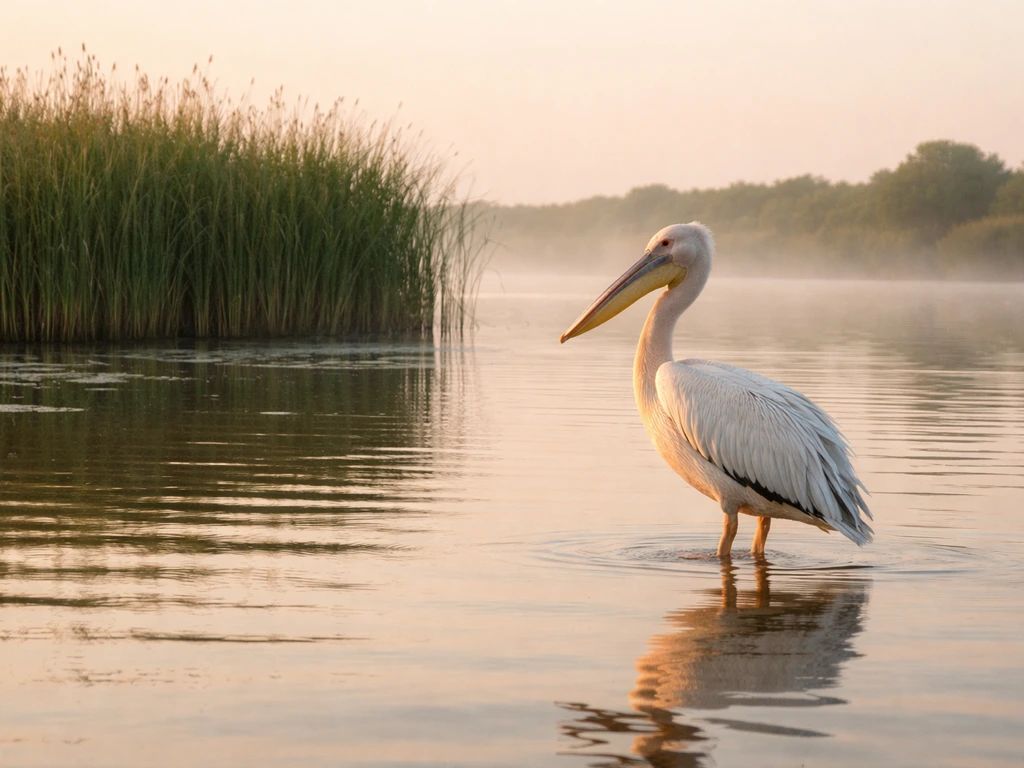
Romania's national bird: the great white pelican
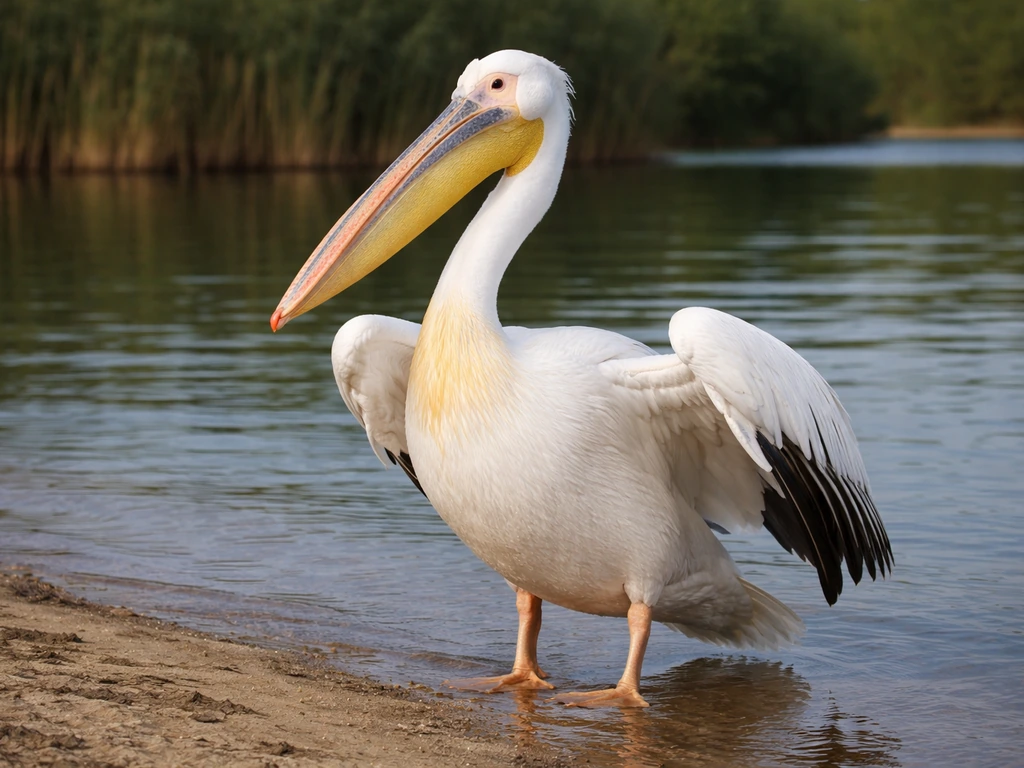
The great white pelican is a massive, unmistakable waterbird. Adults typically reach 140 to 175 centimeters in length, with a wingspan that can stretch up to 3.6 meters, making it one of the largest flying birds on the planet. Its plumage is almost entirely white, offset by black flight feathers that are only visible when the wings are spread. The famous orange-yellow pouch hanging from its long bill is used as a scoop to catch fish, not as a storage container as many people assume.
In Romanian, the official designation is 'pasărea națională a României,' and multiple Romanian sources confirm the great white pelican holds that title. The connection between Romania and this bird is not arbitrary or purely symbolic. Romania simply has more great white pelicans than almost any other European country, and the Danube Delta is the bird's primary European breeding ground.
How the pelican became Romania's symbol
The formalization of the great white pelican as Romania's national bird is tied closely to growing recognition of the Danube Delta's ecological importance in the late 20th century. Romania declared the Danube Delta a Biosphere Reserve in 1990, and UNESCO added it to the World Heritage List in 1991. These international milestones put the delta's wildlife, and the pelican colonies at its heart, squarely in the public eye. The pelican was the natural choice for national bird precisely because its presence in Romania is ecologically unique within Europe.
Unlike some national bird designations that come from a single formal government decree on a specific date, Romania's adoption of the pelican as its avian symbol emerged through cultural consensus and official recognition tied to conservation efforts. The bird became synonymous with Romanian national pride in nature and is consistently cited in Romanian educational materials and national identity discussions as the country's representative bird.
What the pelican represents for Romania
The great white pelican carries powerful symbolism in the Romanian context. It represents the country's extraordinary natural heritage, specifically the Danube Delta, which is the largest river delta in the European Union and one of the most biodiverse wetland ecosystems on Earth. Choosing the pelican signals that Romania identifies strongly with this natural wonder.
Beyond ecology, pelicans have carried rich symbolic meaning in Christian and European cultural traditions for centuries. In medieval European iconography, the pelican was a symbol of self-sacrifice and parental devotion, stemming from a legend that a pelican would wound its own breast to feed its chicks with blood during times of famine. This image, known as the 'pelican in her piety,' appeared frequently in religious art and heraldry across Europe, and Romania shares this broader cultural inheritance.
In a modern national sense, the pelican also represents conservation and environmental stewardship. Romania has invested significantly in protecting the Danube Delta, and the pelican serves as a flagship species for those efforts, much like how other nations use charismatic animals to anchor environmental campaigns.
The pelican in Romanian culture and national identity
The Danube Delta region, home to the pelicans, features prominently in Romanian folklore and rural life. The communities of the delta, many of them Lipovan Russian descendants who have fished these waters for generations, have lived alongside pelican colonies for centuries. Local stories and customs are deeply intertwined with the rhythms of the delta's wildlife, including the annual arrival of pelican flocks in spring.
Romanian tourism campaigns frequently feature the great white pelican as one of the country's defining natural icons, alongside imagery of the Carpathian mountains and medieval castles. The bird appears in nature documentaries, school curricula, and conservation literature as a shorthand for Romania's ecological wealth. It is also the focus of ecotourism efforts centered on Tulcea county and the delta villages, drawing birdwatchers and naturalists from across Europe.
While the pelican does not appear on Romania's official coat of arms (which features an eagle holding a cross, along with symbols representing the country's historical regions), it occupies a firm place in national cultural identity through conservation discourse and popular recognition.
Interesting facts and how to spot one
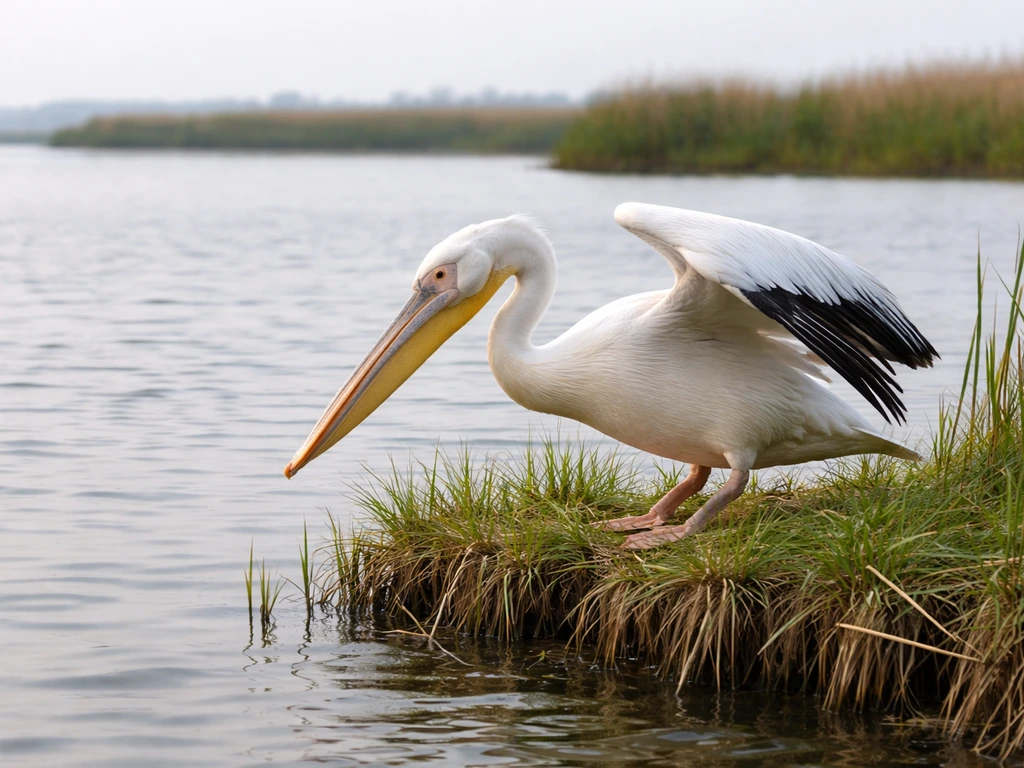
The great white pelican is genuinely impressive in the field. Here are some facts worth knowing, whether you are studying it for school or planning a trip to Romania to see one.
- The Danube Delta hosts one of the largest breeding colonies of great white pelicans in Europe, with estimates ranging from 2,500 to over 5,000 breeding pairs in good years.
- Pelicans are highly social and nest in dense colonies on low-lying islands within the delta, particularly around Lake Rosca-Buhaiova, which is a strictly protected area.
- They are migratory: Romanian pelicans typically arrive from their African wintering grounds in March or April and depart by October.
- A single great white pelican can eat up to 1.2 kilograms of fish per day, and they often hunt cooperatively, herding fish into shallow water as a group.
- Despite their bulk, great white pelicans are strong fliers and use thermal currents to soar. Flocks in formation are one of the most spectacular sights in the delta.
- The best months for birdwatching in the Danube Delta are May through July, when pelicans are actively breeding and feeding chicks.
If you want to see great white pelicans in Romania, the town of Tulcea is the practical gateway to the Danube Delta. From there, guided boat tours run through the delta channels and give you close access to pelican feeding grounds. Binoculars with at least 8x magnification are recommended, though pelicans are large enough that you can spot flocks with the naked eye from open water viewpoints.
Common confusion: the eagle on Romania's coat of arms
A lot of people arrive at this topic expecting the answer to be an eagle, and that confusion is completely understandable. Turkey's national bird is different from Romania's, so it's helpful to know the correct country-specific designation national bird of Turkey. Romania's coat of arms features a golden eagle holding an Orthodox cross, and eagles are a recurring motif in Romanian heraldry and historical imagery. But the heraldic eagle on the coat of arms is a symbol of statehood and dynastic history, not the designated national bird.
The distinction matters because 'national bird' and 'heraldic bird on the coat of arms' are two different categories. Many countries have one bird on their state emblems and a separate designated national bird, and Romania is a clear example of this. If you are specifically looking for the heraldic symbol, the eagle is your answer. If you are looking for the national bird, it is the great white pelican. The national bird of Iran is the Eurasian hoopoe.
A second source of confusion is that Romania shares the Danube Delta and its bird life with Ukraine, and some sources discuss pelican populations in a regional context without clearly attributing the national bird designation to Romania specifically. The pelican's presence in the delta spans both countries, but the designation as national bird belongs to Romania.
It is also worth noting that neighboring countries have made their own distinct national bird choices. Greece, Turkey, Hungary, and Austria all have different avian symbols that reflect their own histories and landscapes, so the pelican stands out as genuinely unique to Romania's identity in the region. If you are comparing national birds across Europe, you can also look up what is the national bird of albania for another example. Austria’s national bird is the golden eagle. Greece, Turkey, Hungary, and Austria all have different avian symbols that reflect their own histories and landscapes, and Hungary's national bird is the common kestrel. If you are comparing Romania with other countries, you may also be wondering what the national bird of Greece is. If you are comparing, you can also look up what Italy's national bird is national bird choices.
Quick reference: Romania's national bird at a glance
| Detail | Information |
|---|---|
| Common name | Great white pelican |
| Romanian name | Pelicanul alb |
| Scientific name | Pelecanus onocrotalus |
| Primary habitat in Romania | Danube Delta, southeastern Romania |
| Best time to see it | May to July (breeding season) |
| Conservation status | Least Concern (IUCN), but locally protected |
| Wingspan | Up to 3.6 meters |
| Heraldic bird (coat of arms) | Golden eagle (separate from national bird) |
FAQ
Is the national bird of Romania the eagle on the coat of arms?
No. The great white pelican (Pelicanul alb) is Romania’s designated national bird, while the golden eagle on Romania’s coat of arms is a separate heraldic symbol tied to state and historical motifs.
Why do some websites say Romania’s national bird is the Italian sparrow?
It is the great white pelican, not the Italian sparrow. If you see “Italian sparrow” in a quiz or list, it is likely referring to Italy’s symbolism or a mistaken mix-up rather than Romania’s national bird designation.
Where should I go in Romania if I want to see the national bird (the great white pelican) in the wild?
For pelican watching, Tulcea is typically the most practical starting point because it gives access to the Danube Delta channels where breeding and feeding occur. Your viewing chances are also better when pelicans are actively foraging during daylight hours.
Do I need to worry that the Danube Delta is shared with other countries when looking up Romania’s national bird?
If your goal is national-bird facts, ignore general Danube Delta wildlife pages that discuss the region without clearly assigning national status. The pelican is present across borders in the delta, but Romania’s national-bird designation is specifically for Romania.
Was Romania’s national bird chosen by one government decree on a specific date?
Don’t treat the national bird as a single official decree with a widely cited date. In Romania’s case, the identification is tied to cultural acceptance and conservation visibility, especially linked to the Danube Delta’s rise in international prominence.
Do great white pelicans in real life match the medieval “pelican in her piety” story?
“Pelican in her piety” is the better-known medieval European legend connected to pelicans, but you should treat it as cultural symbolism rather than a literal behavior description. The pouch is used for scooping fish, not for carrying food or “feeding by tearing flesh.”
What’s the easiest way to verify I’m looking at the correct “national bird” category for Romania?
A good way to confirm you have the right category is to separate “national bird” from “heraldic bird.” Many countries have an emblem bird and a different designated national bird, and Romania follows that pattern.