The bald eagle earns the word "majestic" through a combination of sheer size, striking appearance, and behavior that's hard to look away from. A seven-foot wingspan, a snow-white head contrasting against a dark brown body, bright yellow talons, and the habit of dropping from a perch to snatch a fish out of open water, these are things you feel as much as see. Add in its deep roots in American history and a surprisingly recent official designation as the U.S. national bird (signed into law in December 2024), and you've got a bird that earns its reputation on every level.
The Bald Eagle Is a Majestic Bird: Facts and Meaning

Marcus Chen
15 Jun 2026
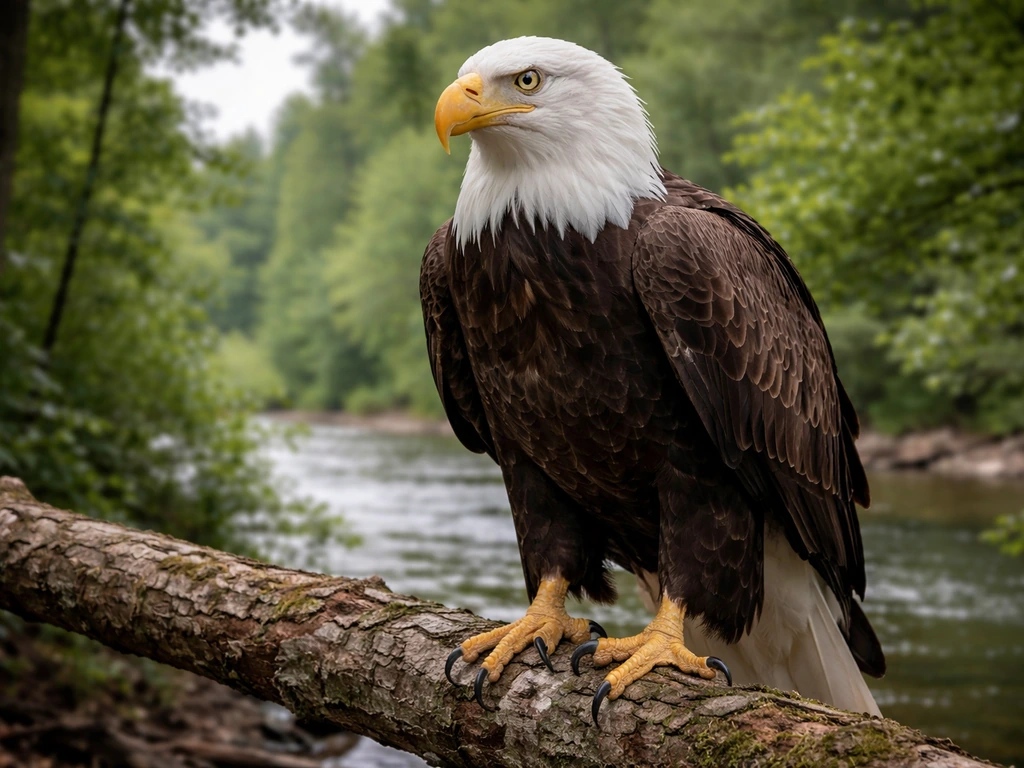
What "majestic" actually looks like: the bald eagle's key physical traits
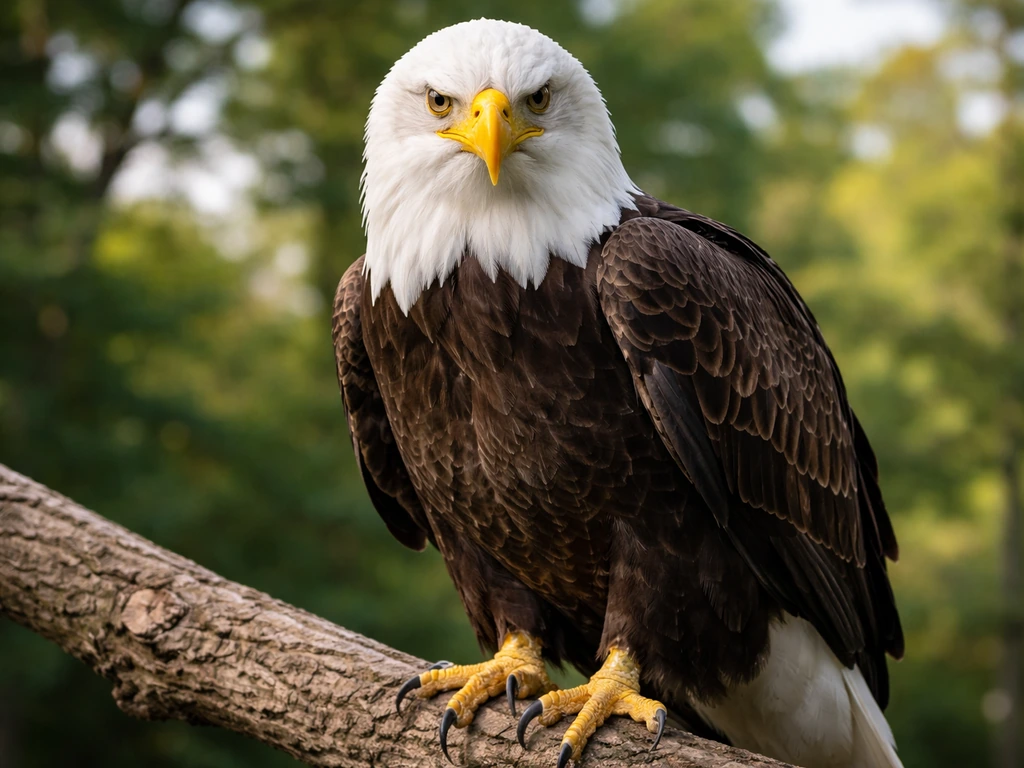
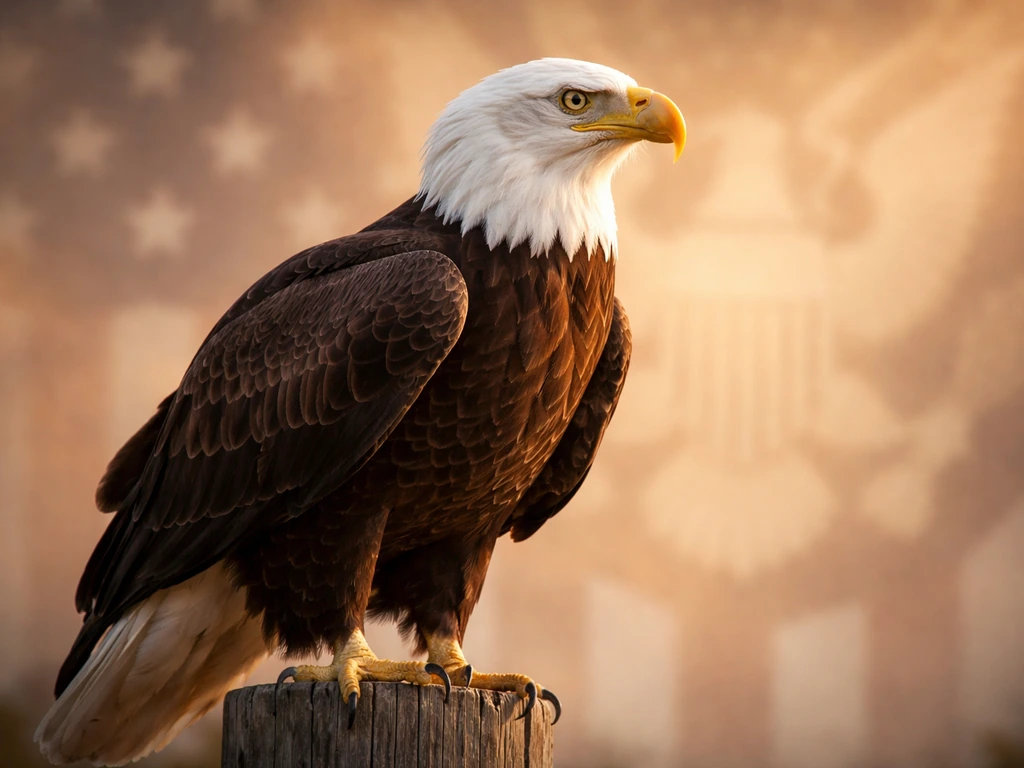
Start with the basics. Adult bald eagles have a dark brown body and wings, a bright white head and white tail, and a bold yellow bill. Their beak, feet, and irises are all vivid yellow, which creates an almost theatrical contrast against the dark feathers. The legs are feather-free, and the toes are short and powerful with large, curved talons built for gripping live fish.
Size is a big part of the impression they make. According to the National Park Service, bald eagles average 28 to 38 inches in length with a wingspan of roughly 80 inches, about 6.7 feet. The U.S. Fish and Wildlife Service rounds that up to approximately seven feet. Either way, when one passes overhead, you feel it. There's a shadow. You notice.
One thing worth knowing: not every bald eagle you spot will have that iconic white head. Juveniles spend their first four or five years with mostly brown plumage, and their eye and bill color shifts gradually from dark brown or blackish-gray at hatching to the adult's bright yellow. You have to be looking at a bird that's at least four to five years old before you get the full white-head look. Yellowstone National Park's wildlife guides specifically flag this to help visitors calibrate their expectations.
Where bald eagles live and what you can actually watch them do
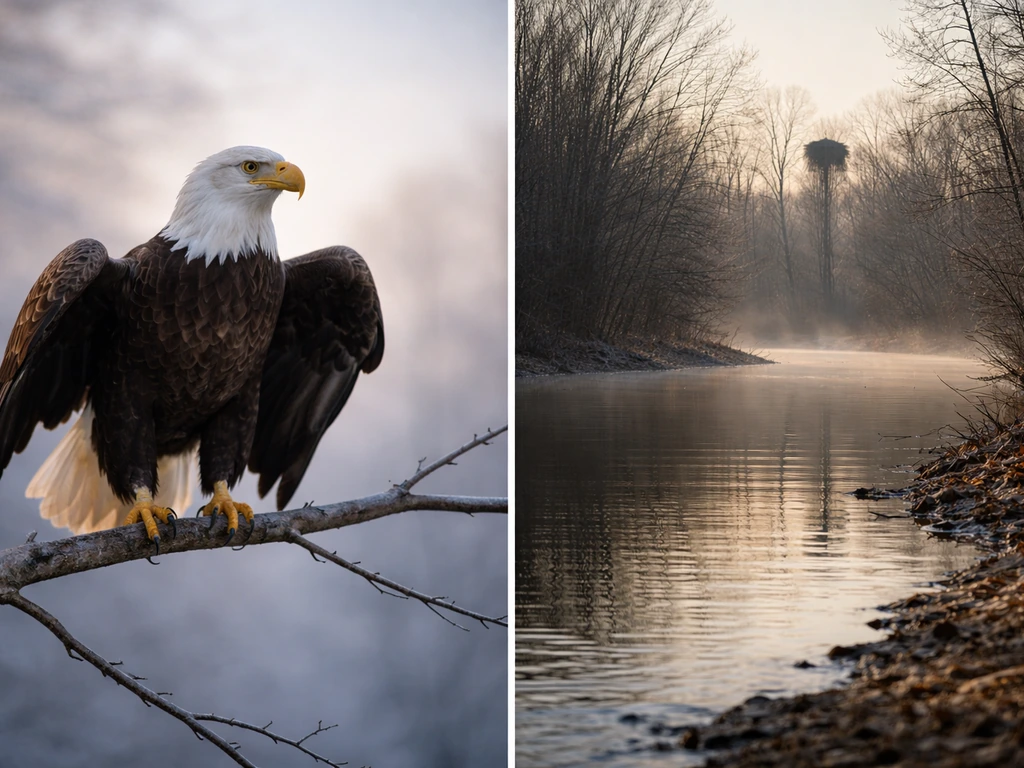
Bald eagles stick close to water. Rivers, lakes, reservoirs, coastal shorelines, and wetlands are their preferred territory, places where fish are accessible and tall trees or elevated perches give them a commanding view. You'll find them across most of North America, from Alaska and Canada all the way down through the lower 48 states into parts of northern Mexico.
Their hunting style is one of the things that makes them so watchable. They typically perch high in a tree or on a rock, scan the water below, then swoop down fast and snag a fish with those talons. Sometimes they'll wade into shallows or even swim using their wings to pull themselves toward shore when a fish is too heavy to carry into flight immediately. That swimming behavior surprises a lot of people the first time they see it.
They're not above scavenging, either. When live fish aren't available, bald eagles will feed on carrion including large hoofed animals. This is actually what bothered Benjamin Franklin, more on that in the history section, but it's also normal raptor behavior. A bird that can adapt its diet is a bird that survives.
If you're near a lake or river and see a large bird sitting very still at the top of a dead tree, watch it. The perch-and-swoop pattern is the most reliable thing to look for, and once you see the dive, you'll understand where "majestic" comes from.
Bald eagle facts worth knowing (and a few myths to drop)
Lifespan
Bald eagles are long-lived birds. The U.S. Fish and Wildlife Service puts their wild lifespan at up to about 30 years, while Indiana's Department of Natural Resources cites estimates as high as 38 years in the wild. In captivity, under managed care, they can live even longer. That longevity adds to their cultural weight, this isn't a fragile creature.
Nesting and breeding
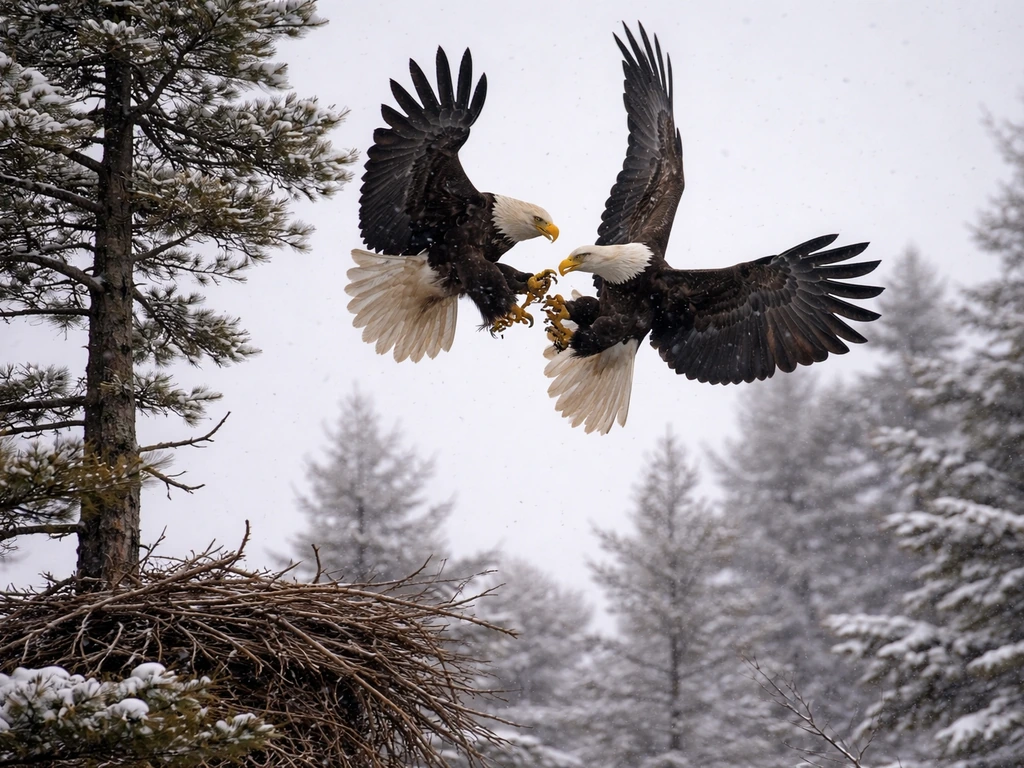
Courtship is spectacular and happens in mid- to late winter. Pairs perform aerial loops, dives, and the behavior that's become almost legendary: talon-locking, where two eagles lock feet and spiral downward together in a cartwheel descent before breaking apart just before hitting the ground. Courtship occurs in mid- to late winter and can include aerial loops, cartwheels, and dives, ending with talon-locking followed by a downward dive for hundreds of feet mid- to late winter courtship that includes talon-locking and a downward dive. National Geographic has called it a "death spiral," which is accurate and slightly alarming. If you ever witness this in the wild, it's one of the most dramatic things any bird does.
After courtship, females lay one to three eggs (two is most common), with incubation by both parents lasting about 35 days. Young eagles typically fledge 10 to 12 weeks after hatching. Fledglings stay near the nest and continue to be fed and taught by the adults for a period after their first flight. Immature birds then spend about four years exploring before settling into breeding territory of their own.
Common misconceptions
- "All bald eagles have white heads" — Only adults do, starting around age four to five. Younger birds look mostly brown and can be confused with other large raptors.
- "They only hunt fish" — Bald eagles are opportunistic. They eat waterfowl, scavenge carrion, and steal prey from other birds. They're adaptable, not specialized.
- "They always mate for life" — Bald eagles do tend toward long-term pair bonds, but pairs can change, especially if a mate dies. It's not a guaranteed lifelong arrangement in every case.
- "It was always officially the national bird" — Until December 2024, the bald eagle had long been assumed to hold that title but was never formally designated by law. PBS NewsHour and the Associated Press both covered the moment when President Biden signed the legislation making it official.
How it became a national symbol: the selection story
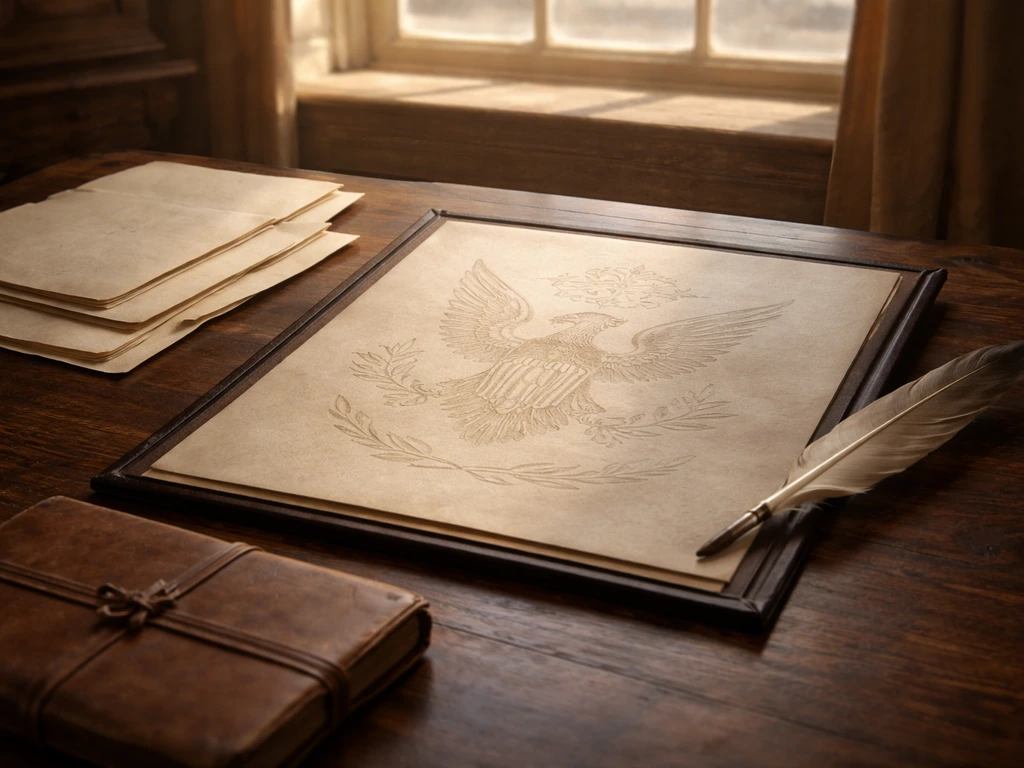
The story of the bald eagle as a national emblem begins in 1782. On June 13 of that year, Congress asked Charles Thomson to come up with a suitable design for the Great Seal of the United States. Thomson placed the American bald eagle at the center of his design, on the wing, facing forward, holding an olive branch in one talon and a bundle of arrows in the other. On June 20, 1782, Congress officially adopted the Great Seal.
Thomson's own explanation of the design is clear: the olive branch represents the power of peace, and the arrows represent the power of war. The eagle holding both signals that the new nation had the strength for either but preferred peace. It's a deliberate visual argument, not just decoration.
There's a famous story about Benjamin Franklin preferring the wild turkey over the bald eagle, partly due to the eagle's scavenging habits. Whether that concern was entirely serious or partly tongue-in-cheek is debated, but the bald eagle won out, and for understandable reasons. It's native exclusively to North America, it's visually arresting, and it carries an air of authority that was useful for a country trying to establish itself on the world stage.
The formal legal status came much later. For most of American history, the bald eagle was the de facto national bird through its presence on the Great Seal, currency, and federal buildings, but there was no law specifically calling it the national bird. To answer why are bald eagles the national bird, it's a mix of law, symbolism, and what the eagle represents to Americans. That gap closed on December 24 to 25, 2024, when President Biden signed legislation codified under 36 U. If you want the exact date, it was officially designated by law in December 2024 December 24 to 25, 2024. S. Code § 306, officially designating the bald eagle as the national bird of the United States. If you're curious about the earlier timeline in more detail, the history of when the bald eagle became the national bird and why it was chosen over other candidates are stories worth reading alongside this one.
What the bald eagle represents in American symbolism today
The National Park Service summarizes the bald eagle's symbolism as wilderness, power, and freedom. Those three words aren't arbitrary, they map directly onto American national identity as it was constructed from the founding era forward. A bird that lives wild across an entire continent, that hunts independently, and that physically dominates the skies above rivers and mountains is a natural fit for a country that built its self-image around those same ideas.
The Great Seal image appears on official U.S. documents, passports, currency, and the president's flag. It's one of the most reproduced symbols in American life. USA.gov confirms the bald eagle's role as the national emblem in this context, not just a decorative bird but a legal and diplomatic symbol used every day.
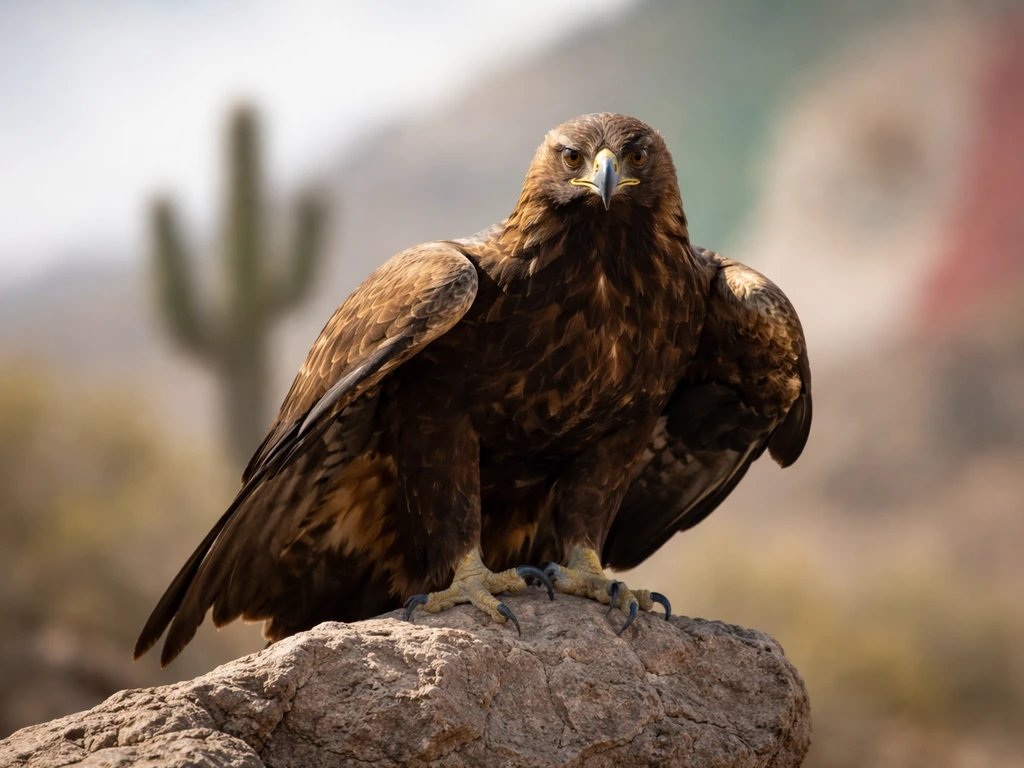
Modern conservation adds another layer to the symbolism. The bald eagle was listed as endangered in the lower 48 states in the 1960s and 1970s, largely due to DDT pesticide use and habitat loss. It was removed from the Endangered Species List in 2007 following a dramatic population recovery. It's still protected under the Migratory Bird Treaty Act and the Bald and Golden Eagle Protection Act. The fact that the country pulled a nationally symbolic bird back from the edge of extinction is now part of the story people tell about the eagle, a symbol of resilience on top of everything else. For comparison, other countries have made similarly powerful choices with their national birds: Mexico's golden eagle, for instance, carries its own deep historical and cultural weight that mirrors the significance Americans attach to the bald eagle.
Where and how to see bald eagles today (without causing a problem)
Best times and places
Winter is the single best season for bald eagle watching across most of the lower 48 states. December through March brings both resident eagles and migratory birds to feeding areas near open water. The California Department of Fish and Wildlife, New York's DEC, and the NPS Upper Delaware unit all point to winter as peak viewing time. In the Upper Delaware region alone, more than 100 eagles may gather along the river during winter months.
For volume, Alaska is in a category of its own. Southeast Alaska, particularly near Haines and the Chilkat River, can host thousands of bald eagles in winter, drawn by late-running chum salmon. If you want to understand what it means to say bald eagles are numerous and thriving, standing near the Chilkat River in November or December makes that abstract statistic very concrete.
Other reliable spots include national parks and wildlife refuges near major waterways: the Upper Delaware, Yellowstone, Kenai Fjords in Alaska, and Wellesley Island State Park in New York are all mentioned by state and federal agencies as strong viewing locations.
Watching responsibly
The U.S. Fish and Wildlife Service's National Bald Eagle Management Guidelines are worth knowing before you go. The practical rules are straightforward: keep your distance, especially during nesting season (egg-laying, incubation, and the late nestling period are the most sensitive windows). Iowa's DNR recommends staying at least 100 yards away when vegetation blocks the eagle's view of you. Pennsylvania's wildlife agency puts it simply: if the eagle looks agitated or starts vocalizing, you're too close.
Bring binoculars or a spotting scope. You'll get better views, the eagle won't know you're there, and you'll actually see more, including the yellow eye color, the texture of the white head feathers, and whether you're looking at an adult or an immature bird. That distinction becomes part of the fun once you know to look for it.
Beyond the facts: stories and culture that stick
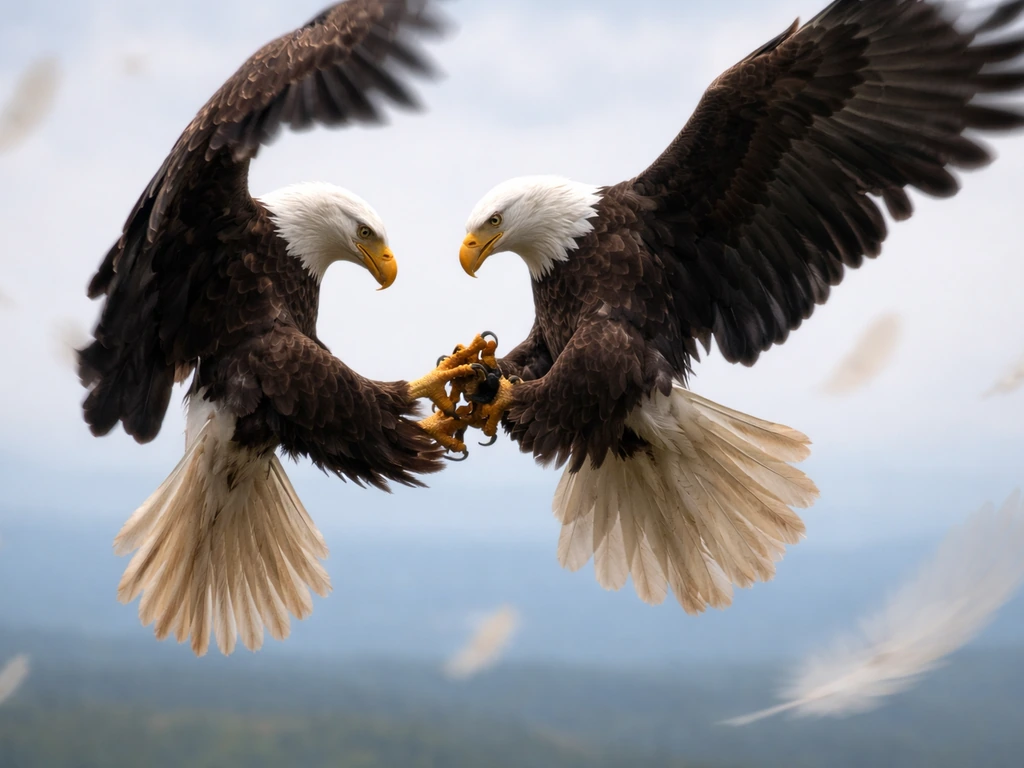
The talon-lock courtship spiral is genuinely one of the more extraordinary things a bird does. Two eagles, locked together by their feet, falling hundreds of feet before releasing just before impact. Researchers believe it helps pairs assess each other's strength and coordination before committing to raise chicks together. It's functional, but it looks like performance art.
In many Indigenous North American cultures, bald eagle feathers carry deep spiritual meaning and are used in ceremonies that predate European contact by thousands of years. Federal law, specifically the Bald and Golden Eagle Protection Act, makes it illegal for most people to possess eagle feathers, but members of federally recognized tribes can apply for permits through the National Eagle Repository, which distributes naturally molted or deceased eagle feathers for cultural and ceremonial use. This is an ongoing and living tradition, not historical footnote.
The 2024 official designation bill itself has a small cultural story attached to it. For over 240 years, the bald eagle was everywhere in American life, on the dollar bill, the presidential seal, federal agency logos, military insignia, but it had never been formally named the national bird by act of Congress. The assumption was so universal that no one bothered to make it official. When the law finally passed, it was simultaneously unremarkable (of course) and genuinely significant (it had never actually been done). That gap between assumed and confirmed says something interesting about how national symbols work in practice.
If you want to go deeper after reading this, the questions of exactly when the bald eagle was adopted as a national symbol and why it was chosen over other candidates, including Franklin's turkey argument, have their own detailed histories worth exploring. The short version is that the Continental Congress made a fast and deliberate choice in June 1782, and America has never seriously reconsidered it.
FAQ
How can I tell an immature bald eagle from an adult if the head is not fully white yet?
It is normal to see bald eagles with different plumage depending on age, but you can still confirm you are looking at a bald eagle by the combination of a heavy, hooked yellow bill and large, pale tail in adults. Juveniles often have a darker overall look and only develop the white head over several years, so don’t rely on the head color alone.
Why does a bald eagle sometimes look like it is barely moving, especially near the water?
Bald eagles can sometimes appear to be “standing still” because they are scanning, but prolonged immobility for long periods is also common when they are resting after feeding. If you notice repeated dives, tail-flicking, or frequent head turns toward the water, that is more consistent with active hunting than simple rest.
Is it only illegal or risky to get close during nesting season, or should I use extra caution in other months too?
Yes. Although their nesting season is the most sensitive time, the same general rule applies year-round: keep distance, avoid blocking their line of sight, and back away if they show agitation or start vocalizing. Nesting sensitivity is higher because disturbance can cause adults to abandon nests or leave eggs and young exposed.
What are safe rules for getting photos or using a spotting scope without stressing the eagles?
If you are photographing or using a scope, use a zoom that lets you stay put, avoid approaching toward the eagle, and never try to lure it with food. Even if you are “downwind,” sudden movements can be interpreted as threat, and repeated vehicle or foot traffic can lead to wildlife habituation that increases risk for the bird.
Do bald eagles always hunt live fish, or should I expect scavenging and opportunistic behavior?
Not always. Bald eagles do not hunt exclusively by swooping for fish, they also scavenge, and they may steal food from other birds. That means a calm eagle near shore can still be waiting for an opportunity, not necessarily waiting for a fish to swim by.
Why might I see a young bald eagle in an area that has no obvious nest nearby?
Juveniles often roam and spend time near food sources, so you might see them far from established nesting areas. They are still learning, so their hunting attempts can be less efficient, and they may use different perches and more “trial” behavior than adults.
What should I do if I find a bald eagle that seems injured or is on the ground?
They are protected species under U.S. federal law, so the safest assumption is that touching, feeding, or attempting to handle them is not allowed and can be dangerous for both you and the bird. If you find an injured or grounded eagle, contact local wildlife authorities or a trained wildlife rehabilitator rather than trying to move it yourself.
Why do bald eagle crowds vary so much from year to year, even in famous winter locations?
Even when eagles are abundant in winter, best viewing depends on open water and predictable food. In places like Alaska, salmon run timing and river conditions drive large gatherings, so the “best time” can shift by a few weeks depending on when fish are available.
If I travel in winter, will I reliably see the talon-locking courtship spiral?
The courtship behavior is dramatic, but it is not guaranteed whenever you go. It is most likely in mid- to late winter, and it also depends on whether a pair has formed and is actively bonding in that area. If you are there only briefly, your odds improve by checking local wildlife updates before your trip.
Does being the U.S. national bird mean bald eagles are easy to find across the country year-round?
Some people assume the national bird status means you can expect the bald eagle everywhere, but its distribution still tracks water and fish availability, and it varies by season. Your best bet is targeting major waterways and winter congregation zones rather than expecting to find one in every state or neighborhood.
Next Articles
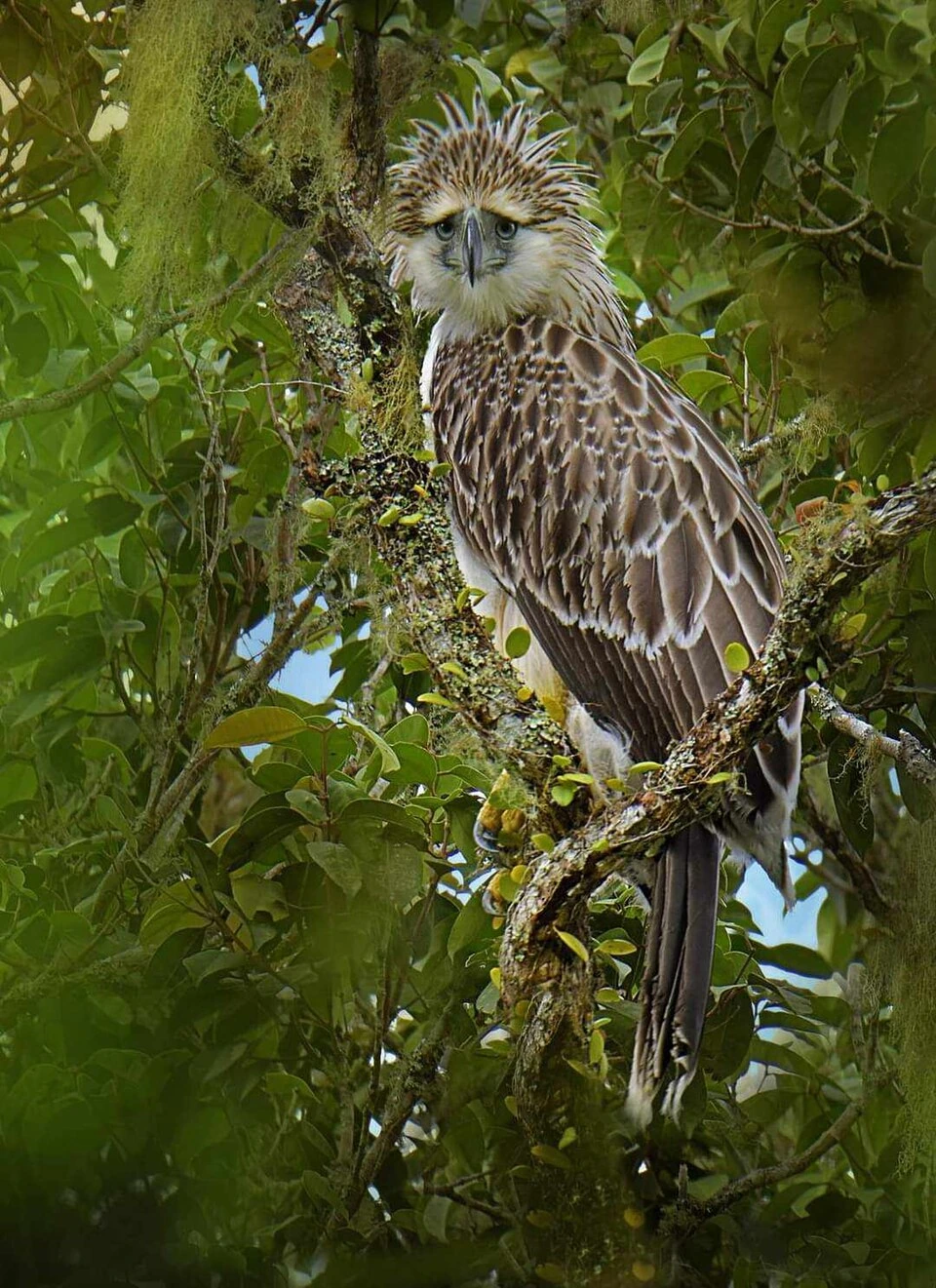
Why the Philippine Eagle Is Our National Bird and What It Symbolizes
Why the Philippine eagle is national bird: identity and pride, endangered forest icon, and strong biodiversity symbol.
Why Is the Golden Eagle the National Bird of Mexico?
Explains why the golden eagle became Mexico’s national bird, tracing Aztec and nation-building symbolism and verifying t
When Did the Eagle Become the National Bird? US Dates
Find the exact US date the bald eagle became the national bird and why it was chosen, with key history points.