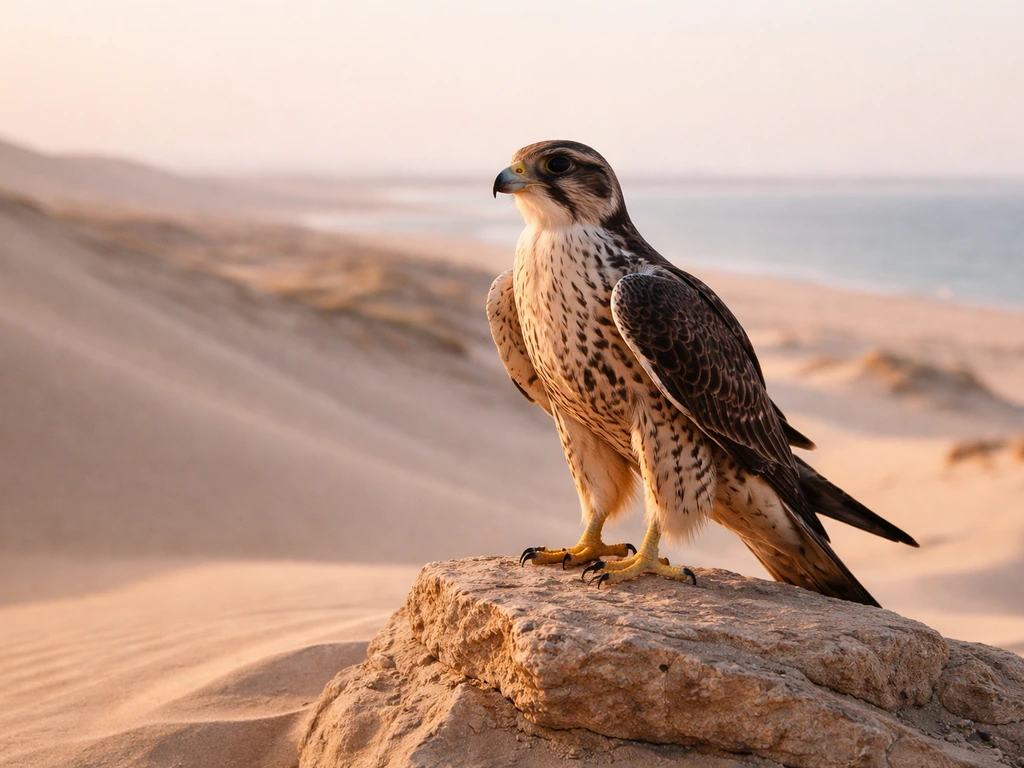
The Barbary falcon is most widely cited as the national bird of Oman, and you'll find it listed on reference sites and Wikipedia's national symbols page. However, there's an important caveat: Oman's government does not appear to have published an official national bird designation in the way some countries do, so the Barbary falcon claim is widely repeated but not backed by a clear government decree or gazette entry. If you need a quick answer for a quiz or school project, Barbary falcon is the accepted answer. If you need to verify it for something more formal, read on because the picture is a little more complicated than most sites let on.
What Is the National Bird of Oman? Official Answer and Meaning

Marcus Chen
6 Jun 2026
Official designation vs. what's commonly claimed
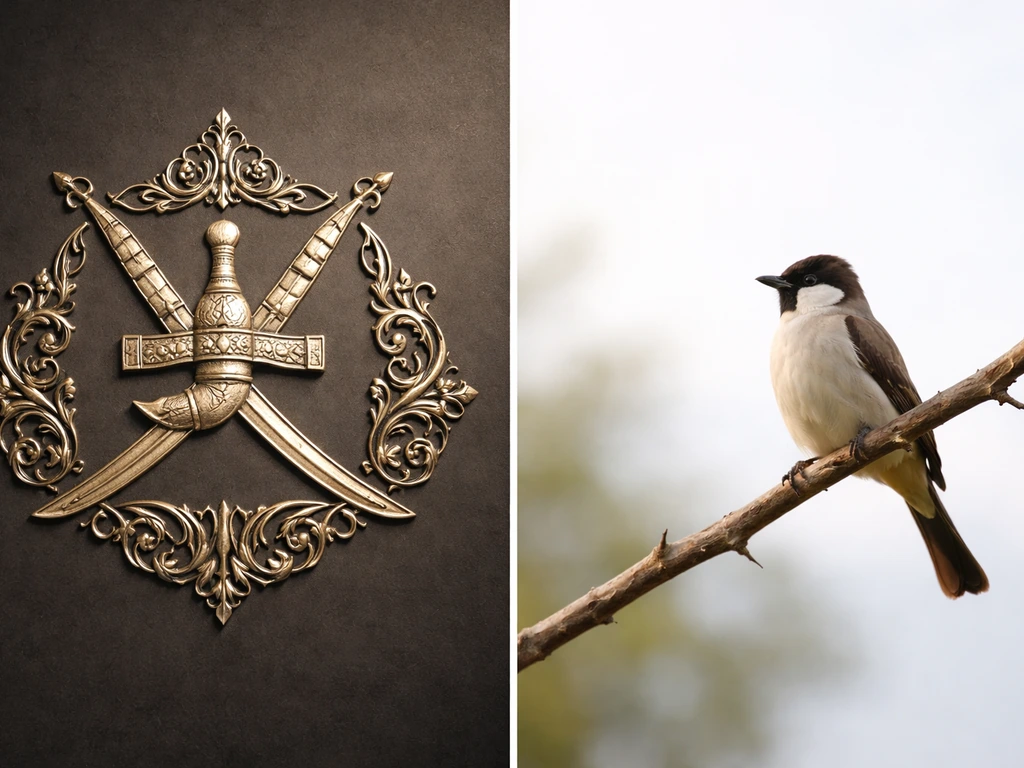
Oman's officially documented national symbols, as described by the country's Ministry of Foreign Affairs, center on three things: the flag, the state emblem (the khanjar dagger crossed with two swords), and the national anthem. A bird species is not listed alongside these in any official government source I could locate. That matters because it puts Oman in a different category from, say, the UAE, where falconry and the falcon have a very well-documented place in formal state identity.
What happened over time is that travel sites, educational databases, and Wikipedia began circulating the Barbary falcon as Oman's national bird, and those claims got copied widely. Some sources go further and list the Saker falcon instead, and a separate set of references points to the sooty falcon (Falco concolor) because it appears on Oman's Half Rial banknote. None of these sources trace back to a specific government act, a heritage ministry announcement, or a dated selection process.
So the confusion comes from three overlapping things: the country's deep cultural connection to falconry, the appearance of falcon imagery on currency, and the way national symbol lists get copied between websites without anyone tracing them to a primary source. The Barbary falcon is the most consistently cited answer, so it's the one most people go with, but it's worth knowing it rests on cultural tradition rather than a formal decree.
Why the falcon carries so much meaning in Oman
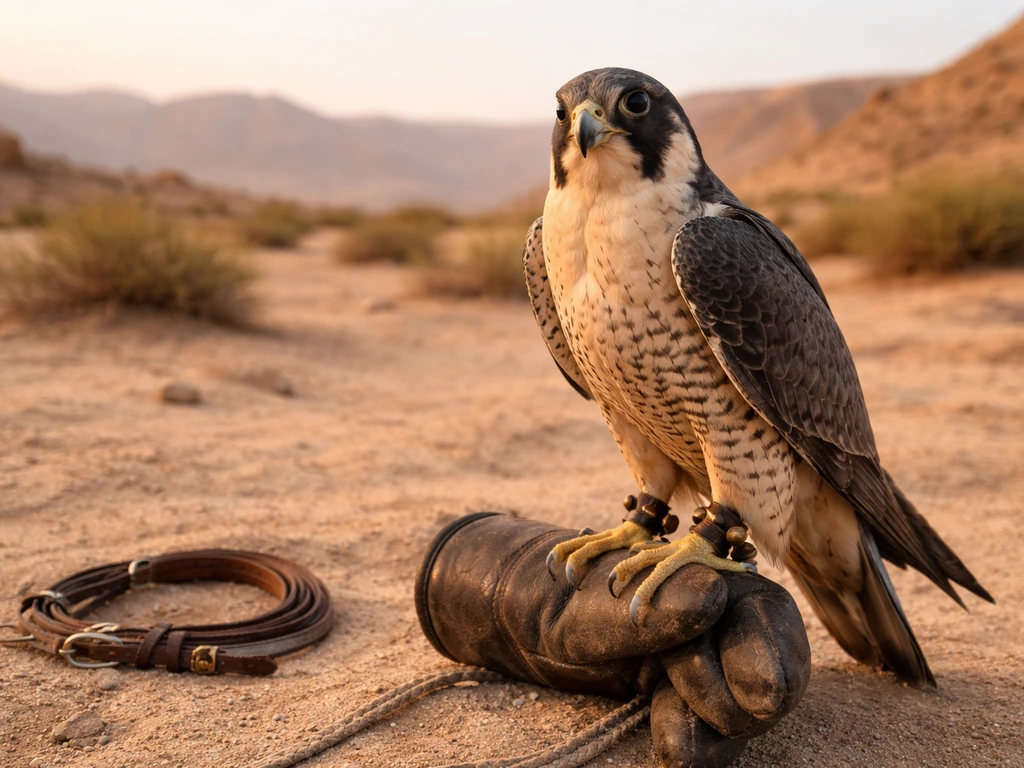
Even without a formal designation document, the falcon's symbolic weight in Oman is real and deep. Falconry has been practiced across the Arabian Peninsula for thousands of years, and in Oman it is woven into Bedouin heritage and tribal identity. The falcon represents qualities that Omani culture prizes: precision, patience, power, and a connection to the desert landscape. UNESCO recognized Arabian falconry as Intangible Cultural Heritage in 2016, and Oman was among the countries included in that recognition.
The Barbary falcon in particular is associated with the rugged terrain of Oman's mountains and coastal cliffs, which matches the country's geography well. Whether the association became a formal designation or simply a strong cultural shorthand, the falcon became the bird most naturally linked to Omani national identity in the eyes of both locals and outside observers. That cultural logic is probably why the Barbary falcon ended up on national symbol lists in the first place.
What the Barbary falcon actually is
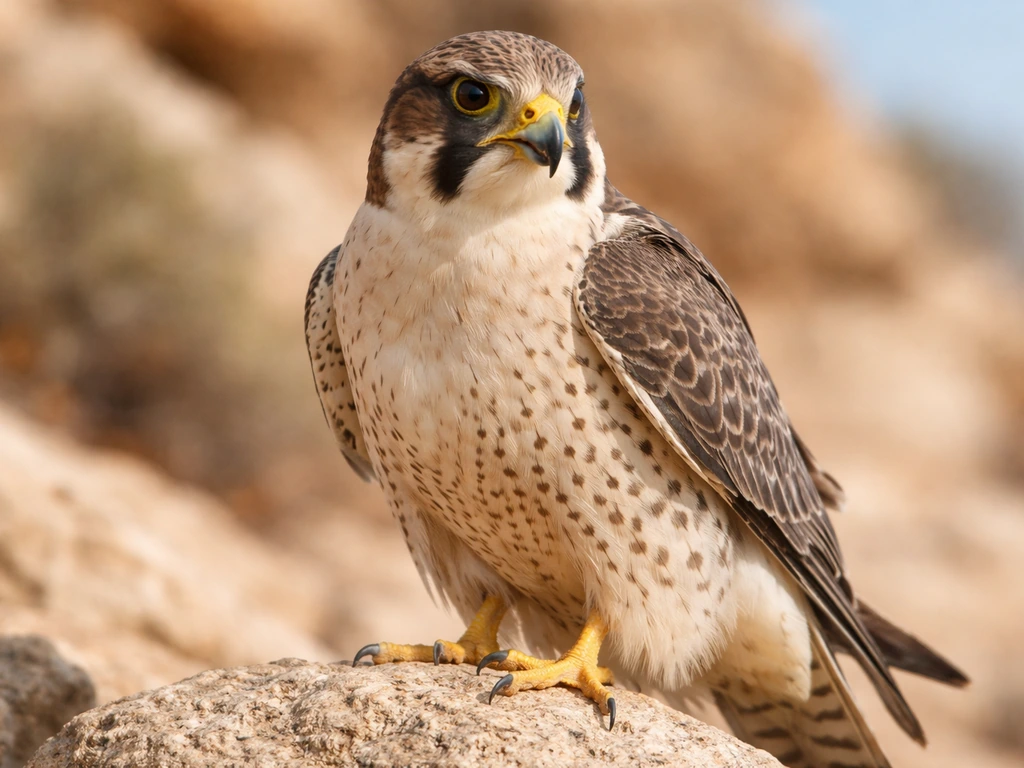
The Barbary falcon's scientific identity depends on which taxonomy you follow, which is one reason you'll see slightly different descriptions across sources. Under some classifications it's treated as a full species, Falco pelegrinoides. Under others, it's considered a subspecies of the peregrine falcon, Falco peregrinus pelegrinoides. BirdLife International and the IOC World Bird List are the two most commonly referenced authorities if you need to pin down the binomial.
In terms of appearance, the Barbary falcon is smaller and paler than a typical peregrine, with a rusty or buff-colored nape and a more washed-out overall plumage suited to arid environments. It ranges across North Africa and the Middle East, including the Arabian Peninsula, which is why it fits Oman geographically. It hunts smaller birds in open, rocky terrain and is fast and agile in flight, which makes it well suited to the falconry tradition of the region.
| Feature | Barbary Falcon | Sooty Falcon (also linked to Oman) |
|---|---|---|
| Scientific name | Falco pelegrinoides (or F. peregrinus pelegrinoides) | Falco concolor |
| Size | Smaller than peregrine, compact build | Medium-small falcon, slender |
| Plumage | Pale sandy/buff with rusty nape | Uniform slate-grey |
| Regional presence | North Africa, Middle East, Arabian Peninsula | Breeds on Arabian Sea islands, coasts |
| Link to Oman | Cultural/falconry tradition, cited as national bird | Depicted on Oman's Half Rial banknote |
| Formal national symbol? | Widely cited, no confirmed official decree | Banknote imagery, not a national bird claim |
The sooty falcon and the banknote angle
It's worth addressing the sooty falcon separately because the banknote connection confuses a lot of people. Oman's Half Rial note features a sooty falcon (Falco concolor), and numismatic reference sites like Numista explicitly identify the species. The sooty falcon breeds on islands in the Sea of Oman and is genuinely part of the country's natural heritage. But appearing on a banknote as a wildlife representative is different from being declared a national bird. Oman's note is depicting regional fauna, not making a formal national symbol declaration.
How the falcon appears in Oman's national life today
Even without a formal designation, falcon imagery is embedded in Omani public life. Falconry is taught and practiced as part of cultural education, and falconry festivals and heritage events regularly feature Omani falconers. The sport is treated as a living tradition connected to the country's pre-oil Bedouin past, and conservation efforts for wild falcon populations in the region are taken seriously by Omani wildlife authorities.
On the currency side, the falcon's appearance on banknotes puts it in front of every Omani citizen and visitor in a very tangible way. Oman's state emblem itself doesn't feature a bird (it centers on the khanjar and crossed swords), but the falcon shows up in cultural programming, school curricula on Omani heritage, and tourism materials as a recognizable symbol of the country's identity. In practice, the bird functions like a national symbol even if the paperwork confirming it officially isn't publicly accessible.
This pattern is common across the Gulf region. The UAE's relationship with the falcon is the most formally documented among its neighbors, and countries like Qatar, Bahrain, Kuwait, and Saudi Arabia all have their own layered relationships with falconry culture and national bird claims that sit somewhere between deep tradition and official designation. If you're specifically asking what the national bird of Qatar is, you'll see similar claims tied to falconry traditions rather than a widely published official decree. In the UAE, the national bird is widely identified as the falcon, reflecting the region's deep falconry tradition UAE national bird. In the UAE, falcon imagery and falconry are strongly tied to state identity, which is why the answer you hear is often linked to national symbolism. If you are asking instead about Kuwait, you can look up which bird is officially recognized as Kuwait's national bird. Oman fits that regional pattern.
How to verify this for yourself
If you want to check the answer today, here's a practical approach:
- Start with Oman's Ministry of Foreign Affairs website, which covers the flag, emblem, and national anthem. If an official national bird exists in government records, a heritage or culture ministry page would be the place to confirm it.
- Check the Oman Ministry of Heritage and Culture for any national symbol documentation or heritage designation announcements.
- For the Barbary falcon's species identity and distribution, use BirdLife International's species factsheets or the IOC World Bird List, both of which are free and searchable online.
- For the sooty falcon's presence on currency, Numista (a free numismatic database) has detailed banknote records including the species depicted on the Oman Half Rial note.
- If you're citing this for academic or formal use, note clearly that the Barbary falcon is widely attributed as Oman's national bird but that a primary government source confirming a formal designation has not been publicly located as of June 2026.
blank" rel="noopener noreferrer">The bottom line is that Barbary falcon is the answer most reference sources give, and it's a culturally grounded choice with real roots in Omani heritage. If you are also wondering about the national bird of Jordan, that is a different question with its own commonly cited answer. If you're asking a similar question about Bahrain, the national bird is usually given as the Arabian bustard in common reference sources national bird of Bahrain. If you're also wondering what is the national bird of Saudi Arabia, the answer differs from Oman's widely claimed falcon and depends on Saudi Arabia's official listings. Just go in knowing that the official paper trail is thinner than you might expect, and use the sources above if you need to dig deeper. If you are asking about Iraq instead, you can use the same kind of verification approach to check the national bird claim for Iraq national bird of iraq.
FAQ
Is the Barbary falcon definitely Oman’s official national bird?
For formal, legal certainty, not really. Many lists repeat the Barbary falcon claim, but the article notes that a specific government decree or gazette-style publication is not clearly surfaced in available official sources.
If Oman does not publish an official national bird, what should I write for a quiz or homework?
Use “Barbary falcon” if the question expects the widely accepted reference answer. If the assignment is about official state symbols, add a short qualifier that the bird is commonly cited but not clearly backed by a publicly identified government declaration.
Why do some sources list a different falcon, like the Saker or sooty falcon?
Different sources tie Oman’s falcon imagery to different references. The article explains that some lists swap species, and the sooty falcon connection comes from currency imagery, which represents wildlife depiction rather than a formal national bird declaration.
Does Omani currency mean the banknote bird is automatically the national bird?
No. The article distinguishes between depicting fauna on a banknote (as with the sooty falcon on the Half Rial) and declaring a national symbol through an official selection process. Banknote imagery can be symbolic but is not the same as an official designation.
How can I verify the “national bird” claim in a responsible way?
Check whether the source points to an identifiable government source, such as a ministry announcement, official gazette, or an official symbols entry. If it only cites other websites, treat the claim as unverified and rely on the “commonly accepted” answer for low-stakes use.
Which scientific name should I use for the Barbary falcon?
It depends on the taxonomy followed. The article notes two common treatments, either as Falco pelegrinoides or as a subspecies of Falco peregrinus. For school projects, stating the binomial used by your chosen authority (for example, BirdLife International or IOC listings) is usually safest.
Is Oman’s bird identity more about culture than official documents?
That is the overall pattern described. Falconry is culturally central, and the bird functions like a national symbol in public life even without the paper trail you might expect from a formal decree.
Could the “national bird” question be different depending on the context (tourism vs. government)?
Yes. Tourism materials and educational content often use falcons as a recognizable identity marker, while government-documented national symbols may list only items like the flag, state emblem, and anthem. For context-sensitive questions, match the expected framing.
Next Article
What Is the National Bird of Qatar? Facts and Meaning
Discover Qatar’s national bird, what it looks like, its habitat and behavior, and why it symbolizes the country.