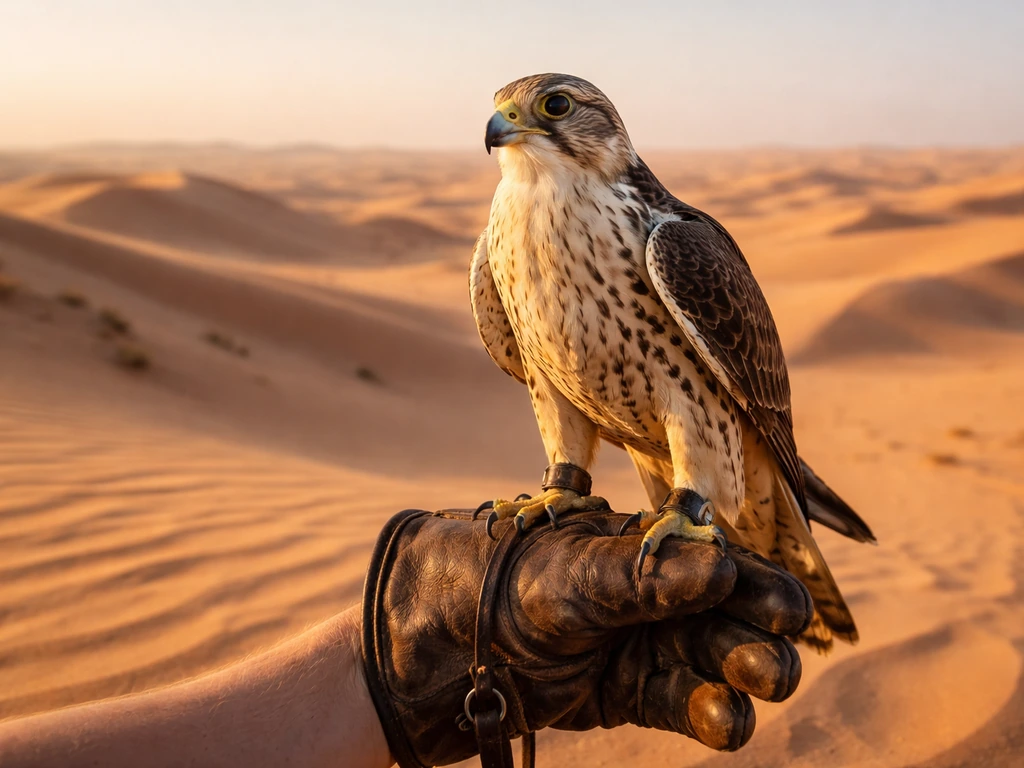
The falcon is the national bird and emblem of the UAE because it sits at the very heart of Emirati identity. For centuries, Bedouin tribes across the Arabian Peninsula relied on trained falcons to hunt for food in the desert. That deep practical bond became a cultural one over generations, and today the falcon represents strength, agility, and pride in the UAE's desert heritage. It is not just a symbolic choice, it is the bird that shaped how Emiratis lived, and it still shapes how they see themselves.
Why Is Falcon the National Bird of the UAE? Key Reasons

Marcus Chen
11 Jun 2026
Which falcon the UAE actually refers to
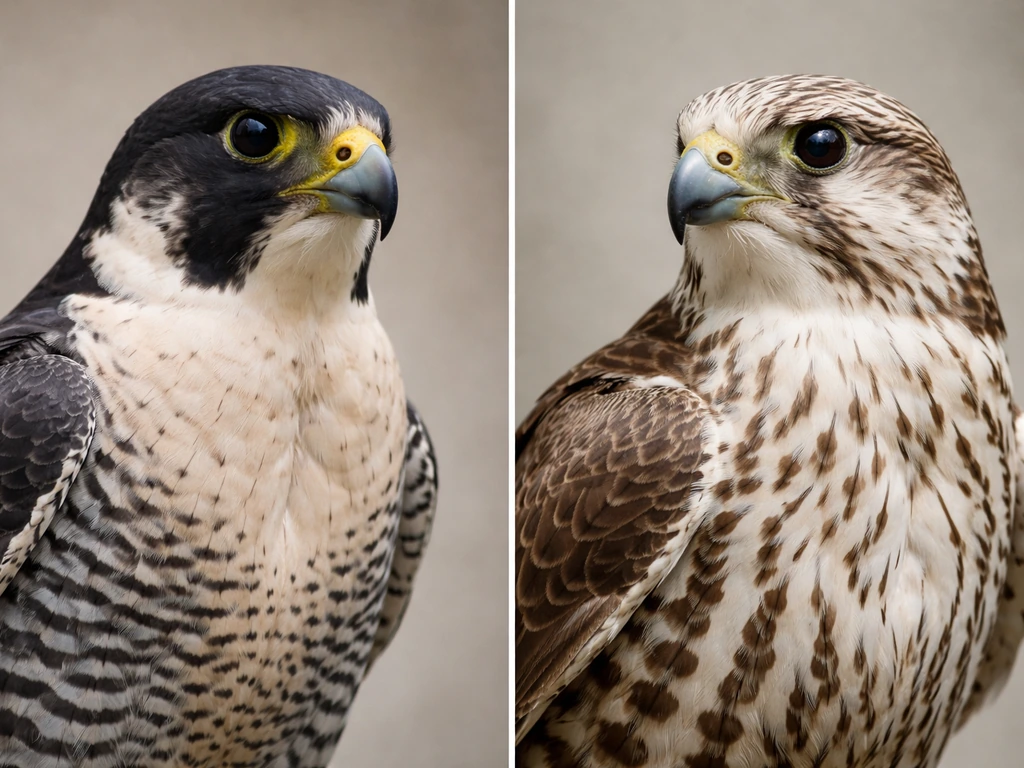
When the UAE says 'falcon,' it most commonly refers to the Peregrine Falcon (Falco peregrinus) and the Saker Falcon (Falco cherrug), both of which have been central to traditional falconry in the region. The Peregrine is the faster of the two and the most prized globally, capable of diving at over 240 mph. The Saker is larger and historically favored in desert falconry for its endurance and hunting power over open terrain. You will also hear the term 'the UAE Falcon' used in official contexts without specifying a single species, because the emblem draws on the broader cultural idea of the falcon rather than pinning down one exact bird.
Locally, you may come across the term 'qarmousha' or simply hear falcons referred to in Arabic as 'saqr' (which broadly means falcon or hawk) or 'shaheen' (which refers more specifically to the Peregrine). If you are researching this topic, know that these terms are sometimes used interchangeably in everyday conversation even though they have technical distinctions.
The deep roots of falconry in Emirati history
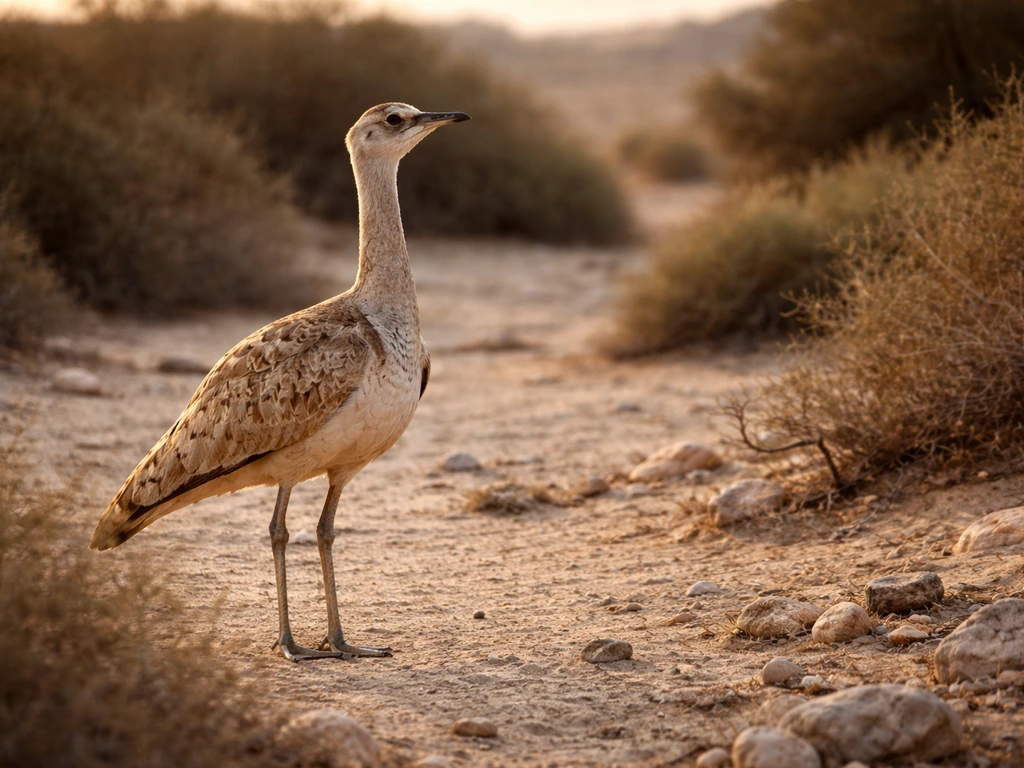
Falconry in what is now the UAE goes back at least 2,000 years, and archaeological evidence from the wider Arabian Peninsula pushes that history even further. For Bedouin communities surviving in the desert, falcons were working animals. They were trained to hunt houbara bustards and other birds that provided critical protein during the harsh winter months when other food sources were scarce.
The bond between a Bedouin falconer and his bird was intensely personal. Falcons were kept inside family tents, handled daily, and treated almost as companions. This closeness built a relationship that was practical, yes, but also deeply emotional and tied to concepts of patience, skill, and respect for nature. Learning to train and hunt with a falcon was a mark of status and competence for Emirati men, something passed down from father to son across generations.
In 2016, UNESCO inscribed falconry as an Intangible Cultural Heritage of Humanity, and the UAE was one of the primary countries behind that designation. That recognition confirmed what Emiratis had always known: this is not a hobby or a sport, it is a living cultural tradition with roots that predate the modern state by many centuries.
What the falcon symbolizes for the UAE
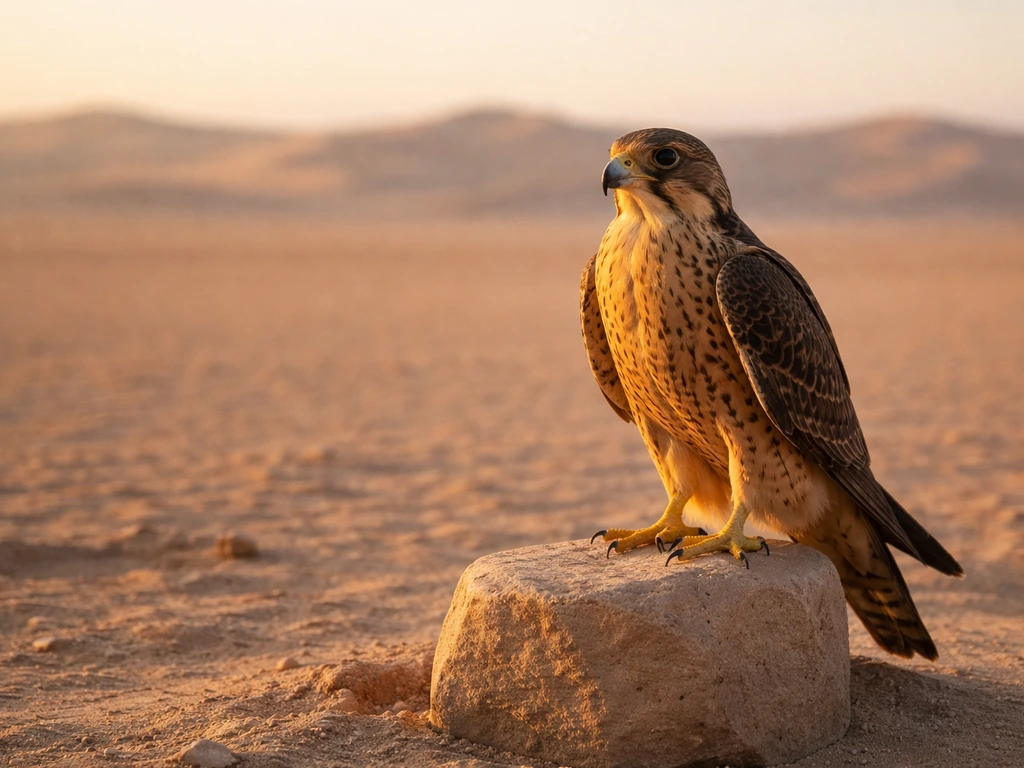
The UAE Federal Government's own Visual Identity Guidelines put it clearly: 'Watchful, prepared and firmly grounded, the falcon embodies our strength and unity in the present, our pride in our past, and our agility to soar high into the future.' That one sentence covers a lot of ground, and each part is deliberate.
- Strength: Falcons are apex predators. In a desert environment where survival demanded resilience, the falcon's power resonated with Bedouin values of endurance and toughness.
- Speed and agility: The Peregrine Falcon is the fastest animal on Earth. For a young nation that has modernized at extraordinary speed, the falcon's agility is a fitting metaphor for ambition and forward momentum.
- Desert heritage: The falcon is native to the landscape of the UAE. It soars over the same dunes and wadis where Emirati ancestors lived, making it a genuine geographic symbol, not an imported one.
- Watchfulness and wisdom: A trained falcon is calm, focused, and precise. These are qualities Emiratis associate with good leadership and considered judgment.
- Unity: The falcon as a shared emblem crosses tribal and regional lines within the UAE, making it a unifying symbol across all seven emirates.
How the falcon became the official national symbol
The formalization of the falcon as a national symbol tracks closely with the formation of the UAE itself. The Abu Dhabi crest, which features a falcon design, was first unveiled in 1968, three years before the UAE formally unified in 1971. According to the Government of Abu Dhabi's official brand documentation, that crest is described as 'a true reflection of the falcon that soars over Abu Dhabi's deserts as a symbol of the UAE's identity.' The emblem was later refreshed in 2013 but retained the falcon at its core.
The UAE Federal Emblem also features a golden falcon holding a shield that displays the UAE flag. The falcon's wings are spread, conveying openness and strength simultaneously. This image appears on official government documents, public buildings, currency, and passports. It is one of the most visible design elements of the UAE state, which means most people encounter the falcon symbol long before they consciously think about what it represents.
Beyond official documents, falcons are woven into everyday modern life in the UAE. Abu Dhabi hosts a dedicated Falcon Hospital, one of the largest in the world, that treats thousands of birds annually. Falcon souks (markets) operate regularly. There is even a Falcon passport: the UAE issues official travel documents for falcons accompanying owners on international trips, because falconry is practiced at such a serious level that birds travel by plane. All of this institutional infrastructure shows that the falcon is not just a logo choice, it is a living, funded, actively maintained part of national culture.
How the UAE compares to its neighbors on this front
The UAE is not alone in choosing a falcon or related bird of prey as a national symbol. Several Gulf states share the same deep falconry tradition. Qatar's national emblem also features a falcon. If you are wondering what is the national bird of Qatar, it is the Qatar national emblem bird. Bahrain lists the White-eared Bulbul as its national bird but falconry is equally important there culturally. Oman, for example, has its own national bird designation as well Bahrain lists the White-eared Bulbul as its national bird. Similarly, Iraq has its own national bird that is commonly identified in reference guides about Iraqi national symbols national bird of Iraq. Saudi Arabia's national emblem prominently features a palm tree and crossed swords, but the Saker Falcon holds immense cultural prestige there too. For Saudi Arabia, the national bird is the great egret national bird of saudi arabia. Kuwait, Oman, and Jordan each have their own national bird designations that reflect the regional biodiversity and cultural priorities of the Arabian Peninsula. If you are looking specifically for Jordan's official national bird, check Jordanian government and reputable reference sources for the current designation. If you are wondering what is the national bird of Kuwait, you will often see it listed differently depending on the source.
What sets the UAE apart is the degree to which the falcon has been institutionalized, from dedicated hospitals and markets to passport documentation and federal emblems. The commitment is not just symbolic, it is financial and structural.
| Country | National Bird / Emblem Bird | Falconry Significance |
|---|---|---|
| UAE | Falcon (Peregrine / Saker) | Core national emblem, UNESCO-recognized tradition, falcon hospitals and passports |
| Qatar | Falcon | Featured on national emblem, major falconry culture |
| Saudi Arabia | Saker Falcon (cultural prestige) | Highly valued in heritage, emblem features different symbols |
| Bahrain | White-eared Bulbul (national bird) | Falconry is culturally important but emblem bird differs |
| Oman | Barbary Falcon (emblem) | Falconry practiced, falcon on national coat of arms |
| Kuwait | Falcon (emblem) | Falconry tradition shared across Gulf region |
Where to verify this and learn more
If you want to go deeper or confirm specific details, here are the most reliable places to look and the right search terms to use.
- UAE Federal Government website (u.ae): Search for 'UAE Federal Emblem' or 'Visual Identity Guidelines' to find the official description of the falcon's symbolism in the government's own words.
- Government of Abu Dhabi official site (abudhabi.ae): Look up 'Our Brand' or 'Abu Dhabi crest' to find the history of the falcon emblem dating to 1968.
- UNESCO Intangible Cultural Heritage list: Search 'falconry UNESCO' to find the 2016 inscription and the UAE's role in it. This is the most authoritative source for the international recognition of the tradition.
- Abu Dhabi Falcon Hospital website: A practical resource that shows just how seriously the UAE treats falconry as a living practice, not a museum piece.
- Search terms to use: 'UAE national emblem falcon,' 'Emirati falconry history,' 'saqr UAE symbol,' 'shaheen falcon UAE,' and 'falconry Bedouin Arabia' will all pull up credible sources for different angles on this topic.
One thing worth knowing: some sources list the falcon as the UAE's 'national bird' and others describe it as the 'national emblem bird' or simply the bird on the national emblem. The distinction matters slightly in technical terms, but in practice the falcon functions as both. It is the bird most closely associated with the UAE at every level, official and cultural, and no other bird comes close to that level of national identification.
FAQ
Is the UAE’s national bird one exact species, or a group of falcons?
Because the UAE’s official iconography is designed around the falcon tradition, not a single specimen. In practical terms, “UAE falcon” often refers to the idea and species commonly used in falconry there, mainly Peregrine and Saker, while “falcon” on documents and crests is treated as the national emblem bird rather than a strictly one-species label.
What is the difference between “national bird” and “national emblem bird” in the UAE?
If you see “falcon” used alongside “emblem,” it usually means the same bird is acting as a national identifier. The main difference is technical: “national bird” emphasizes a wildlife designation, while “national emblem bird” emphasizes symbolism used in state identity, but most people encounter the falcon through the emblem anyway.
Why do different sources use different Arabic words for falcons, and does that change the meaning?
The most common everyday mix-ups are Arabic terms like saqr, shaheen, or qarmousha. In casual speech they can blur species boundaries, so if you are verifying a claim, match the term to its technical species meaning (for example, shaheen is typically used for the Peregrine in many contexts).
How does the UAE support falconry beyond symbolism, especially for birds traveling internationally?
Falconry is treated as a heritage and serious practice, which is why the UAE supports infrastructure for it. A key edge case is international travel, where falcons may require formal documentation to accompany owners, reflecting that the UAE views the tradition as regulated and not just cultural “interest.”
Why do some references disagree on what the UAE national bird is, and how can I verify which claim is accurate?
You may come across lists that disagree because some references simplify the UAE bird as “falcon” without stating species. If you want to resolve contradictions, look for whether the source is describing the national emblem icon, a heritage statement, or a specific falcon species used in local falconry.
Does falconry being common in the Gulf automatically mean the UAE must have chosen the falcon as its national bird?
Not necessarily. Some countries share falconry culture, but the UAE’s falcon is more visible across state systems, like federal identity materials and widely recognized emblems. If you compare countries, check whether the falcon appears as a national emblem element or is only mentioned culturally.
Is the falcon’s national-bird status mainly about hunting history, or more about modern national identity?
When interpreting the reasons, distinguish between the hunting function (historical utility in the desert) and the identity function (present-day symbolism used in emblems and documents). The UAE’s explanation connects both, but the modern “why” leans heavily on continuity of heritage and national unity rather than only hunting outcomes.
What search terms should I use to avoid mistakes when researching UAE falconry and species claims?
A common research mistake is assuming every national “falcon” story refers to the same bird and the same term. For deeper accuracy, search specifically for “Peregrine,” “Saker,” and the Arabic term used in that source, then see whether the claim is about emblem symbolism or about falconry species practices.
Next Article
What Is the National Bird of Bahrain? Meaning and History
Learn why Bahrain’s national bird is the Arabian bustard, including symbolism, selection history, and key traits.